Results by title
1713 books match the query '21st Century' and 82 start with m
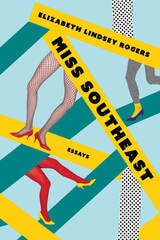
Miss Southeast
EssaysElizabeth Lindsey Rogers
Northwestern University Press, 2024
A collection of narrative essays on femininity, sexuality, community, and belonging
Miss Southeast explores the strange, often contradictory cultural circumstances of being queer and female in the American South and beyond. Born and raised in North Carolina, the youngest in a family of precocious daughters, Rogers spends her teenage years as a half-closeted lesbian desperate to escape the South, convinced the rest of the United States must be “more enlightened than our cow-dotted corner of the county.”
Adulthood takes Rogers to Ohio, New York, Louisiana, Arkansas, Washington, DC, and China, but each essay finds her reckoning with participation in and resistance to rigid cultural institutions—whether a coming-out story set at a high school beauty pageant or a meditation on swimming pools as emblems of racial divides across the South. In lyric prose enlivened by a poet’s sense of musicality, Miss Southeast considers how both place and our layered identities shape our sense of belonging.
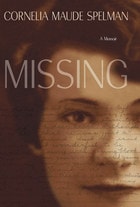
Missing
A MemoirCornelia Maude Spelman
Northwestern University Press, 2010
Acclaimed children’s book author Cornelia Maude Spelman’s memoir of her family springs from a meeting and subsequent friendship with the late, legendary New Yorker editor William MaxwellIn the 1920s, he and her parents had been friends as undergraduates at the University of Illinois at Urbana-Champaign. When Spelman hints at what she thinks of as the failure of her parents’ lives, he counters that “in a good novel one doesn’t look for a success story, but for a story that moves one with its human drama and richness of experience.”
At their final meeting, Maxwell encourages her to tell her mother’s story. Missing is Spelman’s response to Maxwell’s wisdom. With the pacing of the mystery novels her mother loved, and using everything from letters and interviews to the family’s quotidian paper trail—medical records, telegrams, and other oft-overlooked clues to a family’s history—Spelman reconstructs her mother’s life and untimely death. Along the way, she unravels mysteries of her family, including the fate of her long lost older brother.
Spelman skillfully draws the reader into the elation and sorrow that accompany the discovery of a family’s past. A profoundly loving yet honest elegy, Missing is, like the woman it memorializes, complex and beautiful.
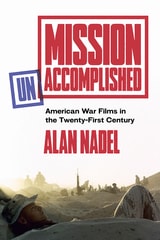
Mission Unaccomplished
American War Films in the Twenty-First CenturyAlan Nadel
University of Texas Press, 2025
An analysis of how post-9/11 war movies changed from following soldiers on specific missions to chronicling war as a day-to-day occupation.
In 2003, the United States began a war in Iraq without a mission. Instead of fighting to restore peace—the traditional objective of warfare—servicemembers faced the grim reality that there was no goal. Lacking even certainty as to who was the enemy, soldiers discovered that their task was simply to survive.
Mission Unaccomplished explores how Hollywood grasped the experience of Iraq from the perspective of US soldiers, reinventing the war film in the process. Historically, films such as Saving Private Ryan valorized the goals of war by chronicling missions that unambiguously contribute to the defeat of the enemy and the restoration of peace. But in The Hurt Locker, American Sniper, Green Zone, and other recent dramas, soldiers just try to outlast the chaos. Dramatizing the aimlessness of the war, events occur in random order, and soldiers have no sense of how their actions contribute to victory or peace. Looking to recent WWII movies such as Dunkirk and Hacksaw Ridge, which use this same cinematic vocabulary to position soldiering as merely a deadly job to be endured, Alan Nadel argues that the disillusionment of Iraq has influenced cinema broadly, inspiring a newly critical war film genre.
Mission for Development
Utah Universities and the Point Four Program in IranRichard Garlitz
Utah State University Press, 2018
The Point Four Program sponsored American technical assistance for developing countries during the 1950s—an American Cold War strategy to cultivate friendly governments and economic development in countries purportedly susceptible to Communist influence. Between 1951 and 1964, advisors from Brigham Young University sought to modernize Iranian public education, experts from Utah State University worked to improve agricultural production, and doctors and nurses from the University of Utah helped with the Iranian government’s rural health initiatives. In A Mission for Development, author Richard Garlitz offers a critical and clear-eyed assessment of the challenges the Utahns faced and the contributions they made to Iranian development.
The book also reexamines the Iranian political crisis of the early 1950s and the overthrow of Prime Minister Mohammad Mossadegh through the eyes of the Utah advisors. A Mission for Development provides rare insight into the university role in international development and will be of interest to historians and policy makers.
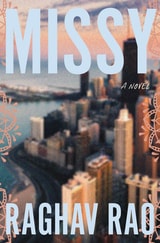
Missy
A NovelRaghav Rao
Northwestern University Press, 2026
A remarkable young woman flees India to chase the dream of self-reinvention in America
The orphaned girls of St. Ursula’s convent are destined to be nuns or servants, but seventeen-year-old Savi dreams of escape. She is chosen to work as a governess for the wealthy Nandiyar family at their country estate in Tamil Nadu, where she falls for a lively and carefree apprentice sculptor. After the violent and horrific events of a single night, they are forced to flee, leaving their homeland forever in the rearview.
Decades later, Savi has become known to all as “Missy” and runs a successful driving school in Chicago. She is a pillar of the South Asian community and the mother of two brilliant, stubborn young women, Mansi and Shilpa. But when Varun, a charming doctor with mysterious connections to her past, enters their lives, a chain of events is set off that puts Missy’s carefully constructed world in jeopardy. Can Missy outrun her secrets? And, if she is forced to face them, what will become of those she loves?
Mistaken for an Empire
A Memoir in TonguesChristine Imperial
The Ohio State University Press, 2023
Moderately Modern
Rémi Brague
St. Augustine's Press, 2017
Modern French Jewish Thought
Writings on Religion and PoliticsEdited by Sarah Hammerschlag
Brandeis University Press, 2018
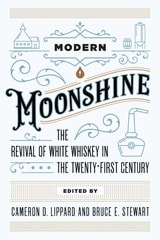
Modern Moonshine
The Revival of White Whiskey in the Twenty-First CenturyCameron D. Lippard
West Virginia University Press, 2019
The craft of making moonshine—an unaged white whiskey, often made and consumed outside legal parameters—nearly went extinct in the late twentieth century as law enforcement cracked down on illicit producers, and cheaper, lawful alcohol became readily available. Yet the twenty-first century has witnessed a resurgence of artisanal distilling, as both connoisseurs and those reconnecting with their heritage have created a vibrant new culture of moonshine. While not limited to Appalachia, moonshine is often entwined with the region in popular understandings.
The first interdisciplinary examination of the legal moonshine industry, Modern Moonshine probes the causes and impact of the so-called moonshine revival. What does the moonshine revival tell us about our national culture? How does it shape the image of Appalachia and rural America? Focusing mostly on southern Appalachia, the book’s eleven essays chronicle such popular figures as Popcorn Sutton and explore how and why distillers promote their product as “traditional” and “authentic.” This edited collection draws from scholars across the disciplines of anthropology, history, geography, and sociology to make sense of the legal, social, and historical shifts behind contemporary production and consumption of moonshine, and offers a fresh perspective on an enduring topic of Appalachian myth and reality.
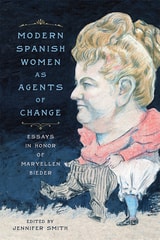
Modern Spanish Women as Agents of Change
Essays in Honor of Maryellen BiederSmith, Jennifer
Bucknell University Press, 2019
Published by Bucknell University Press. Distributed worldwide by Rutgers University Press.
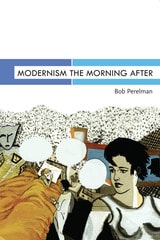
Modernism the Morning After
Bob Perelman
University of Alabama Press, 2017
Modernism the Morning After is a superb, lively, engaging series of essays and talks, dating from 1995 to 2016, by the eminent scholar, critic, and poet Bob Perelman. Throughout his career, Perelman has focused on the persistence of modernist ambition in poetry, with all of its admirable articulations and tragicomic short-circuits. Poetry, it turns out, is not simply “news that stays news,” as Ezra Pound postulated. Instead, as Perelman demonstrates, poetry often gropes toward whatever news can be found in the broader contexts of public speech—the cultural commons, the almost-real or much-too-real language of people and our hyperactive media.
Working in a variety of modes from the poetic to the dramatic to the conversational, and ranging across an expansive historical register from Dickinson, Whitman, and Dunbar in the nineteenth century to Kenneth Goldsmith and Stephen Colbert in the twenty-first, Perelman’s readings are unfailingly illuminating and, in many cases, his witty expositions take us strikingly close to the original intent of the text concerned.
Perelman also places intermittent, yet artful, pressure on some basic questions about the very nature of poetry. What does the transcription of poems tell us about them? How do hoaxes like the Ern Malley affair compel us to reconsider fundamental assumptions about what constitutes “authentic” poetry? How does the bathetic register relate to tones and idiom in recent poetic production? In Modernism the Morning After, Perelman writes as a poet, teacher, and critic, addressing a broad audience of readers and writers without choosing between them, inviting all to consider along with him modernism’s future through a dynamic consideration of its past.
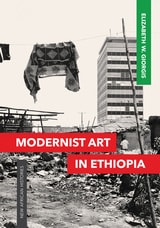
Modernist Art in Ethiopia
Elizabeth W. Giorgis
Ohio University Press, 2019
Short-listed for the Fage & Oliver Prize for outstanding scholarly work published on Africa.
Finalist, African Studies Association Book Prize.
Finalist, ASA Bethwell A. Ogot Prize for best book in east African studies.
If modernism initially came to Africa through colonial contact, what does Ethiopia’s inimitable historical condition—its independence save for five years under Italian occupation—mean for its own modernist tradition? In Modernist Art in Ethiopia—the first book-length study of the topic—Elizabeth W. Giorgis recognizes that her home country’s supposed singularity, particularly as it pertains to its history from 1900 to the present, cannot be conceived outside the broader colonial legacy. She uses the evolution of modernist art in Ethiopia to open up the intellectual, cultural, and political histories of it in a pan-African context.
Giorgis explores the varied precedents of the country’s political and intellectual history to understand the ways in which the import and range of visual narratives were mediated across different moments, and to reveal the conditions that account for the extraordinary dynamism of the visual arts in Ethiopia. In locating its arguments at the intersection of visual culture and literary and performance studies, Modernist Art in Ethiopia details how innovations in visual art intersected with shifts in philosophical and ideological narratives of modernity. The result is profoundly innovative work—a bold intellectual, cultural, and political history of Ethiopia, with art as its centerpiece.
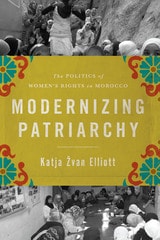
Modernizing Patriarchy
The Politics of Women's Rights in MoroccoBy Katja Žvan Elliott
University of Texas Press, 2015
Morocco is hailed by academics, international NGO workers, and the media as a trailblazer in women’s rights and legal reforms. The country is considered a model for other countries in the Middle East and North African region, but has Morocco made as much progress as experts and government officials claim? In Modernizing Patriarchy, Katja Žvan Elliott examines why women’s rights advances are lauded in Morocco in theory but are often not recognized in reality, despite the efforts of both Islamist and secular feminists.
In Morocco, female literacy rates remain among the lowest in the region; many women are victims of gender-based violence despite legal reforms; and girls as young as twelve are still engaged to adult men, despite numerous reforms. Based on extensive ethnographic research and fieldwork in Oued al-Ouliya, Modernizing Patriarchy offers a window into the life of Moroccan Muslim women who, though often young and educated, find it difficult to lead a dignified life in a country where they are expected to have only one destiny: that of wife and mother. Žvan Elliott exposes their struggles with modernity and the legal reforms that are supposedly ameliorating their lives. In a balanced approach, she also presents male voices and their reasons for criticizing the prevailing women’s rights discourse. Compelling and insightful, Modernizing Patriarchy exposes the rarely talked about reality of Morocco’s approach toward reform.
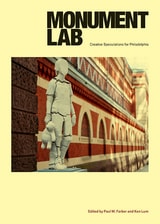
Monument Lab
Creative Speculations for PhiladelphiaPaul M. Farber
Temple University Press, 2020
What is an appropriate monument for the current city of Philadelphia? That was the question posed by the curators, artists, scholars, and students who comprise the Philadelphia-based public art and history studio Monument Lab. And in 2017, along with Mural Arts Philadelphia, they produced and organized a groundbreaking, city-wide exhibition of temporary, site-specific works that engaged directly with the community. The installations, by a cohort of diverse artists considering issues of identity, appeared in iconic public squares and neighborhood parks with research and learning labs and prototype monuments.
Monument Lab is a fabulous compendium of the exhibition and a critical reflection of the proceedings, including contributions from interlocutors and collaborators. The exhibition and this handbook were designed to generate new ways of thinking about monuments and public art as well as to find new, critical perspectives to reflect on the monuments we have inherited and to imagine those we have yet to build. Monument Lab energizes acivic dialogue about place and history as forces for a deeper questioning of what it means to be Philadelphian in a time of renewal and continuing struggle.
Contributors: Alexander Alberro, Alliyah Allen, Laurie Allen, Andrew Friedman, Justin Geller, Kristen Giannantonio, Jane Golden, Aviva Kapust, Fariah Khan, Homay King, Stephanie Mach, Trapeta B. Mayson, Nathaniel Popkin, Ursula Rucker, Jodi Throckmorton, Salamishah Tillet, Jennifer Harford Vargas, Naomi Waltham-Smith, Bethany Wiggin, Mariam I. Williams, Leslie Willis-Lowry, and the editors.
Artists: Tania Bruguera, Mel Chin, Kara Crombie, Tyree Guyton, Hans Haacke, David Hartt, Sharon Hayes, King Britt and Joshua Mays, Klip Collective, Duane Linklater, Emeka Ogboh, Karyn Olivier, Michelle Angela Ortiz, Kaitlin Pomerantz, RAIR, Alexander Rosenberg, Jamel Shabazz, Hank Willis Thomas, Shira Walinsky and Southeast by Southeast, and Marisa Williamson.
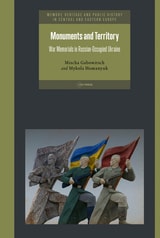
Monuments and Territory
War Memorials in Russian-Occupied UkraineMischa Gabowitsch
Central European University Press, 2025
From the very first weeks of Russia’s large-scale attack on Ukraine in February 2022, Russian soldiers, politicians, and proxy administrators expended considerable effort interacting with monuments on newly occupied territory. Why did the invaders care enough about war memorials to divert scarce resources to destroying, maintaining, or building them amid a massive war? Why did they remove some memorials and spare others? What was the point of commemorating past victories and defeats while bombing Ukrainian cities, and how did commemorative ceremonies in the occupied territories
change over the first year of the war? What was the broader impact of monument-related practices beyond the local settings in which they occurred? And what does the Ukrainian case teach us more generally about how memorials to past wars can be used to justify new conquests? These are some of the questions this book explores, based on fieldwork in occupied Ukraine and online research.
More Philadelphia Murals and the Stories They Tell
Jane Golden
Temple University Press, 2006
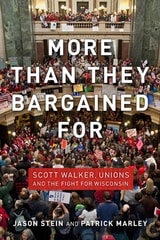
More than They Bargained For
Scott Walker, Unions, and the Fight for WisconsinJason Stein and Patrick Marley
University of Wisconsin Press, 2013
“Stein and Marley deliver an impressively objective account of the struggle, ably describing the objectives and tactics of each side in a confident and engaging style.”—Kirkus Reviews
“Stein and Marley deliver a swashbuckling tale of Wisconsin's Republican Governor Scott Walker's election and tumultuous first year in office. . . . Instead of an expected dry read, the authors' lively, economical prose, supplemented by snippets of social media reporting in real time, place readers in the crowded Capitol building stairwells, or in the midst of Wisconsin's largest sustained demonstration since Vietnam protests rocked the University of Wisconsin campus.”—Publishers Weekly
“This book is a political thriller, an activists’ handbook (for the Left on how to organize mass protests, and for the Right on how to effectively fight public employee unions), and a work of investigative journalism all rolled into one. Social scientists, political junkies, and anyone interested in public affairs will devour it.”—Library Journal
“Not only have Stein and Marley organized this mass of material into a coherent whole, but they also write well, ensuring that even the drier parts of their narrative are clear as well as fair. Their book provides plenty of ammunition for both sides. But it also offers something far better: the basis for an adult conversation about what actually happened.”—Milwaukee Journal Sentinel
“This timely account covers the ethics investigations, public demonstrations, runaway legislators, recalls, and physical confrontation between two state Supreme Court justices. . . . This book is written in a concise, unbiased manner and includes complete details. In a greater sense, it explores the drastic polarization endemic in American society today.”—Choice
“A testament to the information-gathering powers of good beat reporters. In Bob Woodward style, they reconstruct the backroom meetings that ushered Gov. Scott Walker’s Act 10 legislation through the protester-crammed halls of the Wisconsin State Capitol.”—Milwaukee Magazine
“Stein and Marley have managed to produce a very readable, well-researched, and thoroughly interesting narrative without any notable bias—a major accomplishment.”—Wisconsin People & Ideas Magazine
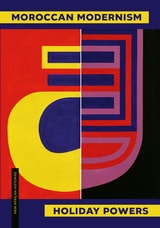
Moroccan Modernism
Holiday Powers
Ohio University Press, 2024
In the years after independence, new art forms and practices flourished at the Casablanca École des beaux-arts, transforming the colonial relic into a wellspring of Moroccan modernism. Casablanca School artists, including Farid Belkahia, Mohammed Chebaa, and Mohammed Melehi, defined the modernist movement in Morocco. Their visual arts activism was displayed at their iconic outdoor exhibition in the Djemaa al-Fna plaza in Marrakech, in their collaborations with the cultural and political journal Souffles, through their radical anticolonial pedagogy, and through their use of abstraction to expand the horizons of postcolonial national culture.
In Moroccan Modernism, Holiday Powers argues that the pedagogy and transnational solidarities of this generation of artists were intrinsic to their broader artistic projects. She advances a novel reading of Moroccan modernism that is rooted in its cosmopolitan national context and in Pan-Africanism and Pan-Arabism, the transnational anticolonial intellectual movements that defined the era.
Movie Migrations
Transnational Genre Flows and South Korean CinemaHye Seung Chung and David Scott Diffrient
Rutgers University Press, 2015
Movie Minorities
Transnational Rights Advocacy and South Korean CinemaHye Seung Chung and David Scott Diffrient
Rutgers University Press, 2021
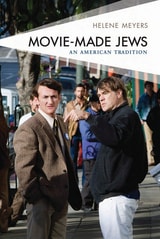
Movie-Made Jews
An American TraditionHelene Meyers
Rutgers University Press, 2021
With incisive analysis, Movie-Made Jews challenges the assumption that American Jewish cinema is a cinema of impoverishment and assimilation. While it’s a truism that Jews make movies, this book brings into focus the diverse ways movies make Jews.
Moving Beyond Academic Discourse
Composition Studies and the Public SphereChristian R. Weisser. Foreword by Gary A. Olson
Southern Illinois University Press, 2002
Moving student writing beyond academic discourse and into larger public spheres is a difficult task, but Christian R. Weisser’s study challenges composition instructors to do just that. This highly accessible book does what no other study has attempted to do: place the most current, cutting-edge theories and pedagogies in rhetoric and composition in their intellectual and historical contexts, while at the same time offering a unique, practical theory and pedagogy of public writing for use both inside and outside of the classroom.
By positing a theory of the public for composition studies, one which envisions the public sphere as a highly contested, historically textured, multilayered, and sometimes contradictory site, Weisser offers a new approach to the roles that compositionists might assume in their attempts to initiate progressive political and social change.
After first providing a historical context that situates composition’s recent interest in public writing, Weisser next examines recent theories in composition studies that consider writing an act of social engagement before outlining a more complex theory of the public based on the work of Jürgen Habermas. The resulting re-envisioning of the public sphere expands current conversations in rhetoric and composition concerning the public.
Weisser concludes with a holistic vision that places greater political and social import on addressing public issues and conversations in the composition classroom and that elucidates the role of the public intellectual as it relates specifically to compositionists in postmodern society.
Multipolarity
The Promise of DisharmonyEdited by Peter W. Schulze
Campus Verlag, 2018
Murderous Feeling
Gender and Retribution in Black and Indigenous LiteratureChad Benito Infante
University of Minnesota Press, 2026
Examining revenge narratives as a feminist response to slavery and settler colonialism
From Octavia Butler’s Kindred to The Round House by Louise Erdrich, themes of retribution resound throughout the work of renowned Black and Indigenous women and queer authors. Revealing how the Black Power Movement and the American Indian Movement influenced literature from the 1960s onward, Murderous Feeling explores how these writers have employed revenge narratives as a response to white supremacy and colonialism.
Chad Benito Infante shows how, rather than using retributive violence to cultivate a heroic, masculine ideal, Black and Native women and queer writers use revenge as a way to raise philosophical questions about justice and the reclamation of power in the face of white supremacy. Pairing canonical texts—including work by James Baldwin, Leslie Marmon Silko, Craig Womack, Toni Morrison, and others—he demonstrates how this uniquely queer and feminist literary tradition, the “grammar of interrogation,” allows for generative ambivalence and curiosity about the possibilities and failures of violence.
In highlighting these narratives’ potential to steer anticolonial efforts, Murderous Feeling reconceptualizes literary violence not as an individualized act of cleansing but as a tool for revolutionary inquiry.
Retail e-book files for this title are screen-reader friendly.
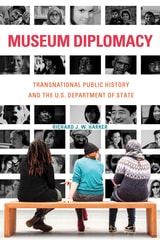
Museum Diplomacy
Transnational Public History and the U.S. Department of StateRichard J. W. Harker
University of Massachusetts Press, 2020
As more historic sites and museums seek to surmount social, cultural, and economic barriers between themselves and their communities in their exhibitions and programming, the Museums Connect program provides important lessons on how to overcome entrenched hierarchies of power in public history.
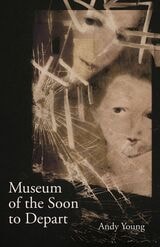
Museum of the Soon to Depart
Andy Young
Carnegie Mellon University Press, 2024
In Museum of the Soon to Depart, poet Andy Young searches for her place in history as it unfolds around her through revolution, plague, and natural disaster. As curator of her museum, she navigates her own and others’ suffering through intense observation, from the inner mechanisms of grief and illness to the solace of distance provided by photography. The material of the poet’s own life and events on the world stage intertwine, resulting in poems with a staggering range, inhabiting language in ways that ultimately point to its limits.
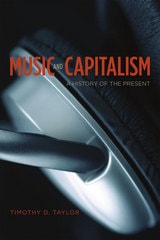
Music and Capitalism
A History of the PresentTimothy D. Taylor
University of Chicago Press, 2015
Taylor explores everything from the branding of musicians to the globalization of music to the emergence of digital technologies in music production and consumption. Drawing on interviews with industry insiders, musicians, and indie label workers, he traces both the constricting forces of bottom-line economics and the revolutionary emergence of the affordable home studio, the global internet, and the mp3 that have shaped music in different ways. A sophisticated analysis of how music is made, repurposed, advertised, sold, pirated, and consumed, Music and Capitalism is a must read for anyone who cares about what they are listening to, how, and why.
Music and Conflict
Edited by John Morgan O'Connell and Salwa El-Shawan Castello-Branco
University of Illinois Press, 2010
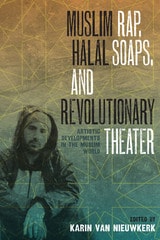
Muslim Rap, Halal Soaps, and Revolutionary Theater
Artistic Developments in the Muslim WorldEdited by Karin van Nieuwkerk
University of Texas Press, 2011
From "green" pop and "clean" cinema to halal songs, Islamic soaps, Muslim rap, Islamist fantasy serials, and Suficized music, the performing arts have become popular and potent avenues for Islamic piety movements, politically engaged Islamists, Islamic states, and moderate believers to propagate their religio-ethical beliefs. Muslim Rap, Halal Soaps, and Revolutionary Theater is the first book that explores this vital intersection between artistic production and Islamic discourse in the Muslim world.
The contributors to this volume investigate the historical and structural conditions that impede or facilitate the emergence of a "post-Islamist" cultural sphere. They discuss the development of religious sensibilities among audiences, which increasingly include the well-to-do and the educated young, as well as the emergence of a local and global religious market. At the heart of these essays is an examination of the intersection between cultural politics, performing art, and religion, addressing such questions as where, how, and why pop culture and performing arts have been turned into a religious mission, and whether it is possible to develop a new Islamic aesthetic that is balanced with religious sensibilities. As we read about young Muslims and their quest for a "cool Islam" in music, their struggle to quell their stigmatized status, or the collision of morals and the marketplace in the arts, a vivid, varied new perspective on Muslim culture emerges.
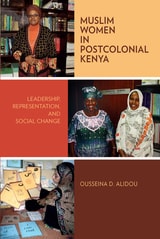
Muslim Women in Postcolonial Kenya
Leadership, Representation, and Social ChangeOusseina D. Alidou
University of Wisconsin Press, 2013
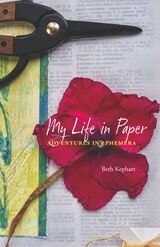
My Life in Paper
Adventures in EphemeraBeth Kephart
Temple University Press, 2023
Kephart’s obsession with paper began in the wake of her father’s death, when she began to handcraft books and make and marble paper in his memory. But it was when she read My Life with Paper, an autobiography by the late renowned paper hunter and historian Dard Hunter, that she felt she had found a kindred spirit, someone to whom she might address a series of one-sided letters about life and how we live it. Remembering and crafting, wanting and loving, doubting and forgetting—the spine and weave of My Life in Paper came into view.
Paper, for Kephart, provides proof of our yearning, proof of our failure, proof of the people who loved us and the people we have lost. It offers, too, a counterweight to the fickle state of memory.
My Life in Paper, illustrated by the author herself, is an intimate and poignant meditation on life’s most pressing questions.
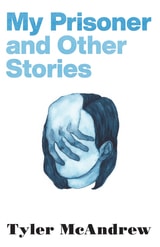
My Prisoner and Other Stories
Tyler McAndrew
The Ohio State University Press, 2025
Set largely in the Rust Belt of the 1990s and early 2000s, My Prisoner and Other Stories gives us protagonists who repeatedly confront helplessness in the face of others’ suffering. A teenage girl tries to help an elderly woman who has locked herself out of her house only to be shaken by the trauma and loneliness that the woman—a Holocaust survivor and recent widow—eventually shares with her. A schoolteacher writes letters to his cousin, who has schizophrenia and is serving a life sentence for the murder of three of their relatives. A middle school student makes a complicated gesture of charity after befriending the poor kid at his lunch table. Siblings seed the ground for an eccentric treasure hunter only to find that their prank leads them into unexpected emotional peril. The structural forces that stain life in late-capitalist America—the prison system, economic desperation—lurk throughout these muscular and empathetic tales, but in the face of endemic adversity, shrewd and loving characters strive for and sometimes achieve hope and tenderness. Tyler McAndrew shows us an unadorned America that can still tap its capacity for human kindness.