Results by title
1441 books match the query 'Great Britain' and 76 start with m

Models of Value
Eighteenth-Century Political Economy and the NovelJames Thompson
Duke University Press, 1996
In this account, political economy and the novel clearly arise as solutions to a crisis in the notion of value. Exploring the ways in which these different genres responded to the crisis—political economy by reconceptualizing wealth as capital, and the novel by refiguring intrinsic or human worth in the form of courtship narratives—Thompson rereads several literary works, including Defoe’s Roxana, Fielding’s Tom Jones, and Burney’s Cecilia, along with influential contemporary economic texts. Models of Value also traces the discursive consequences of this bifurcation of value, and reveals how history and theory participate in the very novelistic and economic processes they describe. In doing so, the book bridges the opposition between the interests of Marxism and feminism, and the distinctions which, newly made in the eighteenth century, continue to inform our discourse today.
An important reformulation of the literary and cultural production of the eighteenth century, Models of Value will attract students of the novel, political economy, and of literary history and theory.

Modern Cows and Bovine Transformations
The Remaking of India's Cattle, 1790-1950David Arnold
University of Chicago Press, 0
Examines how India’s cattle underwent profound changes during the years of British colonial rule.
Drawing on extensive, untapped archives, Modern Cowsand Bovine Transformations illustrates the radical remaking of India’s cattle against the backdrop of colonial policies, environmental change, and anticolonial politics. Historian David Arnold examines the history of cows in India from 1790 to 1950, focusing on science, technology, and medicine to provide a secular account of imperial animal husbandry.
Doing justice to the wide variety of Indian cattle breeds, Arnold unpacks “bovine technology” and its subaltern linkages, covering topics such as the role of cattle in agriculture and the military; haulage and transport; breeding strategies; bacteriology and nutrition science, and India’s milk revolution. He also examines the dispersal of Indian cattle around the globe and the role that colonial policies played in spreading knowledge of Indian cattle breeds and facilitating their export. Finally, he addresses the “cattle crisis” brought on by famines, droughts, and disease, and disputes between colonial rulers and Hindu nationalists. He concludes with the impact of World War II and Partition on bovine populations, illustrating the consequences for independent India’s attempts to restore the milk supply and rebuild cattle breeds while also respecting the Hindu cow protection agenda. In the end, Arnold argues, the history of cattle in India provides us with a new way of understanding the power of the colonial state, its ambitions to transform India, its appropriation of the Indian subcontinent’s resources, and the myriad contradictions of its policies.
Modern Nature
Derek Jarman
University of Minnesota Press, 2009
Modernism Is the Literature of Celebrity
By Jonathan Goldman
University of Texas Press, 2011
The phenomenon of celebrity burst upon the world scene about a century ago, as movies and modern media brought exceptional, larger-than-life personalities before the masses. During the same era, modernist authors were creating works that defined high culture in our society and set aesthetics apart from the middle- and low-brow culture in which celebrity supposedly resides. To challenge this ingrained dichotomy between modernism and celebrity, Jonathan Goldman offers a provocative new reading of early twentieth-century culture and the formal experiments that constitute modernist literature's unmistakable legacy. He argues that the literary innovations of the modernists are indeed best understood as a participant in the popular phenomenon of celebrity.
Presenting a persuasive argument as well as a chronicle of modernism's and celebrity's shared history, Modernism Is the Literature of Celebrity begins by unraveling the uncanny syncretism between Oscar Wilde's writings and his public life. Goldman explains that Wilde, in shaping his instantly identifiable public image, provided a model for both literary and celebrity cultures in the decades that followed. In subsequent chapters, Goldman traces this lineage through two luminaries of the modernist canon, James Joyce and Gertrude Stein, before turning to the cinema of mega-star Charlie Chaplin. He investigates how celebrity and modernism intertwine in the work of two less obvious modernist subjects, Jean Rhys and John Dos Passos. Turning previous criticism on its head, Goldman demonstrates that the authorial self-fashioning particular to modernism and generated by modernist technique helps create celebrity as we now know it.
Modernism and Colonialism
British and Irish Literature, 1899–1939Richard Begam and Michael Valdez Moses, eds.
Duke University Press, 2007
Ranging over poetry, fiction, and criticism, the essays provide fresh appraisals of Joseph Conrad, T. S. Eliot, Ezra Pound, Virginia Woolf, D. H. Lawrence, Wyndham Lewis, E. M. Forster, W. B. Yeats, James Joyce, Elizabeth Bowen, Hugh MacDiarmid, and Evelyn Waugh, as well as Robert Louis Stevenson and H. Rider Haggard. The essays that bookend the collection connect the modernists to their Victorian precursors, to postwar literary critics, and to postcolonial poets. The rest treat major works written or published between 1899 and 1939, the boom years of literary modernism and the period during which the British empire reached its greatest geographic expanse. Among the essays are explorations of how primitivism figured in the fiction of Lawrence and Lewis; how, in Ulysses, Joyce used modernist techniques toward anticolonial ends; and how British imperialism inspired Conrad, Woolf, and Eliot to seek new aesthetic forms appropriate to the sense of dislocation they associated with empire.
Contributors. Nicholas Allen, Rita Barnard, Richard Begam, Nicholas Daly, Maria DiBattista, Ian Duncan, Jed Esty, Andrzej Gąsiorek, Declan Kiberd, Brian May, Michael Valdez Moses, Jahan Ramazani, Vincent Sherry
Modernism and the Women’s Popular Romance in Britain, 1885–1925
Martin Hipsky
Ohio University Press, 2011
Today’s mass-market romances have their precursors in late Victorian popular novels written by and for women. In Modernism and the Women’s Popular Romance Martin Hipsky scrutinizes some of the best-selling British fiction from the period 1885 to 1925, the era when romances, especially those by British women, were sold and read more widely than ever before or since.
Recent scholarship has explored the desires and anxieties addressed by both “low modern” and “high modernist” British culture in the decades straddling the turn of the twentieth century. In keeping with these new studies, Hipsky offers a nuanced portrait of an important phenomenon in the history of modern fiction. He puts popular romances by Mrs. Humphry Ward, Marie Corelli, the Baroness Orczy, Florence Barclay, Elinor Glyn, Victoria Cross, Ethel Dell, and E. M. Hull into direct relationship with the fiction of Virginia Woolf, Katherine Mansfield, James Joyce, and D. H. Lawrence, among other modernist greats.
Modernist Heresies
British Literary History, 1883–1924Damon Franke
The Ohio State University Press, 2008
Franke documents the untold history of the Cambridge Heretics Society and places the concerns of this discussion society in dialogue with contemporaneous literature by such authors as Pater, Hardy, Shaw, Joyce, Woolf, Lawrence, and Orwell. Since several highly influential figures of the modernist literati were members of the Heretics or in dialogue with the group, heresy and its relation to synthesis now become crucial to an understanding of modernist aesthetics and ethics.
From the 1880s through the 1920s, heresy commonly appears in literature as a discursive trope, and the literary mode of heresy shifts over the course of this time from one of syncretism to one based on the construction of modernist artificial or "synthetic" wholes. In Franke’s work, the discourse of heresy comes forth as a forgotten dimension of the origins of modernism, one deeply entrenched in Victorian blasphemy and the crisis in faith, and one pointing to the censorship of modernist literature and some of the first doctrines of literary criticism.
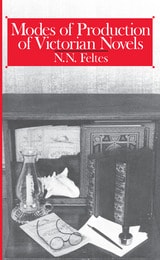
Modes of Production of Victorian Novels
N. N. Feltes
University of Chicago Press, 1986
Feltes focuses on five English novels: Dickens's Pickwick Papers, Thackeray's Henry Esmond, Eliot's Middlemarch, Hardy's Tess of the d'Urbervilles, and Forster's Howards End. Published at approximately twenty year intervals between 1836 and 1920, they each represent a different first-publication format: part-issue, three-volume, bimonthly, magazine-serial, and single-volume. Drawing on publishing, economic, and literary history, Feltes offers a broad, synthetic explanation of the relationship between the production and format of each novel, and the way in which these determine, in the last instance, the ideology of the text.
Modes of Production in Victorian Novels provides a Marxist structuralist analysis of historical events and practices described elsewhere only empirically, and traces their relationship to literary texts which have been analyzed only idealistically, thus setting these familiar works firmly and perhaps permanently into a framework of historic materialism.
Module 17
Implementing DACS: A Guide to the Archival Content StandardCory Nimer
Society of American Archivists, 2017
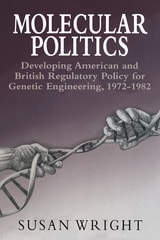
Molecular Politics
Developing American and British Regulatory Policy for Genetic Engineering, 1972-1982Susan Wright
University of Chicago Press, 1994
In this comparative study of the development of regulatory policy for genetic engineering in the United States and the United Kingdom, Susan Wright analyzes government responses to the struggles among corporations, scientists, universities, trade unions, and public interest groups over regulating this new field. Drawing on archival materials, government records, and interviews with industry executives, politicians, scientists, trade unionists, and others on both sides of the Atlantic, Molecular Politics provides a comprehensive account of a crucial set of policy decisions and explores their implications for the political economy of science.
By combining methods from political science and the history of science, Wright advances a provocative interpretation of the evolution of genetic engineering policy and makes a major contribution to science and public policy studies.
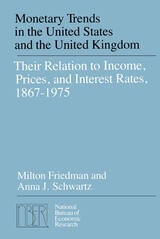
Monetary Trends in the United States and the United Kingdom
Their Relations to Income, Prices, and Interest RatesMilton Friedman and Anna J. Schwartz
University of Chicago Press, 1982
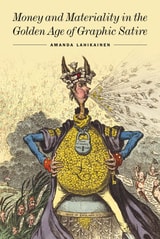
Money and Materiality in the Golden Age of Graphic Satire
Amanda Lahikainen
University of Delaware Press, 2022
This book examines the entwined and simultaneous rise of graphic satire and cultures of paper money in late eighteenth- and early nineteenth-century Britain. Asking how Britons learned to value both graphic art and money, the book makes surprising connections between two types of engraved images that grew in popularity and influence during this time. Graphic satire grew in visual risk-taking, while paper money became a more standard carrier of financial value, courting controversy as a medium, moral problem, and factor in inflation. Through analysis of satirical prints, as well as case studies of monetary satires beyond London, this book demonstrates several key ways that cultures attach value to printed paper, accepting it as social reality and institutional fact. Thus, satirical banknotes were objects that broke down the distinction between paper money and graphic satire altogether.
Money in Historical Perspective
Anna J. Schwartz
University of Chicago Press, 1987
In the papers in part I, dating from 1947 to the present, Dr. Schwartz examines money and banking in the United States and the United Kingdom from a historical perspective. Her investigation of the historical evidence linking economic instability to erratic monetary behavior—this behavior itself a product of discretionary monetary policy—has led her to argue for the importance of stable money, and her writings on these issues over the last two decades form part II. The volume concludes with four recent articles on international monetary arrangements, including Dr. Schwartz's well-known work on the gold standard.
This volume of classic essays by Anna Schwartz will be a useful addition to the libraries of scholars and students for its exemplary historical research and commentary on monetary systems.
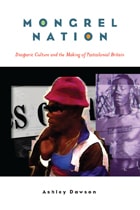
Mongrel Nation
Diasporic Culture and the Making of Postcolonial BritainAshley Dawson
University of Michigan Press, 2007
Mongrel Nation surveys the history of the United Kingdom’s African, Asian, and Caribbean populations from 1948 to the present, working at the juncture of cultural studies, literary criticism, and postcolonial theory. Ashley Dawson argues that during the past fifty years Asian and black intellectuals from Sam Selvon to Zadie Smith have continually challenged the United Kingdom’s exclusionary definitions of citizenship, using innovative forms of cultural expression to reconfigure definitions of belonging in the postcolonial age. By examining popular culture and exploring topics such as the nexus of race and gender, the growth of transnational politics, and the clash between first- and second-generation immigrants, Dawson broadens and enlivens the field of postcolonial studies.
Mongrel Nation gives readers a broad landscape from which to view the shifting currents of politics, literature, and culture in postcolonial Britain. At a time when the contradictions of expansionist braggadocio again dominate the world stage, Mongrel Nation usefully illuminates the legacy of imperialism and suggests that creative voices of resistance can never be silenced.Dawson
“Elegant, eloquent, and full of imaginative insight, Mongrel Nation is a refreshing, engaged, and informative addition to post-colonial and diasporic literary scholarship.”
—Hazel V. Carby, Yale University
“Eloquent and strong, insightful and historically precise, lively and engaging, Mongrel Nation is an expansive history of twentieth-century internationalist encounters that provides a broader landscape from which to understand currents, shifts, and historical junctures that shaped the international postcolonial imagination.”
—May Joseph, Pratt Institute
Ashley Dawson is Associate Professor of English at the City University of New York’s Graduate Center and the College of Staten Island. He is coeditor of the forthcoming Exceptional State: Contemporary U.S. Culture and the New Imperialism.
Monstrosities
Bodies And British RomanticismPaul Youngquist
University of Minnesota Press, 2003
A surprising evaluation of the role of the physical body in the construction of British identity
Eighteenth-century medicine used the word “monstrosities” to describe physically deformed bodies—those irreducible to the “proper body” in their singular, sometimes startling difference. Considering British society in confrontation with such monstrosities, Paul Youngquist reveals the cultural politics of embodiment in Britain during the late eighteenth and early nineteenth centuries. Drawing on the histories of medicine, economics, liberalism, and nationalism, his work shows that bodies are not simply born but rather built by cultural practices directed toward particular social ends.
Among the phenomena Youngquist treats are the science of comparative anatomy, the annual festivity of Bartholomew Fair, the social status of black Britons, opium habitués, pregnant women, and wounded war veterans. The authors he engages include John Locke, William Blake, Olaudah Equiano, Samuel Taylor Coleridge, Thomas De Quincey, Mary Wollstonecraft, Lord Byron, and Mary Shelley. Uniquely interdisciplinary, formidably researched, and replete with curious illustrations, this remarkable book should be of interest to anyone concerned with the historical and cultural fate of bodies in liberal society—and with the importance of deviance in determining that fate.
More Adventures with Britannia
Personalities, Politics and Culture in BritainEdited by Wm. Roger Louis
University of Texas Press, 1998
Collecting the interpretations of outstanding writers on the literature and history of modern Britain, this book deals with a rich variety of themes, some familiar, many unexpected, taking the reader on a highly engaging excursion through British life and intellectual biography. The scope includes not only the personalities, politics, and culture of England, Wales, Scotland, and Ireland, but also the interaction of British and other societies throughout the world.
Mormonism and the Making of a British Zion
Matthew L. Rasmussen
University of Utah Press, 2016
After many British believers left for America, church membership in England fell so sharply that the movement in Britain seemed to be on the brink of collapse. Yet British Mormonism gradually resurged and continues today. How did this religious minority flourish when so many nineteenth-century revivalist movements did not? Rasmussen explains Mormonism’s inception, perpetuation, and maturation in Britain in a compelling case study of a “new religious movement” with staying power. From its establishment in 1837 to its maturation in 1998, the Mormon perspective of Britain shifted dramatically. This book chronicles that shift, and illustrates how doctrinal adaptation has enabled Mormonism in Britain to persist.
Movable Londons
Performance and the Modern CityJulia H Fawcett
University of Michigan Press, 2025
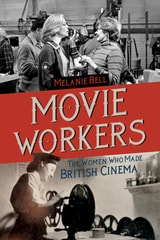
Movie Workers
The Women Who Made British CinemaMelanie Bell
University of Illinois Press, 2021
After the advent of sound, women in the British film industry formed an essential corps of below-the-line workers, laboring in positions from animation artist to negative cutter to costume designer. Melanie Bell maps the work of these women decade-by-decade, examining their far-ranging economic and creative contributions against the backdrop of the discrimination that constrained their careers. Her use of oral histories and trade union records presents a vivid counter-narrative to film history, one that focuses not only on women in a male-dominated business, but on the innumerable types of physical and emotional labor required to make a motion picture. Bell's feminist analysis looks at women's jobs in film at important historical junctures while situating the work in the context of changing expectations around women and gender roles.
Illuminating and astute, Movie Workers is a first-of-its-kind examination of the unsung women whose invisible work brought British filmmaking to the screen.
Moving Home
Gender, Place, and Travel Writing in the Early Black AtlanticSandra Gunning
Duke University Press, 2021
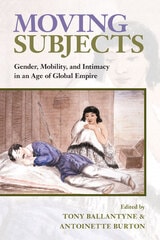
Moving Subjects
Gender, Mobility, and Intimacy in an Age of Global EmpireEdited by Tony Ballantyne and Antoinette Burton
University of Illinois Press, 2008
Moving Subjects is the first of its kind to make a case not simply for the necessity of a spatial analysis of imperial formations, but for the indispensability of an investigative approach that links space and movement with the domain of the intimate. Through careful archival research and a commitment to excavating the variety of "mobile intimacies" at the heart of imperial power, its agents, and its interlocutors, contributors offer new evidence and approaches for scholars engaged in capturing the historical nuances of imperial domination.
Contributors are Tony Ballantyne, Antoinette Burton, Adrian Carton, David Haines, Katherine Ellinghaus, Charlotte Macdonald, Michael A. McDonnell, Kirsten McKenzie, Michelle Moran, Fiona Paisley, Adele Perry, Dana Rabin, Christine M. Skwiot, Rachel Standfield, Frances Steel, Elizabeth Vibert, and Kerry Wynn.
Multicultural Politics
Racism, Ethnicity, and Muslims in BritainTariq Modood
University of Minnesota Press, 2005
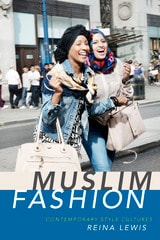
Muslim Fashion
Contemporary Style CulturesReina Lewis
Duke University Press, 2015
Muslims in Motion
Islam and National Identity in the Bangladeshi DiasporaKibria, Nazli
Rutgers University Press, 2011
In Muslims in Motion, Nazli Kibria provides a comparative look at Bangladeshi Muslims in different global contexts--including Britain, the U.S., the Middle East, and Malaysia. Kibria examines international migrant flows from Bangladesh, and considers how such migrations continue to shape Islamization in these areas. Having conducted more than 200 in-depth interviews, she explores how, in societies as different as these, migrant Muslims, in their everyday lives, strive to achieve economic gains, sustain community and family life, and realize a sense of dignity and honor.
Muslims in Motion offers fresh insights into the prominence of Islam in these communities, especially an Islam defined by fundamentalist movements and ideologies. Kibria also focuses on the complex significance of nationality--with rich analyses of the diaspora, the role of gender and class, and the multiple identities of the migrants, she shows how nationality can be both a critical source of support and also of difficulty for many in their efforts to attain lives of dignity. By bringing to life a vast range of experiences, this book challenges prevailing stereotypes of Muslims.

My Song is My Own
100 Women's SongsKathy Henderson
Pluto Press, 1979
With full sheet music for every song, and accompanying lyrics, this is perfect for singers as well as readers. Each section is introduced with a a brief thematic history, showing how the music has developed over time.
From ballads to industrial songs written for the mine and factory, from folk revivals to children's songs for the street and playground, this book reveals the hidden culture and history of women for us today.
My Victorians
Lost in the Nineteenth CenturyRobert Clark
University of Iowa Press, 2019
As Clark delves deeper into the Victorian world, he wonders: What can its artists offer a twenty-first century writer by way of insight into his own life and work? His obsession with Victoriana bleeds into all aspects of his life, even the seemingly incongruous world of online dating. My Victorians is in the spirit of Geoff Dyer’s Out of Sheer Rage and Rebecca Mead’s My Life in Middlemarch. This book considers what happens when heartbreak, eros, faith, and doubt drive us to take refuge in the past.