Results by title
5550 books match the query 'Biography & Autobiography' and 333 start with m
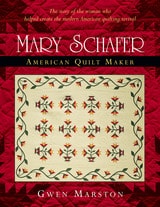
Mary Schafer, American Quilt Maker
Gwen Marston
University of Michigan Press, 2004
Extensively illustrated, with over 100 drawings and 11 unique Mary Schafer patterns, Mary Schafer, American Quilt Maker is a must-have book for anyone passionate about American quilting.
While we take that passion for granted today, author Gwen Marston shows that it wasn't always so; indeed, one woman, Mary Schafer, was largely responsible for the restoration of interest in one of our greatest folk arts -- long before the American bicentennial turned quilting into what seemed like an overnight sensation.
Marston presents Schafer as an unassuming scholar: the anonymous quilter, remaining humble and somewhat retiring. Behind the modest façade, however, Schafer displayed a remarkable devotion to research, historical accuracy, and community through her efforts to make quilting available to as many people as possible.
Nonquilters will find Mary Schafer, American Quilt Maker a welcome addition to their collection of the work of masters of American folk art, while quilting aficionados will appreciate it not only for the story it tells, but for the generous selection of patterns and illustrations it offers.
Gwen Marston is a nationally known quilt maker, teacher, and author. She is the author of over fifteen books on quilting, including Liberated String Quilts, 70 Classic Quilting Patterns, and Amish Quilting Patterns.
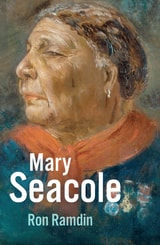
Mary Seacole
Ron Ramdin
Haus Publishing, 2020
Mary Seacole’s remarkable life began in Jamaica, where she was born a free person, the daughter of a black mother and white Scottish army officer. Ron Ramdin—who, like Seacole, was born in the Caribbean and emigrated to the United Kingdom—tells the remarkable story of this woman, celebrated today as a pioneering nurse.
Refused permission to serve as an army nurse, Seacole took the remarkable step of funding her own journey to the Crimean battlefront, and there, in the face of sometimes harsh opposition, she established a hotel for wounded British soldiers. Unlike Florence Nightingale—whose exploits saw her venerated as the “lady with the lamp” for generations afterward—Seacole cared for soldiers perilously close to the fighting. As Ramdin shows in this biography, Seacole’s time in Crimea, for which she is best known, was only the pinnacle of a life of adventure and travel.
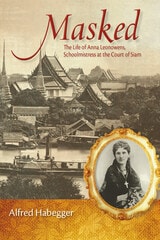
Masked
The Life of Anna Leonowens, Schoolmistress at the Court of SiamAlfred Habegger
University of Wisconsin Press, 2014
But who was Leonowens and why did her story take hold? Although it has been known for some time that she was of Anglo-Indian parentage and that her tales about the Siamese court are unreliable, not until now, with the publication of Masked, has there been a deeply researched account of her extraordinary life. Alfred Habegger, an award-winning biographer, draws on the archives of five continents and recent Thai-language scholarship to disclose the complex person behind the mask and the troubling facts behind the myth. He also ponders the curious fit between Leonowens’s compelling fabrications and the New World’s innocent dreams—in particular the dream that democracy can be spread through quick and easy interventions.
Exploring the full historic complexity of what it once meant to pass as white, Masked pays close attention to Leonowens’s midlevel origins in British India, her education at a Bombay charity school for Eurasian children, her material and social milieu in Australia and Singapore, the stresses she endured in Bangkok as a working widow, the latent melancholy that often afflicted her, the problematic aspects of her self-invention, and the welcome she found in America, where a circle of elite New England abolitionists who knew nothing about Southeast Asia gave her their uncritical support. Her embellished story would again capture America’s imagination as World War II ended and a newly interventionist United States looked toward Asia.
Best Books for General Audiences, selected by the American Association of School Librarians
Best Regional Special Interest Boosk, selected by the Public Library Reviewers

Masks, Misinformation, and Making Do
Appalachian Health-Care Workers and the COVID-19 PandemicWendy Welch
Ohio University Press, 2023
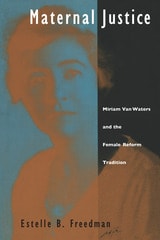
Maternal Justice
Miriam Van Waters and the Female Reform TraditionEstelle B. Freedman
University of Chicago Press, 1996
Estelle B. Freedman draws from Van Waters's diaries, letters, and personal papers to recreate her complex personal life, unveiling the disparity between Van Waters's public persona and her agonized private soul. With the power and elegance of a novel, Maternal Justice illuminates this historical context, casting light on the social welfare tradition, on women's history, on the American feminist movement, and on the history of sexuality.
"Maternal Justice is as much a work of history as it is biography, bringing to life not only a remarkable woman but also the complex political and social milieu within which she worked and lived."—Kelleher Jewett, The Nation
"This sympathetic biography reclaims Van Waters for history."—Publishers Weekly
"The Van Waters legacy, as Freedman gracefully presents, is that she cared about the lives of women behind bars. It is a strikingly unfashionable sentiment today."—Jane Meredith Adams, San Francisco Chronicle Book Review, Editor's Recommended Selection
"This finely crafted biography is both an engrossing read and a richly complicated account of a reformer whose work . . . bridged the eras of voluntarist charitable activism and professional social service."—Sherri Broder, Women's Review of Books
"This is a sympathetic, highly personal biography, revealing of both the author's responses to her subject's life and, in considerable detail, Van Waters's family traumas, illnesses, and love affairs."—Elizabeth Israels Perry, Journal of American History
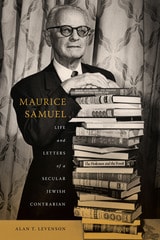
Maurice Samuel
Life and Letters of a Secular Jewish ContrarianAlan T. Levenson
University of Alabama Press, 2022
An intellectual biography that reassesses one of the premier Jewish humanists of the mid-twentieth century
In Maurice Samuel: Life and Letters of a Secular Jewish Contrarian, Alan T. Levenson captures the life, works, and milieu of the Romanian-born, English-educated, American belletrist Maurice Samuel. A diaspora intellectual—or a rooted cosmopolitan, as Levenson describes him—Samuel made an indelible mark on many features of contemporary Jewish thought and culture. A generalist in an age of experts, an independent scholar in an age of rabbis and professors, Samuel was one of the most productive and visible members of the group dubbed the “other” New York Jewish intellectuals.
His fame as a public intellectual and popular speaker were well warranted: no mere popularizer, Samuel contributed significantly to four seemingly unrelated but critical areas of modern Jewish thought. Samuel is characterized by some as principally a Zionist, by others as an accomplished translator and many Americans’ first entrée into the world of Yiddish literature, by still others as a polemicist and campaigner against anti-Semitism, and finally as a media-savvy Biblical critic, essayist, and radio personality. But he was all of these things, since Samuel succeeded in an era when it was possible to be a public intellectual without being an expert.
Drawing on Samuel’s vast literary opus, as well as previously unexplored archival material from three continents, this study writes Samuel back into the history of mid-twentieth-century American letters. Levenson argues that Samuel’s varied and substantive contributions demand reconsideration of our assumptions about the means and ends of cultural transmission, and merit him a place as one of twentieth-century American Jewry’s most significant cultural and intellectual voices.
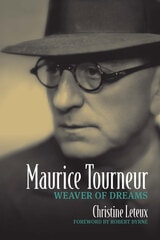
Maurice Tourneur
Weaver of DreamsChristine Leteux, Foreword by Robert Byrne
University of Wisconsin Press, 2026
In 1914, an unknown French filmmaker arrived in New York; within four years, Maurice Tourneur (1876–1961) would become one of America’s most acclaimed directors. In this masterful biography, Christine Leteux shows how intimately connected Tourneur’s life was to major events of the twentieth century as well as to the profound transformations in movie making. A master of directing silent films, he quickly managed the transition to sound. His last major work was created for Continental Films, the German-owned firm that controlled the French film industry during the Nazi Occupation. His son, Jacques, followed in his footsteps, also becoming an acclaimed director.
Drawing heavily on previously unpublished archival documents, Leteux reinvigorates film history and demonstrates that we know far less about this era of filmmaking than we often assume. She reveals not only how Tourneur jumped from France to the United States and back again but also how he shifted from one company to another, moving quickly up the ladder to bigger productions and ever larger studios. Tourneur’s drive, insight, technical proficiency, skill with actors, ability to create new forms of storytelling, and fame on both sides of the Atlantic make it all the more surprising that he is not better known today—an oversight that has now been corrected thanks to Leteux’s impressively detailed research and nuanced storytelling.
Maury Maverick
A Political BiographyBy Richard B. Henderson
University of Texas Press, 1970
Maury Maverick was possibly the first liberal United States Congressman from Texas to achieve national and even international stature. A dedicated Democrat, he was ready to attack Franklin D. Roosevelt whenever he felt that Roosevelt was flagging in his enthusiasm for reform. He was honest to the point of rudeness, and he belonged to the "damn the torpedoes" class that pulled ahead regardless of political consequences.
He was at home with the literate—he was a prodigious writer and speaker—but always ready to puncture their pretensions. And he could cuss with sailors, pecan shellers, and any breed of saloon keeper. Put all that together with a short, stocky, bulldog frame, a fierce face and a voice to match, and you have one of the nation's more colorful political figures.

Maverick Heart
The Further Adventures Of Zane GreyStephen J. May
Ohio University Press, 2000
In 1927, at the peak of his career, Zane Grey bought a three-masted schooner, which he sailed to the Galapagos Islands, later journeying to Tahiti, New Zealand, Australia, and Fiji.
As colorful as his characters were, so too was their creator. A consummate explorer, Zane Grey toured the world, was an acclaimed expert on salt- and freshwater fishing, and incorporated the sights and sounds he witnessed into his writings.
As a companion to his biographical work of Grey’s literary life, Zane Grey: Romancing the West, author Stephen J. May now gives as a remarkable look into another aspect of Grey’s existence, the side little known but central to the measure of the man.
Maverick Heart makes use of Grey’s own memoirs and letters to give an enlightening portrait of this larger-than-life American character and a telling insight into one of the key shapers of the cultural heritage of our country.
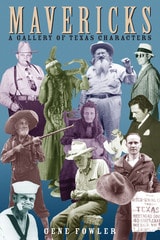
Mavericks
A Gallery of Texas CharactersBy Gene Fowler
University of Texas Press, 2008
Texas has been home to so many colorful characters, out-of-staters might wonder if any normal people live here. And it's true that the "Texian" desire to act out sometimes overcomes even the most sober citizens—which makes it a real challenge for the genuine eccentrics to distinguish themselves from the rest of us. Fortunately, though, many maverick Texans have risen to the test, and in this book, Gene Fowler introduces us to a gallery of Texas eccentrics from the worlds of oil, ranching, real estate, politics, rodeo, metaphysics, showbiz, art, and folklore.
Mavericks rounds up dozens of Fowler's favorite Texas characters, folks like the Trinity River prophet Commodore Basil Muse Hatfield; the colorful poet-politician Cyclone Davis Jr.; Big Bend tourist attraction Bobcat Carter; and the dynamic chief executive of the East Texas Oil Field Governor Willie. Fowler persuasively argues that many of these characters should be viewed as folk performance artists who created "happenings" long before the modern art world took up that practice in the 1960s. Other featured mavericks run the demographic gamut from inspirational connoisseurs of the region's native quirkiness to creative con artists and carnival oddities. But, artist or poser, all of the eccentrics in Mavericks completely embody the style and spirit that makes Texas so interesting, entertaining, and culturally unique.
Max Lerner
Pilgrim in the Promised LandSanford Lakoff
University of Chicago Press, 1998
Politically, Lerner went through a series of metamorphoses. During the 1930s, he was an anti-fascist "popular front progressive" writing for the Nation and the New Republic. From the 1940s through the 1970s, he became the country's leading liberal columnist—first with the lively but short-lived PM, then for the New York Post. In the 1980s, however, he was repelled by the New Left and the counterculture and joined the ranks of the neoconservatives, scandalizing some readers but insisting he owed it to them to tell the truth as he saw it.
This riveting biography begins with Lerner's own gripping account of the hardships his family endured in emigrating from Russia and his own boyhood triumphs and frustrations. Sanford Lakoff traces Lerner's American pilgrimage from his education at Yale, where he felt the bitter sting of anti-Semitism, through his years as a radical inspired by Thorstein Veblen, into mellower maturity as a widely read columnist, an inspiring teacher, the author of America as a Civilization, a much-loved father, and—to the end—an unapologetic romantic, who liked to say that he never learned anything worth knowing except from women.

Max Nohl’s Underwater Adventures
Jane Kelley
Wisconsin Historical Society Press, 2027
Dive into the thrilling adventures of the daring explorer who pushed the limits of underwater exploration.
From discovering a pocket of air beneath a half-sunken rowboat as a young boy to setting a world diving record hundreds of feet below the surface of Lake Michigan, Max Nohl never stopped chasing the mysteries of our lakes, seas, and oceans. In Max Nohl’s Underwater Adventures, young readers will dive into the remarkable true story of the man who helped to modernize scuba diving and expand our ability to explore the watery depths.
Inventor, engineer, and explorer, Nohl was pushing the limits of human courage beneath the waves long before scuba diving became a recreational pastime. Readers of this biography for ages 8–11 will follow his riveting shipwreck treasure hunts, daring salvage expeditions, close encounters with sharks, and dramatic escapes from the many dangers under the sea.
But Nohl was more than an adventurer and thrill-seeker. Determined to make diving safer, he studied engineering at MIT and invented new equipment and techniques, including self-contained underwater breathing systems and helium-oxygen mixtures that opened the door to deeper exploration. He also helped pioneer advances in underwater camera equipment that allowed Hollywood moviemakers and others to capture watery scenes on film. Looking beyond Nohl’s own life story, this biography includes sidebars that give readers a peek into the history of deep-sea diving, tales of Great Lakes shipwrecks, and exploits of other record-breaking divers.
Filled with peril, discovery, ingenuity, and larger-than-life escapades, Max Nohl’s Underwater Adventures introduces young readers to an innovator whose curiosity and determination helped to unlock one of Earth’s last great frontiers—the mysterious world beneath the sea.
Max Reinhardt
From Bourgeois Theater to Metropolitan CulturePeter W. Marx, translated from the German by Robert E. Goodwin
Northwestern University Press, 2024
At the same time, Reinhardt soon longed for an international range: guest performances throughout Europe and to the US soon made him into a global star – and even a brand. He represents a metropolitan culture that roots in the late nineteenth century but comes to an end when Fasicsm in Europe ended any hopes for an international culture. As a Jew, Reinhardt himself had to flee the Nazis but when he eventually arrived in the US, he could not follow up with his earlier successes. Marx provides a broad panorama of Reinhardt's work, portraying not only his work method and some of his best known productions, but also the cultural conditions of his visionary enterprise.

Max Weber
An Intellectual BiographyFritz Ringer
University of Chicago Press, 2004
This searching work offers the first comprehensive introduction to Weber's thought for students and newcomers. Fritz Ringer locates Weber in his historical context, relating his ideas to the controversies and politics of his day. Ringer also considers the importance of Weber to contemporary life, discussing his insights into the limits of scholarly research and the future of Western capitalist societies. Weber, Ringer reminds us, believed in democracy, liberalism, and fundamental human rights; his ethic of responsibility remains as vital to our historical moment as it was to his own.
A concise and incisive look at the man and personality behind the thought, Max Weber is a masterful outing in intellectual biography and social theory.
Max Weber
An Introduction to His Life and WorkDirk Käsler
University of Chicago Press, 1988
Käsler offers a comprehensive account of Weber's views, giving attention both to the context in which Weber produced his most significant contributions to social science, and to the changes involved in his work over the course of his career. This volume also serves as an introduction to the controversies that Weber's writings have stimulated, from the time of their first appearance to the present day.
This book will be of vital interest to anyone concerned with Max Weber and will undoubtedly become the leading student text on Weber in the English-speaking world.

Mayakovsky
A BiographyBengt Jangfeldt
University of Chicago Press, 2014
With Mayakovsky, Bengt Jangfeldt offers the first comprehensive biography of Mayakovsky, revealing a troubled man who was more dreamer than revolutionary, more political romantic than hardened Communist. Jangfeldt sets Mayakovsky’s life and works against the dramatic turbulence of his times, from the aesthetic innovations of the pre-revolutionary avant-garde to the rigidity of Socialist Realism and the destruction of World War I to the violence—and hope—of the Russian Revolution, through the tightening grip of Stalinist terror and the growing disillusion with Russian communism that eventually led the poet to take his life.
Through it all is threaded Mayakovsky’s celebrated love affair with Lili Brik and the moving relationship with Lili’s husband, Osip, along with a brilliant depiction of the larger circle of writers and artists around Mayakovsky, including Maxim Gorky, Viktor Shklovsky, Alexander Rodchenko, and Roman Jakobson. The result is a literary life viewed in the round, enabling us to understand the personal and historical furies that drove Mayakovsky and generated his still-startling poetry.
Illustrated throughout with rare images of key characters and locations, Mayakovsky is a major step in the revitalization of a crucial figure of the twentieth-century avant-garde.
Maybe We'll Make It
A MemoirMargo Price
University of Texas Press, 2022
An October 2022 IndieNext pick
”[An] engaging and beautifully narrated quest for personal fulfillment and musical recognition...This is a fast-paced tale in which music and love always take center stage...A truly gifted musician, Price writes about her journey with refreshing candor.”—Kirkus, starred review
”Brutally honest…a vivid and poignant memoir.”—The Guardian
Country music star Margo Price shares the story of her struggle to make it in an industry that preys on its ingenues while trying to move on from devastating personal tragedies.
When Margo Price was nineteen years old, she dropped out of college and moved to Nashville to become a musician. She busked on the street, played open mics, and even threw out her TV so that she would do nothing but write songs. She met Jeremy Ivey, a fellow musician who would become her closest collaborator and her husband. But after working on their craft for more than a decade, Price and Ivey had no label, no band, and plenty of heartache.
Maybe We’ll Make It is a memoir of loss, motherhood, and the search for artistic freedom in the midst of the agony experienced by so many aspiring musicians: bad gigs and long tours, rejection and sexual harassment, too much drinking and barely enough money to live on. Price, though, refused to break, and turned her lowest moments into the classic country songs that eventually comprised the debut album that launched her career. In the authentic voice hailed by Pitchfork for tackling "Steinbeck-sized issues with no-bullshit humility," Price shares the stories that became songs, and the small acts of love and camaraderie it takes to survive in a music industry that is often unkind to women. Now an award-winning artist with a global fanbase, Price tells a love story of music, collaboration, and the struggle to build a career while trying to maintain her singular voice and style.
Mayor Harold Washington
Champion of Race and Reform in ChicagoRoger Biles
University of Illinois Press, 2020
McIntosh and Weatherford
Creek Indian LeadersBenjamin W. Griffith
University of Alabama Press, 1998
The human story behind the Creek War and the coming of Indian Removal.
About the time of the American Revolutionary war, when the Creek Indians owned land that is today approximately the lower two-thirds of Alabama and of Georgia west of the Oconee River, two sons were born to Indian mothers and Scots fathers in obscure towns in the territory of the Creek Nation. Both sons were named William, and both were to become leaders of their mothers’ people.
The two remarkable men lived during a period of war and turbulence along the frontier in Alabama and Georgia. More often the subjects of folk tale and legend than serious historical inquiry, McIntosh and Weatherford fought on opposing sides in the Creek War of 1813-1814. McIntosh allied himself with Andrew Jackson and the friendly Lower Creeks, while Weatherford joined with the hostile Red Stick and was the leader of a band of Upper Creeks in the massacre at Fort Mims. McIntosh, who was given the rank of brigadier general for his military feats, was involved in the machinations that led to the ceding of Creek lands to Georgia. As a result, he died in disgrace at the hands of his fellow Creeks. Weatherford, once hated and feared, died a planter and local hero in Alabama near the site of Fort Mims.
Mdeilmm
Mole SpeechHélène Cixous
Seagull Books, 2025
Weaving together history, literature, and personal experience, this recent book from a master of literature crafts a mesmerizing exploration of language, loss, and the enduring power of the spirit world.
The strange word “Mdeilmm” was reported to have been uttered by the spirit of Shakespeare when called up during a séance in 1854 at the instigation of the French poet Victor Hugo. Hugo was then living in exile on the island of Jersey where he took part in several such séances. Hélène Cixous weaves this scene into a rich tapestry that draws from many corners of her world, both real and fictional: Dostoevsky’s Idiot, Hugo’s Last Day of a Condemned Man, Poe’s story “The Gold Bug,” but also film footage of the assassination of Itzhak Rabin and many layers of memories of her Algerian childhood. Transcribed communications from spirits of the departed, her father and grandfather among them, provide a fascinating glimpse into past spiritual practices.
Cixous’s unique narrative style enhances the book’s enchanting quality, ensuring that readers are not only engaged by the content but also captivated by the beauty of the prose. Meanwhile, the reader falls under the spell of the author’s incomparable “mole speech,” the language in which poets communicate.
Me and Mine
The Life Story of Helen SekaquaptewaLouise Udall
University of Arizona Press, 1969

Me, Governor?
My Life in the Rough-and-Tumble World of New Jersey PoliticsRichard J. Codey
Rutgers University Press, 2011
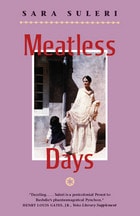
Meatless Days
Sara Suleri Goodyear
University of Chicago Press, 1989
"Nine autobiographical tales that move easily back and forth among Pakistan, Britain, and the United States. . . . She forays lightly into Pakistani history, and deeply
into the history of her family and friends. . . . The Suleri women at home in Pakistan make this book sing."—Daniel Wolfe, New York Times Book Review
"A jewel of insight and beauty. . . . Suleri's voice has the same authority when she speaks about Pakistani politics as it does in her literary interludes."—Rone Tempest, Los Angeles Times Book Review
"The author has a gift for rendering her family with a few, deft strokes, turning them out as whole and complete as eggs."—Anita Desai, Washington Post Book World
"Meatless Days takes the reader through a Third World that will surprise and confound him even as it records the author's similar perplexities while coming to terms with the West. Those voyages Suleri narrates in great strings of words and images so rich that they left this reader . . . hungering for more."—Ron Grossman, Chicago Tribune
"Dazzling. . . . Suleri is a postcolonial Proust to Rushdie's phantasmagorical Pynchon."—Henry Louise Gates, Jr., Voice Literary Supplement
Medal Winners
How the Vietnam War Launched Nobel CareersBy Raymond S. Greenberg
University of Texas Press, 2020
As the ground war in Vietnam escalated in the late 1960s, the US government leveraged the so-called doctor draft to secure adequate numbers of medical personnel in the armed forces. Among newly minted physicians’ few alternatives to military service was the Clinical Associate Training Program at the National Institutes of Health. Though only a small percentage of applicants were accepted, the elite program launched an unprecedented number of remarkable scientific careers that would revolutionize medicine at the end of the twentieth century.
Medal Winners recounts this overlooked chapter and unforeseen byproduct of the Vietnam War through the lives of four former NIH clinical associates who would go on to become Nobel laureates. Raymond S. Greenberg traces their stories from their pre-NIH years and apprenticeships through their subsequent Nobel Prize–winning work, which transformed treatment of heart disease, cancer, and other diseases. Greenberg shows how the Vietnam draft unintentionally ushered in a golden era of research by bringing talented young physicians under the tutelage of leading scientists and offers a lesson in what it may take to replicate such a towering center of scientific innovation as the NIH in the 1960s and 1970s.

Medgar Evers
Mississippi MartyrMichael Vinson Williams
University of Arkansas Press, 2011

Media Marathon
A Twentieth-Century MemoirErik Barnouw
Duke University Press, 1996
Born in Holland in 1908 and an immigrant to the United States at the age of eleven, Barnouw spent his early working years in an astounding array of occupations—actor and stage manager, lyricist, translator, director, producer, teacher, and union official. This varied background, described here in rich detail, informs his writings about the world in which he moved, specifically regarding the shifting channels of twentieth-century mass communication. Telling his story through a series of personal profiles of the famous, the infamous, and the little known but powerfully influential, Barnouw recounts the events that took him from the vaudeville stage to the Library of Congress, where he became the first chief of its newly formed Motion Picture, Broadcasting, and Recording Sound Division. Thornton Wilder, Pearl S. Buck, Joshua Logan, Dwight Eisenhower, Lynn Fontanne, Tallulah Bankhead, and Akira Iwasaki—these are among the featured characters in the drama of American media, rendered here in striking close-ups.
From The Hague to retirement in Vermont, with stops in India, Japan, and Russia, Barnouw’s remarkable story gives readers the chance to relive crucial chapters of modern media history—and to relive them with one of that history’s masters as an incomparable guide. A book for those interested in the “mass media,” its evolution, and role in society, Media Marathon will appeal to students, scholars, and general readers alike.
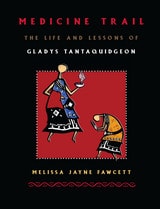
Medicine Trail
The Life and Lessons of Gladys TantaquidgeonMelissa Jayne Fawcett
University of Arizona Press, 2000
Contrary to the fictional account of James Fenimore Cooper, the Mohegan/Mohican nation did not vanish with the death of Chief Uncas more than three hundred years ago. In the remarkable life story of one of its most beloved matriarchs—100-year-old medicine woman Gladys Tantaquidgeon—Medicine Trail tells of the Mohegans' survival into this century.
Blending autobiography and history, with traditional knowledge and ways of life, Medicine Trail presents a collage of events in Tantaquidgeon's life. We see her childhood spent learning Mohegan ceremonies and healing methods at the hands of her tribal grandmothers, and her Ivy League education and career in the white male-dominated field of anthropology. We also witness her travels to other Indian communities, acting as both an ambassador of her own tribe and an employee of the federal government's Bureau of Indian Affairs. Finally we see Tantaquidgeon's return to her beloved Mohegan Hill, where she cofounded America's oldest Indian-run museum, carrying on her life's commitment to good medicine and the cultural continuance and renewal of all Indian nations.
Written in the Mohegan oral tradition, this book offers a unique insider's understanding of Mohegan and other Native American cultures while discussing the major policies and trends that have affected people throughout Indian Country in the twentieth century. A significant departure from traditional anthropological "as told to" American Indian autobiography, Medicine Trail represents a major contribution to anthropology, history, theology, women's studies, and Native American studies.

Medicine Wheel for the Planet
A Journey Toward Personal and Ecological HealingJennifer Grenz
University of Minnesota Press, 2024
A personal journey of bringing together Western science and Indigenous ecology to transform our understanding of the human role in healing our planet
I used to be an ecologist. . . . Now, I am a community gatherer, working to help bring healing beyond just the land. I am a story-listener. I am a storyteller. I am a shaper of ecosystems. I work on bringing communities together, in circle, to listen to each other.
A farm kid at heart, and a Nlaka’pamux woman of mixed ancestry, Dr. Jennifer Grenz always felt a deep connection to the land. However, after nearly two decades of working as a restoration ecologist in the Pacific Northwest, she became frustrated that despite the best efforts of her colleagues and numerous volunteers, they weren’t making the meaningful change needed for plant, animal, and human communities to adapt to a warming climate. Restoration ecology is grounded in an idea that we must return the natural world to an untouched, pristine state, placing humans in a godlike role—a notion at odds with Indigenous histories of purposeful, reciprocal interaction with the environment. This disconnect sent Dr. Grenz on a personal journey of joining her head (Western science) and her heart (Indigenous worldview) to find a truer path toward ecological healing.
In Medicine Wheel for the Planet, building on sacred stories, field observations, and her own journey, Dr. Grenz invites readers to share in the teachings of the four directions of the medicine wheel: the North, which draws upon the knowledge and wisdom of elders; the East, where we let go of colonial narratives and see with fresh eyes; the South, where we apply new-old worldviews to envision a way forward; and the West, where a relational approach to land reconciliation is realized.
Eloquent, inspiring, and disruptive, Medicine Wheel for the Planet circles around an argument that we need more than a singular worldview to protect the planet and make the significant changes we are running out of time for.
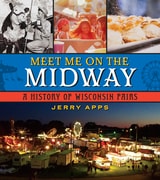
Meet Me on the Midway
A History of Wisconsin FairsJerry Apps
Wisconsin Historical Society Press, 2022
Meet Me with Your Black Drawers On
My Life in MusicBy Jeannie Cheatham
University of Texas Press, 2006
Jeannie Cheatham is a living legend in jazz and blues. A pianist, singer, songwriter, and co-leader of the Sweet Baby Blues Band, she has played and sung with many of the greats in blues and jazz—T-Bone Walker, Dinah Washington, Cab Callaway, Joe Williams, Al Hibbler, Odetta, and Jimmy Witherspoon. Cheatham toured with Big Mama Thornton off and on for ten years and was featured with Thornton and Sippie Wallace in the award-winning PBS documentary Three Generations of the Blues. Her music, which has garnered national and international acclaim, has been described as unrestrained, exuberant, soulful, rollicking, wicked, virtuous, wild, and truthful. Cheatham's signature song, "Meet Me with Your Black Drawers On" is a staple in jazz and blues clubs across America and in Europe, Africa, and Japan.
In this delightfully frank autobiography, Jeannie Cheatham recalls a life that has been as exuberant, virtuous, wild, and truthful as her music. She begins in Akron, Ohio, where she grew up in a vibrant multiethnic neighborhood surrounded by a family of strong women. From those roots, she launched a musical career that took her from the Midwest to California, doing time along the way everywhere from a jail cell in Dayton, Ohio, where she was innocently caught in a police raid, to the University of Wisconsin-Madison—where she and Jimmy Cheatham taught music. Cheatham writes of a life spent fighting racism and sexism, of rage and resolve, misery and miracles, betrayals and triumphs, of faith almost lost in dark places, but mysteriously regained in a flash of light. Cheatham's autobiography is also the story of her fifty-years-and-counting love affair and musical collaboration with her husband and band partner, Jimmy Cheatham.

Meeting Sophie
A Memoir of AdoptionNancy McCabe
University of Missouri Press, 2003
The baby is screaming again. My baby. I hoist her off the narrow hotel bed--again--and try to cradle her as I rock my torso back and forth in an uncomfortable straight-backed chair.
This baby does not cradle. She doesn't know how to cuddle, to be soothed in anyone's arms. She howls and arches away, squirms and flops, a sixteen-pound fish out of water. I'm not used to holding babies, and she's not used to be being held, but when I try to put her down, she wails. My arms feel chafed, raw, and my wrists ache from the hours of straining to hang on to her.
Huge tears pool in her eyes. These tears could break my heart. These screams could break my eardrums.
Meeting Tom Brady
One Man's Quest for Truth, Enlightenment, and a Simple Game of Catch with the Patriots QuarterbackRichard J. King
University Press of New England, 2015
Melt with Me
Coming of Age and Other ’80s PerilsPaul Crenshaw
The Ohio State University Press, 2023
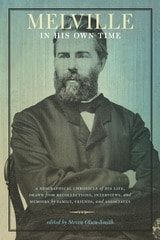
Melville in His Own Time
A Biographical Chronicle of His Life, Drawn from Recollection, Interviews, and Memoirs by Family, Friends, and AssociatesSteven Olsen-Smith
University of Iowa Press, 2015
Melville’s mastery of the English language and heterodox views made him a source of both controversy and fascination to western readers, until his increasing commitment to artistry and contempt for artificial conventions led him to write Moby-Dick (1851) and its successor Pierre (1852). Although the former is considered his masterwork today, the books offended mid-nineteenth-century cultural sensibilities and alienated Melville from the American literary marketplace. The resulting eclipse of his popular reputation was deepened by his voluntary withdrawal from society, so that obituaries written after his death in 1891 frequently expressed surprise that he hadn’t died long before.
With most of his personal papers and letters lost or destroyed, his library of marked and annotated books dispersed, and first-hand accounts of him scattered, brief, and frequently conflicting, Melville’s place in American literary scholarship illustrates the importance of accurately edited documents and the value of new information to our understanding of his life and thought. As a chronologically organized collection of surviving testimonials about the author, Melville in His Own Time continues the tradition of documentary research well-exemplified over the past half-century by the work of Jay Leyda, Merton M. Sealts, and Hershel Parker. Combining recently discovered evidence with new transcriptions of long-known but rarely consulted testimony, this collection offers the most up-to-date and correct record of commentary on Melville by individuals who knew him.
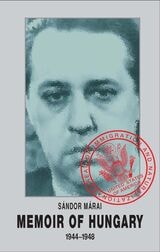
Memoir of Hungary
1944-1948Sándor Márai
Central European University Press, 1996
This scathing, at times humorous, and always insightful memoir by exiled Hungarian novelist Sándor Márai, provides one of the most poignant and human portraits of life in Hungary between the German occupation in 1944 and the solidification of communist power in 1948. Both a fervent anti-fascist and anti-communist, Márai draws a vivid portrait of the Hungarian peasantry and middle-class during this period, while delivering a telling indictment of the communist system from which he fled. Witty, aphoristic and psychologically clear-sighted, this memoir depicts the tragedy and pathos of a crucial period in the post-war history of a nation which has been 'central' to both the communists and the post-communist history of our times.
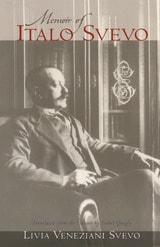
Memoir of Italo Svevo
Livia Veneziani Svevo
Northwestern University Press, 2001
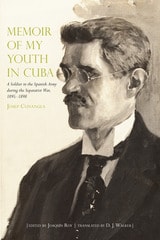
Memoir of My Youth in Cuba
A Soldier in the Spanish Army during the Separatist War, 1895–1898Dolores J. Walker
University of Alabama Press, 2017
A historically significant memoir offering a firsthand perspective on life, identity, and cultural transformation in nineteenth-century Cuba.
Memoir of My Youth in Cuba: A Soldier in the Spanish Army during the Separatist War, 1895–1898 is a translation of the memoir Memorias de mi juventud en Cuba: Un soldado del ejército español en la guerra separatista (1895–1898) by Josep Conangla. The English edition is based on the Spanish version edited by Joaquín Roy, who found the memoir and was given access to the Conangla family archives. Conangla’s memoir, now available in English, is an important addition to the accounts of Spanish and Cuban soldiers who served in Cuba’s second War of Independence.
Spaniard Josep Conangla was conscripted at the age of twenty and sent to Cuba. In the course of his time there, he reaffirmed his pacifism and support of Cuban independence. The young man was a believer who unfailingly connected his view of events to the Christian humanitarianism on which he prided himself. Conangla’s advanced education and the influence of well-placed friends facilitated his assignment to safe bureaucratic positions during the war, ensuring that he would not see combat. From his privileged position, he was a keen observer of his surroundings. He described some of the decisions he made—which at times put him at odds with the military bureaucracy he served—along with what he saw as the consequences of General Valeriano Weyler’s decree mandating the reconcentración, an early version of concentration camps. What Conangla saw fueled his revulsion at the collusion of the Spanish state and its state-sponsored religion in that policy. “Red Mass,” published six years after the War of Independence and included in his memoir, is a vivid expression in verse of his abhorrence.
Conangla’s recollections of the contacts between Spaniards and Cubans in the areas to which he was assigned reveal his ability to forge friendships even with Creole opponents of the insurrection. As an aspiring poet and writer, Conangla included material on fellow writers, Cuban and Spanish, who managed to meet and exchange ideas despite their circumstances. His accounts of the Spanish defeat, the scene in Havana around the end of the war, along with his return to Spain, are stirring.
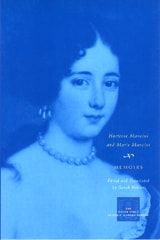
Memoirs
Marie Mancini and Hortense Mancini
University of Chicago Press, 2008
Through their writings, the Mancinis sought to rehabilitate their reputations and reclaim the right to define their public images themselves, rather than leave the stories of their lives to the intrigues of the court—and to their disgruntled ex-husbands. First translated in 1676 and 1678 and credited largely to male redactors, the two memoirs reemerge here in an accessible English translation that chronicles the beginnings of women’s rights to personal independence within the confines of an otherwise circumscribed early modern aristocratic society.
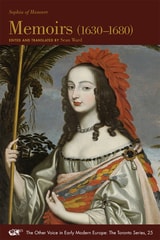
Memoirs (1630-1680)
Sophia of Hanover
Iter Press, 2013
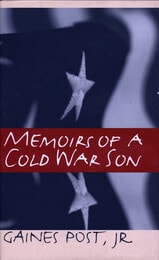
Memoirs Of A Cold War Son
Post, Gaines, Jr.
University of Iowa Press, 2000
In 1951 Gaines Post was a gangly, bespectacled, introspective teenager preparing to spend a year in Paris with his professorial father and older brother; his mother, who suffered from extreme depression, had been absent from the family for some time. Ten years later, now less gangly but no less introspective, he was finishing a two-year stint in the army in West Germany and heading toward Oxford on a Rhodes scholarship, having narrowly escaped combat in the Berlin crisis of 1961. His quietly intense coming-of-age story is both self-revealing and reflective of an entire generation of young men who came to adulthood before the Cuban Missile Crisis and the Vietnam War.
Post's experiences in high school in Madison, Wisconsin, and Paris, his Camus-influenced undergraduate years at Cornell University, and his army service in Germany are set very effectively against the events of the Cold War. McCarthyism and American crackdowns on dissidents, American foreign and military policy in Western Europe in the nuclear age, French and German life and culture, crises in Paris and Berlin that nearly bring the West to war and the Post family to dissolution—these are the larger scenes and subjects of his self-disclosure as a contemplative, conflicted "Cold War agnostic."
His intelligent, talented mother and her fragile health hover over Post's narrative, informing his hesitant relationships with women and his acutely questioning sense of self-worth. His story is strongly academic and historical as well as political and military; his perceptions and judgments lean toward no ideological extreme but remain true to the heroic ideals of his boyhood during the Second World War.

Memoirs and Letters
Oscar W. Firkins
University of Minnesota Press, 1934
Memoirs and Letters was first published in 1934. Minnesota Archive Editions uses digital technology to make long-unavailable books once again accessible, and are published unaltered from the original University of Minnesota Press editions.
This volume, the last in a set of four containing posthumous works of Oscar W. Firkins, consists mainly of some two hundred personal letters, which reveal many delightful facets of a unique character.
Oscar W. Firkins—critic, biographer, playwright, lecturer, and teacher—was regarded as a recluse, living in a world peopled largely by "poets dead and gone" and the creatures of their imagination and his own. That he enjoyed warm friendships with men and women of his time is brought to light in these miscellaneous letters: letters to clergymen and children, to editors and club women, to students and poets, to actors and college deans.
Many brilliantly epigrammatic comments from Firkins' famous classroom lectures are included in the section of this book entitled "From Oscar Firkins' Notebooks." The "Estimate and Appreciation" with which the volume opens is by Dr. Richard Burton, for many years a colleague of Professor Firkins at the University of Minnesota. "Oscar Firkins as a Teacher" is contributed by a former student. A complete bibliography, compiled by Ina Ten Eyck Firkins, concludes the volume.
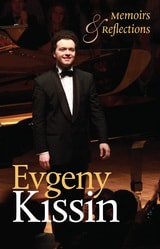
Memoirs and Reflections
Evgeny Kissin
University Press of New England, 2018
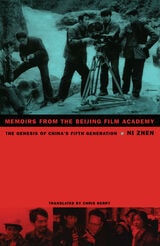
Memoirs from the Beijing Film Academy
The Genesis of China's Fifth GenerationZhen Ni
Duke University Press, 2002
Memoirs of Elleanor Eldridge
Frances H. Whipple
West Virginia University Press, 2013
Memoirs of Elleanor Eldridge
Joycelyn K. Moody
University of Delaware Press, 0
Elleanor Eldridge, born of African and US indigenous descent in 1794, operated a lucrative domestic services business in nineteenth century Providence, Rhode Island. In defiance of her gender and racial background, she purchased land and built rental property from the wealth she gained as a business owner. In the 1830s, Eldridge was defrauded of her property by a white lender. In a series of common court cases as defendant and plaintiff, she managed to recover it through the Rhode Island judicial system. In order to raise funds to carry out this litigation, her memoir, which includes statements from employers endorsing her respectable character, was published in 1838. Frances Harriet Whipple, an aspiring white writer in Rhode Island, narrated and co-authored Eldridge’s story, expressing a proto-feminist outrage at the male “extortioners” who caused Eldridge’s loss and distress.
With the rarity of Eldridge’s material achievements aside, Memoirs of Elleanor Eldridge forms an exceptional antebellum biography, chronicling Eldridge’s life from her birth. Because of Eldridge’s exceptional life as a freeborn woman of color entrepreneur, it constitutes a counter-narrative to slave narratives of early nineteenth-century New England, changing the literary landscape of conventional American Renaissance studies and interpretations of American Transcendentalism.
With an introduction by Joycelyn K. Moody, this new edition contextualizes the extraordinary life of Elleanor Eldridge—from her acquisition of wealth and property to the publication of her biography and her legal struggles to regain stolen property. Because of her mixed-race identity, relative wealth, local and regional renown, and efficacy in establishing a collective of white women patrons, this biography challenges typical African and Indigenous women’s literary production of the early national period and resituates Elleanor Eldridge as an important cultural and historical figure of the nineteenth century.
Memoirs of Pancho Villa
By Martín Luis Guzmán
University of Texas Press, 1965
This is a tale that might be told around a campfire, night after night in the midst of a military campaign. The kinetic and garrulous Pancho Villa talking on and on about battles and men; bursting out with hearty, masculine laughter; weeping unashamed for fallen comrades; casually mentioning his hotheadedness—"one of my violent outbursts"—which sent one, two, or a dozen men before the firing squad; recounting amours; and always, always protesting dedication to the Revolutionary cause and the interests of "the people."
Villa saw himself as the champion, eventually almost the sole champion, of the Mexican people. He fought for them, he said, and opponents who called him bandit and murderer were hypocrites.
This is his story, his account of how it all began when as a peasant boy of sixteen he shot a rich landowner threatening the honor of his sister. This lone, starved refugee hiding out in the mountains became the scourge of the Mexican Revolution, the leader of thousands of men, and the hero of the masses of the poor.
Great battles of the Revolution are described, sometimes as broad sweeps of strategy, sometimes as they developed half hour by half hour. Long, dusty horseback forays and cold nights spent pinned down under enemy fire on a mountainside are made vivid and gripping. The assault on Ciudad Juárez in 1911, the battles of Tierra Blanca, of Torreón, of Zacatecas, of Celaya, all are here, told with a feeling of great immediacy. This volume ends as Villa and Obregón prepare to engage each other in the war between victorious generals into which the Revolution degenerated before it finally ended.
Martín Luis Guzmán, eminent historian of Mexico, knew and traveled with Pancho Villa at various times during the Revolution. General Villa offered young Martín Luis a position as his secretary, but he declined. When many years later some of Villa's private papers, records, and what was apparently the beginning of an autobiography came into Guzmán's hands, he was ideally suited to blend all these into an authentic account of the Revolution as Pancho Villa saw it, and of the General's life as known only to Villa himself.
The Memoirs were first published in Mexico in 1951, where they were extremely popular; this volume was the first English publication. Virginia H. Taylor, translator in the Spanish Archives of the State of Texas Land Office, has accurately captured in English the flavor of the narrative.
Memoirs of Waldo Frank
Alan Trachtenberg
University of Massachusetts Press, 1973
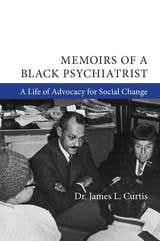
Memoirs of a Black Psychiatrist
A Life of Advocacy for Social ChangeDr. James L. Curtis
Michigan Publishing Services, 2017
In his two previous books, Dr. Curtis illustrated the leadership role he played in changing how medicine is practiced for the better. His first book, Blacks, Medical Schools and Society (University of Michigan Press, 1971), was written when he was an associate dean of the Cornell University Medical College. As dean in the beginning years of Affirmative Action in Medicine, Dr. Curtis took action in this movement by desegregating medical school admissions not only at Cornell, but also in all US medical schools. After his retirement, his second book, Affirmative Action in Medicine: Improving Health Care for All (University of Michigan Press, 2003), was published: a twenty-five-year progress report on the social benefit of these programs in the American practice of medicine.
Dr. Curtis retired in 2000 as Clinical Professor of Psychiatry of Columbia University College of Physicians and Surgeons, having been a faculty member for eighteen years. During his tenure at Columbia he was also Director of Psychiatry at Harlem Hospital Center, serving one of the most economically deprived neighborhoods of New York City. Since 2003, he has lived in his hometown of Albion, Michigan, one of the formerly vibrant and prosperous cities devastated by the collapse of the automobile industry. With a small group of others, he is developing new social service programs to benefit Albion.
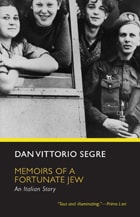
Memoirs of a Fortunate Jew
An Italian StoryDan Vittorio Segre
University of Chicago Press, 2008
“Taut and illuminating . . . memorable . . . written with the humility of he who confesses himself and with the honesty of he who bore witness.”—Primo Levi
“The writing of memoirs is a difficult art that Dan Segre fully possesses. Under his pen, history and psychology merge in one captivating narrative which illuminates the turmoils, fears and triumphs of his generation.”—Elie Wiesel
“Beautifully written. . . . [A] labyrinthine, spell-binding autobiography, full of passionate tenderness.”—New York Review of Books
“An unusually attractive book—attractive in its irony, its energy and its moral insight. Mr. Segre had some rich material to work with, and he has done it justice.”—New York Times
Memoirs of a Palestinian Communist
The Secret Life of Najati SidqiNajati Sidqi; translated by Margaret Litvin, Gideon Gordon, and Anas Farhan
University of Texas Press, 2025
The secret life of a Palestinian Communist activist during the leadup to World War II.
In the public eye, Najati Sidqi was known as a journalist and writer, a translator of Russian classics, and an outspoken opponent of Nazism. However, Sidqi concealed a critical component of his life from the world and his family. He was an underground activist for the Palestinian Communist Party, a risky and influential pursuitthat took him to early Bolshevik Moscow, British courts and prison cells in Palestine, Nazi Germany, intrigue-heavy interwar Paris, and Civil War Spain, Morocco, and Algeria. Throughout his journey, Sidqi continued to write, even as he faced fascism, intense surveillance, active warzones, the death of friends, and exile.
Memoirs of a Palestinian Communist brings Sidqi’s incredible life and work to light, wryly narrating his international travels, his work as an activist, and his political dealings at a crucial moment for Palestine and the international fight against fascism. Translated from Arabic into English for the first time, it is a riveting firsthand account of an often-overlooked aspect of the history of the global left. Generous supplementary materials make the memoir accessible to students and non-specialist scholars: a preface by Sidqi’s grandson, a foreword by renowned historian Joel Beinin, a translators’ introduction that presents new research on Sidqi’s family history, a map of his travels, and a timeline, as well as a bibliographic essay offering pointers for further research.