Results by title
1017 books match the query 'Reference' and 149 start with m
Middle English Dictionary
S.10Robert E. Lewis, Editor-in-Chief
University of Michigan Press, 1989
Middle English Dictionary
S.11Robert E. Lewis, Editor-in-Chief
University of Michigan Press, 1989
Middle English Dictionary
S.12Robert E. Lewis, Editor-in-Chief
University of Michigan Press, 1990
Middle English Dictionary
S.13Robert E. Lewis, Editor-in-Chief
University of Michigan Press, 1990
Middle English Dictionary
S.14Robert E. Lewis, Editor-in-Chief
University of Michigan Press, 1990
Middle English Dictionary
S.15Robert E. Lewis, Editor-in-Chief
University of Michigan Press, 1991
Middle English Dictionary
S.16Robert E. Lewis, Editor-in-Chief
University of Michigan Press, 1991
Middle English Dictionary
S.17Robert E. Lewis, Editor-in-Chief
University of Michigan Press, 1992
Middle English Dictionary
S.18Robert E. Lewis, Editor-in-Chief
University of Michigan Press, 1992
Middle English Dictionary
S.2Robert E. Lewis, Editor-in-Chief
University of Michigan Press, 1986
Middle English Dictionary
S.3Robert E. Lewis, Editor-in-Chief
University of Michigan Press, 1987
Middle English Dictionary
S.4Robert E. Lewis, Editor-in-Chief
University of Michigan Press, 1987
Middle English Dictionary
S.5Robert E. Lewis, Editor-in-Chief
University of Michigan Press, 1987
Middle English Dictionary
S.6Robert E. Lewis, Editor-in-Chief
University of Michigan Press, 1988
Middle English Dictionary
S.7Robert E. Lewis, Editor-in-Chief
University of Michigan Press, 1988
Middle English Dictionary
S.8Robert E. Lewis, Editor-in-Chief
University of Michigan Press, 1988
Middle English Dictionary
S.9Robert E. Lewis, Editor-in-Chief
University of Michigan Press, 1988
Middle English Dictionary
T.1Robert E. Lewis, Editor-in-Chief
University of Michigan Press, 1993
Middle English Dictionary
T.10Robert E. Lewis, Editor-in-Chief
University of Michigan Press, 1997
The Middle English Dictionary is a monumental scholarly endeavor that began more than fifty years ago and is expected to be completed in the late-1990s. The task of the editors compiling the dictionary is to document the English language from just after the Norman Conquest up to the introduction of the printing press at the end of the 1400s. With that innovation the language became more or less standardized, but during the Middle Ages the language was evolving under the stress of events and social change, particularly as French culture was absorbed into the language. These were truly the formative years of the English language, and they present major challenges to lexicographers.
Published volumes include all fascicles from A.1 through T.10, plus the Plan and Bibliography.
Middle English Dictionary
T.2Robert E. Lewis, Editor-in-Chief
University of Michigan Press, 1993
Middle English Dictionary
T.3Robert E. Lewis, Editor-in-Chief
University of Michigan Press, 1994
Middle English Dictionary
T.4Robert E. Lewis, Editor-in-Chief
University of Michigan Press, 1994
Middle English Dictionary
T.5Robert E. Lewis, Editor-in-Chief
University of Michigan Press, 1995
Middle English Dictionary
T.6Robert E. Lewis, Editor-in-Chief
University of Michigan Press, 1995
Middle English Dictionary
T.7Robert E. Lewis, Editor-in-Chief
University of Michigan Press, 1996
The Middle English Dictionary is a monumental scholarly endeavor that began more than fifty years ago and is expected to be completed in the late-1990s. The task of the editors compiling the dictionary is to document the English language from just after the Norman Conquest up to the introduction of the printing press at the end of the 1400s. With that innovation the language became more or less standardized, but during the Middle Ages the language was evolving under the stress of events and social change, particularly as French culture was absorbed into the language. These were truly the formative years of the English language, and they present major challenges to lexicographers.
Published volumes include all fascicles from A.1 through T.10, plus the Plan and Bibliography.
Middle English Dictionary
T.8Robert E. Lewis, Editor-in-Chief
University of Michigan Press, 1996
The Middle English Dictionary is a monumental scholarly endeavor that began more than fifty years ago and is expected to be completed in the late-1990s. The task of the editors compiling the dictionary is to document the English language from just after the Norman Conquest up to the introduction of the printing press at the end of the 1400s. With that innovation the language became more or less standardized, but during the Middle Ages the language was evolving under the stress of events and social change, particularly as French culture was absorbed into the language. These were truly the formative years of the English language, and they present major challenges to lexicographers.
Published volumes include all fascicles from A.1 through T.10, plus the Plan and Bibliography.
Middle English Dictionary
T.9Robert E. Lewis, Editor-in-Chief
University of Michigan Press, 1997
The Middle English Dictionary is a monumental scholarly endeavor that began more than fifty years ago and is expected to be completed in the late-1990s. The task of the editors compiling the dictionary is to document the English language from just after the Norman Conquest up to the introduction of the printing press at the end of the 1400s. With that innovation the language became more or less standardized, but during the Middle Ages the language was evolving under the stress of events and social change, particularly as French culture was absorbed into the language. These were truly the formative years of the English language, and they present major challenges to lexicographers.
Published volumes include all fascicles from A.1 through T.10, plus the Plan and Bibliography.
Middle English Dictionary
U.1Robert E. Lewis, Editor-in-Chief
University of Michigan Press, 1997
The Middle English Dictionary is a monumental scholarly endeavor that began more than fifty years ago and is expected to be completed in 2001. The task of the editors compiling the dictionary is to document the English language from just after the Norman Conquest up to the introduction of the printing press at the end of the 1400s. With that innovation the language became more or less standardized, but during the Middle Ages the language was evolving under the stress of events and social change, particularly as French culture was absorbed into the language. These were truly the formative years of the English language, and they present major challenges to lexicographers.
Fascicles U.1, U.2, and U.3 are the most recent additions to this ongoing undertaking. Published volumes include all fascicles from A.1 through U.3, plus the Plan and Bibliography.
Middle English Dictionary
U.2Robert E. Lewis, Editor-in-Chief
University of Michigan Press, 1998
The Middle English Dictionary is a monumental scholarly endeavor that began more than fifty years ago and is expected to be completed in 2001. The task of the editors compiling the dictionary is to document the English language from just after the Norman Conquest up to the introduction of the printing press at the end of the 1400s. With that innovation the language became more or less standardized, but during the Middle Ages the language was evolving under the stress of events and social change, particularly as French culture was absorbed into the language. These were truly the formative years of the English language, and they present major challenges to lexicographers.
Fascicles U.1, U.2, and U.3 are the most recent additions to this ongoing undertaking. Published volumes include all fascicles from A.1 through U.3, plus the Plan and Bibliography.
Middle English Dictionary
U.4Robert E. Lewis, Editor-in-Chief
University of Michigan Press, 1998
Middle English Dictionary
VRobert E. Lewis, Editor-in-Chief
University of Michigan Press, 1999
The Middle English Dictionary, a monumental scholarly endeavor that began more than fifty years ago, is scheduled to be completed in 2001. The task of the editors compiling the dictionary is to document the English language from just after the Norman Conquest to the introduction of the printing press at the end of the 1400s. With that innovation the language became more or less standardized, but during the Middle Ages the language was evolving under the stress of events and social change, particularly as French culture was absorbed into the language. These were truly the formative years of the English language, and they present major challenges to lexicographers.
Fascicles V.1, W.1, and W.2 are the most recent additions to this ongoing undertaking. Published volumes include all fascicles from A.1 through U.3, plus the Plan and Bibliography.
Middle English Dictionary
W.2Robert E. Lewis, Editor-in-Chief
University of Michigan Press, 1999
The Middle English Dictionary, a monumental scholarly endeavor that began more than fifty years ago, is scheduled to be completed in 2001. The task of the editors compiling the dictionary is to document the English language from just after the Norman Conquest to the introduction of the printing press at the end of the 1400s. With that innovation the language became more or less standardized, but during the Middle Ages the language was evolving under the stress of events and social change, particularly as French culture was absorbed into the language. These were truly the formative years of the English language, and they present major challenges to lexicographers.
Fascicles V.1, W.1, and W.2 are the most recent additions to this ongoing undertaking. Published volumes include all fascicles from A.1 through U.3, plus the Plan and Bibliography.
Middle English Dictionary
W.3Robert E. Lewis, Editor-in-Chief
University of Michigan Press, 2000
Middle English Dictionary
W.4Robert E. Lewis, Editor-in-Chief
University of Michigan Press, 2000
TheMiddle English Dictionary, a monumental scholarly endeavor that began more than fifty years ago, is completed with the publication of these remaining fascicles. The task of the editors compiling the dictionary is to document the English language from just after the Norman Conquest up to the introduction of the printing press at the end of the 1400s. With that innovation the language became more or less standardized, but during the Middle Ages the language was evolving under the stress of events and social change, particularly as French culture was absorbed into the language. These were truly the formative years of the English language, and they present major challenges to lexicographers.
Middle English Dictionary
W.5Robert E. Lewis, Editor-in-Chief
University of Michigan Press, 2000
TheMiddle English Dictionary, a monumental scholarly endeavor that began more than fifty years ago, is completed with the publication of these remaining fascicles. The task of the editors compiling the dictionary is to document theE nglish language from just after the Norman Conquest up to the introduction of the printing press at the end of the 1400s. With that innovation the language became more or less standardized, but during the Middle Ages the language was evolving under the stress of events and social change, particularly as French culture was absorbed into the language. These were truly the formative years of the English language, and they present major challenges to lexicographers.
Middle English Dictionary
W.6Robert E. Lewis, Editor-in-Chief
University of Michigan Press, 2000
TheMiddle English Dictionary, a monumental scholarly endeavor that began more than fifty years ago, is completed with the publication of these remaining fascicles. The task of the editors compiling the dictionary is to document theE nglish language from just after the Norman Conquest up to the introduction of the printing press at the end of the 1400s. With that innovation the language became more or less standardized, but during the Middle Ages the language was evolving under the stress of events and social change, particularly as French culture was absorbed into the language. These were truly the formative years of the English language, and they present major challenges to lexicographers.
Fascicle X/Y/Z is the final addition to this incredible undertaking. Published volumes include all fascicles from A.1 through X/Y/Z, plus the Plan and Bibliography.
Middle English Dictionary
W.7Robert E. Lewis, Editor-in-Chief
University of Michigan Press, 2001
TheMiddle English Dictionary, a monumental scholarly endeavor that began more than fifty years ago, is completed with the publication of these remaining fascicles. The task of the editors compiling the dictionary is to document theE nglish language from just after the Norman Conquest up to the introduction of the printing press at the end of the 1400s. With that innovation the language became more or less standardized, but during the Middle Ages the language was evolving under the stress of events and social change, particularly as French culture was absorbed into the language. These were truly the formative years of the English language, and they present major challenges to lexicographers.
Fascicle X/Y/Z is the final addition to this incredible undertaking. Published volumes include all fascicles from A.1 through X/Y/Z, plus the Plan and Bibliography.
Middle English Dictionary
W.8Robert E. Lewis, Editor-in-Chief
University of Michigan Press, 2001
TheMiddle English Dictionary, a monumental scholarly endeavor that began more than fifty years ago, is completed with the publication of these remaining fascicles. The task of the editors compiling the dictionary is to document theE nglish language from just after the Norman Conquest up to the introduction of the printing press at the end of the 1400s. With that innovation the language became more or less standardized, but during the Middle Ages the language was evolving under the stress of events and social change, particularly as French culture was absorbed into the language. These were truly the formative years of the English language, and they present major challenges to lexicographers.
Fascicle X/Y/Z is the final addition to this incredible undertaking. Published volumes include all fascicles from A.1 through X/Y/Z, plus the Plan and Bibliography.
Middle English Dictionary
X/Y/ZRobert E. Lewis, Editor-in-Chief
University of Michigan Press, 2001
TheMiddle English Dictionary, a monumental scholarly endeavor that began more than fifty years ago, is completed with the publication of these remaining fascicles. The task of the editors compiling the dictionary is to document theE nglish language from just after the Norman Conquest up to the introduction of the printing press at the end of the 1400s. With that innovation the language became more or less standardized, but during the Middle Ages the language was evolving under the stress of events and social change, particularly as French culture was absorbed into the language. These were truly the formative years of the English language, and they present major challenges to lexicographers.
Fascicles W.9 and X/Y/Z will be the final additions to this incredible undertaking. Published volumes include all fascicles from A.1 through W.8, plus the Plan and Bibliography.
Mismatch
Form-Function Incongruity and the Architecture of GrammarEdited by Elaine J. Francis and Laura A. Michaelis
CSLI, 2002
Modeling and Interpreting Interactive Hypotheses in Regression Analysis
Cindy D. Kam and Robert J. Franzese, Jr.
University of Michigan Press, 2007
Social scientists study complex phenomena about which they often propose intricate hypotheses tested with linear-interactive or multiplicative terms. While interaction terms are hardly new to social science research, researchers have yet to develop a common methodology for using and interpreting them. Modeling and Interpreting Interactive Hypotheses in Regression Analysis provides step-by-step guidance on how to connect substantive theories to statistical models and how to interpret and present the results.
"Kam and Franzese is a must-have for all empirical social scientists interested in teasing out the complexities of their data."
---Janet M. Box-Steffensmeier, Ohio State University
"Kam and Franzese have written what will become the definitive source on dealing with interaction terms and testing interactive hypotheses. It will serve as the standard reference for political scientists and will be one of those books that everyone will turn to when helping our students or doing our work. But more than that, this book is the best text I have seen for getting students to really think about the importance of careful specification and testing of their hypotheses."
---David A. M. Peterson, Texas A&M University
"Kam and Franzese have given scholars and teachers of regression models something they've needed for years: a clear, concise guide to understanding multiplicative interactions. Motivated by real substantive examples and packed with valuable examples and graphs, their book belongs on the shelf of every working social scientist."
---Christopher Zorn, University of South Carolina
"Kam and Franzese make it easy to model what good researchers have known for a long time: many important and interesting causal effects depend on the presence of other conditions. Their book shows how to explore interactive hypotheses in your own research and how to present your results. The book is straightforward yet technically sophisticated. There are no more excuses for misunderstanding, misrepresenting, or simply missing out on interaction effects!"
---Andrew Gould, University of Notre Dame
Cindy D. Kam is Assistant Professor, Department of Political Science, University of California, Davis.
Robert J. Franzese Jr. is Associate Professor, Department of Political Science, University of Michigan, and Research Associate Professor, Center for Political Studies, Institute for Social Research, University of Michigan.
For datasets, syntax, and worksheets to help readers work through the examples covered in the book, visit: www.press.umich.edu/KamFranzese/Interactions.html

Monsters In The Woods
Backpacking With ChildrenTim Hauserman
University of Nevada Press, 2007
How and why you should take your children backpacking
Despite America’s enthusiasm for outdoors activities like hiking and backpacking, most books on these subjects focus on adults. Backpacking, however, is an ideal activity for the entire family. Tim Hauserman, who is both an experienced outdoors guide and the father of two daughters, now offers a handbook for parents who would like to introduce their children to backpacking and camping. Hauserman provides practical, humorous advice for families new to the outdoors and for trail-savvy parents planning to take their children along for the first time: how to prepare, what to bring, who carries what, how far to walk, what to do in camp, safety precautions, dealing with mishaps, and proper trail and campground etiquette. He includes guidance about appropriate distances and pack weights for every age level of child, as well as tips about backpacking with an infant and bringing the family dog along on the adventure. He even suggests appealing destinations in the Sierra Nevada appropriate for various age groups and recounts some of his (and his daughters’) favorite hikes. Hauserman’s down-to-earth encouragement is based on decades of backpacking and camping with his own children, their friends, and other groups of youngsters. He is candid about his experiences and the lessons he learned from his own mistakes and how he dealt with them. Ultimately, the reward of sharing a special adventure and the peace and beauty of the outdoors makes all the effort worthwhile.
Museum Frictions
Public Cultures/Global TransformationsIvan Karp, Corinne A. Kratz, Lynn Szwaja, and Tomás Ybarra-Frausto With Gustavo Buntinx, Barbara Kirshenblatt-Gimblett, and Ciraj Rassool, eds.
Duke University Press, 2006
Whether contrasting the transformation of Africa’s oldest museum, the South Africa Museum, with one of its newest, the Lwandle Migrant Labor Museum; offering an interpretation of the audio guide at the Guggenheim Bilbao; reflecting on the relative paucity of art museums in Peru and Cambodia; considering representations of slavery in the United States and Ghana; or meditating on the ramifications of an exhibition of Australian aboriginal art at the Asia Society in New York City, the contributors highlight the frictions, contradictions, and collaborations emerging in museums and heritage sites around the world. The volume opens with an extensive introductory essay by Ivan Karp and Corinne A. Kratz, leading scholars in museum and heritage studies.
Contributors. Tony Bennett, David Bunn, Gustavo Buntinx, Cuauhtémoc Camarena, Andrea Fraser, Martin Hall, Ivan Karp, Barbara Kirshenblatt-Gimblett, Corinne A. Kratz, Christine Mullen Kreamer, Joseph Masco, Teresa Morales, Howard Morphy, Ingrid Muan, Fred Myers, Ciraj Rassool, Vicente Razo, Fath Davis Ruffins, Lynn Szwaja, Krista A. Thompson, Leslie Witz, Tomás Ybarra-Frausto
Museum Lighting
A Guide for Conservators and CuratorsDavid Saunders
J. Paul Getty Trust, The, 2020
Author David Saunders, former keeper of conservation and scientific research at the British Museum, explores how to balance the conflicting goals of visibility and preservation under a variety of conditions. Beginning with the science of how light, color, and vision function and interact, he proceeds to offer detailed studies of the impact of light on a wide range of objects, including paintings, manuscripts, textiles, bone, leather, and plastics.
With analyses of the effects of light on visibility and deterioration, Museum Lighting provides practical information to assist curators, conservators, and other museum professionals in making critical decisions about the display and preservation of objects in their collections.

Mushrooms in Your Pocket
A Guide to the Mushrooms of IowaDonald M. And Lois H. Huffman & Tiffany
University of Iowa Press, 2004
In addition to crocuses and robins, springtime in Iowa brings out another harbinger of warmer weather: mushrooms. Melting snow and warmer temperatures provide optimal opportunity for mushroom enthusiasts; people of all ages can be found wandering the woods, clutching bags and hoping to spot a clump of elusive morels. Now, for budding naturalists, beginning mushroom hunters, and professionals outside of the area of mycology, Donald Huffman and Lois Tiffany have provided this laminated guide to the most common mushrooms of Iowa.
The guide illustrates forty-three species of Iowa mushrooms using color photos that show the fungi in the wild, from the yellow morel to the destroying angel to the pear-shaped puffball. Huffman and Tiffany give common and scientific names, descriptions of caps and stalks, descriptions of where the mushrooms can be found (on the ground in woods, in clusters on fallen logs, etc.), the season when they are most likely to be seen, plus information on edibility from the “choice edible” yellow morel, much coveted by generations of mushroom hunters, to the poisonous false morel.
Mushrooms’ diverse forms and variety of colors, along with their seemingly mysterious appearances and disappearances, have long made them objects of fascination. Mushrooms in Your Pocket will be an invaluable companion for finding and identifying these unusual and interesting organisms.
Music Grooves
Essays and DialoguesCharles Keil and Steven Feld
University of Chicago Press, 1994
Music Grooves ranges from jazz, blues, polka, soul, rock, world beat, rap, karaoke, and other familiar genres to major scholarly debates in music theory, ethnomusicology, and popular culture studies. The authors develop and create links between the fields of ethnomusicology and popular culture studies and relate the contents of musics from America, Greece, Cuba, Africa, and Papua New Guinea to artists as diverse as James Brown, Aretha Franklin, L'il Wally Jagiello, Bo Diddley, Walt Solek, Madonna, Paul Simon, Miles Davis, Thelonious Monk, and Billie Holiday.
Keil and Feld offer a fascinating view of the shaping of central ideas and terms in ethnomusicology such as "engendered feeling," "interpretive moves," "participatory discrepancies," "iconicity of style," "people's music," "schizophonia," and "lift-up-over sounding." From Keil's critique of Leonard Meyer's musicological approach to Feld's recent work on world beat, this volume covers an array of vital issues in media studies, musicology and ethnomusicology, popular culture, anthropology, and sociology. It will interest anyone concerned with the nature and meaning of music in the modern world.
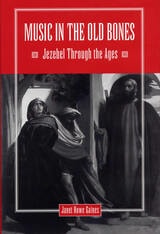
Music in the Old Bones
Jezebel Through the AgesJanet Howe Gaines
Southern Illinois University Press, 1999
An alien, a polytheist from Phoenicia, the biblical Queen Jezebel posed a serious threat to the stability of the Israelites' single male deity. So powerful was this threat that writers through the ages have portrayed her as the incarnation of feminine evil, and her name has become synonymous with the misogynist view of women as seductresses.
Janet Howe Gaines argues that the bride of the Israelite king Ahab became a convenient scapegoat for biblical writers who portrayed her as the primary force behind their nation's apostasy. The biblical account presents the queen as a murderer, as a disruptive force for evil. Despised, the strong-willed Jezebel is still one of the most intriguing women of the Bible.
Music in the Old Bones is a guide to the eternal Jezebel story. The first part of this illustrated study is a detailed analysis that explores the biblical tale from traditional and feminist points of view. Gaines then analyzes the ways authors through the centuries have treated Jezebel. Her unburied bones became misogynist relics for generations of writers who retold her story as a warning about the dangers of rebelling against patriarchal society. From the sermons of John Knox to the novels of Margaret Atwood, from the poetry of Percy Shelley to the ballads of Boyz II Men, from the drama of Racine to the Academy Award-winning film starring Bette Davis, Jezebel has long been the subject of artistic inquiry. Her image as the bad girl of the Bible is still useful to writers. Most exploit her name and evil reputation to enhance their admonitions to women, but a few break away from tradition and openly admire Jezebel's courage and vigor.
Placing the biblical account of Jezebel's doomed reign in the context of its xenophobic writers, Gaines proposes a new and more sympathetic reading of the murdered queen whose body was left to rot in the streets and whose reputation suffered a fate even more egregious. Rather than providing a decent burial for the mangled bones of Jezebel, Gaines seeks to flesh them out and revivify them because, as she demonstrates, "there's music in the old bones yet."
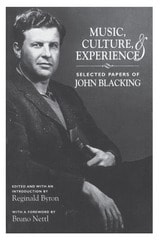
Music, Culture, and Experience
Selected Papers of John BlackingJohn Blacking
University of Chicago Press, 1995
This volume brings together in one convenient source eight of Blacking's most important theoretical papers along with an extensive introduction by the editor. Drawing heavily on his fieldwork among the Venda people of South Africa, these essays reveal his most important theoretical themes such as the innateness of musical ability, the properties of music as a symbolic or quasi-linguistic system, the complex relation between music and social institutions, and the relation between scientific musical analysis and cultural understanding.
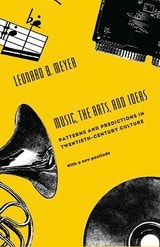
Music, the Arts, and Ideas
Patterns and Predictions in Twentieth-Century CultureLeonard B. Meyer
University of Chicago Press, 1994