Results by title
4127 books match the query 'Science' and 197 start with m

Media Rurality
Patrick Brodie and Darin Barney, editors
Duke University Press, 2026
Contributors. Christopher Ali, Patrick Bresnihan, Patrick Brodie, Darin Barney, Jenna Burrell, Jordan B. Kinder, Burç Köstem, Cindy Lin, Emily Ng, Lisa Parks, Anne Pasek, Esther Peeren, Nicole Starosielski, Ishita Tiwary, Hunter Vaughan, Ayesha Vemuri, Megan Wiessner, Assatu Wisseh
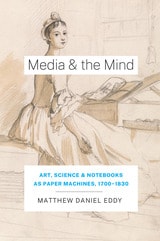
Media and the Mind
Art, Science, and Notebooks as Paper Machines, 1700-1830Matthew Daniel Eddy
University of Chicago Press, 2022
We often think of reason as a fixed entity, as a definitive body of facts that do not change over time. But during the Enlightenment, reason also was seen as a process, as a set of skills enacted on a daily basis. How, why, and where were these skills learned? Concentrating on Scottish students living during the long eighteenth century, this book argues that notebooks were paper machines and that notekeeping was a capability-building exercise that enabled young notekeepers to mobilize everyday handwritten and printed forms of material and visual media in a way that empowered them to judge and enact the enlightened principles they encountered in the classroom. Covering a rich selection of material ranging from simple scribbles to intricate watercolor diagrams, the book reinterprets John Locke’s comparison of the mind to a blank piece of paper, the tabula rasa. Although one of the most recognizable metaphors of the British Enlightenment, scholars seldom consider why it was so successful for those who used it. Each chapter uses one core notekeeping skill to reveal the fascinating world of material culture that enabled students in the arts, sciences, and humanities to transform the tabula rasa metaphor into a dynamic cognitive model. Starting in the home, moving to schools, and ending with universities, the book reconstructs the relationship between media and the mind from the bottom up. It reveals that the cognitive skills required to make and use notebooks were not simply aids to reason; rather, they were part of reason itself.
Medical Monopoly
Intellectual Property Rights and the Origins of the Modern Pharmaceutical IndustryJoseph M. Gabriel
University of Chicago Press, 2014
Drawing on a wealth of previously unused archival material, Medical Monopoly combines legal, medical, and business history to offer a sweeping new interpretation of the origins of the complex and often troubling relationship between the pharmaceutical industry and medical practice today. Joseph M. Gabriel provides the first detailed history of patent and trademark law as it relates to the nineteenth-century pharmaceutical industry as well as a unique interpretation of medical ethics, therapeutic reform, and the efforts to regulate the market in pharmaceuticals before World War I. His book will be of interest not only to historians of medicine and science and intellectual property scholars but also to anyone following contemporary debates about the pharmaceutical industry, the patenting of scientific discoveries, and the role of advertising in the marketplace.
Medical Technics
Don Ihde
University of Minnesota Press, 2019
A personal account of the aging body and advanced technologies by a preeminent philosopher of technology
Medical Technics is a rigorous examination of how medical progress has modified our worlds and contributed to a virtual revolution in longevity. Don Ihde offers a unique autobiographical tour of medical events experienced in a decade, beginning in his 70s. Ihde offers experiential and postphenomenological analyses of technologies such as sonography and microsurgery, and ultimately asks what it means to increasingly become a cyborg.
Forerunners: Ideas FirstShort books of thought-in-process scholarship, where intense analysis, questioning, and speculation take the lead
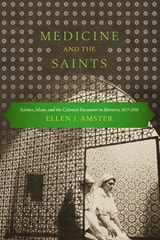
Medicine and the Saints
Science, Islam, and the Colonial Encounter in Morocco, 1877-1956By Ellen J. Amster
University of Texas Press, 2013
The colonial encounter between France and Morocco took place not only in the political realm but also in the realm of medicine. Because the body politic and the physical body are intimately linked, French efforts to colonize Morocco took place in and through the body. Starting from this original premise, Medicine and the Saints traces a history of colonial embodiment in Morocco through a series of medical encounters between the Islamic sultanate of Morocco and the Republic of France from 1877 to 1956.
Drawing on a wealth of primary sources in both French and Arabic, Ellen Amster investigates the positivist ambitions of French colonial doctors, sociologists, philologists, and historians; the social history of the encounters and transformations occasioned by French medical interventions; and the ways in which Moroccan nationalists ultimately appropriated a French model of modernity to invent the independent nation-state. Each chapter of the book addresses a different problem in the history of medicine: international espionage and a doctor’s murder; disease and revolt in Moroccan cities; a battle for authority between doctors and Muslim midwives; and the search for national identity in the welfare state. This research reveals how Moroccans ingested and digested French science and used it to create a nationalist movement and Islamist politics, and to understand disease and health. In the colonial encounter, the Muslim body became a seat of subjectivity, the place from which individuals contested and redefined the political.
Medicines That Feed Us
Plants, Healing, and Sovereignty in a Toxic WorldStacey A. Langwick
Duke University Press, 2026
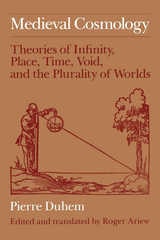
Medieval Cosmology
Theories of Infinity, Place, Time, Void, and the Plurality of WorldsPierre Duhem
University of Chicago Press, 1987
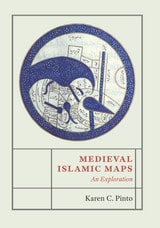
Medieval Islamic Maps
An ExplorationKaren C. Pinto
University of Chicago Press, 2016
Pinto focuses on the distinct tradition of maps known collectively as the Book of Roads and Kingdoms (Kitab al-Masalik wa al-Mamalik, or KMMS), examining them from three distinct angles—iconography, context, and patronage. She untangles the history of the KMMS maps, traces their inception and evolution, and analyzes them to reveal the identities of their creators, painters, and patrons, as well as the vivid realities of the social and physical world they depicted. In doing so, Pinto develops innovative techniques for approaching the visual record of Islamic history, explores how medieval Muslims perceived themselves and their world, and brings Middle Eastern maps into the forefront of the study of the history of cartography.
Meeting the Universe Halfway
Quantum Physics and the Entanglement of Matter and MeaningKaren Barad
Duke University Press, 2006
In an agential realist account, the world is made of entanglements of “social” and “natural” agencies, where the distinction between the two emerges out of specific intra-actions. Intra-activity is an inexhaustible dynamism that configures and reconfigures relations of space-time-matter. In explaining intra-activity, Barad reveals questions about how nature and culture interact and change over time to be fundamentally misguided. And she reframes understanding of the nature of scientific and political practices and their “interrelationship.” Thus she pays particular attention to the responsible practice of science, and she emphasizes changes in the understanding of political practices, critically reworking Judith Butler’s influential theory of performativity. Finally, Barad uses agential realism to produce a new interpretation of quantum physics, demonstrating that agential realism is more than a means of reflecting on science; it can be used to actually do science.
Meetings with Remarkable Mushrooms
Forays with Fungi across HemispheresAlison Pouliot
University of Chicago Press, 2023
A whirlwind journey through fungus frontiers that underscores how appreciating fungi is key to understanding our planet’s power and fragility.
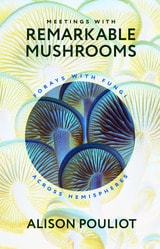
What can we learn from the lives of fungi? Splitting time between the northern and southern hemispheres, ecologist Alison Pouliot ensures that she experiences two autumns per year in the pursuit of fungi—from Australia’s deserts to Iceland’s glaciers to America’s Cascade Mountains. In Meetings with Remarkable Mushrooms, we journey alongside Pouliot, magnifiers in hand, as she travels the world.
With Pouliot as our guide, we smell fire-loving truffles that transform their scent after burning to lure mammals who eat them and, ultimately, spread their spores. We spot the eerie glow of the ghost fungus, a deceptive entity that looks like an edible oyster mushroom but will soon heave back out—along with everything else in your stomach—if you take a bite. And we crawl alongside vegetable caterpillars, which are neither vegetable nor caterpillar but a fungus that devours insects from the inside out.
Featuring stunning color photographs of these mycological miracles, Meetings with Remarkable Mushrooms shows that understanding fungi is fundamental for harmonizing with the natural world.
Megawatts and Megatons
The Future of Nuclear Power and Nuclear WeaponsRichard L. Garwin and Georges Charpak
University of Chicago Press, 2002
Membranes to Molecular Machines
Active Matter and the Remaking of LifeMathias Grote
University of Chicago Press, 2019
Membranes to Molecular Machines explores just how late twentieth-century science came to think of our cells and bodies this way. This story is told through the lens of membrane research, an unwritten history at the crossroads of molecular biology, biochemistry, physiology, and the neurosciences, that directly feeds into today's synthetic biology as well as nano- and biotechnology. Mathias Grote shows how these sciences not only have made us think differently about life, they have, by reworking what membranes and proteins represent in laboratories, allowed us to manipulate life as "active matter" in new ways. Covering the science of biological membranes in the United States and Europe from the mid-1960s to the 1990s, this book connects that history to contemporary work with optogenetics, a method for stimulating individual neurons using light, and will enlighten and provoke anyone interested in the intersection of chemical research and the life sciences—from practitioner to historian to philosopher.
The research described in the book and its central actor, Dieter Oesterhelt, were honored with the 2021 Albert Lasker Basic Medical Research Award for his contribution to the development of optogenetics. The 2026 Nobel Prize in Physiology or Medicine was awarded to three scientists for discoveries leading to optogenetics. Membranes to Molecular Machines can be read as a prehistory of this research.

Memory and Dreams
The Creative Human MindGeorge Christos
Rutgers University Press, 2003
Why do we sleep? Why do we dream? How does the brain turn a collection of new experiences into memories, dreams, and creative thoughts?
After synthesizing much of what is known about the neurobiological basis of memory and dreaming, Memory and Dreams: The Creative Human Mind offers new interpretations of how memories are formed, the nature of creativity, the purpose of dream sleep, and, in its most original section, the causes of SIDS.
Memory is represented in the brain by specific neural firing patterns that share common neurons and connections. Mathematical models therefore suggest that the brain can generate its own set of “spurious memories” by combining various features of stored memories. George Christos suggests that these spurious memories represent the basis for creativity.
The function of dreaming in humans and almost all other mammals is one of the great unsolved biological mysteries. Christos argues that we dream in order to process recently acquired memories, to forget unimportant memories, and to generate more creative states. By organizing our memories, dreaming allows us to be more predisposed for learning the next day.
The last section of the book deals with one of the most puzzling and heartbreaking problems in medical science, SIDS. Christos posits that infants, through dreaming, may trigger fetal breathing pathways and stop breathing without any alarms going off. In other words, SIDS has no physical cause; the cause is in the mind of the infant, who “dreams” it is back in the safety of its mother’s womb—a state in which it does not breathe. Christos asserts that this is the only theory that explains the causes as well as the trigger mechanisms of SIDS and is consistent with all of the known facts. The book concludes with a list of suggested preventative measures derived from this provocative theory.

Memory
Fragments of a Modern HistoryAlison Winter
University of Chicago Press, 2011
Picture your twenty-first birthday. Did you have a party? If so, do you remember who was there? Now step back: how clear are those memories? Should we trust them to be accurate, or is there a chance that you’re remembering incorrectly? And where have the many details you can no longer recall gone? Are they hidden somewhere in your brain, or are they gone forever?
Such questions have fascinated scientists for hundreds of years, and, as Alison Winter shows in Memory: Fragments of a Modern History, the answers have changed dramatically in just the past century. Tracing the cultural and scientific history of our understanding of memory, Winter explores early metaphors that likened memory to a filing cabinet; later, she shows, that cabinet was replaced by the image of a reel of film, ever available for playback. That model, too, was eventually superseded, replaced by the current understanding of memory as the result of an extremely complicated, brain-wide web of cells and systems that together assemble our pasts. Winter introduces us to innovative scientists and sensationalistic seekers, and, drawing on evidence ranging from scientific papers to diaries to movies, explores the way that new understandings from the laboratory have seeped out into psychiatrists' offices, courtrooms, and the culture at large. Along the way, she investigates the sensational battles over the validity of repressed memories that raged through the 1980s and shows us how changes in technology—such as the emergence of recording devices and computers—have again and again altered the way we conceptualize, and even try to study, the ways we remember.
Packed with fascinating details and curious episodes from the convoluted history of memory science, Memory is a book you'll remember long after you close its cover.
Men Who Made a New Physics
Physicists and the Quantum TheoryBarbara Lovett Cline
University of Chicago Press, 1987

Men among the Mammoths
A. Bowdoin Van Riper
University of Chicago Press, 1993

Mentality and Machines
Keith Gunderson
University of Minnesota Press, 1985
Mentality and Machines was first published in 1985. Minnesota Archive Editions uses digital technology to make long-unavailable books once again accessible, and are published unaltered from the original University of Minnesota Press editions.
Mentality and Machines — with a new preface and an extended postscript—is a general essay on the philosophy of mind, oriented to philosophical and psychological questions about real as well as imagined, robots and machines. The second edition retains all of the essays from the original book, including Gunderson's influential critique ("The Imitation Game") of A.M. Turing's treatment of the question "Can machines think?" and his controversial distinction between program-receptive and program-resistant aspects of the mind. This edition's postscript includes further reflections on these themes and others, and relates them to recent writings of other philosophers and computer scientists.

Merchants of Medicines
The Commerce and Coercion of Health in Britain’s Long Eighteenth CenturyZachary Dorner
University of Chicago Press, 2020
In Merchants of Medicines, Zachary Dorner follows the earliest industrial pharmaceuticals from their manufacture in the United Kingdom, across trade routes, and to the edges of empire, telling a story of what medicines were, what they did, and what they meant. He brings to life business, medical, and government records to evoke a vibrant early modern world of London laboratories, Caribbean estates, South Asian factories, New England timber camps, and ships at sea. In these settings, medicines were produced, distributed, and consumed in new ways to help confront challenges of distance, labor, and authority in colonial territories. Merchants of Medicines offers a new history of economic and medical development across early America, Britain, and South Asia, revealing the unsettlingly close ties among medicine, finance, warfare, and slavery that changed people’s expectations of their health and their bodies.
Mercury
Edited by Faith Vilas, Clark R. Chapman, and Mildred Shapley Matthews
University of Arizona Press, 1989
"This book is another in the excellent University of Arizona Space Science Series, each of which is based on a conference. . . .but goes far beyond a conference proceedings to present a comprehensive summary of current knowledge. . . .I recommend this book as a valuable compendium of current knowledge."—Pageoph
"This collection will be a most valuable addition to any research library."—Choice
Messages from Islands
A Global Biodiversity TourIlkka Hanski
University of Chicago Press, 2016
Beginning each chapter on a particular island, Hanski dives into reflections on his own field studies before going on to pursue a variety of ecological questions, including: What is the biodiversity crisis? What are extinction thresholds and extinction debts? What can the biodiversity hypothesis tell us about rapidly increasing allergies, asthma, and other chronic inflammatory disorders? The world’s largest island, Greenland, for instance, is the starting point for a journey into the benefits that humankind acquires from biodiversity, including the staggering biodiversity of microbes in the ecosystems that are closest to us—the ecosystems in our guts, in our respiratory tracts, and under our skin. Conceptually oriented but grounded in an adventurous personal narrative, Messages from Islands is a landmark work that lifts the natural mysteries of islands from the sea, bringing to light the thrilling complexities and connections of ecosystems worldwide.
Mestizo Genomics
Race Mixture, Nation, and Science in Latin AmericaPeter Wade, Carlos López Beltrán, Eduardo Restrepo and Ricardo Ventura Santos, eds.
Duke University Press, 2014
Drawing on ethnographic research in Brazil, Colombia, and Mexico, the contributors to Mestizo Genomics explore how the concepts of race, ethnicity, nation, and gender enter into and are affected by genomic research. In Latin America, national identities are often based on ideas about mestizaje (race mixture), rather than racial division. Since mestizaje is said to involve relations between European men and indigenous or African women, gender is a key factor in Latin American genomics and in the analyses in this book. Also important are links between contemporary genomics and recent moves toward official multiculturalism in Brazil, Colombia, and Mexico. One of the first studies of its kind, Mestizo Genomics sheds new light on the interrelations between "race," identity, and genomics in Latin America.
Contributors. Adriana Díaz del Castillo H., Roosbelinda Cárdenas, Vivette García Deister, Verlan Valle Gaspar Neto, Michael Kent, Carlos López Beltrán, María Fernanda Olarte Sierra, Eduardo Restrepo, Mariana Rios Sandoval, Ernesto Schwartz-Marín, Ricardo Ventura Santos, Peter Wade

Metamaterials and Metasurfaces
Foundations, trends and applicationsSubal Kar
The Institution of Engineering and Technology, 2025
Metaphors We Live By
George Lakoff and Mark Johnson
University of Chicago Press, 1981
In this updated edition of Lakoff and Johnson's influential book, the authors supply an afterword surveying how their theory of metaphor has developed within the cognitive sciences to become central to the contemporary understanding of how we think and how we express our thoughts in language.
Metaphysical Experiments
Physics and the Invention of the UniverseBjørn Ekeberg
University of Minnesota Press, 2019
An engaging critique of the science and metaphysics behind our understanding of the universe
The James Webb Space Telescope, when launched in 2021, will be the premier orbital observatory, capable of studying every phase of the history of the universe, from the afterglow of the Big Bang to the formation of our solar system. Examining the theoretical basis for key experiments that have made this latest venture in astrophysics possible, Bjørn Ekeberg reveals that scientific cosmology actually operates in a twilight zone between the physical and metaphysical.
Metaphysical Experiments explains how our current framework for understanding the universe, the Big Bang theory, is more determined by a deep faith in mathematical universality than empirical observation. Ekeberg draws on philosophical insights by Spinoza, Bergson, Heidegger, and Arendt; on the critical perspectives of Latour, Stengers, and Serres; and on cutting-edge physics research at the Large Hadron Collider, to show how the universe of modern physics was invented to reconcile a Christian metaphysical premise with a claim to the theoretical unification of nature.
By focusing on the nonmathematical assumptions underlying some of the most significant events in modern science, Metaphysical Experiments offers a critical history of contemporary physics that demystifies such concepts as the universe, particles, singularity, gravity, blackbody radiation, the speed of light, wave/particle duality, natural constants, black holes, dark matter, and dark energy. Ekeberg’s incisive reading of the metaphysical underpinnings of scientific cosmology offers an innovative account of how we understand our place in the universe.
Metaphysics, Materialism, and the Evolution of Mind
The Early Writings of Charles DarwinCharles Darwin
University of Chicago Press, 1980
First published in 1974 as a companion volume to Darwin on Man by Howard E. Gruber, Paul Barrett’s transcriptions of Darwin’s M and N notebooks served to shed new light on the evolutionist’s methods and motivation.
According to Stephen Jay Gould in the New York Times Book Review, “Darwin kept [these notebooks] primarily in 1838, when he was 29 years old. In them, he recorded his early conviction of evolutionary continuity between humans and all other animals. . . . These notebooks display all the features of humanistic intellect that his detractors denied. We find erudition in his comments on Plato, Locke, Hume, Adam Smith, Whewell, Burke, Montaigne, Lessing and Spencer. . . . We appreciate an artistic bent in his delight with nature and her prophet Wordsworth. . . . We grasp the breadth of his bold attempt to clothe all human thought and behaviour in a new evolutionary garb. . . . Charles Darwin was reconstructing the world and he knew exactly what he was doing.”
Meteorite Craters
Kathleen Mark
University of Arizona Press, 1987
Meteorites and the Early Solar System
John F. Kerridge
University of Arizona Press, 1988
From the original publication:
Contents 1. Introduction 2. Source Regions 3. Secondary Processing 4. Irradiation Effects 5. Solar System Chronology 6. Chondrites and the Early Solar System 7. Elemental Composition of Chondrites 8. Magnetic Fields in the Early Solar System 9. Chondrules10. Primitive Material Surviving in chondrites11. Micrometeorites12. Inhomogencity of the Nebula13. Survival of Presolar Material in Meteorites14. Nucleosynthesis15. Nucleocosmochronology16. Summary
Meteorites and the Early Solar System II
Edited by Dante S. Lauretta and Harry Y. McSween
University of Arizona Press, 2006

Metrical Stress Theory
Principles and Case StudiesBruce Hayes
University of Chicago Press, 1994
Hayes incorporates the iambic/trochaic opposition into a general theory of word stress assignment, intended to account for all languages in which stress is assigned on phonological as opposed to morphological principles. His theory addresses particularly problematic areas in metrical work, such as ternary stress and unusual weight distinctions, and he proposes new theoretical accounts of them. Attempting to take more seriously the claim of generative grammar to be an account of linguistic universals, Hayes proposes analyses for the stress patterns of over 150 languages.
Hayes compares his own innovative views with alternatives from the literature, allowing students to gain an overview of the field. Metrical Stress Theory should interest all who seek to understand the role of stress in language.

Metroburbia, USA
Knox, Paul L
Rutgers University Press, 2008
Upper-middle-class Americans are moving into larger homes in greater numbers, which leads Knox to explore the relationship between built form and material culture in contemporary society. He covers changes in home design, real estate, the work of developers, and the changing wishes of consumers. Knox shows that contemporary suburban landscapes are a product of consumer demand, combined with the logic of real estate development, mediated by design and policy professionals and institutions of governance. Suburban landscapes not only echo the fortunes of successive generations of inhabitants, Knox argues, they also reflect the country's changing core values.
Knox addresses key areas of concern and importance to today's urban planners and suburban residents including McMansions, traffic disasters, house design, homeowner's associations, exclusionary politics, and big box stores. Through the inclusion of examples and photos, Metroburbia, USA creates an accessible portrait of today's suburbs supported by data, anecdotes, and social theory. It is a broad interpretation of the American metropolitan form that looks carefully at the different influences that contribute to where and how we live today.
Mexican Macaws
Comparative Osteology and Survey of Remains from the SouthwestLyndon L. Hargrave
University of Arizona Press, 1970
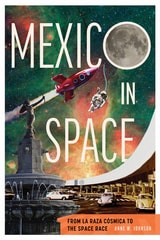
Mexico in Space
From la Raza Cósmica to the Space RaceAnne W. Johnson
University of Arizona Press, 2026
From Aztec sun stones to satellite launches, from muralist visions to dark sky parks, Mexico’s engagement with outer space is fundamental to its identity. Mexico in Space offers a groundbreaking look at how the country has navigated the tensions between technological dependence and sovereign dreams.
Anthropologist Anne W. Johnson reveals Mexico’s unique relationship with outer space, describing Indigenous knowledge, nationalist projects, artistic visions, and community practices. Through rich ethnographic detail and historical insight, Johnson challenges the notion that space is for everyone and shows whose voices truly shape the world’s cosmic futures. Johnson introduces us to satellite engineers, community astronomers, space generation youth, and artists imagining Mars, each crafting alternative cosmic futures.
As space exploration increasingly becomes the domain of billionaires and superpowers, this book offers a compelling counternarrative, demonstrating how Mexican cosmic engagements suggest more just, inclusive ways of inhabiting Earth and beyond and providing vital lessons for reimagining humanity’s place in the cosmos.
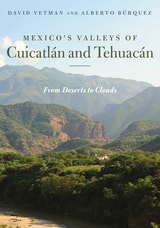
Mexico’s Valleys of Cuicatlán and Tehuacán
From Deserts to CloudsDavid Yetman and Alberto Búrquez
University of Arizona Press, 2023
Through firsthand experience and engaging prose, the authors provide a synthesis of the geology, ecology, history, and cultures of the valleys, showing their importance and influence as Mesoamerican arteries for environmental and cultural interchange through Mexico. It also reveals the extraordinary plant life that draws from habitats ranging from deserts to tropical forests.
The authors, both experts in their respective fields, begin with a general description of the geography of the valleys, followed by an introduction to climate and hydrology, a look at the valleys’ often bewildering geology. The book delves into cultural and linguistic backgrounds of the valleys and discusses archaeological sites that that encapsulate the valleys’ fascinating history prior to the arrival of Europeans. The book concludes by describing the flora that makes the region so singular.
Miami in the Anthropocene
Rising Seas and Urban ResilienceStephanie Wakefield
University of Minnesota Press, 2025
Reimagining adaptation amidst climate change–driven mutations of urban space and life
Between its susceptibility to flooding and an ever-expanding real estate market powered by global surges of people and capital, Miami is an epicenter of the urban Anthropocene and a living laboratory for adaptation to sea level rise. Miami in the Anthropocene explores the social, environmental, and technical transformations involved in climate adaptation infrastructure and imaginaries in a global city seen as climate change ground zero.
Using Miami as a compelling microcosm for understanding the complex interplay between urbanization and environmental upheaval in the twenty-first century, Stephanie Wakefield shows how “aqua-urban futures” are being imagined for the city, from governmental scenario exercises for severe weather events to proposals to transform the city’s metropolitan area into an archipelago of islands connected by bridges. She examines the shifts reweaving the fabric of urban life and presents designs that imagine dramatic new ways of living with water.
Grounded in the dynamic landscape of Miami but reaching far beyond its shores, Miami in the Anthropocene delves into the broader debates shaping urban thought and practice in the Anthropocene. Focusing on postresilience urban designs, Wakefield illuminates the path toward a future where cities embrace opportunities for evolution rather than merely for survival.

Mice in the Freezer, Owls on the Porch
The Lives of Naturalists Frederick and Francis HamerstromHelen M. Corneli
University of Wisconsin Press, 2006
Mice in the Freezer, Owls on the Porch is in many ways a love story—about a quiet scientist and his flamboyant wife, but also about their passions for hunting, for wild lands, and for the grouse and raptor species that they were instrumental in saving from destruction.
From the papers and letters of Frederick and Frances Hamerstrom, the reminiscences of contemporaries, and her own long friendship with this extraordinary couple who were her neighbors, Helen Corneli draws an intimate picture of Fran and "Hammy" from childhood through the genesis and maturation of a romantic, creative, and scientific relationship. Following the Hamerstroms as they give up a life of sophisticated convention and comfort for the more "civilized" (as Aldo Leopold would have it) pleasures of living and conducting on-the-spot research into diminishing species, Corneli captures the spirit of the Hamerstroms, their profession, and the natural and human environments in which they worked. A nuanced account of the labors, adventures, and achievements that distinguished the Hamerstroms over the years—and that inspired a generation of naturalists—this book also provides a dramatic account of conservation history over the course of the twentieth century, particularly in Wisconsin during the eventful years from the 1920s through the 1970s.

Michael Faraday's 'Chemical Notes, Hints, Suggestions and Objects of Pursuit' of 1822
Ryan D. Tweney
The Institution of Engineering and Technology, 1991
Michael Polanyi and His Generation
Origins of the Social Construction of ScienceMary Jo Nye
University of Chicago Press, 2011

Michigan Shrubs and Vines
A Guide to Species of the Great Lakes RegionBurton V. Barnes, Christopher W. Dick, and Melanie E. Gunn
University of Michigan Press, 2016

Microbes from Hell
Patrick Forterre
University of Chicago Press, 2016
In Microbes from Hell, one of the world’s leading experts on archaea and hyperthermophiles, or organisms that have evolved to flourish in extreme temperatures, offers a colorful, engaging account of this taxonomic upheaval. Blending tales of his own search for thermophiles with discussions of both the physiological challenges thermophiles face and the unique adaptations they have evolved to live in high-temperature environments, Forterre illuminates our developing understanding of the relationship between archaea and the rest of Earth’s organisms. From biotech applications to the latest discoveries in thermophile research, from microbiomes to the communities of organisms that dwell on deep-sea vents, Forterre’s exploration of life-forms that seem to thrive at the mouth of hell provides a glimpse into the early days of Earth, offering deep insight into what life may have looked like in the extreme environments of our planet’s dawn.
Microbial Resolution
Visualization and Security in the War against Emerging MicrobesGloria Chan-Sook Kim
University of Minnesota Press, 2024
An interdisciplinary study charting the war against microbial futures leads to a new theory of contemporary vision and visuality
In 1989, a group of U.S. government scientists met to discuss some surprising findings: new diseases were appearing around the world, and viruses that they thought long vanquished were resurfacing. Their appearance heralded a future perpetually threatened by unforeseeable biological risks, sparking a new concept of disease: the “emerging microbe.” With the Cold War nearing its end, American scientists and security experts turned to confront this new “enemy,” redirecting national security against its risky horizons. In order to be fought, emerging microbes first needed to be made perceptible; but how could something immaterial, unknowable, and ever mutating be coaxed into visibility, knowability, and operability?
Microbial Resolution charts the U.S.-led war on the emerging microbe to show how their uncertain futures were transformed into objects of global science and security. Moving beyond familiar accounts that link scientific knowledge production to optical practices of visualizing the invisible, Gloria Chan-Sook Kim develops a theory of “microbial resolution” to analyze the complex problematic that arises when dealing with these entities: what can be seen when there is nothing to see? Through a syncretic analysis of data mining, animal-tracking technologies, media networks, computer-modeled futures, and global ecologies and infrastructures, she shows how a visual impasse—the impossibility of seeing microbial futures—forms the basis for new modes of perceiving, knowing, and governing in the present.
Timely and thought provoking, Microbial Resolution opens up the rich paradoxes, irreconcilabilities, and failures inherent in this project and demonstrates how these tensions profoundly animate twenty-first-century epistemologies, aesthetics, affects, and ecologies.

Microwave Circuit Theory and Foundations of Microwave Metrology
Glenn F. Engen
The Institution of Engineering and Technology, 1992
Midlatitude Synoptic Meteorology
Dynamics, Analysis, and ForecastingGary Lackmann
American Meteorological Society, 2011
The past decade has been characterized by remarkable advances in meteorological observation, computing techniques, and data-visualization technology. However, the benefit of these advances can only be fully realized with the introduction of a systematic, applied approach to meteorological education that allows well-established theoretical concepts to be applied to modernized observational and numerical datasets.
Mimesis and Science
Empirical Research on Imitation and the Mimetic Theory of Culture and ReligionScott R. Garrels
Michigan State University Press, 2011
This exciting compendium brings together, for the first time, some of the foremost scholars of René Girard’s mimetic theory, with leading imitation researchers from the cognitive, developmental, and neuro sciences. These chapters explore some of the major discoveries and developments concerning the foundational, yet previously overlooked, role of imitation in human life, revealing the unique theoretical links that can now be made from the neural basis of social interaction to the structure and evolution of human culture and religion. Together, mimetic scholars and imitation researchers are on the cutting edge of some of the most important breakthroughs in understanding the distinctive human capacity for both incredible acts of empathy and compassion as well as mass antipathy and violence. As a result, this interdisciplinary volume promises to help shed light on some of the most pressing and complex questions of our contemporary world.
Mimicry and the Evolutionary Process
Edited by Lincoln P. Brower
University of Chicago Press, 1989
Mind, Matter, and Method
Essays in Philosophy and Science in Honor of Herbert FeiglPaul K. Feyerabend and Grover Maxwell, Editors
University of Minnesota Press, 1966
Mind, Matter, and Method was first published in 1966. Minnesota Archive Editions uses digital technology to make long-unavailable books once again accessible, and are published unaltered from the original University of Minnesota Press editions.
This volume of twenty-six essays by as many contributors is published in honor of Herbert Feigl, professor of philosophy at the University of Minnesota and director of the Minnesota Center for the Philosophy of Science. Though the majority of the contributors are philosophers, there are also -- as benefits Mr. Feigl's varied intellectual interests -- representatives of psychology, psychoanalysis, and physics.
The first group of ten essays deals with the philosophy of mind, particularly with the mind-body problem, to which Mr. Feigl has devoted much attention. The eleven essays in the second part are concerned with problems of philosophical method, especially with induction and confirmation. The third part is comprised of five essays on the philosophy of the physical sciences. A biographical sketch of Mr. Feigl and a bibliography of his writings are also provided.
Mineralogy of Arizona
John W. Anthony, Sidney A. Williams, Richard A. Bideaux, and Raymond W. Grant
University of Arizona Press, 1995
For nearly 20 years, Mineralogy of Arizona has been respected as the definitive reference on Arizona minerals. Now completely revised and greatly expanded with breathtaking new color photographs, the third edition covers 232 minerals discovered in Arizona since the first edition, including 28 first identified in the state.
Mineralogy of Arizona, Fourth Edition
Raymond W. Grant, Ronald B. Gibbs, Harvey W. Jong, Jan C. Rasmussen, and Stanley B. Keith
University of Arizona Press, 2022
Completely revised and expanded, this fourth edition covers the 986 minerals found in Arizona, showcased with breathtaking new color photographs throughout the book. The new edition includes more than 200 new species not reported in the third edition and previously unknown in Arizona.
Chapters in this fourth edition of Mineralogy of Arizona cover gemstones and lapidary materials, fluorescent minerals, and an impressive catalog of mineral species. The authors also discuss mineral districts, including information about the geology, mineralogy, and age of mineral occurrences throughout the state. The book includes detailed maps of each county, showing the boundaries and characteristics of the mineral districts present in the state.
Arizona’s rich mineral history is well illustrated by the more than 300 color photographs of minerals, gemstones, and fluorescent minerals that help the reader identify and understand the rich and diverse mineralogy of Arizona. Anyone interested in the mineralogy and geology of the state will find this the most up-to-date compilation of the minerals known to occur in Arizona.

Minerals of Nevada
Stephen B. Castor
University of Nevada Press, 2012
Nevada has an extraordinary diversity of minerals, some of them unique to the state and some the focus of human exploitation for millennia. Minerals of Nevada is the first synoptic catalog of Nevada minerals, listing every mineral found in the state along with the places where they occur. The book includes the geologic history of the state, the history of mining in Nevada, descriptions of significant mineral deposits and mining districts, maps, and an album of striking color photographs of rare and important minerals.

Minnesota's Geologist
The Life of Newton Horace WinchellSue Leaf
University of Minnesota Press, 2026
Winner of the 2021 Minnesota Book Award for Minnesota Nonfiction
The story of the scientist who first mapped Minnesota’s geology, set against the backdrop of early scientific inquiry in the state
At twenty, Newton Horace Winchell declared, “I know nothing about rocks.” At twenty-five, he decided to make them his life’s work. As a young geologist tasked with heading the Minnesota Geological and Natural History Survey, Winchell (1839–1914) charted the prehistory of the region, its era of inland seas, its volcanic activity, and its several ice ages—laying the foundation for the monumental five-volume Geology of Minnesota. Tracing Winchell’s remarkable path from impoverished fifteen-year-old schoolteacher to a leading light of an emerging scientific field, Minnesota’s Geologist also recreates the heady early days of scientific inquiry in Minnesota, a time when one man’s determination and passion for learning could unlock the secrets of the state’s distant past and present landscape.
Traveling by horse and cart, by sailboat and birchbark canoe, Winchell and his group surveyed rock outcrops, river valleys, basalt formations on Lake Superior, and the vast Red River Valley. He studied petrology at the Sorbonne in Paris, bringing cutting-edge knowledge to bear on the volcanic rocks of the Arrowhead region. As a founder of the American Geological Society and founding editor of American Geologist, the first journal for professional geologists, Winchell was the driving force behind scientific endeavor in early state history, serving as mentor to many young scientists and presiding over a household—the Winchell House, located on the University of Minnesota’s present-day mall—that was a nexus of intellectual ferment. His life story, told here for the first time, draws an intimate picture of this influential scientist, set against a backdrop of Minnesota’s geological complexity and splendor.

Minnesota’s Geology
Richard Ojakangas
University of Minnesota Press, 1982
The classic book on the state’s unique geology, now back in print!
Have you ever wondered how the Mississippi River was formed? Or why shark teeth have been found in the Iron Range of the Upper Midwest? Towering mountain ranges, explosive volcanoes, expansive glaciers, and long-extinct forms of both land and sea life were important parts of Minnesota’s ancient history. Today the evidence of this remarkable heritage is revealed in the state’s rocky outcroppings, stony soils, and thousands of lakes.
Minnesota’s Geology provides a history of the past 3.5 billion years in the area’s development. In accessible language, Minnesota-based geologists Richard W. Ojakangas and Charles L. Matsch tell the story of the state’s past and offer a guide for those who want to read geological history firsthand from the rocks and landscapes of today. The book’s four sections give a short introduction to geology and Minnesota’s place in geologic history; a historic timeline; a look at the metallic minerals, nonmetals, and water present today; and a geologic picture of today’s Minnesota arranged in five geographical regions. This book is both a wonderful source of information for rock hounds and the perfect backpacking companion for tourists and outdoor enthusiasts. Lavishly illustrated with color and black-and-white photographs, as well as extensive graphs and maps, Minnesota’s Geology will inform and delight for years to come."This is certainly one of the finest books about the geology of any state in the United States. It is written at a level that should satisfy the visitor, the student, and even most professionals." American Scientist"A stunning guide . . . Minnesota’s Geology will be as valuable to the rock hound or student as it is to a trained geologist." Duluth News-Tribune"Minnesota’s Geology sets a standard of excellence for books about the geology of a region. . . . an unusually well-written and well-balanced book." Science Books and FilmsRichard W. Ojakangas and Charles L. Matsch are professors in the Department of Geological Sciences at the University of Minnesota, Duluth.