Results by title
8642 books match the query '20th century' and 493 start with m
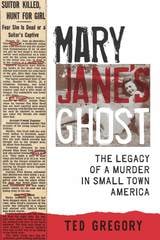
Mary Jane's Ghost
The Legacy of a Murder in Small Town AmericaTed Gregory
University of Iowa Press, 2017
Fast forward fifty years. Eccentric entrepreneur Michael Arians moves to Oregon, opens a roadhouse, gets elected mayor, and becomes obsessed with the crime. He comes up with a scandalous conspiracy theory and starts to believe that Mary Jane’s ghost is haunting his establishment. He also reaches out to the Chicago Tribune for help.
Arians’s letter falls on the desk of general assignment reporter Ted Gregory. For the next thirteen years, while he ricochets from story to story and his newspaper is deconstructed around him, Gregory remains beguiled by the case of the teenaged telephone operator Mary Jane and twenty-eight-year-old Navy vet Stanley—and equally fascinated by Arians’s seemingly hopeless pursuit of whoever murdered them. Mary Jane’s Ghost is the story of these two odysseys.
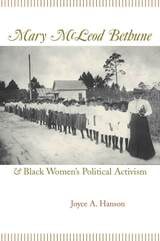
Mary McLeod Bethune and Black Women's Political Activism
Joyce A. Hanson
University of Missouri Press, 2003
Mary McLeod Bethune was a significant figure in American political history. She devoted her life to advancing equal social, economic, and political rights for blacks. She distinguished herself by creating lasting institutions that trained black women for visible and expanding public leadership roles. Few have been as effective in the development of women’s leadership for group advancement. Despite her accomplishments, the means, techniques, and actions Bethune employed in fighting for equality have been widely misinterpreted.
Examining the historical evolution of African American women’s activism in the critical period between 1920 and 1950, a time previously characterized as “doldrums” for both feminist and civil rights activity, Mary McLeod Bethune and Black Women’s Political Activism is important for understanding the centrality of black women to the political fight for social, economic, and racial justice.
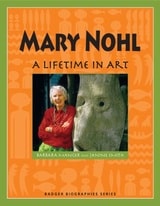
Mary Nohl
A Lifetime in ArtBarbara Manger
Wisconsin Historical Society Press, 2013
LOOK INSIDE THE LIFE — AND HOME — OF LEGENDARY 'OUTSIDER' ARTIST MARY NOHL
"Mary Nohl: A Lifetime in Art" by Barbara Manger and Janine Smith, tells the story of Milwaukee-born artist, Mary Nohl. A prolific and fanciful maker who worked in a variety of media, Nohl was both a mysterious figure and an iconic "outsider" artist. This new addition to the Badger Biographies series captures her life and will capture the imagination of readers, and artists, of all ages.
Nohl didn't just make art — she lived it. From the time she was young, Mary enjoyed making things, from the model airplane that won her a citywide prize to assignments in shop class, where she learned to work with tools.
Her interests in art blossomed during the years she spent training at the Art Institute of Chicago, leading to a lifetime of curiosity and ventures into new artistic media. From pottery to silver jewelry and oil painting to concrete sculpture, Mary explored new ways of making art. Many of her pieces were made from found objects that other people might think of as junk — like chicken bones, bedsprings and sand that she made into concrete.
Nohl, who made her home on the shores of Lake Michigan, decorated the interior of her cottage with bright colors and eye-catching figures in driftwood and glass. During her later years, her home became known as the "Witch's House" — a place of local legend known far beyond Fox Point. Though she died in 2001, Mary's legacy continues. Her art is held at the John Michael Kohler Arts Center in Sheboygan, and her home is listed on the National Register of Historic Places.
The popular Badger Biographies series for young readers explores the lives of famous and not-so-famous figures in Wisconsin history. The Wisconsin Historical Society Press is proud to celebrate the release of this, the 21st book in the series.
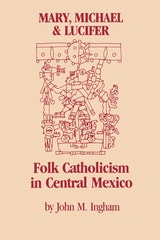
Mary, Michael, and Lucifer
Folk Catholicism in Central MexicoBy John M. Ingham
University of Texas Press, 1986
The physical signs of Roman Catholicism pervade the Mexican countryside. Colonial churches and neighborhood chapels, wayside shrines, and mountaintop crosses dot the landscape. Catholicism also permeates the traditional cultures of rural communities, although this ideational influence is less immediately obvious. It is often couched in enigmatic idiom and imagery, and it is further obscured by the vestiges of pagan customs and the anticlerical attitudes of many villagers. These heterodox tendencies have even led some observers to conclude that Catholicism in rural Mexico is little more than a thin veneer on indigenous practice.
In Mary, Michael, and Lucifer John M. Ingham attempts to develop a modern semiotic and structuralist interpretation of traditional Mexican culture, an interpretation that accounts for the culture's apparent heterodoxy. Drawing on field research in Tlayacapan, Morelos, a village in the central highlands, he shows that nearly every domain of folk culture is informed with religious meaning. More precisely, the Catholic categories of spirit, nature, and evil compose the basic framework of the villagers' social relations and subjective experiences.

Maryat Lee's EcoTheater
A Theater for the Twenty-first CenturyWILLIAM W. FRENCH
West Virginia University Press, 1998
Maryat Lee : a life in the theater, Dope!, and salt -- EcoTheater : the one thing willed -- EcoTheater's significance to the twenty-first century -- The EcoTheater process -- Sample EcoTheater scenes -- Some sayings and writings of Maryat Lee -- Maryat Lee : personal reminiscences -- Chronology
Masculinist Impulses
Toomer, Hurston, Black Writing, and ModernityNathan Grant
University of Missouri Press, 2004
Grant’s book provides close readings of Jean Toomer (Cane and Natalie Mann) and Zora Neale Hurston (Moses, Man of the Mountain, Seraph of the Suwanee, and Their Eyes Were Watching God), for whom the American South was a crucial locus of the African American experience. Toomer and Hurston were virtually alone among the Harlem Renaissance writers of prose who returned to the South for their literary materials. That return, however, allowed their rediscovery of key black masculine values and charted the northern route of those values in the twentieth century to their compromise and destruction.
Grant then moves on to three more recent writers—John Edgar Wideman, Gloria Naylor, and Toni Morrison—who expanded upon and transformed the themes of Toomer and Hurston. Like Toomer and Hurston, these later authors recognized the need for the political union of black men and women in the effort to realize the goals of equity and justice.
Masculinist Impulses discusses nineteenth- and twentieth-century black masculinity as both a feature and a casualty of modernism. Scholars and students of African American literature will find Grant’s nuanced and creative readings of these key literary texts invaluable.
Masculinity Besieged?
Issues of Modernity and Male Subjectivity in Chinese Literature of the Late Twentieth CenturyXueping Zhong
Duke University Press, 2000
Before the 1990s onslaught of popular culture decentered the role of intellectuals within the nation, they had come to embody Chinese masculinity during the previous decade. The focus on masculinity in literature had become unprecedented in scale and the desire for “real men” began to permeate Chinese popular culture, making icons out of Rambo and Takakura Ken. Stories by Zhang Xianliang and Liu Heng portraying male anxiety about masculine sexuality are employed by Zhong to show how “marginal” males negotiate their sexual identities in relation to both women and the state. Looking at writers popular among not only the well-educated but also the working and middle classes, she discusses works by Han Shaogong, Yu Hua, and Wang Shuo and examines instances of self-loathing male voices, particularly as they are articulated in Mo Yan’s well-known work Red Sorghum. In her last chapter Zhong examines “roots literature,” which speaks of the desire to create strong men as a part of the effort to create a geopolitically strong Chinese nation. In an afterword, Zhong situates her study in the context of the 1990s.
This book will be welcomed by scholars of Chinese cultural studies, as well as in literary and gender studies.
Masses and Man
Nationalist and Fascist Perceptions of RealityGeorge L. Mosse
University of Wisconsin Press, 2024
Masses and Man comprises three parts. The first lays out a cultural history of nationalism, essentially the first of its kind, emphasizing the importance of sacred expressions like myths, symbols, and rituals as appropriated in a political context. The second zeroes in on fascism’s most dramatic irruptions in European history in the rise of Italian Fascism and the Nazi Party in Germany, elucidating these as not just political movements but also cultural and even aesthetic ones. The third part considers nationalism and fascism from the particular standpoint of German Jews.
Taken in full, the volume offers an eloquent summation of Mosse’s groundbreaking insights into European nationalism, fascism, and Jewish history in the twentieth century. A new critical introduction by Enzo Traverso helpfully situates Mosse’s work in context and exposes the many ways in which Masses and Man, first published in 1980, remains relevant today.

Master of the Air
William Tunner and the Success of Military AirliftRobert A. Slayton
University of Alabama Press, 2010
Into this difficult situation the US placed General William Henry Tunner. He was given a task that seemed doomed to failure—to supply a major city by air with everything it needed to survive from food to a winter’s supply of coal—and made it a brilliant success, astonishing the world in a major public relations defeat for the Soviets, and demonstrating the unexpected capacity of air fleets in a postwar world.
Mastery and Drift
Professional-Class Liberals since the 1960sEdited by Brent Cebul and Lily Geismer
University of Chicago Press, 2025
Since the 1960s, American liberalism and the Democratic Party have been remade along professional class lines, widening liberalism’s impact but narrowing its social and political vision. In Mastery and Drift, historians Brent Cebul and Lily Geismer have assembled a group of scholars to address the formation of “professional-class liberalism” and its central role in remaking electoral politics and the practice of governance. Across subjects as varied as philanthropy, consulting, health care, welfare, race, immigration, economics, and foreign conflicts, the authors examine not only the gaps between liberals’ egalitarian aspirations and their approaches to policymaking but also how the intricacies of contemporary governance have tended to bolster professional-class liberals’ power.
The contributors to Mastery and Drift all came of age amid the development of professional-class liberalism, giving them distinctive and important perspectives in understanding its internal limitations and its relationship to neoliberalism and the Right. With never-ending disputes over the meaning of liberalism, the content of its governance, and its relationship to a resurgent Left, now is the time to consider modern liberalism’s place in contemporary American life.
Mastery and Escape
T. S. Eliot and the Dialectic of ModernismJewel Spears Brooker
University of Massachusetts Press, 1994
This seminal scholarly work examines T. S. Eliot's literary development and philosophical outlook through the lens of modernist dialectics, exploring the tension between mastery and escape as central to understanding both his poetry and critical thought. Edited and written by acclaimed Eliot scholar Jewel Spears Brooker, this volume presents expert studies of key intellectual influences on Eliot's modernism—particularly Stéphane Mallarmé, Sir James George Frazer, F. H. Bradley, and T. E. Hulme—yielding fresh and original insights into how these thinkers shaped the poet's artistic vision.
Through careful textual analysis and intellectual history, Brooker investigates how Eliot grappled with fundamental modernist anxieties: the desire for artistic mastery and transcendence alongside the simultaneous impulse toward escape from the constraints of tradition, rationality, and conventional form. She demonstrates how Eliot's poetry and prose reflect a dialectical movement, a constant interplay between opposing forces, that defines both his modernist aesthetics and his philosophical positions.
An essential resource for scholars seeking comprehensive understanding of modernism's philosophical foundations and poetic achievements, Brooker is devoted to tracing both dialectical movements and biographical developments in Eliot's career.
Material Events
Paul de Man and the Afterlife of TheoryTom Cohen
University of Minnesota Press, 2000
Renowned contributors use the late work of this crucial figure to open new speculations on "materiality."
A "material event," in one of Paul de Man’s definitions, is a piece of writing that enters history to make something happen. This interpretation hovers over the publication of this volume, a timely reconsideration of de Man’s late work in its complex literary, critical, cultural, philosophical, political, and historical dimensions.
A distinguished group of scholars responds to the problematic of "materialism" as posed in Paul de Man’s posthumous final book, Aesthetic Ideology. These contributors, at the forefront of critical theory, productive thinking, and writing in the humanities, explore the question of "material events" to illuminate not just de Man’s work but their own. Prominent among the authors here is Jacques Derrida, whose extended essay “Typewriter Ribbon: Limited Inc (2)” returns to a celebrated episode in Rousseau’s Confessions that was discussed by de Man in Allegories of Reading.
The importance of de Man’s late work is related to a broad range of subjects and categories and-in Derrida’s provocative reading of de Man’s concept of "materiality"-the politico-autobiographical texts of de Man himself. This collection is essential reading for all those interested in the present state of literary and cultural theory.
Contributors: Judith Butler, UC Berkeley; T. J. Clark, UC Berkeley; Jacques Derrida, École des Hautes Études en Sciences Sociales and UC Irvine; Barbara Johnson, Harvard U; Ernesto Laclau, U of Essex; Arkady Plotnitsky, Purdue U; Laurence A. Rickels, UC Santa Barbara; and Michael Sprinker.
Materializing Imaginaries in Senegal
Modern African Literature and Global 1968Fatoumata Seck
Duke University Press, 2026
Materials of the Mind
Phrenology, Race, and the Global History of Science, 1815-1920James Poskett
University of Chicago Press, 2019
Phrenology was the most popular mental science of the Victorian age. From American senators to Indian social reformers, this new mental science found supporters around the globe. Materials of the Mind tells the story of how phrenology changed the world—and how the world changed phrenology.
This is a story of skulls from the Arctic, plaster casts from Haiti, books from Bengal, and letters from the Pacific. Drawing on far-flung museum and archival collections, and addressing sources in six different languages, Materials of the Mind is an impressively innovative account of science in the nineteenth century as part of global history. It shows how the circulation of material culture underpinned the emergence of a new materialist philosophy of the mind, while also demonstrating how a global approach to history can help us reassess issues such as race, technology, and politics today.

Maternal Body and Voice in Toni Morrison, Bobbie Ann Mason, and Lee Smith
Paula Gallant Eckard
University of Missouri Press, 2002
Maternal Fictions
Stendahl, Sand, Rachilde, and BatailleMaryline Lukacher
Duke University Press, 1994
Through readings of Armance, Le Rouge et le noir, La Vie de Henry Brulard, and Les Cenci, Lukacher exposes Stendhal's preoccupation with his dead mother, who is obsessively retrieved throughout his work. George Sand's identity is, in effect, divided between two mothers, her biological mother and her grandmother, and in Histoire de ma vie, Indiana, and Mauprat, we see the writer's efforts to break the impasse created by this divided identity. In the extraordinary but too little known work of Rachilde (Marguerite Eymery), Lukacher finds the maternal figure identified as the secret inner force of patriarchal oppression. This resistance to feminism continues in the pseudonymous work of Georges Bataille. In Ma mère, Le coupable, and L’Expérience intérieure Lukacher traces Bataille’s representation of the mother as a menacing, ever subversive figure who threatens basic social configurations.
Maternal Fictions establishes a new pseudonymous genealogy in modern French writing that will inform and advance our understanding of the act of self-creation that occurs in fiction.
Matisse
The BooksLouise Rogers Lalaurie
University of Chicago Press, 2020
With deftness and sensitivity, Louise Rogers Lalaurie reintroduces us to Matisse by considering how in each volume, Matisse constructed an intriguing dialogue between word and image. Examining this page-by-page interplay, translating key sequences, and discussing the books’ distinct themes and production histories, Lalaurie offers the thoughtful analysis these works deserve. Together Matisse’s artist books reveal his deep engagement with questions of beauty and truth; his faith; his perspectives on aging, loss, and inspiration; and his relationship to his critics, the French art establishment, and the women in his life. In addition, Lalaurie illuminates Matisse’s often misunderstood political affinities—though Matisse was vilified in his time for choosing to live in the collaborationist Vichy zone, his wartime books reveal a body of work that stands as a deeply personal statement of resistance.
Lavishly illustrated, Matisse: The Books showcases a rich group of underappreciated works and brings unprecedented clarity to a controversial period in the artist’s life.
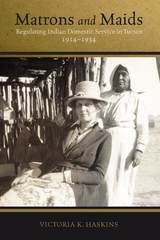
Matrons and Maids
Regulating Indian Domestic Service in Tucson, 1914–1934Victoria K. Haskins
University of Arizona Press, 2012
From 1914 to 1934 the US government sent Native American girls to work as domestic servants in the homes of white families. Matrons and Maids tells this forgotten history through the eyes of the women who facilitated their placements. During those two decades, “outing matrons” oversaw and managed the employment of young Indian women. In Tucson, Arizona, the matrons acted as intermediaries between the Indian and white communities and between the local Tucson community and the national administration, the Office of Indian Affairs.
Based on federal archival records, Matrons and Maids offers an original and detailed account of government practices and efforts to regulate American Indian women. Haskins demonstrates that the outing system was clearly about regulating cross-cultural interactions, and she highlights the roles played by white women in this history. As she compellingly argues, we cannot fully engage with cross-cultural histories without examining the complex involvement of white women as active, if ambivalent, agents of colonization.
Including stories of the entwined experiences of Indigenous and non-Indigenous women that range from the heart-warming to the heart-breaking, Matrons and Maids presents a unique perspective on the history of Indian policy and the significance of “women’s work.”
Matters of Gravity
Special Effects and Supermen in the 20th CenturyScott Bukatman
Duke University Press, 2003
Considering theme parks, cyberspace, cinematic special effects, superhero comics, and musical films, Matters of Gravity highlights phenomena that make technology spectacular, permit unfettered flights of fantasy, and free us momentarily from the weight of gravity and history, of past and present. Bukatman delves into the dynamic ways pop culture imagines that apotheosis of modernity: the urban metropolis. He points to two genres, musical films and superhero comics, that turn the city into a unique site of transformative power. Leaping in single bounds from lively descriptions to sharp theoretical insights, Matters of Gravity is a deft, exhilarating celebration of the liberatory effects of popular culture.
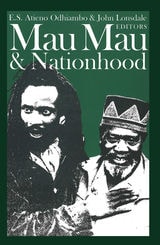
Mau Mau and Nationhood
Arms, Authority, and NarrationE. S. Atieno Odhiambo
Ohio University Press, 2003
Fifty years after the declaration of the state of emergency, Mau Mau still excites argument and controversy, not least in Kenya itself. Mau Mau and Nationhood is a collection of essays providing the most recent thinking on the uprising and its aftermath.
The work of well-established scholars as well as of young researchers with fresh perspectives, Mau Mau and Nationhood achieves a multilayered analysis of a subject of enduring interest. According to Terence Ranger, Emeritus Rhodes Professor, Oxford, “In some ways the historiography of Mau Mau is a supreme example not only of ambiguity and complexity, but also of redemption of a topic once thought incapable of rational analysis.”
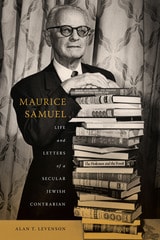
Maurice Samuel
Life and Letters of a Secular Jewish ContrarianAlan T. Levenson
University of Alabama Press, 2022
An intellectual biography that reassesses one of the premier Jewish humanists of the mid-twentieth century
In Maurice Samuel: Life and Letters of a Secular Jewish Contrarian, Alan T. Levenson captures the life, works, and milieu of the Romanian-born, English-educated, American belletrist Maurice Samuel. A diaspora intellectual—or a rooted cosmopolitan, as Levenson describes him—Samuel made an indelible mark on many features of contemporary Jewish thought and culture. A generalist in an age of experts, an independent scholar in an age of rabbis and professors, Samuel was one of the most productive and visible members of the group dubbed the “other” New York Jewish intellectuals.
His fame as a public intellectual and popular speaker were well warranted: no mere popularizer, Samuel contributed significantly to four seemingly unrelated but critical areas of modern Jewish thought. Samuel is characterized by some as principally a Zionist, by others as an accomplished translator and many Americans’ first entrée into the world of Yiddish literature, by still others as a polemicist and campaigner against anti-Semitism, and finally as a media-savvy Biblical critic, essayist, and radio personality. But he was all of these things, since Samuel succeeded in an era when it was possible to be a public intellectual without being an expert.
Drawing on Samuel’s vast literary opus, as well as previously unexplored archival material from three continents, this study writes Samuel back into the history of mid-twentieth-century American letters. Levenson argues that Samuel’s varied and substantive contributions demand reconsideration of our assumptions about the means and ends of cultural transmission, and merit him a place as one of twentieth-century American Jewry’s most significant cultural and intellectual voices.

Maverick Heart
The Further Adventures Of Zane GreyStephen J. May
Ohio University Press, 2000
In 1927, at the peak of his career, Zane Grey bought a three-masted schooner, which he sailed to the Galapagos Islands, later journeying to Tahiti, New Zealand, Australia, and Fiji.
As colorful as his characters were, so too was their creator. A consummate explorer, Zane Grey toured the world, was an acclaimed expert on salt- and freshwater fishing, and incorporated the sights and sounds he witnessed into his writings.
As a companion to his biographical work of Grey’s literary life, Zane Grey: Romancing the West, author Stephen J. May now gives as a remarkable look into another aspect of Grey’s existence, the side little known but central to the measure of the man.
Maverick Heart makes use of Grey’s own memoirs and letters to give an enlightening portrait of this larger-than-life American character and a telling insight into one of the key shapers of the cultural heritage of our country.
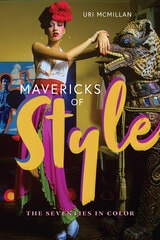
Mavericks of Style
The Seventies in ColorUri McMillan
Duke University Press, 2025

Max Brand
Western Giant: The Life and Times of Frederick Schiller FaustWilliam F. Nolan
University of Wisconsin Press, 1985
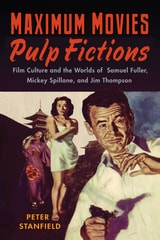
Maximum Movies—Pulp Fictions
Film Culture and the Worlds of Samuel Fuller, Mickey Spillane, and Jim ThompsonStanfield, Peter
Rutgers University Press, 2011
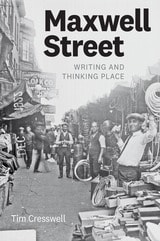
Maxwell Street
Writing and Thinking PlaceTim Cresswell
University of Chicago Press, 2019
In Maxwell Street, Cresswell advocates approaching the study of place as an “assemblage” of things, meanings, and practices. He models this innovative approach through a montage format that exposes the different types of texts—primary, secondary, and photographic sources—that have attempted to capture the essence of the area. Cresswell studies his historical sources just as he explores the different elements of Maxwell Street—exposing them layer by layer. Brilliantly interweaving words and images, Maxwell Street sheds light on a historic Chicago neighborhood and offers a new model for how to write about place that will interest anyone in the fields of geography, urban studies, or cultural history.

May '68
Donald M. Reid and Daniel J. Sherman, special issue editors
Duke University Press, 2018
Contributors: Ludivine Bantigny, Françoise Blum, Tony Côme, Boris Gobille, Bethany Keenan, Salar Mohandesi, Donald Reid, Sandrine Sanos, Daniel Sherman
Mayakovsky
A BiographyBengt Jangfeldt
University of Chicago Press, 2014
With Mayakovsky, Bengt Jangfeldt offers the first comprehensive biography of Mayakovsky, revealing a troubled man who was more dreamer than revolutionary, more political romantic than hardened Communist. Jangfeldt sets Mayakovsky’s life and works against the dramatic turbulence of his times, from the aesthetic innovations of the pre-revolutionary avant-garde to the rigidity of Socialist Realism and the destruction of World War I to the violence—and hope—of the Russian Revolution, through the tightening grip of Stalinist terror and the growing disillusion with Russian communism that eventually led the poet to take his life.
Through it all is threaded Mayakovsky’s celebrated love affair with Lili Brik and the moving relationship with Lili’s husband, Osip, along with a brilliant depiction of the larger circle of writers and artists around Mayakovsky, including Maxim Gorky, Viktor Shklovsky, Alexander Rodchenko, and Roman Jakobson. The result is a literary life viewed in the round, enabling us to understand the personal and historical furies that drove Mayakovsky and generated his still-startling poetry.
Illustrated throughout with rare images of key characters and locations, Mayakovsky is a major step in the revitalization of a crucial figure of the twentieth-century avant-garde.

Mayan Drifter
Chicano Poet in the Lowlands of AmericaJuan Herrera
Temple University Press, 1997
Mayor Harold Washington
Champion of Race and Reform in ChicagoRoger Biles
University of Illinois Press, 2020
Mazaltob
A NovelBlanche Bendahan
Brandeis University Press, 2024
Raised in the Judería or Jewish quarter of Tetouan, Morocco, at the turn of the 20th-century, sixteen-year-old Mazaltob finds herself betrothed to José, an uncouth man from her own community who has returned from Argentina to take a wife. Mazaltob, however, is in love with Jean, who is French, half-Jewish, and a free spirit. In this classic of North African Jewish fiction, Blanche Bendahan evokes the two compelling forces tearing Mazaltob apart in her body and soul: her loyalty to the Judería and her powerful desire to follow her own voice and find true love. Bendahan’s nuanced and moving novel is a masterly exploration of the language, religion, and quotidian customs constraining North African Jewish women on the cusp of emancipation and decolonization. Yaëlle Azagury and Frances Malino provide the first English translation of this modern coming-of-age tale, awarded a prize by the Académie Française in 1930, and analyze the ways in which Mazaltob, with its disconcerting blend of ethnographic details and modernist experimentation, is the first of its genre—that of the feminist Sephardi novel. A historical introduction, a literary analysis, and annotations elucidate historical and cultural terms for readers, supplementing the author’s original notes.
Measuring America
How Economic Growth Came to Define American Greatness in the Late Twentieth CenturyAndrew L. Yarrow
University of Massachusetts Press, 2010
The United States has always fancied itself a nation apart—"exceptional" in its values, traditions, and way of life. For most of the country's history, ideas about what made America distinctive generally were framed in terms of a liberal idealism rooted in the thought of John Locke and articulated by Jefferson, Madison, and other Founders. While some commentators also observed that the United States was a land of plenty, it wasn't until the mid-twentieth century that material abundance emerged as the principal standard of American “greatness,” as measured by a host of new economic indicators.
Beginning in earnest in the wake of World War II, opinion-shapers in politics, business, academia, the media, the schools, and public diplomacy gloried in the nation's booming economy. Where “plenty” had once been a largely abstract concept, it was now quantifiable, thanks to new national income accounting and other economic data collection and analysis techniques. One could tally up production and consumption of an ever-expanding cornucopia of goods and services that made up the gross national product (GNP), the king of postwar statistics. American preeminence and American identity were increasingly linked with this measurable prosperity, presented in the language of a newly influential economics profession.
In Measuring America, Andrew L. Yarrow explores this history, telling two parallel, interlocking stories—of how economic ideas came to have vastly greater influence on American culture after World War II, and how those ideas dovetailed with a growing belief that the meaning and value of the United States resided in its material output. How and why this new way of “measuring America” developed, how it was expressed, and what it has meant and means for Americans today are the subject of this well-researched and insightful book.
Measuring the Correlates of War
J. David Singer and Paul F. Diehl, Editors
University of Michigan Press, 1991
Measuring the Harlem Renaissance
The U.S. Census, African American Identity, and Literary FormMichael Soto
University of Massachusetts Press, 2016
In this provocative study, Michael Soto examines African American cultural forms through the lens of census history to tell the story of how U.S. officialdom—in particular the Census Bureau—placed persons of African descent within a shifting taxonomy of racial difference, and how African American writers and intellectuals described a far more complex situation of interracial social contact and intra-racial diversity. What we now call African American identity and the literature that gives it voice emerged out of social, cultural, and intellectual forces that fused in Harlem roughly one century ago.
Measuring the Harlem Renaissance sifts through a wide range of authors and ideas—from W. E. B. Du Bois, Rudolph Fisher, and Nella Larsen to Zora Neale Hurston, Langston Hughes, and Wallace Thurman, and from census history to the Great Migration—to provide a fresh take on late nineteenth—and twentieth—century literature and social thought. Soto reveals how Harlem came to be known as the “cultural capital of black America,” and how these ideas left us with unforgettable fiction and poetry.
Meatless Days
Sara Suleri Goodyear
University of Chicago Press, 1989
"Nine autobiographical tales that move easily back and forth among Pakistan, Britain, and the United States. . . . She forays lightly into Pakistani history, and deeply
into the history of her family and friends. . . . The Suleri women at home in Pakistan make this book sing."—Daniel Wolfe, New York Times Book Review
"A jewel of insight and beauty. . . . Suleri's voice has the same authority when she speaks about Pakistani politics as it does in her literary interludes."—Rone Tempest, Los Angeles Times Book Review
"The author has a gift for rendering her family with a few, deft strokes, turning them out as whole and complete as eggs."—Anita Desai, Washington Post Book World
"Meatless Days takes the reader through a Third World that will surprise and confound him even as it records the author's similar perplexities while coming to terms with the West. Those voyages Suleri narrates in great strings of words and images so rich that they left this reader . . . hungering for more."—Ron Grossman, Chicago Tribune
"Dazzling. . . . Suleri is a postcolonial Proust to Rushdie's phantasmagorical Pynchon."—Henry Louise Gates, Jr., Voice Literary Supplement
Medal Winners
How the Vietnam War Launched Nobel CareersBy Raymond S. Greenberg
University of Texas Press, 2020
As the ground war in Vietnam escalated in the late 1960s, the US government leveraged the so-called doctor draft to secure adequate numbers of medical personnel in the armed forces. Among newly minted physicians’ few alternatives to military service was the Clinical Associate Training Program at the National Institutes of Health. Though only a small percentage of applicants were accepted, the elite program launched an unprecedented number of remarkable scientific careers that would revolutionize medicine at the end of the twentieth century.
Medal Winners recounts this overlooked chapter and unforeseen byproduct of the Vietnam War through the lives of four former NIH clinical associates who would go on to become Nobel laureates. Raymond S. Greenberg traces their stories from their pre-NIH years and apprenticeships through their subsequent Nobel Prize–winning work, which transformed treatment of heart disease, cancer, and other diseases. Greenberg shows how the Vietnam draft unintentionally ushered in a golden era of research by bringing talented young physicians under the tutelage of leading scientists and offers a lesson in what it may take to replicate such a towering center of scientific innovation as the NIH in the 1960s and 1970s.
Medbh McGuckian
Borbála Faragó
Bucknell University Press, 2025
Published by Bucknell University Press. Distributed worldwide by Rutgers University Press.
Meddling in Middle Europe
Britain and the 'Lands Between' 1919-1925Miklos Lojkó
Central European University Press, 2006

Medgar Evers
Mississippi MartyrMichael Vinson Williams
University of Arkansas Press, 2011
Media Laboratories
Late Modernist Authorship in South AmericaSarah Ann Wells
Northwestern University Press, 2017
Media Laboratories explores a pivotal time for South American literature of the 1930s and ’40s. Cinema, radio, and the typewriter, once seen as promising catalysts for new kinds of writing, began to be challenged by authors, workers, and the public. What happens when media no longer seem novel and potentially democratic but rather consolidated and dominant? Moving among authors from Brazil, Argentina, and Uruguay, and among the genres of fiction, the essay, popular journalism, and experimental little magazines, Sarah Ann Wells shows how writers on the periphery of global modernity were fashioning alternative approaches to these media. Analyzing authors such as Clarice Lispector, Jorge Luis Borges, and Felisberto Hernández, along with their lesser-known contemporaries, Media Laboratories casts a wide net: from spectators of Hollywood and Soviet montage films, to inventors of imaginary media, to proletarian typists who embodied the machine-human encounters of the period. The text navigates contemporary scholarly and popular debates about the relationship of literature to technological innovation, media archaeology, sound studies, populism, and global modernisms. Ultimately, Wells underscores a question that remains relevant: what possibilities emerge when the enthusiasm for new media has been replaced by anxiety over their potentially pernicious effects in a globalizing, yet vastly unequal, world?
Media Theory in Japan
Marc Steinberg and Alexander Zahlten, editors
Duke University Press, 2017
Media and the Global Cold War
Edited by Rossen Djagalov and Arvind Rajagopal
University of Illinois Press, 2027
Arvind Rajagopal and Rossen Djagalov present essays on the uses of Cold War media. Focusing on the Global South, the contributors illuminate how postcolonial nations and others defied superpower pressure to use media for nation-building and international cooperation. At the same time, communication infrastructures linked global regions in unequal ways that often reinforced the power of the United States. Throughout, the essays show how Cold War media practices like secrecy, propaganda, and cultural diplomacy cemented patterns that still influence global communication systems and international politics today.
Cutting-edge and timely, Media and the Global Cold War reveals the workings of media beyond the superpower rivalry.
Medical Readers' Theater
A Guide and ScriptsTodd L. Savitt
University of Iowa Press, 2002
Medicine Stories
Essays for RadicalsAurora Levins Morales
Duke University Press, 2019
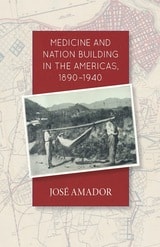
Medicine and Nation Building in the Americas, 1890-1940
Jose Amador
Vanderbilt University Press, 2015
Drawing on sources in Cuba, Puerto Rico, Brazil, and the United States, Amador shows that initiatives launched in colonial settings laid the foundation for the rise of public health programs in the hemisphere and transformed debates about the formation of national culture. Writers rethought theories of environmental and racial danger, while Cuban reformers invoked the yellow fever campaign to exclude nonwhite immigrants. Puerto Rican peasants flooded hookworm treatment stations, and Brazilian sanitarians embraced regionalist and imperialist ideologies. Together, these groups illustrated that public health campaigns developed in the shadow of empire propelled new conflicts and conversations about achieving modernity and progress in the tropics.
This book is a recipient of the annual Norman L. and Roselea J. Goldberg Prize for the best project in the area of medicine.
Medieval Essays (The Works of Christopher Dawson)
Christopher Dawson
Catholic University of America Press, 2002
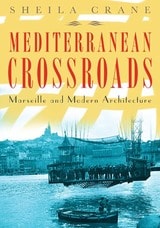
Mediterranean Crossroads
Marseille and Modern ArchitectureSheila Crane
University of Minnesota Press, 2010
Drawing together a cast of both world-renowned and less familiar architects, photographers, and cultural theorists, including Le Corbusier, Sigfried Giedion, Walter Benjamin, and László Moholy-Nagy, Mediterranean Crossroads examines how mythic ideas about Marseille helped to shape its urban landscape. Tracing successive planning proposals in tandem with shifting representations of the city in photographs, film, guidebooks, and postcards, Sheila Crane reconstructs the history and politics of architecture in Marseille from the 1920s through the years of rebuilding after World War II.
By exploring how architects and planners negotiated highly localized pressures, evolving imperial visions, and transnational aspirations at the borders of Europe and the Mediterranean region, Mediterranean Crossroads brings to life a lost chapter in the history of modern architecture.
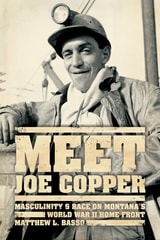
Meet Joe Copper
Masculinity and Race on Montana's World War II Home FrontMatthew L. Basso
University of Chicago Press, 2013
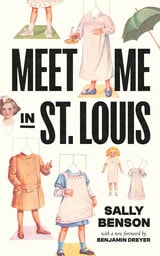
Meet Me in St. Louis
Sally Benson
University of Chicago Press, 2026
Sally Benson’s charming slice-of-life story is back in print for a new generation of readers.
Originally published as World War II raged overseas, Meet Me in St. Louis is Sally Benson’s semi-autobiographical account of the intergenerational Smith family during the twelve months leading up to the 1904 World’s Fair in St. Louis, Missouri. With warmth and tenderness, Benson chronicles the Smiths’ lives as they navigate sibling rivalries, first loves, financial hardship, jealousy, and heartaches in a poignant ode to the bonds of family.
Benson's novel is infused with wit as she details the lighthearted, pleasant existence of the Smith family’s five children—one rife with chaste crushes, victimless pranks, and other childhood escapades. Yet, the novel’s episodic, squeaky-clean veneer belies a dark comedic brilliance that transcends the ages and speaks, even today, to the universal experience of growing up.
Long out of print, this new edition of Benson’s timeless work includes a foreword by bestselling author Benjamin Dreyer, who comments both on the book's origins and its afterlife in popular culture as the source material for Judy Garland’s beloved musical of the same name. An effervescent midcentury novel waiting to be rediscovered, Meet Me in St. Louis is ready to meet its new generation of readers.
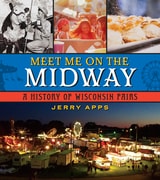
Meet Me on the Midway
A History of Wisconsin FairsJerry Apps
Wisconsin Historical Society Press, 2022