Results by title
4155 books match the query 'State & Local' and 216 start with m
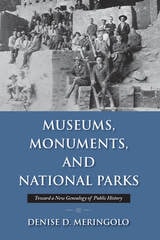
Museums, Monuments, and National Parks
Toward a New Genealogy of Public HistoryDenise D. Meringolo
University of Massachusetts Press, 2012
All of these developments included interpretive activities that shaped public understanding of the past. Yet it was not until the emergence of the education-oriented National Park Service history program in the 1920s and 1930s that public history found an institutional home that grounded professional practice simultaneously in the values of the emerging discipline and in government service. Even thereafter, tensions between administrators in Washington and practitioners on the ground at National Parks, monuments, and museums continued to define and redefine the scope and substance of the field. The process of definition persists to this day, according to Meringolo, as public historians establish a growing presence in major universities throughout the United States and abroad.

Music and Theater in Minnesota History
John K. Sherman
University of Minnesota Press, 1958
Music and Theater in Minnesota History was first published in 1958. Minnesota Archive Editions uses digital technology to make long-unavailable books once again accessible, and are published unaltered from the original University of Minnesota Press editions.
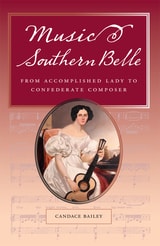
Music and the Southern Belle
From Accomplished Lady to Confederate ComposerCandace Bailey
Southern Illinois University Press, 2010
Candace Bailey’s exploration of the intertwining worlds of music and gender shows how young southern women pushed the boundaries of respectability to leave their unique mark on a patriarchal society. Before 1861, a strictly defined code of behavior allowed a southern woman to identify herself as a “lady” through her accomplishments in music, drawing, and writing, among other factors. Music permeated the lives of southern women, and they learned appropriate participation through instruction at home and at female training institutions. A belle’s primary venue was the parlor, where she could demonstrate her usefulness in the domestic circle by providing comfort and serving to enhance social gatherings through her musical performances, often by playing the piano or singing. The southern lady performed in public only on the rarest of occasions, though she might attend public performances by women. An especially talented lady who composed music for a broader audience would do so anonymously so that her reputation would remain unsullied.
The tumultuous Civil War years provided an opportunity for southern women to envision and attempt new ways to make themselves useful to the broader, public society. While continuing their domestic responsibilities and taking on new ones, young women also tested the boundaries of propriety in a variety of ways. In a broad break with the past, musical ladies began giving public performances to raise money for the war effort, some women published patriotic Confederate music under their own names, supporting their cause and claiming public ownership for their creations. Bailey explores these women’s lives and analyzes their music. Through their move from private to public performance and publication, southern ladies not only expanded concepts of social acceptability but also gained a valued sense of purpose.
Music and the Southern Belle places these remarkable women in their social context, providing compelling insight into southern culture and the intricate ties between a lady’s identity and the world of music. Augmented by incisive analysis of musical compositions and vibrant profiles of composers, this volume is the first of its kind, making it an essential read for devotees of Civil War and southern history, gender studies, and music.
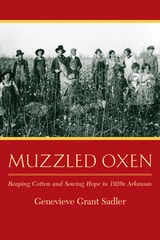
Muzzled Oxen
Reaping Cotton and Sowing Hope in 1920s ArkansasGenevieve Grant Sadler
Butler Center for Arkansas Studies, 2014
My Dearest Angel
A Virginia Family Chronicle 1895–1947Katie Letcher Lyle
Ohio University Press, 2002
She was the daughter of a circuit judge and state senator. He was the youngest son of Virginia’s Civil War governor and was a state legislator himself at the age of nineteen. Their courtship and marriage stands as a portrait of a bygone way of life unique to the American South during the first half of the twentieth century. My Dearest Angel is their story, told through their faithful correspondence over the course of their fifty years together.
Piecing together the voluminous letters, their granddaughter, noted author Katie Letcher Lyle, has succeeded in giving us an intimate panorama of the full and oftentimes wrenching lives led by Greenlee and Katie Letcher. Domestic life, family secrets, and visiting luminaries are part of their story. But the abiding appeal of My Dearest Angel is the maturation of a lifelong relationship built on the crest of a changing world.
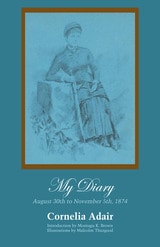
My Diary
August 30th to November 5th, 1874By Cornelia Adair. Introduction by Montagu K. Brown, Illustrations by Malcolm Thurgood
University of Texas Press, 1965
Cornelia Wadsworth Adair’s ancestors had pioneered in western New York, where they opened and developed large, palatial estates; and the life they lived was elegant and aristocratic. Adair too was discreetly cultured; yet she took great personal pleasure in the rough and primitive land of her famed JA Ranch in north Texas. Because of physical discomfort and noisy passengers, she detested traveling by railroad coach; yet she could ride all day on horseback and lie down to sleep on a makeshift cot by a waterhole or on an Indian’s flea-infested buffalo rug. She was a lady of interesting contradictions.
This little Diary is her lively account of a two-month trip which she and her husband made into the western part of the United States in 1874. The ostensible purpose of the trip was to hunt buffalo; however, these large beasts actually play a very small part in the journal. Rather, the book is an interesting and often amusing account, by an observant woman, of the long journey from her husband’s estate in Ireland to New York, to Chicago and on into upper Michigan, across Lake Superior to Minnesota, down the Mississippi for several days, out to the buffalo-hunting grounds in Nebraska, then to Denver and the wonders of the Rocky Mountains, and finally back to New York and the Europe-bound ship.
Adair writes with an easy fluency; and her eye for picturesque detail, her taste for amusing incongruities, her romanticist’s delight in Nature, and her instinct for a “good tale” combine to make her Diary pleasant and entertaining reading, while her powers of keen observation provide valuable insight into life as it was then in the West. First printed for private circulation in 1918, the original book is now a rare collector’s item of Western Americana. Mrs. Adair said that she was allowing its publication for two reasons. First, she was afraid that her grandchildren and young friends would remember her only as “an old lady who sat in an armchair, and whose stick had to be looked for”; she wanted them to know that she had once been “a very lively person . . . [who] did all sorts of exciting things.” Second, she felt it worthwhile to record her experiences because “the world is changing so quickly, ways of travelling especially so . . . and I think it may be interesting to compare what was done in 1874 with what will be done by the time the children are able to travel. No doubt they will do their journeys by air, and do many, many things that I have not been able to do; but they can never see the prairies of America in their wild uncivilised state, or hunt buffalo over them, nor can they pow-wow with the Red Indians in a camp on the Platte River. So every time has its own special joys, and the great thing is to miss as little as possible, and to share as much.”
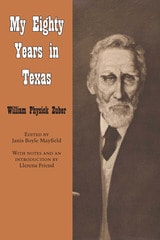
My Eighty Years in Texas
By William Physick Zuber
University of Texas Press, 1971
Almost a century and a half went into the making of My Eighty Years in Texas. It began as a diary, kept by fifteen-year-old William Physick Zuber after he joined Sam Houston’s Texas army in 1836, hoping he could emulate the heroism of American Revolutionary patriots. Although his hopes were never realized, Zuber recorded the privations, victories, and defeats of armies on the move during the Texas Revolution, the Indian campaigns, and, as he styled it, the Confederate War.
In 1910, at the age of ninety, Zuber began the enormous task of transcribing his diaries and his memories for publication. After his death in 1913, the handwritten manuscript, 1, was placed in the Texas State Archives, where it was used as a reference source by students and scholars of Texas history. Over a half century after Zuber’s death, Janis Boyle Mayfield finally brought his publication plans to fruition.
Zuber details his early zest for learning and his laborious methods of self-education. He tells of the trials of organizing and teaching schools in the sparsely populated plains. He recalls the day-by-day happenings of a private soldier in the Texas army of 1836, the Texas Militia, and the Confederate army—including the mishaps of army life and the encounters with enemies from San Jacinto to Cape Girardeau. After the Civil War, his interest turns to the politics of Reconstruction, the veterans’ pension, and the founding of the Texas Veterans Association.
This is the story of and by an outspoken Texian, complete with his attitudes, principles, and moralizings, and the nineteenth-century style and flavor of his writing.
Included as an appendix is “An Escape from the Alamo,” the account of Moses Rose for which Zuber, who was a prolific writer, was best known. A historiography of the Rose story, a bibliography of Zuber’s published and unpublished writings, annotation, and an introduction are provided by Llerena Friend.

My Father Said Yes
A White Pastor in Little Rock School IntegrationDunbar H. Ogden
Vanderbilt University Press, 2008
My Father Said Yes is the untold story of the Reverend Dunbar Ogden, who became the pro-integration leader in Little Rock's white community. He responded to a call for support from Daisy Bates, co-owner of the town's black newspaper. Both faced fierce opposition from within as well as from outside. Reverend Ogden lost his church and Daisy Bates lost her newspaper.
This memoir is also a moving father-son story. In this frank account, the author discusses the depression his father battled for most of his life, as well as the family tragedy of his brother's suicide.
My Father's Name
A Black Virginia Family after the Civil WarLawrence P. Jackson
University of Chicago Press, 2012
My Father’s Name is a family story full of twists and turns—and one of haunting familiarity to many Americans, who may question whether the promises of emancipation have ever truly been fulfilled. It is also a resolute look at the duties that come with reclaiming and honoring Americans who survived slavery and a thoughtful meditation on its painful and enduring history.
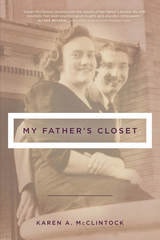
My Father’s Closet
Karen McClintock
The Ohio State University Press, 2017
“Karen McClintock reconstructs the details of her father’s double life with novelistic flair, keen psychological insight, and graceful compassion.” —Alison Bechdel
Thirty years after her father’s death, Karen McClintock sets out to find the gay father she never really knew. As we follow the unraveling family secret, we find ourselves drawn into her story as they stumble into infidelity, grieve heartbreaking losses, and remain loyal in love.
Set in Columbus, Ohio, My Father’s Closet tells the story of how just before the war, McClintock’s parents fell in love and married, while overseas in Germany the man whom she believes became her father’s lover was concealing his Jewish and gay identities in order to escape to America. A set of her father’s journals, letters her parents sent to each other during the Second World War, and a mysterious painting all lead her toward the truth about her gay father. McClintock weaves a complex secret into the fabric of lives we truly care about. And in the process, she leads us out of her father’s closet.
This gripping memoir captures the longing children feel for a distant or hidden parent and taps into the complexity of human connection and abandonment. The characters are resilient and vibrant. The hidden lovers, the nosey neighbors, and surprise lovers all show up. In the end, this extraordinary family finds ways to connect and freedom to love. Anyone who grew up with a family secret will appreciate the dynamics afoot in this fast-paced and compelling story.
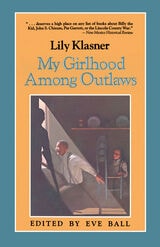
My Girlhood Among Outlaws
Lily Klasner
University of Arizona Press, 1972
In My Girlhood Among Outlaws, Lily recalls her experiences with Billy the Kid and other desperadoes, and sets the record straight on popular misrepresentations of events. Of particular interest to historians is her preservation of the diary of famous cattleman and family friend John Chisum.
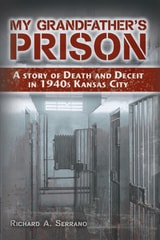
My Grandfather's Prison
A Story of Death and Deceit in 1940s Kansas CityRichard A. Serrano
University of Missouri Press, 2009
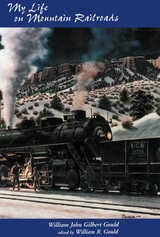
My Life On Mountain Railroads
William Gould
Utah State University Press, 1995
In 1917, Gilbert Gould achieved his dream to be an engineer, and began running engines for the Denver & Rio Grande and later for the Utah Railway. He was a natural storyteller, and his recollections are entertaining and historically rewarding.
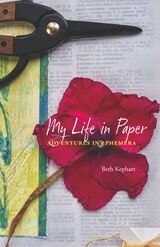
My Life in Paper
Adventures in EphemeraBeth Kephart
Temple University Press, 2023
Kephart’s obsession with paper began in the wake of her father’s death, when she began to handcraft books and make and marble paper in his memory. But it was when she read My Life with Paper, an autobiography by the late renowned paper hunter and historian Dard Hunter, that she felt she had found a kindred spirit, someone to whom she might address a series of one-sided letters about life and how we live it. Remembering and crafting, wanting and loving, doubting and forgetting—the spine and weave of My Life in Paper came into view.
Paper, for Kephart, provides proof of our yearning, proof of our failure, proof of the people who loved us and the people we have lost. It offers, too, a counterweight to the fickle state of memory.
My Life in Paper, illustrated by the author herself, is an intimate and poignant meditation on life’s most pressing questions.
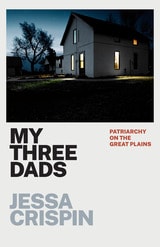
My Three Dads
Patriarchy on the Great PlainsJessa Crispin
University of Chicago Press, 2022
For many Americans, Kansas represents a vision of Midwestern life that is good and wholesome and evokes the American ideals of god, home, and country. But for those like Jessa Crispin who have grown up in Kansas, the realities are much harsher. She argues that the Midwestern values we cling to cover up a long history of oppression and control over Native Americans, women, and the economically disadvantaged.
Blending personal narrative with social commentary, Crispin meditates on why the American Midwest still enjoys an esteemed position in our country's mythic self-image. Ranging from The Wizard of Oz to race, from chastity to rape, from radical militias and recent terrorist plots to Utopian communities, My Three Dads opens on a comic scene in a Kansas rent house the author shares with a (masculine) ghost. This prompts Crispin to think about her intellectual fathers, her spiritual fathers, and her literal fathers. She is curious to understand what she has learned from them and what she needs to unlearn about how a person should be in a family, as a citizen, and as a child of god—ideals, Crispin argues, that have been established and reproduced in service to hierarchy, oppression, and wealth.
Written in Crispin’s well-honed voice—smart, assured, comfortable with darkness—My Three Dads offers a kind of bleak redemption, the insight that no matter where you go, no matter how far from home you roam, the place you came from is always with you, “like it or not.”

Myth and Southern History, Volume 1
The Old SouthEdited by Patrick Gerster and Nicholas Cords
University of Illinois Press, 1989