Results by title
5550 books match the query 'Biography & Autobiography' and 333 start with m

Mr. All-Around
The Life of Tom GolaDavid Grzybowski
Temple University Press, 2019
Tom Gola is a Philadelphia Big Five basketball icon. He led La Salle to the NIT championship in 1952 and the NCAA championship in 1954, and holds the NCAA record for most rebounds in a career. Gola also helped the Philadelphia Warriors win the NBA championship as a rookie in 1956 and was named an All-Star five times before retiring in 1966. But Gola also had many amazing achievements as a coach; his La Salle Explorer teams were a large part of the national basketball landscape. He was inducted into the Naismith Memorial Basketball Hall of Fame in 1976.
In Mr. All-Around, avid sports fan and reporter David Grzybowski provides a definitive biography of Gola. He uses exclusive interviews he conducted with Gola in 2013 and features anecdotes by many figures of Philadelphia and basketball history, including John Cheney, Fran Dunphy, and Lionel Simmons.
After the NBA, Gola transitioned to a second career as a politician, serving as Pennsylvania State Representative and Philadelphia City Controller. His dedication to public service involved joining politician Arlen Specter on a campaign that revolutionized political marketing within Philadelphia. Mr. All-Around is an affectionate testament to the life, career, and legacy of one of Philadelphia’s most beloved sports legends.
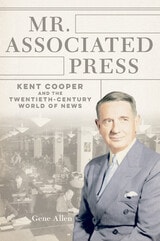
Mr. Associated Press
Kent Cooper and the Twentieth-Century World of NewsGene Allen
University of Illinois Press, 2023
- Finalist for the AEJMC Tankard Book Award
Allen critically assesses the many new approaches and causes that Cooper championed: introducing celebrity news and colorful features to a service previously known for stodgy reliability, pushing through disruptive technological innovations like the instantaneous transmission of news photos, and leading a crusade to bring American-style press freedom--inseparable from private ownership, in Cooper’s view--to every country. His insistence on truthfulness and impartiality presents a sharp contrast to much of today’s fractured journalistic landscape.
Deeply researched and engagingly written, Mr. Associated Press traces Cooper’s career as he built a new foundation for the modern AP and shaped the twentieth-century world of news.
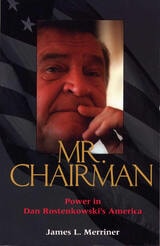
Mr. Chairman
Power in Dan Rostenkowski's AmericaJames L. Merriner
Southern Illinois University Press, 2002
The story of Dan Rostenkowski’s rise and fall provides one of the keys to how power is sought, won, exercised, and distributed in contemporary America, argues political journalist James L. Merriner.
A literal son of the Chicago political machine, Rostenkowski was installed in politics by his father, Alderman Joseph P. Rostenkowski, and by his mentor, Mayor Richard I. Daley. In his thirty-six year congressional career, he served nine presidents, forming close friendships with many of them. His legislative masterpiece was the 1986 tax reform law. Eight years later, he was indicted on federal charges for misusing tax dollars and campaign funds.
In his dealings with the man who tumbled dramatically from his high position as chair of the powerful House Ways and Means Committee all the way down to a cell in a federal prison in Wisconsin, Merriner finds Rostenkowski candid, straightforward, and authentic— "except when it came to his own finances."
Rostenkowski is not a complex man in need of psychoanalysis on the part of his biographer, and Merriner does not indulge in much of that. Purely, simply, and openly, Rostenkowski wanted power. He wanted wealth. He got both, and Merriner shows us how.
Merriner sees mythic qualities in Rostenkowski, characterizing him as the "tall bold slugger" of Carl Sandburg’s 1916 poem about Chicago. Noting that this master politician climbed to fantastic peaks only to fall hard and fast, Merriner points out that "Rostenkowski’s life ascended from power in the political science sense to tragedy in the classical sense." The Justice Department and the electorate sacrificed Rostenkowski as an embodiment of the excesses of big government. Like the Greek chorus of tragedy, major media reported the scandal to the masses.
Yet Merriner does not strain to make his subject fit a classical mold. He tells instead the "story of a great man who was also a little man, a statesman and a crook, an emotional man, an American original." This was also a man unbeaten by his troubles, a man who emerged from prison unabashed.
This illustrated biography is not authorized by Rostenkowski, who declined Merriner’s interview requests after June 1995. His sources are the public record, previous interviews with Rostenkowski and with many other sources before and after 1995, and his own political acumen gained from decades on the political scene.
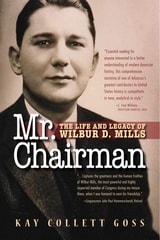
Mr. Chairman
The Life and Legacy of Wilbur D. MillsKay Collett Goss
Parkhurst Brothers, Inc., 2012
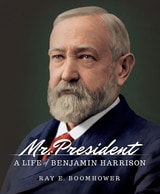
Mr. President
A Life of Benjamin HarrisonRay E. Boomhower
Indiana Historical Society Press, 2018
Mrs. Goodfellow
The Story of America's First Cooking SchoolBecky Libourel Diamond
Westholme Publishing, 2012
Recovering the Life and Influence of the “Mother of American Cooking,” the Woman Who Changed the Way We Learn How to Prepare Meals
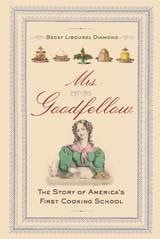
In Philadelphia during the first decades of the nineteenth century, a widow, Mrs. Elizabeth Goodfellow, ran a popular bakery and sweet shop. In addition to catering to Philadelphia’s wealthy families and a reputation of having the finest desserts and sweet dishes in the young country, her business stood out from every other establishment in another way: she ran a small school to learn the art of cooking, the first of its kind in America. Despite her fame—references to her cooking as a benchmark abound in the literature of the period—we know very little about who she was. Since she did not keep a journal and never published any of her recipes, we have to rely on her students, most notably Eliza Leslie, who fortunately recorded many of Goodfellow’s creations and techniques. Goodfellow is known to have made the first lemon meringue pie and for popularizing regional foods, such as Indian (corn) meal. Her students also recall that Mrs. Goodfellow stressed using simple wholesome ingredients that were locally grown, presaging modern culinary fashion.
By assembling the many parts of this puzzle from old recipe books, advertisements, letters, diaries, genealogical records, and other primary sources, researcher and writer Becky Diamond has been able to provide a more complete portrait of this influential figure in cooking history. Mrs. Goodfellow: The Story of America’s First Cooking School begins with what we know about Elizabeth Goodfellow—where she was born, her husbands, her children, where her shop was located. We then travel back in time to discover the kinds of foods that would have been available to Goodfellow and how she may have used them. The book next turns to the rise of both commercial eating establishements and books of recipes. From here, the author explains the rapid expansion of cooking schools, such as the New York Cooking Academy and the Boston Cooking School, made famous through its association with Fannie Farmer, and ends with a discussion of the role of celebrity chefs. Thoroughly researched and including a range of authentic recipes, Mrs. Goodfellow is a delicious exploration of the life and legacy of one of America’s most influential cooks.
Muhammad Ali
The Making of an IconMichael Ezra
Temple University Press, 2009
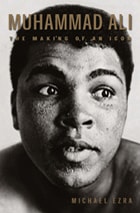
Muhammad Ali (born Cassius Clay) has always engendered an emotional reaction from the public. From his appearance as an Olympic champion to his iconic status as a national hero, his carefully constructed image and controversial persona has always been intensely scrutinized. In Muhammad Ali, Michael Ezra considers the boxer who calls himself “The Greatest” from a new perspective. He writes about Ali’s pre-championship bouts, the management of his career and his current legacy, exploring the promotional aspects of Ali and how they were wrapped up in political, economic, and cultural “ownership.”
Ezra’s incisive study examines the relationships between Ali’s cultural appeal and its commercial manifestations. Citing examples of the boxer’s relationship to the Vietnam War and the Nation of Islam—which serve as barometers of his “public moral authority”—Muhammad Ali analyzes the difficulties of creating and maintaining these cultural images, as well as the impact these themes have on Ali’s meaning to the public.
Murder in Hollywood
Solving a Silent Screen MysteryCharles Higham
University of Wisconsin Press, 2004
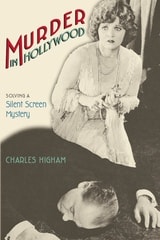
When it was discovered that a famous star of the day had probably killed Taylor, a massive cover-up began—from the removal of crucial evidence to the naming of innocent people as killers—which has continued until now to protect the truth. Murder in Hollywood goes beyond the killing to unearth unknown details about the life of Taylor before his arrival in Hollywood, as well as the stories and histories buried by the crooked authorities and criminals involved the case. The author’s exclusive interviews with the culpable star, his unique possession of long-vanished police records, and the support of the present-day Los Angeles county coroner—who examined the evidence as if the murder had taken place now—have ensured a hair-raising thriller.
Charles Higham successfully presents the most plausible and convincing solution yet to the mystery. In the process he paints a vivid portrait of Hollywood in the 1920s—from its major stars to its bisexual subculture. The result is a compelling answer to a long-standing mystery and a fascinating study of a place, and an industry that, as today, let people reinvent themselves. Murder in Hollywood is more extraordinary than any crime of fiction and more exciting than any action adventure movie.
Muriel Spark
The BiographyMartin Stannard
Northwestern University Press, 2011
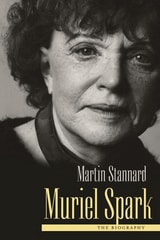
Spark achieved international celebrity with The Prime of Miss Jean Brodie (1961), later adapted into a successful play and film. John Updike, Tennessee Williams, Evelyn Waugh, and Graham Greene, among others, applauded her work. She lived part-time in New York City, had an office at the New Yorker, and became friends with Shirley Hazzard and W. H. Auden. Spark ultimately settled in Italy, where for more than thirty years—until her death in 2006—she shared a house with the artist Penelope Jardine. Spark gave Martin Stannard full access to her papers. He interviewed her many times as well as speaking to her colleagues, friends, and family members. The result is an indelible portrait of one of the most significant and emotionally complicated writers of the twentieth century, full of strong feeling, sharp wit, and unabashed ambition.
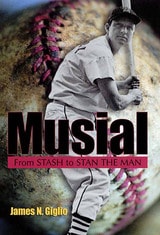
Musial
From Stash to Stan the ManJames N. Giglio
University of Missouri Press, 2001
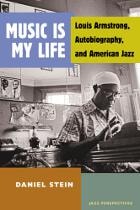
Music Is My Life
Louis Armstrong, Autobiography, and American JazzDaniel Stein
University of Michigan Press, 2012
Music Is My Life is the first comprehensive analysis of Louis Armstrong's autobiographical writings (including his books, essays, and letters) and their relation to his musical and visual performances. Combining approaches from autobiography theory, literary criticism, intermedia studies, cultural history, and musicology, Daniel Stein reconstructs Armstrong's performances of his life story across various media and for different audiences, complicating the monolithic and hagiographic views of the musician.
The book will appeal to academic readers with an interest in African American studies, jazz studies, musicology, and popular culture, as well as general readers interested in Armstrong's life and music, jazz, and twentieth-century entertainment. While not a biography, it provides a key to understanding Armstrong's oeuvre as well as his complicated place in American history and twentieth-century media culture.
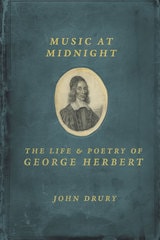
Music at Midnight
The Life and Poetry of George HerbertJohn Drury
University of Chicago Press, 2014
As Drury writes in his preface, Herbert lived “a quiet life with a crisis in the middle of it.” Drury follows Herbert from his academic success as a young man, seemingly destined for a career at court, through his abandonment of those hopes, his devotion to the restoration of a church in Huntingdonshire, and his final years as a country parson. Because Herbert’s work was only published posthumously, it has always been difficult to know when or in what context Herbert wrote his poems. But Drury skillfully places readings of the poems into his narrative at biographically credible moments, allowing us to appreciate not only Herbert’s frame of mind while writing, but also the society that produced it. A sensitive critic of Herbert’s poems as well as a theologian, Drury does full justice to the spiritual dimension of Herbert’s work. In addition, he reveals the occasions of sorrow, happiness, regret, and hope that Herbert captured in his poetry and that led T. S. Eliot to write, “What we can confidently believe is that every poem . . . is true to the poet’s experience.”
Painting a picture of a man torn between worldly ambition and spiritual life, Music at Midnight is an eloquent biography that breathes new life into some of the greatest English poems ever written.
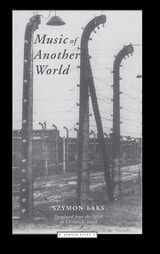
Music of Another World
Szymon Laks
Northwestern University Press, 2000
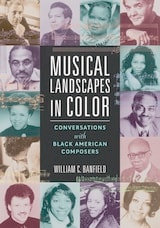
Musical Landscapes in Color
Conversations with Black American ComposersWilliam C. Banfield
University of Illinois Press, 2023
Composers featured: Michael Abels, H. Leslie Adams, Lettie Beckon Alston, Thomas J. Anderson, Dwight Andrews, Regina Harris Baiocchi, David Baker, William C. Banfield, Ysaye Maria Barnwell, Billy Childs, Noel DaCosta, Anthony Davis, George Duke, Leslie Dunner, Donal Fox, Adolphus Hailstork, Jester Hairston, Herbie Hancock, Jonathan Holland, Anthony Kelley, Wendell Logan, Bobby McFerrin, Dorothy Rudd Moore, Jeffrey Mumford, Gary Powell Nash, Stephen Newby, Coleridge-Taylor Perkinson, Michael Powell, Patrice Rushen, George Russell, Kevin Scott, Evelyn Simpson-Curenton, Hale Smith, Billy Taylor, Frederick C. Tillis, George Walker, James Kimo Williams, Julius Williams, Tony Williams, Olly Wilson, and Michael Woods
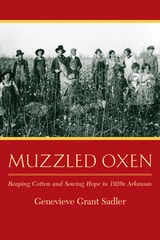
Muzzled Oxen
Reaping Cotton and Sowing Hope in 1920s ArkansasGenevieve Grant Sadler
Butler Center for Arkansas Studies, 2014
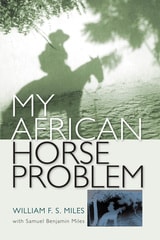
My African Horse Problem
William F. S. Miles
University of Massachusetts Press, 2008
My African Horse Problem recounts the intricacies of this unusual father-son expedition, a sometimes harrowing two-week trip that Samuel joined as "true heir" to the disputed stallion. It relates the circumstances leading up to the dispute and describes the intimacy of a relationship spanning a quarter century between William Miles and the custodians of his family horse—Islamic village friends eking out a precarious existence along the remote sub-Saharan borderline between Nigeria and Niger.
My African Horse Problem is a multi-layered narrative—part memoir, part ethnography—reaching back to Miles's days as a Peace Corps volunteer in Niger in the 1970s and a Fulbright scholar in the 1980s. At a deeper level, the story juxtaposes the idealistic and sometimes irresponsible tendencies of a young university graduate with the parental concerns of a middle-aged, tenured professor. Miles wonders if he was justified in exposing Sam to some of the worst health risks on earth, mainly to restore tenuous ties with long-ago friends in the African bush. Was it reckless to make his son illegally cross international boundaries, in a quixotic quest for justice and family honor? My African Horse Problem is more than an adventurer's tale with a unique story line: it is a father-son travel rumination, leavened by Sam's journal entries that help his father see Africa anew through a child's fresh eyes. In this era of religious and racial tensions, it is also a reaffirmation—within a black Muslim context—of the basic human imperative of trust.
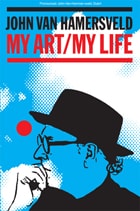
My Art, My Life
John Van Hamersveld
St. Augustine's Press, 2010
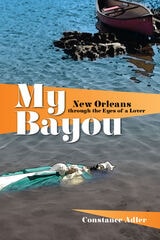
My Bayou
New Orleans through the Eyes of a LoverConstance Adler
Michigan State University Press, 2012
A vividly described and intensely personal memoir, My Bayou charts a personal and spiritual transformation along the fabled banks of Bayou Saint John in New Orleans. When Constance Adler moves to New Orleans, she begins what becomes a lasting love affair with the city, and especially the bayou—a living entity and the beating heart of local culture. Rites of passage, celebrations, mysterious accidents, and magic all take place on its banks, leading Adler to a vibrant awareness of the power of being part of a community. That faith is tested in the wake of Hurricane Katrina, and is ultimately proven right, as Bayou Saint John begins to rebuild.
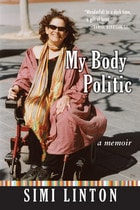
My Body Politic
A MemoirSimi Linton
University of Michigan Press, 2005
-Daniel Berrigan, S.J.
"The struggles, joys, and political awakening of a firecracker of a narrator. . . . Linton has succeeded in creating a life both rich and enviable. With her crackle, irreverence, and intelligence, it's clear that the author would never be willing to settle. . . . Wholly enjoyable."
-Kirkus Reviews
"Linton is a passionate guide to a world many outsiders, and even insiders, find difficult to navigate. . . . In this volume, she recounts her personal odyssey, from flower child . . . to disability-rights/human rights activist."
-Publishers Weekly
"Witty, original, and political without being politically correct, introducing us to a cast of funny, brave, remarkable characters (including the professional dancer with one leg) who have changed the way that 'walkies' understand disability. By the time Linton tells you about the first time she was dancing in her wheelchair, you will feel like dancing, too."
---Carol Tavris, author of Anger: The Misunderstood Emotion
"This astonishing book has perfect pitch. It is filled with wit and passion. Linton shows us how she learned to 'absorb disability,' and to pilot a new and interesting body. With verve and wonder, she discovers her body's pleasures, hungers, surprises, hurts, strengths, limits, and uses."
-Rosemarie Garland-Thomson, author of Extraordinary Bodies: Figuring Physical Disability in American Culture and Literature
"An extraordinarily readable account of life in the fast lane... a brilliant autobiography and a great read."
-Sander L. Gilman, author of Fat Boys: A Slim Book
While hitchhiking from Boston to Washington, D.C., in 1971 to protest the war in Vietnam, Simi Linton was involved in a car accident that paralyzed her legs and took the lives of her young husband and her best friend. Her memoir begins with her struggle to regain physical and emotional strength and to resume her life in the world. Then Linton takes us on the road she traveled (with stops in Berkeley, Paris, Havana) and back to her home in Manhattan, as she learns what it means to be a disabled person in America.
Linton eventually completed a Ph.D., remarried, and began teaching at Hunter College. Along the way she became deeply committed to the disability rights movement and to the people she joined forces with. The stories in My Body Politic are populated with richly drawn portraits of Linton's disabled comrades, people of conviction and lusty exuberance who dance, play-and organize--with passion and commitment.
My Body Politic begins in the midst of the turmoil over Vietnam and concludes with a meditation on the U.S. involvement in the current war in Iraq and the war's wounded veterans. While a memoir of the author's gradual political awakening, My Body Politic is filled with adventure, celebration, and rock and roll-Salvador Dali, James Brown, and Jimi Hendrix all make cameo appearances. Linton weaves a tale that shows disability to be an ordinary part of the twists and turns of life and, simultaneously, a unique vantage point on the world.
My Brother's Keeper
George McGovern and Progressive ChristianityMark A. Lempke
University of Massachusetts Press, 2017
George McGovern is chiefly remembered for his landslide loss to Richard Nixon in 1972. Yet at the time, his candidacy raised eyebrows by invoking the prophetic tradition, an element of his legacy that is little studied. In My Brother's Keeper, Mark A. Lempke explores the influence of McGovern's evangelical childhood, Social Gospel worldview, and conscientious Methodism on a campaign that brought antiwar activism into the mainstream.
McGovern's candidacy signified a passing of the torch within Christian social justice. He initially allied with the ecumenical movement and the mainline Protestant churches during a time when these institutions worked easily with liberal statesmen. But the senator also galvanized a dynamic movement of evangelicals rooted in the New Left, who would dominate subsequent progressive religious activism as the mainline entered a period of decline. My Brother's Keeper argues for the influential, and often unwitting, role McGovern played in fomenting a “Religious Left” in 1970s America, a movement that continues to this day. It joins a growing body of scholarship that complicates the dominant narrative of that era's conservative Christianity.
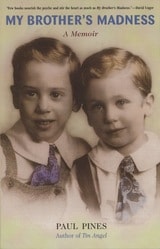
My Brother's Madness
A MemoirPaul Pines
Northwestern University Press, 2007
My Brother's Madness is part thriller, part exploration that not only describes the causes, character, and journey of mental illness, but also makes sense of it. It is ultimately a story of our own humanity, and answers the question, Am I my brother's keeper?
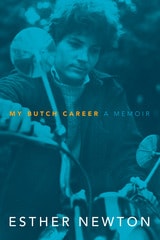
My Butch Career
A MemoirEsther Newton
Duke University Press, 2018
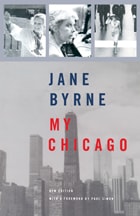
My Chicago
Jane Byrne
Northwestern University Press, 2003
My Chicago is the story of Jane Byrne's rise from young campaign worker to the mayor's office, all within the bruising arena of Chicago politics. Part sociopolitical history, part memoir, it begins with a history of the city and her early life, before she enters politics as a paid staff member of JFK's presidential campaign and, soon after, begins service in the Chicago Machine, but not of it.
Her view from the inside allows Byrne to sketch portraits of Daley, for whom she eventually worked, members of the Kennedy family, and Presidents Carter and Reagan. And, of course, it provides a fascinating perspective on the battle to succeed Daley, which ended with her own triumph over the Machine and a controversial term as mayor, which saw her begin development across the city and (famously) move into the Cabrini-Green housing project. The first memoir by a Chicago mayor in two generations, My Chicago is a valuable history as well as an entertaining look at no-holds-barred city politics.
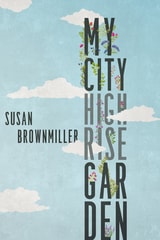
My City Highrise Garden
Kleit,Micah
Rutgers University Press, 2017
She reports the catastrophes: losing daytime access during building-wide renovations; assaults from a mockingbird during his mating season. And the joys: a peach tree fruited for fifteen years; the windswept birches lasted for twenty-five. Butterflies and bees pay annual visits. She pampers a buddleia, a honeysuckle, roses, hydrangeas, and more. Her adventures celebrate the tenacity of nature, inviting readers to marvel at her garden’s resilience, and her own.
Enhanced by over thirty color photographs, this passionate account of green life in a gritty, urban environment will appeal to readers and gardeners wherever they dwell.
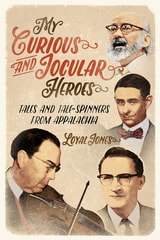
My Curious and Jocular Heroes
Tales and Tale-Spinners from AppalachiaLoyal Jones
University of Illinois Press, 2017
We stopped, and we heard the biggest racket you ever heard up in the house.
“What’s the matter, son?”
“Why, Maw and Paw are up there fightin’.”
“Who is your Paw, son?”
“Well, that’s what they are fightin’ over.”
Brimming with ballads, stories, riddles, tall tales, and great good humor, My Curious and Jocular Heroes pays homage to four people who guided and inspired Loyal Jones’s own study of Appalachian culture. His sharp-eyed portraits introduce a new generation to Bascom Lunsford, the pioneer behind the “memory collections” of song and story at Columbia University and the Library of Congress; the Sorbonne-educated collector and performer Josiah H. Combs; Cratis D. Williams, the legendary father of Appalachian studies; and the folklorist and master storyteller Leonard W. Roberts. Throughout, Jones highlights the tales, songs, jokes, and other collected nuggets that define the breadth of each man’s research and repertoire.
My Dearest Angel
A Virginia Family Chronicle 1895–1947Katie Letcher Lyle
Ohio University Press, 2002
She was the daughter of a circuit judge and state senator. He was the youngest son of Virginia’s Civil War governor and was a state legislator himself at the age of nineteen. Their courtship and marriage stands as a portrait of a bygone way of life unique to the American South during the first half of the twentieth century. My Dearest Angel is their story, told through their faithful correspondence over the course of their fifty years together.
Piecing together the voluminous letters, their granddaughter, noted author Katie Letcher Lyle, has succeeded in giving us an intimate panorama of the full and oftentimes wrenching lives led by Greenlee and Katie Letcher. Domestic life, family secrets, and visiting luminaries are part of their story. But the abiding appeal of My Dearest Angel is the maturation of a lifelong relationship built on the crest of a changing world.
My Diary
August 30th to November 5th, 1874By Cornelia Adair. Introduction by Montagu K. Brown, Illustrations by Malcolm Thurgood
University of Texas Press, 1965
Cornelia Wadsworth Adair’s ancestors had pioneered in western New York, where they opened and developed large, palatial estates; and the life they lived was elegant and aristocratic. Adair too was discreetly cultured; yet she took great personal pleasure in the rough and primitive land of her famed JA Ranch in north Texas. Because of physical discomfort and noisy passengers, she detested traveling by railroad coach; yet she could ride all day on horseback and lie down to sleep on a makeshift cot by a waterhole or on an Indian’s flea-infested buffalo rug. She was a lady of interesting contradictions.
This little Diary is her lively account of a two-month trip which she and her husband made into the western part of the United States in 1874. The ostensible purpose of the trip was to hunt buffalo; however, these large beasts actually play a very small part in the journal. Rather, the book is an interesting and often amusing account, by an observant woman, of the long journey from her husband’s estate in Ireland to New York, to Chicago and on into upper Michigan, across Lake Superior to Minnesota, down the Mississippi for several days, out to the buffalo-hunting grounds in Nebraska, then to Denver and the wonders of the Rocky Mountains, and finally back to New York and the Europe-bound ship.
Adair writes with an easy fluency; and her eye for picturesque detail, her taste for amusing incongruities, her romanticist’s delight in Nature, and her instinct for a “good tale” combine to make her Diary pleasant and entertaining reading, while her powers of keen observation provide valuable insight into life as it was then in the West. First printed for private circulation in 1918, the original book is now a rare collector’s item of Western Americana. Mrs. Adair said that she was allowing its publication for two reasons. First, she was afraid that her grandchildren and young friends would remember her only as “an old lady who sat in an armchair, and whose stick had to be looked for”; she wanted them to know that she had once been “a very lively person . . . [who] did all sorts of exciting things.” Second, she felt it worthwhile to record her experiences because “the world is changing so quickly, ways of travelling especially so . . . and I think it may be interesting to compare what was done in 1874 with what will be done by the time the children are able to travel. No doubt they will do their journeys by air, and do many, many things that I have not been able to do; but they can never see the prairies of America in their wild uncivilised state, or hunt buffalo over them, nor can they pow-wow with the Red Indians in a camp on the Platte River. So every time has its own special joys, and the great thing is to miss as little as possible, and to share as much.”
My Diva
65 Gay Men on the Women Who Inspire ThemEdited by Michael Montlack
University of Wisconsin Press, 2009
These witty and poignant short essays explore reasons for diva-worship as diverse as the writers themselves. My Diva offers both depth and glamour as it pays tribute with joy, intelligence, and fierce, fierce love.
My Eighty Years in Texas
By William Physick Zuber
University of Texas Press, 1971
Almost a century and a half went into the making of My Eighty Years in Texas. It began as a diary, kept by fifteen-year-old William Physick Zuber after he joined Sam Houston’s Texas army in 1836, hoping he could emulate the heroism of American Revolutionary patriots. Although his hopes were never realized, Zuber recorded the privations, victories, and defeats of armies on the move during the Texas Revolution, the Indian campaigns, and, as he styled it, the Confederate War.
In 1910, at the age of ninety, Zuber began the enormous task of transcribing his diaries and his memories for publication. After his death in 1913, the handwritten manuscript, 1, was placed in the Texas State Archives, where it was used as a reference source by students and scholars of Texas history. Over a half century after Zuber’s death, Janis Boyle Mayfield finally brought his publication plans to fruition.
Zuber details his early zest for learning and his laborious methods of self-education. He tells of the trials of organizing and teaching schools in the sparsely populated plains. He recalls the day-by-day happenings of a private soldier in the Texas army of 1836, the Texas Militia, and the Confederate army—including the mishaps of army life and the encounters with enemies from San Jacinto to Cape Girardeau. After the Civil War, his interest turns to the politics of Reconstruction, the veterans’ pension, and the founding of the Texas Veterans Association.
This is the story of and by an outspoken Texian, complete with his attitudes, principles, and moralizings, and the nineteenth-century style and flavor of his writing.
Included as an appendix is “An Escape from the Alamo,” the account of Moses Rose for which Zuber, who was a prolific writer, was best known. A historiography of the Rose story, a bibliography of Zuber’s published and unpublished writings, annotation, and an introduction are provided by Llerena Friend.

My Ever Dear Daughter, My Own Dear Mother
The Correspondence of Julia Sonte Towne and Mary Julia Towne, 1868-1882Katherine R. Morgan
University of Iowa Press, 1996
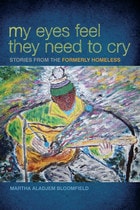
My Eyes Feel They Need to Cry
Stories from the Formerly HomelessMartha Aladjem Bloomfield
Michigan State University Press, 2013
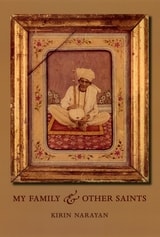
My Family and Other Saints
Kirin Narayan
University of Chicago Press, 2007
A touching, funny, and always affectionate memoir, My Family and Other Saints traces the reverberations of Rahoul's spiritual journey through the entire family. As their beachside Bombay home becomes a crossroads for Westerners seeking Eastern enlightenment, Kirin’s sari-wearing American mother wholeheartedly embraces ashrams and gurus, adopting her son’s spiritual quest as her own. Her Indian father, however, coins the term “urug”—guru spelled backward—to mock these seekers, while young Kirin, surrounded by radiant holy men, parents drifting apart, and a motley of young, often eccentric Westerners, is left to find her own answers. Deftly recreating the turbulent emotional world of her bicultural adolescence, but overlaying it with the hard-won understanding of adulthood, Narayan presents a large, rambunctious cast of quirky characters. Throughout, she brings to life not just a family but also a time when just about everyone, it seemed, was consumed by some sort of spiritual quest.
“A lovely book about the author's youth in Bombay, India. . . . The family home becomes a magnet for truth-seekers, and Narayan is there to affectionately document all of it.”—Body + Soul
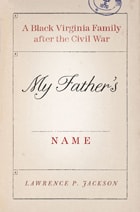
My Father's Name
A Black Virginia Family after the Civil WarLawrence P. Jackson
University of Chicago Press, 2012
My Father’s Name is a family story full of twists and turns—and one of haunting familiarity to many Americans, who may question whether the promises of emancipation have ever truly been fulfilled. It is also a resolute look at the duties that come with reclaiming and honoring Americans who survived slavery and a thoughtful meditation on its painful and enduring history.
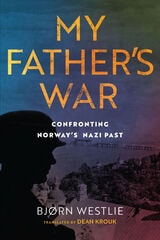
My Father's War
A True Story of Nazism and Treasonby Bjørn Westlie, translated by Dean Krouk
University of Wisconsin Press, 2023
With an insightful introduction from translator Dean Krouk, My Father’s War is a contemporary classic of war literature. Committed to genuine understanding without falling into undue sympathizing, this sober and reflective book presents an eye-opening, moving, intense, and necessary account of the allure of fascism in a world at war—and its personal costs.
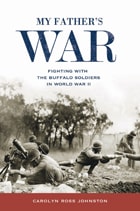
My Father's War
Fighting with the Buffalo Soldiers in World War IICarolyn Ross Johnston
University of Alabama Press, 2012
A compelling story of a unit of Buffalo Soldiers and their white commander fighting on the Italian front during World War II.
The 92nd Division of the Fifth Army was the only African American infantry division to see combat in Europe during 1944 and 1945, suffering more than 3,200 casualties. Members of this unit, known as Buffalo Soldiers, endured racial violence on the home front and experienced racism abroad. Engaged in combat for nine months, they were under the command of southern white infantry officers like their captain, Eugene E. Johnston.
Carolyn Ross Johnston draws on her father’s account of the war and her extensive interviews with other veterans of the 92nd Division to describe the experiences of a naïve southern white officer and his segregated unit on an intimate level. During the war, the protocol that required the assignment of southern white officers to command black units, both in Europe and in the Pacific theater, was often problematic, but Johnston seemed more successful than most, earning the trust and respect of his men at the same time that he learned to trust and respect them. Gene Johnston and the African American soldiers were transformed by the war and upon their return helped transform the nation.
My Father, the Germans and I
Essays, Lectures, InterviewsJurek Becker
Seagull Books, 2010
Jürek Becker (1937–97) is best known for his novel Jacob the Liar, which follows the life of a man, who, like Becker, lived in the Lódz ghetto during the German occupation of Poland in World War II. Throughout his career, Becker also wrote nonfiction, and the essays, lectures, and interviews collected in My Father, the Germans and I share a common thread in that they each speak to Becker’s interactions with and opinions on the social, political, and cultural conditions of twentieth-century Germany.
Becker, who had lived in both German states and in unified Germany, was passionately and humorously active in the political debates of his time. Becker never directly aligned himself with either the political ideology of East Germany or the capitalist market forces of West Germany. The remains of fascism in postwar Germany, and the demise of Socialism, as well as racism and xenophobic violence, were topics that perpetually interested Becker. However, his writings, as evidenced in this collection, were never pedantic, but always entertaining, retaining the sense of humor that made his novels so admired.
My Father, the Germans and I gives expression to an exceptional author’s perception of himself and the world and to his tireless attempt to bring his own unique tone of linguistic brevity, irony, and balance to German relations.
My Father, the Messiah
A MemoirGil Z. Hochberg
Duke University Press, 2026
My Father’s Closet
Karen McClintock
The Ohio State University Press, 2017
“Karen McClintock reconstructs the details of her father’s double life with novelistic flair, keen psychological insight, and graceful compassion.” —Alison Bechdel
Thirty years after her father’s death, Karen McClintock sets out to find the gay father she never really knew. As we follow the unraveling family secret, we find ourselves drawn into her story as they stumble into infidelity, grieve heartbreaking losses, and remain loyal in love.
Set in Columbus, Ohio, My Father’s Closet tells the story of how just before the war, McClintock’s parents fell in love and married, while overseas in Germany the man whom she believes became her father’s lover was concealing his Jewish and gay identities in order to escape to America. A set of her father’s journals, letters her parents sent to each other during the Second World War, and a mysterious painting all lead her toward the truth about her gay father. McClintock weaves a complex secret into the fabric of lives we truly care about. And in the process, she leads us out of her father’s closet.
This gripping memoir captures the longing children feel for a distant or hidden parent and taps into the complexity of human connection and abandonment. The characters are resilient and vibrant. The hidden lovers, the nosey neighbors, and surprise lovers all show up. In the end, this extraordinary family finds ways to connect and freedom to love. Anyone who grew up with a family secret will appreciate the dynamics afoot in this fast-paced and compelling story.

My Friend, Julia Lathrop
Jane Addams
University of Illinois Press, 1935
The memoir reveals a great deal about the influence of Hull-House on the social and political history of the early twentieth century. An introduction by long-time Addams scholar Anne Firor Scott provides a broader account of women's work in voluntary associations.
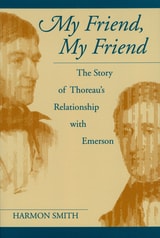
My Friend, My Friend
The Story of Thoreau's Relationship with EmersonHarmon Smith
University of Massachusetts Press, 1999
Henry David Thoreau was a twenty-year-old scholarship student at Harvard when he met Ralph Waldo Emerson in 1837. Emerson, fourteen years Thoreau's senior and independently wealthy, had recently shaken the intellectual world of New England with the publication of Nature. Despite the disparity in their circumstances, Thoreau and Emerson quickly formed a close relationship that lasted until Thoreau's death at the age of forty-four. This book tells the story of their friendship. Harmon Smith emphasizes their personal bond, but also shows how their relationship affected their thought and writing, and was in turn influenced by their careers.
Without Emerson's interest and support, it is unlikely that Thoreau could have expended the energy on writing that enabled him to achieve greatness. By inviting Thoreau into his home to live during two different periods in the 1840s, Emerson effectively made Thoreau “one of the family.” He provided him with work, lent him money, and allowed him to build a cabin on the shore of Walden Pond. Emerson also broadened Thoreau's horizon immeasurably by introducing him to an ever-widening circle of friends and colleagues.
Although the bond between Thoreau and Emerson was strong, their needs were often greatly at variance. While this led to a prolonged period of estrangement between them, they were ultimately able to reconcile their differences. Many years after Thoreau died, Emerson could look back over his long life and say that Henry had been his best friend. Since the thoughts and feelings of the two men are so well documented in their journals and letters, Smith is able to trace the pattern of their emotional involvement in great detail. What emerges is both a remarkable portrait of their relationship and an intimate look at the nature of friendship itself.
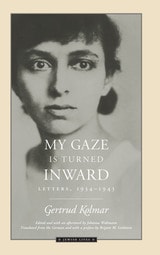
My Gaze Is Turned Inward
Letters 1938-1943Gertrud Kolmar
Northwestern University Press, 2004
So a picture of Gertrud Kolmar, a gifted Jewish writer struggling to sustain her art and family, emerges from these eloquent and allusive letters. Written in the stolen moments before her day as a forced laborer in a munitions factory began, the letters tell of Kolmar's move from the family home in Finkenkrug to a three-room flat in Berlin, which she and her father must soon share with other displaced Jews. They describe her factory work as a learning experience and assert, in the face of ever worsening conditions, that true art, never dependent on comfort or peace, is "capable of triumphing over . . . time and place."
These letters are a triumph of art, proclaiming the freedom of the human will amidst oppression. Though prevented by Nazi censorship from saying too much too directly, Kolmar still conveys the intensity and determination of her inner world, as well as the relentlessness of the outer world bent on crushing her. For its insight into the mind and soul of a poet submitting to and denying fate, and for its interior vision of one of history's darkest moments, My Gaze Is Turned Inward is a unique document of literary, historical, and spiritual power.
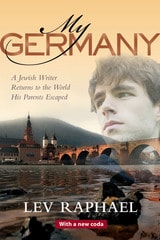
My Germany
A Jewish Writer Returns to the World His Parents EscapedLev Raphael
University of Wisconsin Press, 2009
Haunted by his parents’ horrific suffering and traumatic losses under Nazi rule, Lev Raphael grew up loathing everything German. Those feelings shaped his Jewish identity, his life, and his career. While researching his mother’s war years after her death, he discovers a distant relative living in the very city where she had worked in a slave labor camp, found freedom, and met his father. Soon after, Raphael is launched on book tours in Germany and, in the process, redefines himself as someone unafraid to face the past and let it go.
Bookmarks, “Top Ten Nonfiction Titles of 2009”
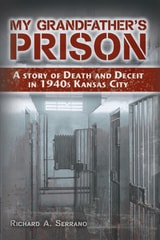
My Grandfather's Prison
A Story of Death and Deceit in 1940s Kansas CityRichard A. Serrano
University of Missouri Press, 2009
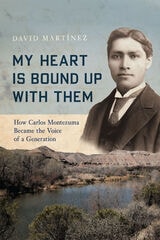
My Heart Is Bound Up with Them
How Carlos Montezuma Became the Voice of a GenerationDavid Martínez
University of Arizona Press, 2023
Through his diligent research and transcription of the letters archived in the Carlos Montezuma Collection at Arizona State University Libraries, David Martínez offers a critical new perspective on Montezuma’s biography and legacy. During an attempt to force the Fort McDowell Yavapai community off of their traditional homelands north of Phoenix, the Yavapai community members and leaders wrote to Montezuma pleading for help. It was these letters and personal correspondence from his Yavapai cousins George and Charles Dickens, as well as Mike Burns that sparked Montezuma’s desperate but principled desire to liberate his Yavapai family and community—and all Indigenous people—from the clutches of an oppressive Indian Bureau.
Centering historically neglected Indigenous voices as his primary source material, Martínez elevates Montezuma’s correspondence and interactions with his family and their community and shows how it influenced his advocacy. Martínez argues that Montezuma’s work in Arizona directly contributed to his national projects. For his Yavapai community, Montezuma set an example as a resistance fighter and advocate on behalf of his people and other Indigenous groups. Martínez offers a critical exploration of history, memory, the formation of archival collections, and the art of writing biography.
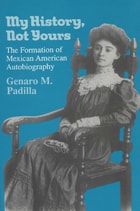
My History, Not Yours
The Formation of Mexican American AutobiographyGenaro M. Padilla
University of Wisconsin Press, 1994
"I am willing to relate all I can remember, but I wish it clearly understood that it must be in my own way, and at my own time. I will not be hurried or dictated to. It is my history and not yours I propose to tell.”—Mariano Guadelupe Vallejo, on “Recuerdos históricos y personales” (1875)
My History, Not Yours is a landmark study of the autobiographical writings of Mexican Americans in the century following the US-Mexican War of 1846-1848. Some 75,000 inhabitants of what is now Texas, New Mexico, Arizona, Nevada, and California were suddenly foreigners on their own lands. Faced with the deliberate obliteration of their history, culture, language, and personal experiences, these women and men set down the stories of their lives and their communities, as a means of both remembering and resisting.
Genaro M. Padilla and other scholars have begun to uncover the huge store of literary materials forgotten in manuscript archives: memoirs long out of print, others unpublished and unread, diaries, family histories, poetry, correspondence, and texts of corridos (ballads). Padilla writes, “Lives are scattered on broken pages, faded, partially lost at the margins, suspended in language unread until there is a reader who opens the file and begins. It is my intention to initiate a recovery of that autobiographical formation that emerged after a war of conquest.”
In providing an overview of this rich literature, Padilla also points out the power relations embedded in the narratives, showing that the reconstruction of the Mexican past was not merely nostalgic idealization, but often an angry and deeply politicized recovery of a world ruptured by American domination.

My House in Damascus
An Inside View of the Syrian CrisisDiana Darke
Haus Publishing, 2014
Diana Darke, a fluent Arabic speaker who moved to Damascus in 2004 after decades of regular visits, details how the Assad regime, and its relationship to the people, differs from the regimes in Egypt, Tunisia, and Libya—and why it was thus always less likely to collapse quickly, even in the face of widespread unrest and violence. Through the author’s firsthand experiences of buying and restoring a house in the old city of Damascus, which she later offered as a sanctuary to friends, Darke presents a clear picture of the realities of life on the ground and what hope there is for Syria’s future. Including additional material on topics like the advance of the Islamic State, as well as a new epilogue describing the current turmoil surrounding her house and the refugees she tried to help, this edition of My House in Damascus powerfully documents the human cost of the ongoing civil war.
My Iowa Journey
Philip G. Hubbard
University of Iowa Press, 1999
Philip Hubbard's life story begins in 1921 in Macon, a county seat in the Bible Belt of north central Missouri, whose history as a former slave state permeated the culture of his childhood. When he was four his mother moved her family 140 miles north to Des Moines in search of the greater educational opportunity that Iowa offered African American students. In this recounting of the effects of that journey on the rest of his life, Phil Hubbard merges his private and public life and career into an affectionate, powerful, and important story.
Hubbard graduated from the University of Iowa with a degree in electrical engineering in 1946; by 1954 he had received his Ph.D. in hydraulics. The College of Engineering extended a warm academic welcome, but nonacademic matters were totally different: Hubbard was ineligible for the housing and other amenities offered to white students. Intelligent, patient, keenly aware of discrimination yet willing to work from within the university system, he advanced from student to teacher to administrator, retiring in 1991 after decades of leadership in the classroom and the conference room.
Hubbard's major accomplishments included policies that focused on human rights; these policies transformed the makeup of students, faculty, and staff by seeking to eliminate discrimination based on race, religion, or other nonacademic factors and by substituting affirmative action for the traditional old-boy methods of selecting faculty and administrators. At the same time that he was advancing the cause of human rights and cultural diversity in education, his family was growing and thriving, and his descriptions of home life reveal one source of his strength and inspiration.
The decades that Hubbard covers were vital in the evolution of the nation and its educational institutions. His dedication to the agenda of public higher education has always been matched by his sensitivity to the negative effects of discrimination and his gentle perseverance toward his goals of inclusion, acceptance, and fairness. His vivid personal and institutional story will prove valuable at this critical juncture in America's racial history.
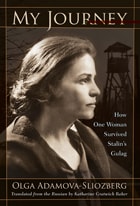
My Journey
How One Woman Survived Stalin's GulagOlga Adamova-Sliozberg
Northwestern University Press, 2011
Arrested along with her husband (who, she would much later learn, was shot the next day) in the great purges of the thirties, Adamova-Sliozberg decided to record her Gulag experiences a year after her arrest, and she “wrote them down in her head” (paper and pencils were not available to prisoners) every night for years. When she returned to Moscow after the war in 1946, she composed the memoir on paper for the first time and then buried it in the garden of the family dacha. After her re-arrest and seven more years of banishment to Kazakhstan, she returned to the dacha to dig up the buried memoir, but could not find it. She sat down and wrote it all over again.
In her later years she also added a collection of stories about her family. Concluding on a hopeful note—Adamova-Sliozberg’s record is cleared, she re-marries a fellow former-prisoner, and she is reunited with her children—this story is a stunning account of perseverance in the face of injustice and unimaginable hardship. This vital primary source continues to fascinate anyone interesting in the tumultuous history of Russia and the Soviet Union in the twentieth century.
My Language Is a Jealous Lover
Adrián N. Bravi
Rutgers University Press, 2023
My Language Is a Jealous Lover explores the plights and successes of authors who lived and wrote in languages other than their mother tongue, from Samuel Beckett and Vladimir Nabokov to Ágota Kristóf and Joseph Brodsky. Author Adrián N. Bravi weaves their stories in with his own experiences as an Argentinian-Italian, thinking and writing in the language of his new life while recalling that of his childhood. Bravi bears witness to the frustrations, the soul-searching, the pain, and the joys of embracing another language.
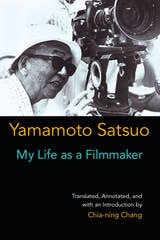
My Life as a Filmmaker
Yamamoto Satsuo; Translated, Annotated, and with an Introduction by Chia-ning Chang
University of Michigan Press, 2017
In addition to detailed annotations of the autobiography, translator Chia-ning Chang offers a comprehensive introduction to the career and the significance of Yamamoto and his works in the context of Japanese film history. It contextualizes Yamamoto’s life and works in the historical and cultural zeitgeist of prewar, wartime, and postwar Japan before scrutinizing the unique qualities of his narrative voice and social conscience as a film artist.