Results by title
4531 books match the query 'Cultural & Ethnic Studies' and 260 start with m
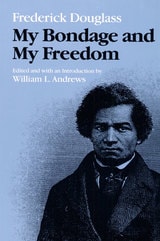
My Bondage and My Freedom
Frederick Douglass
University of Illinois Press, 1988
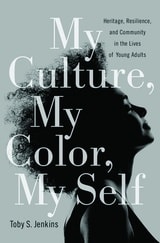
My Culture, My Color, My Self
Heritage, Resilience, and Community in the Lives of Young AdultsToby S. Jenkins
Temple University Press, 2013
In her vibrant ethnography My Culture, My Color, My Self, Toby Jenkins provides engrossing, in-depth interviews and poignant snapshots of young adults talking about their lives and culture. She recounts D'Leon's dream to become a positive example for African American men, and Francheska describing how her late mother inspired her appreciation of her Boricua heritage. In these and other portraits, Jenkins considers the role that cultural education and engagement plays in enhancing educational systems, neighborhood programs, and community structures.
My Culture, My Color, My Self also features critical essays that focus on broader themes such as family bonds, education, and religion. Taken together, Jenkins shows how people of color use their culture as both a politic of social survival and a tool for social change.

My Father's Name
A Black Virginia Family after the Civil WarLawrence P. Jackson
University of Chicago Press, 2012
My Father’s Name is a family story full of twists and turns—and one of haunting familiarity to many Americans, who may question whether the promises of emancipation have ever truly been fulfilled. It is also a resolute look at the duties that come with reclaiming and honoring Americans who survived slavery and a thoughtful meditation on its painful and enduring history.
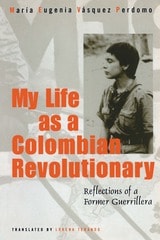
My Life As A Revolutionary
Reflections Of A Former GuerrilleraMaria Eugenia Vasquez Perdomo
Temple University Press, 2005

My Life with Things
The Consumer DiariesElizabeth Chin
Duke University Press, 2016
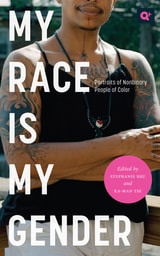
My Race Is My Gender
Portraits of Nonbinary People of ColorStephanie Hsu
Rutgers University Press, 2024
Genderqueer and nonbinary people of color often experience increased marginalization, belonging to an ethnic group that seldom recognizes their gender identity and a queer community that subscribes to white norms. Yet for this very reason, they have a lot to teach about how racial, sexual, and gender identities intersect. Their experiences of challenging social boundaries demonstrate how queer communities can become more inclusive and how the recognition of nonbinary genders can be an anti-racist practice.
My Race is My Gender is the first anthology by nonbinary writers of color to include photography and visual portraits, centering their everyday experiences of negotiating intersectional identities. While informed by queer theory and critical race theory, the authors share their personal stories in accessible language. Bringing together Black, Indigenous, Latine, and Asian perspectives, its six contributors present an intergenerational look at what it means to belong to marginalized queer communities in the U.S. and feel solidarity with a global majority at the same time. They also provide useful insights into how genderqueer and nonbinary activism can both energize and be fueled by such racial justice movements as Black Lives Matter.
Mythohistorical Interventions
The Chicano Movement and Its LegaciesLee Bebout
University of Minnesota Press, 2010
Examining the deployment of the Aztec eagle by the United Farm Workers union, the poem Yo Soy Joaquín, the document El Plan de Santa Barbara, and icons like La Malinche and La Virgen de Guadalupe, Bebout reveals the centrality of culture to the Chicano movement. For Bebout, the active implementation of cultural narrative was strategically significant in several ways. First, it allowed disparate movement participants to imagine themselves as part of a national, and nationalist, community of resistance. Second, Chicano use of these narratives contested the images that fostered Anglo-American hegemony.
Bringing his analysis up to the present, Bebout delineates how demographic changes have, on the one hand, encouraged the possibility of a panethnic Latino community, while, on the other hand, anti-Mexican nativists attempt to resurrect Chicano myths as a foil to restrict immigration from Mexico.
México Between Feast and Famine
Food, Corporate Power, and InequalityEnrique C. Ochoa
University of Arizona Press, 2025
As the birthplace of maize and a celebrated culinary destination, Mexico stands at the crossroads of gastronomic richness and stark social disparities. In México Between Feast and Famine Enrique C. Ochoa unveils the historical and contemporary forces behind Mexico’s polarized food systems.
México Between Feast and Famine provides one of the first comprehensive analyses of Mexico’s food systems and how they reflect the contradictions and inequalities at the heart of Mexico. Ochoa examines the historical roots and contemporary manifestations of neoliberal policies that have reshaped food production, distribution, and consumption in Mexico. Ochoa analyzes the histories of Mexico’s mega food companies, including GRUMA, Bimbo, Oxxo, Aurrera/Walmex, and reveals how corporations have captured the food system at the same time that diet-related diseases have soared. The author not only examines the economic and political dimensions of food production but also interrogates the social and cultural impacts.
As debates around food sovereignty, globalization, and sustainable development intensify globally, México Between Feast and Famine provides a timely analysis that counters conventional narratives about Mexican cuisine. Even as it looks back, this work looks to the future, where more equitable and sustainable food systems prioritize social justice and community well-being.
meXicana Fashions
Politics, Self-Adornment, and Identity ConstructionEdited by Aída Hurtado and Norma E. Cantú
University of Texas Press, 2020
2020 Second Place, Best Nonfiction Multi Author, International Latino Book Awards
Collecting the perspectives of scholars who reflect on their own relationships to particular garments, analyze the politics of dress, and examine the role of consumerism and entrepreneurialism in the production of creating and selling a style, meXicana Fashions examines and searches for meaning in these visible, performative aspects of identity.
Focusing primarily on Chicanas but also considering trends connected to other Latin American communities, the authors highlight specific constituencies that are defined by region (“Tejana style,” “L.A. style”), age group (“homie,” “chola”), and social class (marked by haute couture labels such as Carolina Herrera and Oscar de la Renta). The essays acknowledge the complex layers of these styles, which are not mutually exclusive but instead reflect a range of intersections in occupation, origin, personality, sexuality, and fads. Other elements include urban indigenous fashion shows, the shifting quinceañera market, “walking altars” on the Days of the Dead, plus-size clothing, huipiles in the workplace, and dressing in drag. Together, these chapters illuminate the full array of messages woven into a vibrant social fabric.
meXicana Roots and Routes
Listening to People, Places, and PastsEdited by Vanessa Fonseca-Chávez and Anita Huízar-Hernández
University of Arizona Press, 2025
In this collection, established and emerging scholars draw upon their rootedness in the U.S. Southwest and U.S.-Mexico borderlands. The meXicana contributors use personal and scholarly inquiry to discuss what it means to cultivate spaces of belonging, navigate language policies, and explore and excavate silences in various spaces, among other important themes.
From the recruitment of Latinas for the U.S. Benito Juárez Squadron in World War II, to the early twentieth-century development of bilingual education in Arizona, to new and insightful analyses of Bracero Program participants and their families, the book details little-known oral histories and archival material to present a rich account of lives along the border with emphasis on women and the working class.
As the inaugural publication of the Arizona Crossroads series, readers will find Arizona featured as a central node of borderlands roots and routes. Each section of the book intentionally centers Arizona within broader comparative and cross-state dialogues, alongside chapters that reflect regional concerns in other southwestern states, including Texas, California, Colorado, and New Mexico. Throughout, this volume highlights the ways in which personal experience, community building, and scholarly perspectives can provide a powerful space for community voices.
Contributors
Vanessa Fonseca-Chávez
Lillian Gorman
Gloria Holguín Cuádraz
Anita Huízar-Hernández
Christine Marin
Valerie A. Martínez
Alina R. Méndez
Karen R. Roybal
Yvette J. Saavedra
Liliana Toledo-Guzmán
Andrea Tovar