Results by title
8113 books match the query 'Literary Criticism' and 516 start with m
Middle English Dictionary
S.10Robert E. Lewis, Editor-in-Chief
University of Michigan Press, 1989
Middle English Dictionary
S.11Robert E. Lewis, Editor-in-Chief
University of Michigan Press, 1989
Middle English Dictionary
S.12Robert E. Lewis, Editor-in-Chief
University of Michigan Press, 1990
Middle English Dictionary
S.13Robert E. Lewis, Editor-in-Chief
University of Michigan Press, 1990
Middle English Dictionary
S.14Robert E. Lewis, Editor-in-Chief
University of Michigan Press, 1990
Middle English Dictionary
S.15Robert E. Lewis, Editor-in-Chief
University of Michigan Press, 1991
Middle English Dictionary
S.16Robert E. Lewis, Editor-in-Chief
University of Michigan Press, 1991
Middle English Dictionary
S.17Robert E. Lewis, Editor-in-Chief
University of Michigan Press, 1992
Middle English Dictionary
S.18Robert E. Lewis, Editor-in-Chief
University of Michigan Press, 1992
Middle English Dictionary
S.2Robert E. Lewis, Editor-in-Chief
University of Michigan Press, 1986
Middle English Dictionary
S.3Robert E. Lewis, Editor-in-Chief
University of Michigan Press, 1987
Middle English Dictionary
S.4Robert E. Lewis, Editor-in-Chief
University of Michigan Press, 1987
Middle English Dictionary
S.5Robert E. Lewis, Editor-in-Chief
University of Michigan Press, 1987
Middle English Dictionary
S.6Robert E. Lewis, Editor-in-Chief
University of Michigan Press, 1988
Middle English Dictionary
S.7Robert E. Lewis, Editor-in-Chief
University of Michigan Press, 1988
Middle English Dictionary
S.8Robert E. Lewis, Editor-in-Chief
University of Michigan Press, 1988
Middle English Dictionary
S.9Robert E. Lewis, Editor-in-Chief
University of Michigan Press, 1988
Middle English Dictionary
T.1Robert E. Lewis, Editor-in-Chief
University of Michigan Press, 1993
Middle English Dictionary
T.10Robert E. Lewis, Editor-in-Chief
University of Michigan Press, 1997
The Middle English Dictionary is a monumental scholarly endeavor that began more than fifty years ago and is expected to be completed in the late-1990s. The task of the editors compiling the dictionary is to document the English language from just after the Norman Conquest up to the introduction of the printing press at the end of the 1400s. With that innovation the language became more or less standardized, but during the Middle Ages the language was evolving under the stress of events and social change, particularly as French culture was absorbed into the language. These were truly the formative years of the English language, and they present major challenges to lexicographers.
Published volumes include all fascicles from A.1 through T.10, plus the Plan and Bibliography.
Middle English Dictionary
T.2Robert E. Lewis, Editor-in-Chief
University of Michigan Press, 1993
Middle English Dictionary
T.3Robert E. Lewis, Editor-in-Chief
University of Michigan Press, 1994
Middle English Dictionary
T.4Robert E. Lewis, Editor-in-Chief
University of Michigan Press, 1994
Middle English Dictionary
T.5Robert E. Lewis, Editor-in-Chief
University of Michigan Press, 1995
Middle English Dictionary
T.6Robert E. Lewis, Editor-in-Chief
University of Michigan Press, 1995
Middle English Dictionary
T.7Robert E. Lewis, Editor-in-Chief
University of Michigan Press, 1996
The Middle English Dictionary is a monumental scholarly endeavor that began more than fifty years ago and is expected to be completed in the late-1990s. The task of the editors compiling the dictionary is to document the English language from just after the Norman Conquest up to the introduction of the printing press at the end of the 1400s. With that innovation the language became more or less standardized, but during the Middle Ages the language was evolving under the stress of events and social change, particularly as French culture was absorbed into the language. These were truly the formative years of the English language, and they present major challenges to lexicographers.
Published volumes include all fascicles from A.1 through T.10, plus the Plan and Bibliography.
Middle English Dictionary
T.8Robert E. Lewis, Editor-in-Chief
University of Michigan Press, 1996
The Middle English Dictionary is a monumental scholarly endeavor that began more than fifty years ago and is expected to be completed in the late-1990s. The task of the editors compiling the dictionary is to document the English language from just after the Norman Conquest up to the introduction of the printing press at the end of the 1400s. With that innovation the language became more or less standardized, but during the Middle Ages the language was evolving under the stress of events and social change, particularly as French culture was absorbed into the language. These were truly the formative years of the English language, and they present major challenges to lexicographers.
Published volumes include all fascicles from A.1 through T.10, plus the Plan and Bibliography.
Middle English Dictionary
T.9Robert E. Lewis, Editor-in-Chief
University of Michigan Press, 1997
The Middle English Dictionary is a monumental scholarly endeavor that began more than fifty years ago and is expected to be completed in the late-1990s. The task of the editors compiling the dictionary is to document the English language from just after the Norman Conquest up to the introduction of the printing press at the end of the 1400s. With that innovation the language became more or less standardized, but during the Middle Ages the language was evolving under the stress of events and social change, particularly as French culture was absorbed into the language. These were truly the formative years of the English language, and they present major challenges to lexicographers.
Published volumes include all fascicles from A.1 through T.10, plus the Plan and Bibliography.
Middle English Dictionary
U.1Robert E. Lewis, Editor-in-Chief
University of Michigan Press, 1997
The Middle English Dictionary is a monumental scholarly endeavor that began more than fifty years ago and is expected to be completed in 2001. The task of the editors compiling the dictionary is to document the English language from just after the Norman Conquest up to the introduction of the printing press at the end of the 1400s. With that innovation the language became more or less standardized, but during the Middle Ages the language was evolving under the stress of events and social change, particularly as French culture was absorbed into the language. These were truly the formative years of the English language, and they present major challenges to lexicographers.
Fascicles U.1, U.2, and U.3 are the most recent additions to this ongoing undertaking. Published volumes include all fascicles from A.1 through U.3, plus the Plan and Bibliography.
Middle English Dictionary
U.2Robert E. Lewis, Editor-in-Chief
University of Michigan Press, 1998
The Middle English Dictionary is a monumental scholarly endeavor that began more than fifty years ago and is expected to be completed in 2001. The task of the editors compiling the dictionary is to document the English language from just after the Norman Conquest up to the introduction of the printing press at the end of the 1400s. With that innovation the language became more or less standardized, but during the Middle Ages the language was evolving under the stress of events and social change, particularly as French culture was absorbed into the language. These were truly the formative years of the English language, and they present major challenges to lexicographers.
Fascicles U.1, U.2, and U.3 are the most recent additions to this ongoing undertaking. Published volumes include all fascicles from A.1 through U.3, plus the Plan and Bibliography.
Middle English Dictionary
U.4Robert E. Lewis, Editor-in-Chief
University of Michigan Press, 1998
Middle English Dictionary
VRobert E. Lewis, Editor-in-Chief
University of Michigan Press, 1999
The Middle English Dictionary, a monumental scholarly endeavor that began more than fifty years ago, is scheduled to be completed in 2001. The task of the editors compiling the dictionary is to document the English language from just after the Norman Conquest to the introduction of the printing press at the end of the 1400s. With that innovation the language became more or less standardized, but during the Middle Ages the language was evolving under the stress of events and social change, particularly as French culture was absorbed into the language. These were truly the formative years of the English language, and they present major challenges to lexicographers.
Fascicles V.1, W.1, and W.2 are the most recent additions to this ongoing undertaking. Published volumes include all fascicles from A.1 through U.3, plus the Plan and Bibliography.
Middle English Dictionary
W.1Robert E. Lewis, Editor-in-Chief
University of Michigan Press, 1999
The Middle English Dictionary, a monumental scholarly endeavor that began more than fifty years ago, is scheduled to be completed in 2001. The task of the editors compiling the dictionary is to document the English language from just after the Norman Conquest to the introduction of the printing press at the end of the 1400s. With that innovation the language became more or less standardized, but during the Middle Ages the language was evolving under the stress of events and social change, particularly as French culture was absorbed into the language. These were truly the formative years of the English language, and they present major challenges to lexicographers.
Fascicles V.1, W.1, and W.2 are the most recent additions to this ongoing undertaking. Published volumes include all fascicles from A.1 through U.3, plus the Plan and Bibliography.
Middle English Dictionary
W.2Robert E. Lewis, Editor-in-Chief
University of Michigan Press, 1999
The Middle English Dictionary, a monumental scholarly endeavor that began more than fifty years ago, is scheduled to be completed in 2001. The task of the editors compiling the dictionary is to document the English language from just after the Norman Conquest to the introduction of the printing press at the end of the 1400s. With that innovation the language became more or less standardized, but during the Middle Ages the language was evolving under the stress of events and social change, particularly as French culture was absorbed into the language. These were truly the formative years of the English language, and they present major challenges to lexicographers.
Fascicles V.1, W.1, and W.2 are the most recent additions to this ongoing undertaking. Published volumes include all fascicles from A.1 through U.3, plus the Plan and Bibliography.
Middle English Dictionary
W.3Robert E. Lewis, Editor-in-Chief
University of Michigan Press, 2000
Middle English Dictionary
W.5Robert E. Lewis, Editor-in-Chief
University of Michigan Press, 2000
TheMiddle English Dictionary, a monumental scholarly endeavor that began more than fifty years ago, is completed with the publication of these remaining fascicles. The task of the editors compiling the dictionary is to document theE nglish language from just after the Norman Conquest up to the introduction of the printing press at the end of the 1400s. With that innovation the language became more or less standardized, but during the Middle Ages the language was evolving under the stress of events and social change, particularly as French culture was absorbed into the language. These were truly the formative years of the English language, and they present major challenges to lexicographers.
Middle English Dictionary
W.6Robert E. Lewis, Editor-in-Chief
University of Michigan Press, 2000
TheMiddle English Dictionary, a monumental scholarly endeavor that began more than fifty years ago, is completed with the publication of these remaining fascicles. The task of the editors compiling the dictionary is to document theE nglish language from just after the Norman Conquest up to the introduction of the printing press at the end of the 1400s. With that innovation the language became more or less standardized, but during the Middle Ages the language was evolving under the stress of events and social change, particularly as French culture was absorbed into the language. These were truly the formative years of the English language, and they present major challenges to lexicographers.
Fascicle X/Y/Z is the final addition to this incredible undertaking. Published volumes include all fascicles from A.1 through X/Y/Z, plus the Plan and Bibliography.
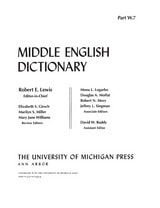
Middle English Dictionary
W.7Robert E. Lewis, Editor-in-Chief
University of Michigan Press, 2001
TheMiddle English Dictionary, a monumental scholarly endeavor that began more than fifty years ago, is completed with the publication of these remaining fascicles. The task of the editors compiling the dictionary is to document theE nglish language from just after the Norman Conquest up to the introduction of the printing press at the end of the 1400s. With that innovation the language became more or less standardized, but during the Middle Ages the language was evolving under the stress of events and social change, particularly as French culture was absorbed into the language. These were truly the formative years of the English language, and they present major challenges to lexicographers.
Fascicle X/Y/Z is the final addition to this incredible undertaking. Published volumes include all fascicles from A.1 through X/Y/Z, plus the Plan and Bibliography.
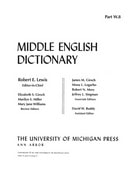
Middle English Dictionary
W.8Robert E. Lewis, Editor-in-Chief
University of Michigan Press, 2001
TheMiddle English Dictionary, a monumental scholarly endeavor that began more than fifty years ago, is completed with the publication of these remaining fascicles. The task of the editors compiling the dictionary is to document theE nglish language from just after the Norman Conquest up to the introduction of the printing press at the end of the 1400s. With that innovation the language became more or less standardized, but during the Middle Ages the language was evolving under the stress of events and social change, particularly as French culture was absorbed into the language. These were truly the formative years of the English language, and they present major challenges to lexicographers.
Fascicle X/Y/Z is the final addition to this incredible undertaking. Published volumes include all fascicles from A.1 through X/Y/Z, plus the Plan and Bibliography.
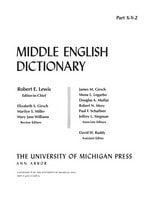
Middle English Dictionary
X/Y/ZRobert E. Lewis, Editor-in-Chief
University of Michigan Press, 2001
TheMiddle English Dictionary, a monumental scholarly endeavor that began more than fifty years ago, is completed with the publication of these remaining fascicles. The task of the editors compiling the dictionary is to document theE nglish language from just after the Norman Conquest up to the introduction of the printing press at the end of the 1400s. With that innovation the language became more or less standardized, but during the Middle Ages the language was evolving under the stress of events and social change, particularly as French culture was absorbed into the language. These were truly the formative years of the English language, and they present major challenges to lexicographers.
Fascicles W.9 and X/Y/Z will be the final additions to this incredible undertaking. Published volumes include all fascicles from A.1 through W.8, plus the Plan and Bibliography.
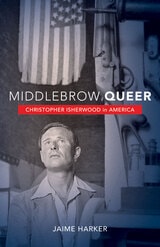
Middlebrow Queer
Christopher Isherwood in AmericaJaime Harker
University of Minnesota Press, 2013
How could one write about gay life for the mainstream public in Cold War America? Many midcentury gay American writers, hampered by external and internal censors, never managed to do it. But Christopher Isherwood did, and what makes his accomplishment more remarkable is that while he was negotiating his identity as a gay writer, he was reinventing himself as an American one. Jaime Harker shows that Isherwood refashioned himself as an American writer following his emigration from England by immersing himself in the gay reading, writing, and publishing communities in Cold War America.
Drawing extensively on Isherwood’s archives, including manuscript drafts and unpublished correspondence with readers, publishers, and other writers, Middlebrow Queer demonstrates how Isherwood mainstreamed gay content for heterosexual readers in his postwar novels while also covertly writing for gay audiences and encouraging a symbiotic relationship between writer and reader. The result—in such novels as The World in the Evening, Down There on a Visit, A Single Man, and A Meeting by the River—was a complex, layered form of writing that Harker calls “middlebrow camp,” a mode that extended the boundaries of both gay and middlebrow fiction.
Weaving together biography, history, and literary criticism, Middlebrow Queer traces the continuous evolution of Isherwood’s simultaneously queer and American postwar authorial identity. In doing so, the book illuminates many aspects of Cold War America’s gay print cultures, from gay protest novels to “out” pulp fiction.
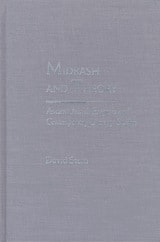
Midrash and Theory
Ancient Jewish Exegesis and Contempory Literary StudiesDavid Stern
Northwestern University Press, 1998
As midrash--the literature of classical Jewish Scriptural interpretation--has become the focus of new interest in contemporary literary circles, it has been invoked as a precursor of post-structuralist theory and criticism. At the same time, the midrashic imagination has undergone a revival in the larger Jewish community and shown itself capable of exercising a powerful influence and hold on a new type of contemporary Jewish writing. Stern examines this resurgence of fascination with ancient Jewish interpretation from the persepctive of the cultural relevance of midrash and its connection to its original historical and literary contexts.
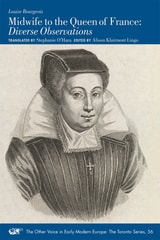
Midwife to the Queen of France
Diverse ObservationsLouise Bourgeois
Iter Press, 2017
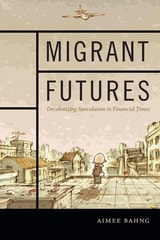
Migrant Futures
Decolonizing Speculation in Financial TimesAimee Bahng
Duke University Press, 2018
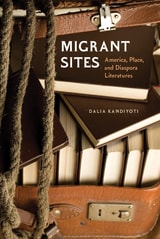
Migrant Sites
America, Place, and Diaspora LiteraturesDalia Kandiyoti
Dartmouth College Press, 2009
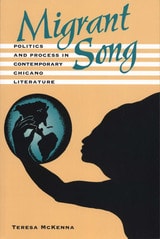
Migrant Song
Politics and Process in Contemporary Chicano LiteratureBy Teresa McKenna
University of Texas Press, 1996
Migration and continuity have shaped both the Chicano people and their oral and written literature. In this pathfinding study of Chicano literature, Teresa McKenna specifically explores how these works arise out of social, political, and psychological conflict and how the development of Chicano literature is inextricably embedded in this fact.
McKenna begins by appraising the evolution of Chicano literature from oral forms—including the important role of the corrido in the development of Chicano poetry. In subsequent chapters she examines the works of Richard Rodriguez and Rolando Hinojosa. She also devotes a chapter to the development of the Chicana voice in Chicano literature. Her epilogue considers the parallel development of Chicano literary theory and discusses some possible directions for research.
In McKenna's own words, "I believe that the future of this literature, as that of all literatures by people of color in the United States, rests largely on its being effectively introduced into the curricula at all levels, as well as its entrance into the critical consciousness of literary theory." This book will be an important step in that process.
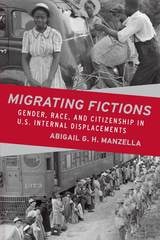
Migrating Fictions
Gender, Race, and Citizenship in U.S. Internal DisplacementsAbigail G. H. Manzella
The Ohio State University Press, 2018
Winner, 2021 CCCC Outstanding Book Award
Migrating Fictions analyzes the role of race, gender, and citizenship in the major internal displacements of the 20th century in history and in narrative. Surveying the particular tactics employed by the United States during the Great Migration, the Dust Bowl, the Japanese American incarceration, and the migrant labor of the Southwest, Abigail G. H. Manzella reveals how the country’s past is imbued with governmentally (en)forced movements that diminished access to full citizenship rights for the laboring class, people of color, and women.
This work is the first book-length study to examine all of these movements together along with their literature, including Zora Neale Hurston’s Their Eyes Were Watching God, Sanora Babb’s Whose Names Are Unknown, Julie Otsuka’s When the Emperor Was Divine, Helena María Viramontes’s Under the Feet of Jesus, and Jesmyn Ward’s Salvage the Bones. Manzella shows how the United States’ history of spatial colonization within its own borders extends beyond isolated incidents into a pattern based on ideology about nation-building, citizenship, and labor. This book seeks to theorize a Thirdspace, an alternate location for social justice that acknowledges the precarity of the internally displaced person.
Migration and Diaspora
Exegetical Voices of Women in Northeast Asian CountriesHisako Kinukawa
SBL Press, 2014
Engage and explore readings from a multi-religious, globalized, multicultural region
The papers in this collection were presented at the third meeting of the Society of Asian Biblical Studies held at the Sabah Theological Seminary, Malaysia in 2012. The essays represent the work of women/feminist scholars in biblical hermeneutics in this region who have raised questions against traditional, male-centered interpretations, offering distinct perspectives based on their experiences of pain, subjugation, and a forced sacrificial philosophy of life.
Features:
- Articles focused on finding justice for women through dialogue with biblical texts
- Reflections on migration, diaspora, displacement, discrimination, and conditions generated by poverty and systemic oppression
- Five essays from women in China, Japan, and Korea
Migration and Identity in Nordic Literature
Edited by Martin Humpál and Helena Brezinová
Karolinum Press, 2022
Migration is a frequent topic of many debates nowadays, whether it concerns refugees from war-torn areas or the economic pros and cons of the mobility of multinational corporations and their employees. Yet such migration has always been a part of the human experience, and its dimensions—with its shifting nature, manifestations, and consequences—were often greater than we can imagine today.
In this book, ten scholars from Czechia, Denmark, the Netherlands, Norway, Poland, and Sweden focus on how migration has manifested itself in literature and culture through the nineteenth, twentieth, and early twenty-first centuries in Denmark, Norway, Sweden, Finland, and Iceland. Examining the theme of migration as it relates to questions of identity, both national and individual, the authors argue that migration almost always leads to a disturbance of identity and creates a potential for conflicts between individuals and larger groups. The book digs deep into such cases of disturbance, disruption, and hybridization of identity as they are represented in three centuries of literary works from the European North.
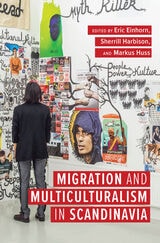
Migration and Multiculturalism in Scandinavia
Edited by Eric Einhorn, Sherrill Harbison, and Markus Huss
University of Wisconsin Press, 2022
Drawing from personal experiences and theoretical perspectives in such varied fields as sociology, political science, literature, and media studies, nineteen scholars assess recent shifts in Scandinavian societies and how they intertwine with broader transformations in Europe and beyond. Chapters explore a variety of topics, including themes of belonging and identity in Norway, the experiences and activism of the Nordic countries’ Indigenous populations, and parallels between the racist far-right resurgence in Sweden and the United States.
Contributors: Ellen A. Ahlness, Julie K. Allen, Grete Brochmann, Eric Einhorn, Sherrill Harbison, Anne Heith, Markus Huss, Peter Leonard, Barbara Mattsson, Kelly McKowen, Andreas Önnerfors, Elisabeth Oxfeldt, Tony Sandset, Carly Elizabeth Schall, Ryan Thomas Skinner, Admir Skodo, Benjamin R. Teitelbaum, Sayaka Osanami Törngren, Ethelene Whitmire
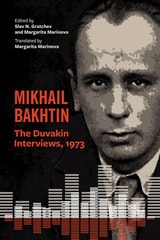
Mikhail Bakhtin
The Duvakin Interviews, 1973Slav N Gratchev
Bucknell University Press, 2019
Published by Bucknell University Press. Distributed worldwide by Rutgers University Press.