Results by title
8812 books match the query 'Political Science' and 421 start with m
Montesquieu and Rousseau
Forerunners of SociologyEmile Durkheim
University of Michigan Press, 1960
Montesquieu and the Despotic Ideas of Europe
An Interpretation of "The Spirit of the Laws"Vickie B. Sullivan
University of Chicago Press, 2017
Nowhere is Montesquieu’s critique of the despotic ideas of Europe more powerful than in his enormously influential The Spirit of the Laws, and Vickie B. Sullivan guides readers through Montesquieu’s sometimes veiled, yet sharply critical accounts of Machiavelli, Hobbes, Aristotle, and Plato, as well as various Christian thinkers. He finds deleterious consequences, for example, in brutal Machiavellianism, in Hobbes’s justifications for the rule of one, in Plato’s reasoning that denied slaves the right of natural defense, and in the Christian teachings that equated heresy with treason and informed the Inquisition.
In this new reading of Montesquieu’s masterwork, Sullivan corrects the misconception that it offers simple, objective observations, showing it instead to be a powerful critique of European politics that would become remarkably and regrettably prescient after Montesquieu’s death when despotism wound its way through Europe.

Montesquieu's Philosophy of Liberalism
A Commentary on The Spirit of the LawsThomas L. Pangle
University of Chicago Press, 1973

Monumentality
Geographies, Histories, IdeologiesElizabeth Kassler-Taub
J. Paul Getty Trust, The, 0
An exploration of how monuments—both physical and conceptual—shape memory, identity, and public debate across cultures and time.
This compelling volume invites readers to reimagine how monuments shape history, identity, and public space. Monumentality is explored as a dynamic and contested idea—one that moves beyond grand buildings and enduring structures to understand how societies remember the past and envision the future.
Engaging scholarly essays, accompanied by focused reflections on objects held in Getty collections, analyze the emotional, ideological, and technological dimensions of monuments by tracing their changing meanings across cultures and historical periods. Spanning themes of destruction, circulation, territorialization, and empire, the book investigates topics such as the ruin aesthetic of the Paris Commune, the material remnants of Buddhism in India, the construction of Cold War dams, and the influence of Almohad minaret architecture. Throughout, readers will encounter the enduring effects of colonialism, modernization, and settlements on societies around the world—from nineteenth-century West Africa to postwar Japan and Guam to present-day Israel and Ukraine.
Together, these studies integrate histories of art, architecture, and urban landscapes to examine the role of monuments in contemporary life. Monumentality offers fresh perspectives on what we choose to honor, why the past is preserved (or forgotten), and how the complex narratives embedded in memorials or public art condition our experience of the present.
Monuments and Territory
War Memorials in Russian-Occupied UkraineMischa Gabowitsch
Central European University Press, 2025
From the very first weeks of Russia’s large-scale attack on Ukraine in February 2022, Russian soldiers, politicians, and proxy administrators expended considerable effort interacting with monuments on newly occupied territory. Why did the invaders care enough about war memorials to divert scarce resources to destroying, maintaining, or building them amid a massive war? Why did they remove some memorials and spare others? What was the point of commemorating past victories and defeats while bombing Ukrainian cities, and how did commemorative ceremonies in the occupied territories
change over the first year of the war? What was the broader impact of monument-related practices beyond the local settings in which they occurred? And what does the Ukrainian case teach us more generally about how memorials to past wars can be used to justify new conquests? These are some of the questions this book explores, based on fieldwork in occupied Ukraine and online research.
Moral Economies of Corruption
State Formation and Political Culture in NigeriaSteven Pierce
Duke University Press, 2016
Moral Issues
How Public Opinion on Abortion and Gay Rights Affects American Religion and PoliticsPaul Goren and Christopher Chapp
University of Chicago Press, 2024
A new perspective on how beliefs about abortion and gay rights reshaped American politics.
Many believe that religious and partisan identities undergird American public opinion. However, when it comes to abortion and gay rights, the reverse may be closer to the truth.
Drawing on wide-ranging evidence, Paul Goren and Christopher Chapp show that views on abortion and gay rights are just as durable and politically impactful—and often more so—than political and religious identities. Goren and Chapp locate the lasting strength of stances on abortion and gay rights in the automatic, visceral emotions that the media has primed since the late 1980s. Moral Issues examines how attitudes toward these moralized issues affect, and can sometimes even disrupt, religious and partisan identities. Indeed, over the last thirty years, these attitudes have accelerated the rise of the religious “nones,” who have no religious affiliation, and promoted moral sorting into the Democratic and Republican parties.

Moral Philosophy and Development
The Human Condition in AfricaTedros Kiros
Ohio University Press, 1992
Moral Politics in the Philippines
Inequality, Democracy and the Urban PoorWataru Kusaka
National University of Singapore Press, 2017
Moral Politics
How Liberals and Conservatives Think, Second EditionGeorge Lakoff
University of Chicago Press, 2002
Moral Politics
How Liberals and Conservatives Think, Third EditionGeorge Lakoff
University of Chicago Press, 2016
Lakoff reveals radically different but remarkably consistent conceptions of morality on both the left and right. Moral worldviews, like most deep ways of understanding the world, are unconscious—part of our “hard-wired” brain circuitry. When confronted with facts that don’t fit our moral worldview, our brains work automatically and unconsciously to ignore or reject these facts, and it takes extraordinary openness and awareness of this phenomenon to pay critical attention to the vast number of facts we are presented with each day. For this new edition, Lakoff has added a new preface and afterword, extending his observations to major ideological conflicts since the book's original publication, from the Affordable Care Act to the wars in Iraq and Afghanistan, the recent financial crisis, and the effects of global warming. One might have hoped such massive changes would bring people together, but the reverse has actually happened; the divide between liberals and conservatives has become stronger and more virulent.
To have any hope of bringing mutual respect to the current social and political divide, we need to clearly understand the problem and make it part of our contemporary public discourse. Moral Politics offers a much-needed wake-up call to both the left and the right.
Moral Politics
What Conservatives Know That Liberals Don'tGeorge Lakoff
University of Chicago Press, 1996

Moral Spaces
Rethinking Ethics And World PoliticsDavid Campbell
University of Minnesota Press, 1999
Morality and Human Nature
A New Route to Ethical TheoryRobert J. McShea
Temple University Press, 1990

More Guns, Less Crime
Understanding Crime and Gun Control Laws, Second EditionJohn R. Lott, Jr.
University of Chicago Press, 2000
"Lott's pro-gun argument has to be examined on the merits, and its chief merit is lots of data. . . . If you still disagree with Lott, at least you will know what will be required to rebut a case that looks pretty near bulletproof."—Peter Coy, Business Week
"By providing strong empirical evidence that yet another liberal policy is a cause of the very evil it purports to cure, he has permanently changed the terms of debate on gun control. . . . Lott's book could hardly be more timely. . . . A model of the meticulous application of economics and statistics to law and policy."—John O. McGinnis, National Review
"His empirical analysis sets a standard that will be difficult to match. . . . This has got to be the most extensive empirical study of crime deterrence that has been done to date."—Public Choice
"For anyone with an open mind on either side of this subject this book will provide a thorough grounding. It is also likely to be the standard reference on the subject for years to come."—Stan Liebowitz, Dallas Morning News
"A compelling book with enough hard evidence that even politicians may have to stop and pay attention. More Guns, Less Crime is an exhaustive analysis of the effect of gun possession on crime rates."—James Bovard, Wall Street Journal
"John Lott documents how far 'politically correct' vested interests are willing to go to denigrate anyone who dares disagree with them. Lott has done us all a service by his thorough, thoughtful, scholarly approach to a highly controversial issue."—Milton Friedman
More Guns, Less Crime
Understanding Crime and Gun Control Laws, Third EditionJohn R. Lott, Jr.
University of Chicago Press, 2010
On its initial publication in 1998, John R. Lott’s More Guns, Less Crime drew both lavish praise and heated criticism. More than a decade later, it continues to play a key role in ongoing arguments over gun-control laws: despite all the attacks by gun-control advocates, no one has ever been able to refute Lott’s simple, startling conclusion that more guns mean less crime. Relying on the most rigorously comprehensive data analysis ever conducted on crime statistics and right-to-carry laws, the book directly challenges common perceptions about the relationship of guns, crime, and violence. For this third edition, Lott draws on an additional ten years of data—including provocative analysis of the effects of gun bans in Chicago and Washington, D.C—that brings the book fully up to date and further bolsters its central contention.
More Nights than Days
A Survey of Writings of Child Genocide SurvivorsYudit Kiss
Central European University Press, 2023
More Nights Than Days is a unique exploration of the experience of children who survived the Holocaust—including Roma and Sinti victims—and the genocides in Cambodia, Rwanda, and Bosnia. Children are among the principal victims of armed conflicts and slaughters; nonetheless, they perceive events through the prism of their unique perspective and have a range of coping techniques adults don't possess.
This overview of writings of ninety-one child survivors bears evidence from a wide range of human ruthlessness. The author presents little-known texts along with famous memoirs and autobiographical fiction, with abundant quotations. Many of these are not only compelling as historical testimony, but poetic and stirringly expressive. Yudit Kiss has not written a historical study or literary criticism of the children’s books. She explores, instead, what the authors went through and what they felt and understood about their experience. An accessible and captivating reading, this volume presents a close-up, human size dimension of the destruction. The books written by child survivors also describe the resources and means that helped them to remain human even in the deepest well of inhumanity, offering precious lessons about resistance and resilience.M
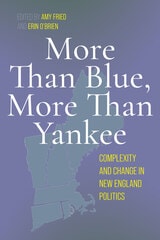
More Than Blue, More Than Yankee
Complexity and Change in New England PoliticsEdited by Amy Fried and Erin O’Brien
University of Massachusetts Press, 2024
New England politics can, at first blush, appear monochromatic. After all, only one member of the entire region’s delegation to the US Congress is a Republican, and citizens have elected few Republicans to the US House or Senate in the last decade. But this has not always been the case. In 1948, only two states in the region–Rhode Island and Connecticut–had Democratic senators. Yet a closer examination of the region today reveals fascinating political variation. Liberal policies, greater diversity, and engaged political movements are reshaping stereotypical Yankee tendencies of close-fisted government, whiteness, and laconic discourse.
This collection of new essays captures both the political history and contemporary moment in this region and exposes the surprisingly varied political landscape. It examines historical shifts, regional developments, and the politics of its states to argue that New England has been and continues to be an important part of the national political puzzle, from demonstrating democratic principles in early America to producing major contemporary figures such as Elizabeth Warren, Ayanna Pressley, and Susan Collins. The political shifts at work in New England mirror the South’s transformation, but have received much less attention. This volume corrects that omission by profiling political movements and candidates, political rhetoric from activists to pundits, and demographics and voting in each state as well as the region as a whole.
In addition to material by the editors, this important collection includes contributions from Rachael V. Cobb, Jerold Duquette, Christopher J. Galdieri, Jane JaKyung Han, Douglas B. Harris, Luis Jiménez, Scott McLean, James Melcher, Maureen Moakley, Paul Petterson, and Dante J. Scala.
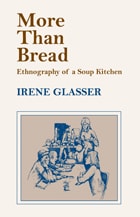
More Than Bread
Ethnography of a Soup KitchenIrene Glasser
University of Alabama Press, 2010
A powerful ethnographic portrait of hunger, dignity, and community in America.
In More than Bread: Ethnography of a Soup Kitchen, sociologist Irene Glasser presents a compelling and deeply human exploration of poverty, hunger, and community through the lens of an American soup kitchen. Drawing on immersive ethnographic research, Glasser moves beyond stereotypes and statistics to examine the daily experiences of individuals who depend on emergency food assistance, as well as the volunteers and staff who work to meet their needs.
Through firsthand observations and personal narratives, the book reveals the complex social relationships, challenges, and acts of resilience that unfold within this vital community institution. Glasser explores how issues such as homelessness, unemployment, inequality, mental health, and social isolation intersect in the lives of those seeking assistance, while also highlighting the dignity and humanity of people often overlooked in public discussions of poverty.
More than Bread invites readers to consider broader questions about social responsibility, public policy, and the effectiveness of charitable responses to human need. A valuable resource for understanding the realities of food insecurity in America, this book offers an informative and compassionate perspective on one of society's most pressing challenges. It is an essential read for students, scholars, social workers, policymakers, nonprofit professionals, and anyone interested in poverty, homelessness, and social justice.
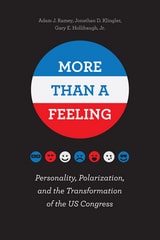
More Than a Feeling
Personality, Polarization, and the Transformation of the US CongressAdam J. Ramey, Jonathan D. Klingler, and Gary E. Hollibaugh Jr.
University of Chicago Press, 2017
With More Than a Feeling, Adam J. Ramey, Jonathan D. Klingler, and Gary E. Hollibaugh, Jr. have developed an innovative framework incorporating what are known as the Big Five dimensions of personality—openness to experience, conscientiousness, extraversion, agreeableness, and neuroticism—to improve our understanding of political behavior among members of Congress. To determine how strongly individuals display these traits, the authors identified correlates across a wealth of data, including speeches, campaign contributions and expenditures, committee involvement, willingness to filibuster, and even Twitter feeds. They then show how we might expect to see the influence of these traits across all aspects of Congress members’ political behavior—from the type and quantity of legislation they sponsor and their style of communication to whether they decide to run again or seek a higher office. They also argue convincingly that the types of personalities that have come to dominate Capitol Hill in recent years may be contributing to a lot of the gridlock and frustration plaguing the American political system.

More or Less Afraid of Nearly Everything
Homeland Security, Borders, and Disasters in the Twenty-First CenturyBenjamin Rohrbaugh
University of Michigan Press, 2020
Throughout the twentieth century, the United States did not experience national security domestically; it defended its borders by conducting military, foreign policy, and intelligence operations internationally, and then separated these activities from domestic law enforcement with bright legal lines. In the twenty-first century, U.S. national security no longer occurs exclusively outside of the nation. The U.S. government is beginning to respond to this change, and the establishment of the Department of Homeland Security is merely the first step in an organizational and strategic realignment that will be a long, difficult, and mistake-filled process. More or Less Afraid of Nearly Everything is an accessible and engaging guide to homeland security, particularly migration and border security, that makes innovative arguments about the American government and keeping citizens safe, and provides practical solutions to real-world problems.
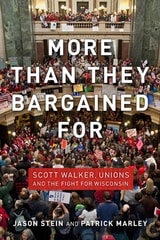
More than They Bargained For
Scott Walker, Unions, and the Fight for WisconsinJason Stein and Patrick Marley
University of Wisconsin Press, 2013
“Stein and Marley deliver an impressively objective account of the struggle, ably describing the objectives and tactics of each side in a confident and engaging style.”—Kirkus Reviews
“Stein and Marley deliver a swashbuckling tale of Wisconsin's Republican Governor Scott Walker's election and tumultuous first year in office. . . . Instead of an expected dry read, the authors' lively, economical prose, supplemented by snippets of social media reporting in real time, place readers in the crowded Capitol building stairwells, or in the midst of Wisconsin's largest sustained demonstration since Vietnam protests rocked the University of Wisconsin campus.”—Publishers Weekly
“This book is a political thriller, an activists’ handbook (for the Left on how to organize mass protests, and for the Right on how to effectively fight public employee unions), and a work of investigative journalism all rolled into one. Social scientists, political junkies, and anyone interested in public affairs will devour it.”—Library Journal
“Not only have Stein and Marley organized this mass of material into a coherent whole, but they also write well, ensuring that even the drier parts of their narrative are clear as well as fair. Their book provides plenty of ammunition for both sides. But it also offers something far better: the basis for an adult conversation about what actually happened.”—Milwaukee Journal Sentinel
“This timely account covers the ethics investigations, public demonstrations, runaway legislators, recalls, and physical confrontation between two state Supreme Court justices. . . . This book is written in a concise, unbiased manner and includes complete details. In a greater sense, it explores the drastic polarization endemic in American society today.”—Choice
“A testament to the information-gathering powers of good beat reporters. In Bob Woodward style, they reconstruct the backroom meetings that ushered Gov. Scott Walker’s Act 10 legislation through the protester-crammed halls of the Wisconsin State Capitol.”—Milwaukee Magazine
“Stein and Marley have managed to produce a very readable, well-researched, and thoroughly interesting narrative without any notable bias—a major accomplishment.”—Wisconsin People & Ideas Magazine
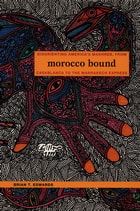
Morocco Bound
Disorienting America's Maghreb, from Casablanca to the Marrakech ExpressBrian T. Edwards
Duke University Press, 2005
Edwards reads a broad range of texts to recuperate the disorienting possibilities for rethinking American empire. Examining work by William Burroughs, Jane Bowles, Ernie Pyle, A. J. Liebling, Jane Kramer, Alfred Hitchcock, Clifford Geertz, James Michener, Ornette Coleman, General George S. Patton, and others, he puts American texts in conversation with an archive of Maghrebi responses. Whether considering Warner Brothers’ marketing of the movie Casablanca in 1942, journalistic representations of Tangier as a city of excess and queerness, Paul Bowles’s collaboration with the Moroccan artist Mohammed Mrabet, the hippie communities in and around Marrakech in the 1960s and early 1970s, or the writings of young American anthropologists working nearby at the same time, Edwards illuminates the circulation of American texts, their relationship to Maghrebi history, and the ways they might be read so as to reimagine the role of American culture in the world.

Mother Earth and Uncle Sam
How Pollution and Hollow Government Hurt Our KidsBy Rena I. Steinzor
University of Texas Press, 2007
In this compelling study, Rena Steinzor highlights the ways in which the government, over the past twenty years, has failed to protect children from harm caused by toxic chemicals. She believes these failures—under-funding, excessive and misguided use of cost/benefit analysis, distortion of science, and devolution of regulatory authority—have produced a situation in which harm that could be reduced or eliminated instead persists.
Steinzor states that, as a society, we are neglecting our children's health to an extent that we would find unthinkable as individual parents, primarily due to the erosion of the government's role in protecting public health and the environment. At this pace, she asserts, our children will inherit a planet under grave threat. We can arrest these developments if a critical mass of Americans become convinced that these problems are urgent and the solutions are near at hand.
By focusing on three specific case studies—mercury contamination through the human food chain, perchlorate (rocket fuel) in drinking water, and the effects of ozone (smog) on children playing outdoors—Steinzor creates an analysis grounded in law, economics, and science to prove her assertions about the existing dysfunctional system.
Steinzor then recommends a concise and realistic series of reforms that could reverse these detrimental trends and serve as a blueprint for restoring effective governmental intervention. She argues that these recommendations offer enough material to guide government officials and advocacy groups toward prompt implementation, for the sake of America's—and the world's—future generations.
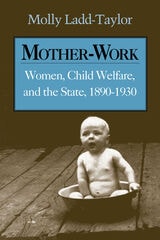
Mother-Work
Women, Child Welfare, and the State, 1890-1930Molly Ladd-Taylor
University of Illinois Press, 1994
Early in the twentieth century, maternal and child welfare evolved from a private family responsibility into a matter of national policy. Molly Ladd-Taylor explores both the private and public aspects of child-rearing, using the relationship between them to cast new light on the histories of motherhood, the welfare state, and women's activism in the United States.
Ladd-Taylor argues that mother-work, "women's unpaid work of reproduction and caregiving," motivated women's public activism and "maternalist" ideology. Mothering experiences led women to become active in the development of public health, education, and welfare services. In turn, the advent of these services altered mothering in many ways, including the reduction of the infant mortality rate.
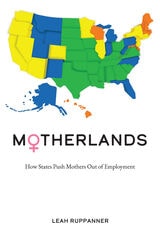
Motherlands
How States Push Mothers Out of EmploymentLeah Ruppanner
Temple University Press, 2020
In the absence of federal legislation, each state in the United States has its own policies regarding family leave, job protection for women and childcare. No wonder working mothers encounter such a significant disparity when it comes to childcare resources in America! Whereas conservative states like Nebraska offer affordable, readily available, and high quality childcare, progressive states that advocate for women’s economic and political power, like California, have expensive childcare, shorter school days, and mothers who are more likely to work part-time or drop out of the labor market altogether to be available for their children.
In Motherlands, Leah Ruppanner cogently argues that states should look to each other to fill their policy voids. She provides suggestions and solutions for policy makers interested in supporting working families. Whether a woman lives in a state with stronger childcare or gender empowerment regimes, at stake is mothers’ financial dependence on their partners.
Ruppanner advocates for reducing the institutional barriers mothers face when re-entering the workforce. As a result, women would have greater autonomy in making employment decisions following childbirth.
Mothers, Daughters, and Political Socialization
Two Generations at an American Women's CollegeKrista Jenkins
Temple University Press, 2013
Using a unique data set comparing mothers and daughters who attended Douglass College—the women's college of Rutgers University—twenty-five years apart, Krista Jenkins perceptively observes the changes in how women acquire their attitudes toward gender roles and behaviors in the post-women's movement years.
Mothers, Daughters, and Political Socialization examines the role of intergenerational transmission—the maternal influences on younger women—while also looking at differences among women in attitudes and behaviors relative to gender roles that might be attributed to the nature of the times during their formative years. How do daughters coming of age in an era when the women's movement is far less visible deal with gendered expectations compared to their mothers? Do they accept the contemporary status quo their feminist mothers fought so hard to achieve? Or, do they press forward with new goals?
Jenkins shows how contemporary women are socialized to accept or reject traditional gender roles that serve to undermine their equality.
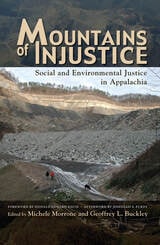
Mountains of Injustice
Social and Environmental Justice in AppalachiaMichele Morrone
Ohio University Press, 2011
Research in environmental justice reveals that low-income and minority neighborhoods in our nation’s cities are often the preferred sites for landfills, power plants, and polluting factories. Those who live in these sacrifice zones are forced to shoulder the burden of harmful environmental effects so that others can prosper. Mountains of Injustice broadens the discussion from the city to the country by focusing on the legacy of disproportionate environmental health impacts on communities in the Appalachian region, where the costs of cheap energy and cheap goods are actually quite high.
Through compelling stories and interviews with people who are fighting for environmental justice, Mountains of Injustice contributes to the ongoing debate over how to equitably distribute the long-term environmental costs and consequences of economic development.
Contributors:
Laura Allen, Brian Black, Geoffrey L. Buckley, Donald Edward Davis, Wren Kruse, Nancy Irwin Maxwell, Chad Montrie, Michele Morrone, Kathryn Newfont, John Nolt, Jedediah S. Purdy, and Stephen J. Scanlan.
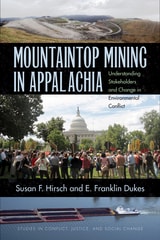
Mountaintop Mining in Appalachia
Understanding Stakeholders and Change in Environmental ConflictSusan F. Hirsch
Ohio University Press, 2014
Residents of the Appalachian coalfields share a history and heritage, deep connections to the land, and pride in their own resilience. These same residents are also profoundly divided over the practice of mountaintop mining—that is, the removal and disposal in nearby valleys of soil and rock in order to reach underlying coal seams. Companies and some miners claim that the practice has reduced energy prices, earned income for shareholders, and provided needed jobs. Opponents of mountaintop mining argue that it poisons Appalachia’s waters and devastates entire communities for the sake of short-term gains.
This conflict is emblematic of many other environmental disputes in the United States and around the world, disputes whose intensity derives not only from economic and environmental stakes but also from competing claims to individual and community identity. Looking beyond the slogans and seemingly irreconcilable differences, however, can reveal deeper causes of conflict, such as flawed institutions, politics, and inequality or the strongly held values of parties for whom compromise is difficult to achieve.
Mountaintop Mining in Appalachia focuses on the people of the region, the people who have the most at stake and have been the most active in trying to shift views and practices. By examining the experiences of these stakeholders and their efforts to effect change, Susan F. Hirsch and E. Franklin Dukes introduce key concepts and theories from the field of conflict analysis and resolution. They provide a compelling case study of how stakeholders challenge governance-as-usual, while offering insight into the causes of conflict over other environmental issues.
Movement and the Ordering of Freedom
On Liberal Governances of MobilityHagar Kotef
Duke University Press, 2015
Movements in Times of Democratic Transition
Bert Klandermans
Temple University Press, 2015
The editors and contributors to Movements in Times of Democratic Transition examine in comparative detail how social movements act within the context of the democratic transitions they have been fighting for, and how they are affected by the changes they helped bring about. Offering insights into the nature of how social movements decline, radicalize, revitalize, or spark new cycles of activism, Movements in Times of Democratic Transition provides a comprehensive analysis of these key questions of mobilization research.
Contributors include: Paul Almeida, Christopher J. Colvin, Stephen Ellis, Grzegorz Ekiert, Grzegorz Forys, Krzysztof Gorlach, Camila Penna, Sebastián Pereyra, Steven Robbins, Ton Salman, Mate Szabo, Ineke van Kessel, Michal Wenzel, and the editors.
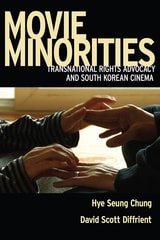
Movie Minorities
Transnational Rights Advocacy and South Korean CinemaHye Seung Chung and David Scott Diffrient
Rutgers University Press, 2021

Moving Against the System
The 1968 Congress of Black Writers and the Shaping of Global Black ConsciousnessEdited by David Austin
Pluto Press, 2018
Against a backdrop of widespread racism in the West and ongoing colonialism and imperialism in the Global South, this group of activists, writers, and political figures gathered to discuss the history and struggles of people of African descent and the meaning of black power.
For the first time since 1968, David Austin brings alive the speeches and debates of the most important international gathering of black radicals of the era. With never-before-seen texts from Stokely Carmichael, Walter Rodney and C.L.R. James, these documents will prove invaluable to anyone interested in black radical thought and political activism of the 1960s.
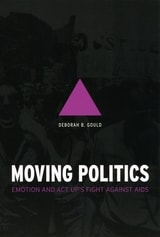
Moving Politics
Emotion and ACT UP's Fight against AIDSDeborah B. Gould
University of Chicago Press, 2009
In the late 1980s, after a decade spent engaged in more routine interest-group politics, thousands of lesbians and gay men responded to the AIDS crisis by defiantly and dramatically taking to the streets. But by the early 1990s, the organization they founded, ACT UP, was no more—even as the AIDS epidemic raged on. Weaving together interviews with activists, extensive research, and reflections on the author’s time as a member of the organization, Moving Politics is the first book to chronicle the rise and fall of ACT UP, highlighting a key factor in its trajectory: emotion.
Surprisingly overlooked by many scholars of social movements, emotion, Gould argues, plays a fundamental role in political activism. From anger to hope, pride to shame, and solidarity to despair, feelings played a significant part in ACT UP’s provocative style of protest, which included raucous demonstrations, die-ins, and other kinds of street theater. Detailing the movement’s public triumphs and private setbacks, Moving Politics is the definitive account of ACT UP’s origin, development, and decline as well as a searching look at the role of emotion in contentious politics.
Moving Up or Moving On
Who Gets Ahead in the Low-Wage Labor Market?Fredrik Andersson
Russell Sage Foundation, 2005
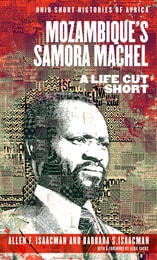
Mozambique’s Samora Machel
A Life Cut ShortAllen F. Isaacman
Ohio University Press, 2020
The precipitous rise and controversial fall of a formidable African leader.
Samora Machel (1933–1986), the son of small-town farmers, led his people through a war against their Portuguese colonists and became the first president of the People’s Republic of Mozambique.
Machel’s military successes against a colonial regime backed by South Africa, Rhodesia, the United States, and its NATO allies enhanced his reputation as a revolutionary hero to the oppressed people of Southern Africa. In 1986, during the country’s civil war, Machel died in a plane crash under circumstances that remain uncertain.
Allen and Barbara Isaacman lived through many of these changes in Mozambique and bring personal recollections together with archival research and interviews with others who knew Machel or participated in events of the revolutionary or post-revolutionary years.
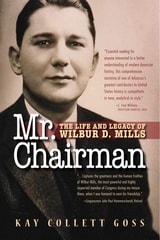
Mr. Chairman
The Life and Legacy of Wilbur D. MillsKay Collett Goss
Parkhurst Brothers, Inc., 2012
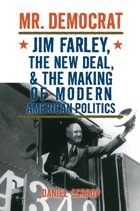
Mr. Democrat
Jim Farley, the New Deal and the Making of Modern American PoliticsDaniel Scroop
University of Michigan Press, 2006
Mr. Democrat tells the story of Jim Farley, Franklin D. Roosevelt's campaign manager. As party boss, Farley experienced unprecedented success in the New Deal years. And like his modern counterpart Karl Rove, Farley enjoyed unparalleled access and power. Unlike Rove, however, Farley was instrumental in the creation of an overwhelming new majority in American politics, as the emergence of the New Deal transformed the political landscape of its time.
Mr. Democrat is timely and indispensable not just because Farley was a fascinating and unduly neglected figure, but also because an understanding of his career advances our knowledge of how and why he revolutionized the Democratic Party and American politics in the age of the New Deal.
Daniel Scroop is Lecturer in American History, University of Liverpool School of History.

Mrs. Shipley's Ghost
The Right to Travel and Terrorist WatchlistsJeffrey Kahn
University of Michigan Press, 2014
Today, when a single person can turn an airplane into a guided missile, no one objects to rigorous security before flying. But can the state simply declare some people too dangerous to travel, ever and anywhere? Does the Constitution protect a fundamental right to travel? Should the mode of travel (car, plane, or boat) or itinerary (domestic or international) make a constitutional difference? This book explores the legal and policy questions raised by government travel restrictions, from passports and rubber stamps to computerized terrorist watchlists.
In tracing the history and scope of U.S. travel regulations, Jeffrey Kahn begins with the fascinating story of Mrs. Ruth Shipley, a federal employee who almost single-handedly controlled access to passports during the Cold War. Kahn questions how far national security policies should go and whether the government should be able to declare some individuals simply too dangerous to travel. An expert on constitutional law, Kahn argues that U.S. citizens’ freedom to leave the country and return is a fundamental right, protected by the Constitution.

Much Ado about Culture
North American Trade DisputesKeith Acheson and Christopher Maule
University of Michigan Press, 2001

Mugwumps, Morals and Politics 1884-1920
Gerald W. McFarland
University of Massachusetts Press, 1975
The conventional approach has been to concentrate on only a dozen or so of the best known Mugwumps and to trace their careers no further than 1900. In contrast, McFarland greatly extends the number of individuals whose activities must be considered reflections of the movement, discussing a sample of hundreds of active Mugwumps, and traces their careers well into the twentieth century.
Mugwump orthodoxy is demonstrated by an examination of their largely negative goals in the anti-Blaine bolt of 1884, their narrow political program during the late 1880s, and their politically disastrous loyalty to Grover Cleveland. But their innovative side is also highlighted by a searching analysis of their successes, including their participation in the movement to professionalize such occupations as law, medicine, and higher education, and their contributions to urban, political, and social reform.
Multi-Party Politics in Kenya
The Kenyatta and Moi States and the Triumph of the System in the 1992 ElectionDavid Throup
Ohio University Press, 1997
This book uses the Kenyan political system to address issues relevant to recent political developments throughout Africa.
The authors analyze the construction of the Moi state since 1978. They show the marginalization of Kikuyu interests as the political economy of Kenya has been reconstructed to benefit President Moi’s Kalenjin people and their allies. Mounting Kikuyu dissatisfaction led to the growth of demands for multi-party democracy.
The book places contemporary Kenyan politics and the 1992 election in their historical context, contrasting the present multi-party era with the previous one during the sixties.
The authors question the hopes for a “second independence” in Africa by demonstrating the problems faced by fledgling opposition parties in weak civil societies.
Multiculturalism and its Discontents
Rethinking Diversity after 9/11Kenan Malik
Seagull Books, 2013
In the wake of September 11, 2001 and the many terrorist attacks that have occurred since then, there has been much debate about the degree of diversity that Western nations can tolerate. In Multiculturalism and its Discontents, Kenan Malik looks closely at the role of multiculturalism within terrorism and societal discontent. He examines whether it is possible—or desirable—to try to build a cohesive society bound by common values and he delves into the increasing anxiety about the presence of the Other within our borders.
Multiculturalism and its Discontents not only explores the relationship between multiculturalism and terrorism, but it analyzes the history of the idea of multiculturalism alongside its political roots and social consequences.
Multiculturalism and the Politics of Guilt
Toward a Secular TheocracyPaul Edward Gottfried
University of Missouri Press, 2003
Multiethnic Moments
The Politics of Urban Education ReformSusan E. Clarke, Rodney E. Hero, Mara S. Sidney, Luis Fraga and Bari Anhalt Erlichson, foreword by Clarence N. Stone
Temple University Press, 2006
Multilateral Institutions
A Critical IntroductionMorten Boas and Desmond McNeill
Pluto Press, 2003
The emphasis is on politics within and also between multilateral institutions, analysing the relations – both competitive and collaborative – between, for example, the World Bank and UNDP. NGOs are also shown to be important actors, and the role they have played in recent years is critically assessed. The book concludes with some emerging trends: the ‘privatisation’ of the system, regionalisation, and ‘the politics of protest’.
Bøås and McNeill do not simply take the policies of multilateral institutions at face value, but ask how and why these policies came into existence. They seek to promote critical, but informed, engagement both with the member states of multilateral institutions and the institutions themselves.

Multiparty Government
The Politics of Coalition in EuropeMichael Laver and Norman Schofield
University of Michigan Press, 1998

Multiple Meanings of Gender Equality
A critical frame analysis of gender policies in EuropeMieke Verloo
Central European University Press, 2007

Multipolarity
The Promise of DisharmonyEdited by Peter W. Schulze
Campus Verlag, 2018
Multnomah
The Tumultuous Story of Oregon's Most Populous CountyJewel Lansing and Fred Leeson
Oregon State University Press, 2012
Covering people and events from 1854 to the present day, this definitive history of Multnomah County provides compelling details about public works triumphs and political scandals.