Results by title
18284 books match the query 'United States' and 949 start with m

Medicine and American Growth, 1800–1860
James H. Cassedy
University of Wisconsin Press, 1986
“A work of great breadth, originality, and distinction. Rarely do we see such a successful marriage between historical demography and the history of medicine. The interconnections between population increase, migration and immigration on the one hand, and disease and the development of medicine on the other in antebellum America are brilliantly presented.”—Irvine Loudon, Bulletin of the History of Medicine
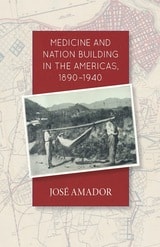
Medicine and Nation Building in the Americas, 1890-1940
Jose Amador
Vanderbilt University Press, 2015
Drawing on sources in Cuba, Puerto Rico, Brazil, and the United States, Amador shows that initiatives launched in colonial settings laid the foundation for the rise of public health programs in the hemisphere and transformed debates about the formation of national culture. Writers rethought theories of environmental and racial danger, while Cuban reformers invoked the yellow fever campaign to exclude nonwhite immigrants. Puerto Rican peasants flooded hookworm treatment stations, and Brazilian sanitarians embraced regionalist and imperialist ideologies. Together, these groups illustrated that public health campaigns developed in the shadow of empire propelled new conflicts and conversations about achieving modernity and progress in the tropics.
This book is a recipient of the annual Norman L. and Roselea J. Goldberg Prize for the best project in the area of medicine.
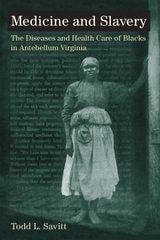
Medicine and Slavery
The Diseases and Health Care of Blacks in Antebellum VirginiaTodd L. Savitt
University of Illinois Press, 2002
In Medicine and Slavery, Todd L. Savitt evaluates the diet, hygiene, clothing, and living and working conditions of antebellum African Americans, slave and free, and analyzes the diseases and health conditions that afflicted them in urban areas, at industrial sites, and on plantations.
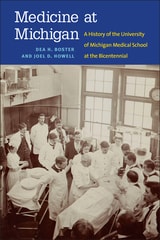
Medicine at Michigan
A History of the University of Michigan Medical School at the BicentennialDea H. Boster and Joel D. Howell
University of Michigan Press, 2017
Medicine’s Labyrinth
The Challenges of Our Treatment-Saturated LivesRobert Aronowitz
University of Chicago Press, 2027
A physician diagnoses why doctors and patients face so many uncertainties as they navigate a dizzying array of medical treatments and technologies—and lays out a treatment plan for better health care.
Americans now depend on ever more potent drugs, devices, and procedures. While many of these interventions can improve our health and extend our lives, their widespread availability has created a medical landscape where patients make increasingly complex choices about their care.
In Medicine’s Labyrinth, physician historian Robert Aronowitz examines the challenging decisions posed by the widespread use of so many medical interventions. Drawing on medical literature, patient accounts, and historical case studies, he shows how medical progress can erode certainty, transform the illness experience, and deepen dependence on technology. To understand how these challenges have played out over the past century, Aronowitz explores medicine’s attempts to safely resuscitate premature infants, treat prostate cancer, and deal with too many disease diagnoses. He concludes with a call for physicians to pay renewed attention to patients’ lived experiences and to offer clinical judgments grounded in observations rather than algorithms.
Medicine’s Labyrinth is a clear-eyed exploration of how the very successes of modern medicine have made care harder, and why the fragile trust that sustains its institutions, policies, and practices must be rebuilt.
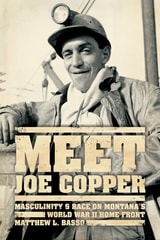
Meet Joe Copper
Masculinity and Race on Montana's World War II Home FrontMatthew L. Basso
University of Chicago Press, 2013
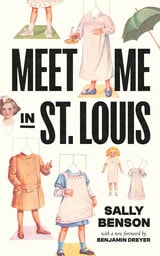
Meet Me in St. Louis
Sally Benson
University of Chicago Press, 2026
Sally Benson’s charming slice-of-life story is back in print for a new generation of readers.
Originally published as World War II raged overseas, Meet Me in St. Louis is Sally Benson’s semi-autobiographical account of the intergenerational Smith family during the twelve months leading up to the 1904 World’s Fair in St. Louis, Missouri. With warmth and tenderness, Benson chronicles the Smiths’ lives as they navigate sibling rivalries, first loves, financial hardship, jealousy, and heartaches in a poignant ode to the bonds of family.
Benson's novel is infused with wit as she details the lighthearted, pleasant existence of the Smith family’s five children—one rife with chaste crushes, victimless pranks, and other childhood escapades. Yet, the novel’s episodic, squeaky-clean veneer belies a dark comedic brilliance that transcends the ages and speaks, even today, to the universal experience of growing up.
Long out of print, this new edition of Benson’s timeless work includes a foreword by bestselling author Benjamin Dreyer, who comments both on the book's origins and its afterlife in popular culture as the source material for Judy Garland’s beloved musical of the same name. An effervescent midcentury novel waiting to be rediscovered, Meet Me in St. Louis is ready to meet its new generation of readers.
Meet Me on the Midway
A History of Wisconsin FairsJerry Apps
Wisconsin Historical Society Press, 2022
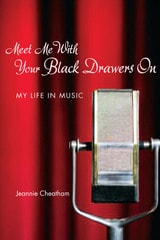
Meet Me with Your Black Drawers On
My Life in MusicBy Jeannie Cheatham
University of Texas Press, 2006
Jeannie Cheatham is a living legend in jazz and blues. A pianist, singer, songwriter, and co-leader of the Sweet Baby Blues Band, she has played and sung with many of the greats in blues and jazz—T-Bone Walker, Dinah Washington, Cab Callaway, Joe Williams, Al Hibbler, Odetta, and Jimmy Witherspoon. Cheatham toured with Big Mama Thornton off and on for ten years and was featured with Thornton and Sippie Wallace in the award-winning PBS documentary Three Generations of the Blues. Her music, which has garnered national and international acclaim, has been described as unrestrained, exuberant, soulful, rollicking, wicked, virtuous, wild, and truthful. Cheatham's signature song, "Meet Me with Your Black Drawers On" is a staple in jazz and blues clubs across America and in Europe, Africa, and Japan.
In this delightfully frank autobiography, Jeannie Cheatham recalls a life that has been as exuberant, virtuous, wild, and truthful as her music. She begins in Akron, Ohio, where she grew up in a vibrant multiethnic neighborhood surrounded by a family of strong women. From those roots, she launched a musical career that took her from the Midwest to California, doing time along the way everywhere from a jail cell in Dayton, Ohio, where she was innocently caught in a police raid, to the University of Wisconsin-Madison—where she and Jimmy Cheatham taught music. Cheatham writes of a life spent fighting racism and sexism, of rage and resolve, misery and miracles, betrayals and triumphs, of faith almost lost in dark places, but mysteriously regained in a flash of light. Cheatham's autobiography is also the story of her fifty-years-and-counting love affair and musical collaboration with her husband and band partner, Jimmy Cheatham.

Meeting Sophie
A Memoir of AdoptionNancy McCabe
University of Missouri Press, 2003
The baby is screaming again. My baby. I hoist her off the narrow hotel bed--again--and try to cradle her as I rock my torso back and forth in an uncomfortable straight-backed chair.
This baby does not cradle. She doesn't know how to cuddle, to be soothed in anyone's arms. She howls and arches away, squirms and flops, a sixteen-pound fish out of water. I'm not used to holding babies, and she's not used to be being held, but when I try to put her down, she wails. My arms feel chafed, raw, and my wrists ache from the hours of straining to hang on to her.
Huge tears pool in her eyes. These tears could break my heart. These screams could break my eardrums.
Meeting Tom Brady
One Man's Quest for Truth, Enlightenment, and a Simple Game of Catch with the Patriots QuarterbackRichard J. King
University Press of New England, 2015
Meeting the Challenge of Teaching Information Literacy
Michelle Reale
American Library Association, 2020
While the profession has generated many books on information literacy, none to date have validated exactly why it is so difficult to teach. In her new book, Reale posits that examining and reflecting on the reality of those factors is what will enable practitioners to meet the challenge of their important mandate. Using the same warm and conversational tone as in her previous works, she
- uses personal anecdotes to lay out the key reasons that teaching information literacy is so challenging, from the limited amount of time given to instructors and lack of collaboration with faculty to one’s own anxieties about the work;
- examines how these factors are related and where librarians fit in;
- validates readers’ struggles and frustrations through an honest discussion of the emotional labor of librarianship, including “imposter syndrome,” stress, and burnout;
- offers a variety of approaches, strategies, and topics of focus that will assist readers in their daily practice;
- looks at how a vibrant community of practice can foster positive change both personally and institutionally; and
- presents “Points to Ponder” at the end of each chapter that encourage readers to self-reflect and then transform personal insights into action.
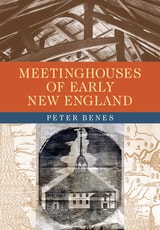
Meetinghouses of Early New England
Peter Benes
University of Massachusetts Press, 2012
Today few of these once ubiquitous buildings survive. Based on site visits and meticulous documentary research, Meetinghouses of Early New England identifies more than 2,200 houses of worship in the region during the period from 1622 to 1830, bringing many of them to light for the first time.
Within this framework Peter Benes addresses the stunning but ultimately impermanent blossoming of a New England "vernacular" tradition of ecclesiastical/ municipal architecture. He pinpoints the specific European antecedents of the seventeenth-century New England meetinghouse and traces their evolution through the eighteenth and early nineteenth centuries into Congregational, Presbyterian, and Baptist churches heavily influenced by an Anglican precedent that made a place of worship a "house of God." Undertaking a parish-by-parish examination, Benes draws on primary sources—original records, diaries, and contemporary commentators—to determine which religious societies in the region advocated (or resisted) this evolution, tying key shifts in meetinghouse architecture to the region's shifting liturgical and devotional practices.
Mel Gibson's Bible
Religion, Popular Culture, and "The Passion of the Christ"Edited by Timothy K. Beal and Tod Linafelt
University of Chicago Press, 2005
In this volume, biblical scholars Timothy K. Beal and Tod Linafelt—along with an esteemed group of contributors—offer a provocative range of views on The Passion of the Christ. Their book is organized in three parts. The first analyzes the film in terms of its religious foundations, including the Gospels and nonbiblical religious texts: What are the film's literary sources and how does it use them? In what ways does the medium of film require a radically different way of representing gospel narrative? The second group of essays focuses on the ethical and theological implications of the film's presentation of the Christian gospel: What do we make of its representations of female sexuality? What are the implications of focusing on the Passion in terms of atonement rather than social justice? Finally, the third section explores the film as a pop cultural phenomenon: How has the film worked to create a sense of insider status for some and alienated so many others? What can we learn about the religious dimensions of contemporary mass culture from the film's reception?
Whether one is inspired or appalled by The Passion of the Christ, there can be no question that it is a defining moment in the cultural afterlife of the Bible. This volume tries to make sense of that moment and will prove to be a touchstone for adherents and detractors of the film alike.
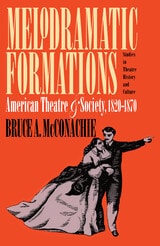
Melodramatic Formations
American Theatre and Society, 1820-1870Bruce A. Mcconachie
University of Iowa Press, 1992
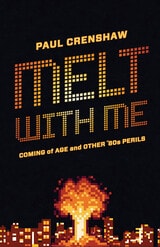
Melt with Me
Coming of Age and Other ’80s PerilsPaul Crenshaw
The Ohio State University Press, 2023
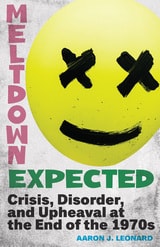
Meltdown Expected
Crisis, Disorder, and Upheaval at the end of the 1970sAaron J. Leonard
Rutgers University Press, 2024
Meltdown Expected tells the story of the power shifts from late 1978 through 1979 whose repercussions are still being felt. Iran’s revolution led to a hostage crisis while neighbouring Afghanistan became the site of a proxy war between the USSR and the US, who supplied aid to Islamic mujahideen fighters that would later form the Taliban. Meanwhile, as tragedies like the Jonestown mass suicide and the assassination of Harvey Milk captured the nation’s attention, the government quietly reasserted and expanded the FBI’s intelligence powers. Drawing from recently declassified government documents and covering everything from Three Mile Island to the rise of punk rock, Aaron J. Leonard paints a vivid portrait of a tumultuous yet pivotal time in American history.
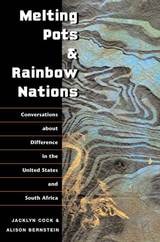
Melting Pots and Rainbow Nations
Conversations about Difference in the United States and South AfricaJacklyn Cock and Alison Bernstein
University of Illinois Press, 2002
This passionate, intelligent commentary is an invigorating look at the implications of difference and diversity in two contrasting but similar societies: the United States and South Africa. Melting Pots and Rainbow Nations addresses how differences--of gender, race, culture, biology, and sexual orientation--are variously understood and acted on in both countries.
The authors argue that the concepts of difference and diversity, although valuable, are hollow if disconnected from specific social and historical contexts in which power relations create and perpetuate disadvantage. Their thoughtful exploration includes accounts of their own experiences of difference and their perspectives on such pioneering women as Elizabeth Bishop, Frene Ginwala, Audre Lorde, Ruth First, Jane Goodall, and Mamphela Ramphele.
Melting the Ice Curtain
The Extraordinary Story of Citizen Diplomacy on the Russia-Alaska FrontierDavid Ramseur
University of Alaska Press, 2017
Melting the Ice Curtain tells the story of how inspiration, courage, and persistence by citizen-diplomats bridged a widening gap in superpower relations. David Ramseur was a first-hand witness to the danger and political intrigue, having flown on that first Friendship Flight, and having spent thirty years behind the scenes with some of Alaska’s highest officials. As Alaska celebrates the 150th anniversary of its purchase, and as diplomatic ties with Russia become perilous, Melting the Ice Curtain shows that history might hold the best lessons for restoring diplomacy between nuclear neighbors.
Melville Biography
An Inside NarrativeHershel Parker
Northwestern University Press, 2013
Melville Biography: An Inside Narrative is Hershel Parker’s history of the writing of Melville biographies, enriched by a lifetime of intimate working partnerships with great Melville scholars of different generations and by the author’s experience of successive phases of literary criticism. Throughout this bold book, Hershel Parker champions archival-based biography and the all-but-lost art of embodying such scholarship in literary criticism. First is a mesmerizing autobiographical account of what went into creating the award-winning and comprehensive Herman Melville: A Biography. Then Parker traces six decades of the “unholy war” waged against biographical scholarship, in which critics repeatedly imposed the theory of organic unity on Melville’s disrupted life—not just on his writings—while truncating his body of work and ignoring his study of art and aesthetics. In this connection, Parker celebrates discoveries made by “divine amateurs,” before throwing open his workshop to challenge ambitious readers with research projects. This is a book for Melville fans and Parker fans, as well as for readers, writers, and would-be writers of biography.
Memoirs Of A Cold War Son
Post, Gaines, Jr.
University of Iowa Press, 2000
In 1951 Gaines Post was a gangly, bespectacled, introspective teenager preparing to spend a year in Paris with his professorial father and older brother; his mother, who suffered from extreme depression, had been absent from the family for some time. Ten years later, now less gangly but no less introspective, he was finishing a two-year stint in the army in West Germany and heading toward Oxford on a Rhodes scholarship, having narrowly escaped combat in the Berlin crisis of 1961. His quietly intense coming-of-age story is both self-revealing and reflective of an entire generation of young men who came to adulthood before the Cuban Missile Crisis and the Vietnam War.
Post's experiences in high school in Madison, Wisconsin, and Paris, his Camus-influenced undergraduate years at Cornell University, and his army service in Germany are set very effectively against the events of the Cold War. McCarthyism and American crackdowns on dissidents, American foreign and military policy in Western Europe in the nuclear age, French and German life and culture, crises in Paris and Berlin that nearly bring the West to war and the Post family to dissolution—these are the larger scenes and subjects of his self-disclosure as a contemplative, conflicted "Cold War agnostic."
His intelligent, talented mother and her fragile health hover over Post's narrative, informing his hesitant relationships with women and his acutely questioning sense of self-worth. His story is strongly academic and historical as well as political and military; his perceptions and judgments lean toward no ideological extreme but remain true to the heroic ideals of his boyhood during the Second World War.
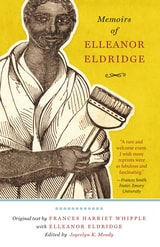
Memoirs of Elleanor Eldridge
Joycelyn K. Moody
University of Delaware Press, 0
Elleanor Eldridge, born of African and US indigenous descent in 1794, operated a lucrative domestic services business in nineteenth century Providence, Rhode Island. In defiance of her gender and racial background, she purchased land and built rental property from the wealth she gained as a business owner. In the 1830s, Eldridge was defrauded of her property by a white lender. In a series of common court cases as defendant and plaintiff, she managed to recover it through the Rhode Island judicial system. In order to raise funds to carry out this litigation, her memoir, which includes statements from employers endorsing her respectable character, was published in 1838. Frances Harriet Whipple, an aspiring white writer in Rhode Island, narrated and co-authored Eldridge’s story, expressing a proto-feminist outrage at the male “extortioners” who caused Eldridge’s loss and distress.
With the rarity of Eldridge’s material achievements aside, Memoirs of Elleanor Eldridge forms an exceptional antebellum biography, chronicling Eldridge’s life from her birth. Because of Eldridge’s exceptional life as a freeborn woman of color entrepreneur, it constitutes a counter-narrative to slave narratives of early nineteenth-century New England, changing the literary landscape of conventional American Renaissance studies and interpretations of American Transcendentalism.
With an introduction by Joycelyn K. Moody, this new edition contextualizes the extraordinary life of Elleanor Eldridge—from her acquisition of wealth and property to the publication of her biography and her legal struggles to regain stolen property. Because of her mixed-race identity, relative wealth, local and regional renown, and efficacy in establishing a collective of white women patrons, this biography challenges typical African and Indigenous women’s literary production of the early national period and resituates Elleanor Eldridge as an important cultural and historical figure of the nineteenth century.
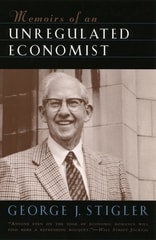
Memoirs of an Unregulated Economist
George J. Stigler
University of Chicago Press, 2003
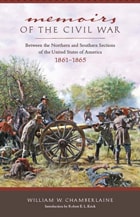
Memoirs of the Civil War
Between the Northern and Southern Sections of the United States of America 1861 to 1865William W. Chamberlaine
University of Alabama Press, 2011
Memoirs of the Civil War, though relatively little known because of its rarity in the original edition, contains much valuable information and engaging narrative passages. A Virginian whose Confederate career included service in an infantry regiment early in the war, Chamberlaine’s most important military service was as a staff officer attached to Brigadier General Reuben Lindsay Walker, who commanded the Third Corps artillery in the Army of Northern Virginia.
Includes excellent material on the duties of staff officers, operation of Confederate conscription, and the role of artillery in Lee’s campaigns. He is especially eloquent and revealing about a number of famous battles: the Seven Days; Antietam, where Chamberlaine distinguished himself and was wounded; and the Wilderness, where he had a memorable encounter with Lee.
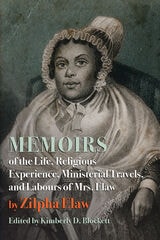
Memoirs of the Life, Religious Experience, Ministerial Travels, and Labours of Mrs. Elaw
Zilpha Elaw
West Virginia University Press, 2021
As a young Black orphan indentured to a Quaker family in Bristol, Pennsylvania, Zilpha Elaw (c. 1793–1873) decided to join the upstart Methodists in 1808. She preached her first sermon a decade later, ignoring her husband and the many church leaders, clergy, and laity who tried to silence her. Elaw’s memoir chronicles the first twenty years of her forty-year itinerant ministry during massive Protestant revivalism in the United States and England.
Elaw preached from Maine to Virginia, attracting multiracial and multidenominational audiences that included powerful men, wealthy White women, poor families, and enslaved communities. She moved from Bristol to Burlington, New Jersey, then to Nantucket, Massachusetts, and finally, in 1840, to London’s East End. In England, Elaw’s celebrity expanded, and at least twice she drew crowds so large they caused human stampedes and multiple injuries.
Blockett’s introduction and extensive annotations draw on newly unearthed information about the entirety of Elaw’s evangelism to provide context for this remarkable story of an antebellum Black woman’s personal and professional mobility.
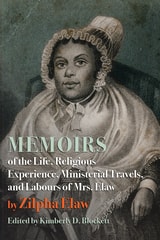
Memoirs of the Life, Religious Experience, Ministerial Travels, and Labours of Mrs. Elaw
Kimberly D. Blockett
University of Delaware Press, 0
Elaw preached from Maine to Virginia, attracting multiracial and multidenominational audiences that included powerful men, wealthy White women, poor families, and enslaved communities. She moved from Bristol to Burlington, New Jersey, then to Nantucket, Massachusetts, and finally, in 1840, to London’s East End. In England, Elaw’s celebrity expanded, and at least twice she drew crowds so large they caused human stampedes and multiple injuries.
Kimberly D. Blockett’s introduction and extensive annotations draw on newly unearthed information about the entirety of Elaw’s evangelism to provide context for this remarkable story of an antebellum Black woman’s personal and professional mobility.
Memorial Mania
Public Feeling in AmericaErika Doss
University of Chicago Press, 2010
In the past few decades, thousands of new memorials to executed witches, victims of terrorism, and dead astronauts, along with those that pay tribute to civil rights, organ donors, and the end of Communism have dotted the American landscape. Equally ubiquitous, though until now less the subject of serious inquiry, are temporary memorials: spontaneous offerings of flowers and candles that materialize at sites of tragic and traumatic death. In Memorial Mania, Erika Doss argues that these memorials underscore our obsession with issues of memory and history, and the urgent desire to express—and claim—those issues in visibly public contexts.
Doss shows how this desire to memorialize the past disposes itself to individual anniversaries and personal grievances, to stories of tragedy and trauma, and to the social and political agendas of diverse numbers of Americans. By offering a framework for understanding these sites, Doss engages the larger issues behind our culture of commemoration. Driven by heated struggles over identity and the politics of representation, Memorial Mania is a testament to the fevered pitch of public feelings in America today.
Memorializing Motherhood
Anna Jarvis and the Struggle for Control of Mother's DayKatharine Lane Antolini
West Virginia University Press, 2017
Few know the name Anna Jarvis, yet on the second Sunday in May, we mail the card, buy the flowers, place the phone call, or make the brunch reservation to honor our mothers, all because of her.
Anna Jarvis organized the first official Mother’s Day celebration in Grafton, West Virginia in 1908 and then spent decades promoting the holiday and defending it from commercialization. She designed her Mother’s Day celebration around a sentimental view of motherhood and domesticity, envisioning a day venerating the daily services and sacrifices of mothers within the home.
After Mother’s Day became a national holiday in 1914, many organizations sought to align the holiday’s meaning with changing perceptions of modern motherhood in the twentieth century. Instead of restricting a mother’s service and influence solely to the domestic sphere, they emphasized the power of mothers both within their homes and throughout their communities.
Jarvis refused to accept this changing interpretation, claiming both intellectual and legal ownership of Mother’s Day. Her obsession with protecting the purity of her vision sustained a war of verbal and legal assaults against rival holiday promoters, patriotic women’s organizations, charitable foundations, public health reformers, and the Franklin D. Roosevelt administration. The struggle for control of Mother’s Day ultimately threatened her livelihood, physical health, and emotional stability.
Memorializing Motherhood explores the complicated history of Anna Jarvis’s movement to establish and control Mother’s Day, as well as the powerful conceptualization of this day as both a holiday and a cultural representation of motherhood.
Memorializing Pearl Harbor
Unfinished Histories and the Work of RemembranceGeoffrey M. White
Duke University Press, 2016
Memories of Lac du Flambeau Elders
Edited by Elizabeth M. Tornes
University of Wisconsin Press, 2004
Most historical accounts of the Ojibwe have been written by Americans of European descent. This book tells the history of the Lac du Flambeau Ojibwe in their own words. It also includes a historical introduction, by Leon Valliere, Jr., going back four hundred years to Lac du Flambeau’s original settlement. A black-and-white photographic portrait of each elder prefaces each interview, and historical photos from the George W. Brown Jr. Ojibwe Museum Cultural Center and collection illustrate the text.
Distributed for the Center for the Study of Upper Midwestern Cultures.
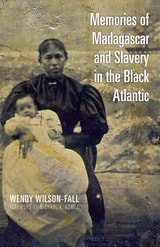
Memories of Madagascar and Slavery in the Black Atlantic
Wendy Wilson-Fall
Ohio University Press, 2015
From the seventeenth century into the nineteenth, thousands of Madagascar’s people were brought to American ports as slaves. In Memories of Madagascar and Slavery in the Black Atlantic, Wendy Wilson-Fall shows that the descendants of these Malagasy slaves in the United States maintained an ethnic identity in ways that those from the areas more commonly feeding the Atlantic slave trade did not. Generations later, hundreds, if not thousands, of African Americans maintain strong identities as Malagasy descendants, yet the histories of Malagasy slaves, sailors, and their descendants have been little explored.
Wilson-Fall examines how and why the stories that underlie this identity have been handed down through families—and what this says about broader issues of ethnicity and meaning-making for those whose family origins, if documented at all, have been willfully obscured by history.
By analyzing contemporary oral histories as well as historical records and examining the conflicts between the two, Wilson-Fall carefully probes the tensions between the official and the personal, the written and the lived. She suggests that historically, the black community has been a melting pot to which generations of immigrants—enslaved and free—have been socially assigned, often in spite of their wish to retain far more complex identities. Innovative in its methodology and poetic in its articulation, this book bridges history and ethnography to take studies of diaspora, ethnicity, and identity into new territory.
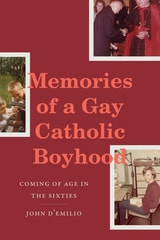
Memories of a Gay Catholic Boyhood
Coming of Age in the SixtiesJohn D'Emilio
Duke University Press, 2022
Memories of a Gay Catholic Boyhood is D’Emilio’s coming-of-age story in which he takes readers from his working-class Bronx neighborhood to an elite Jesuit high school in Manhattan to Columbia University and the political and social upheavals of the late 1960s. He shares his personal experiences of growing up in a conservative, tight-knit, multigenerational family, how he went from considering entering the priesthood to losing his faith and coming to terms with his same-sex desires. Throughout, D’Emilio outlines his complicated relationship with his family while showing how his passion for activism influenced his decision to use research, writing, and teaching to build a strong LGBTQ movement.
This is not just John D’Emilio’s personal story; it opens a window into how the conformist baby boom decade of the 1950s transformed into the tumultuous years of radical social movements and widespread protest during the 1960s. It is the story of what happens when different cultures and values collide and the tensions and possibilities for personal discovery and growth that emerge. Intimate and honest, D’Emilio’s story will resonate with anyone who has had to chart their own path in a world they did not expect to find.
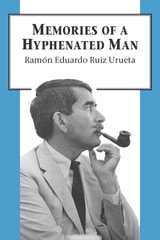
Memories of a Hyphenated Man
Ramón Eduardo Ruiz Urueta
University of Arizona Press, 2003
Historian, author, and intellectual, Ruiz has established himself through such books as Triumphs and Tragedy: A History of the Mexican People and Cuba: The Making of a Revolution, and in 1998 he was awarded the National Humanities Medal by President Clinton. Now he turns his pen on his own life to offer a personal look at what it really means to be American by birth but Mexican by culture.
Little has been written by or about persons of Mexican origin who have achieved the academic stature of Ruiz, and his memoir provides insights not found in the more common biographies of labor leaders and civil rights activists. His early life straddled the social worlds of his parent's Mexico and semi-rural America, where his father's success as an entrepreneur and property owner set his family's experiences apart from those of most other Mexican Americans at the time. His parents reinforced in their children an identity as mexicanos, and that connection with his ancestral roots was for Ruiz a lifejacket in the days of acute bigotry in America.
In making an early, self-conscious commitment to a life of the mind, Ruiz became aware of his unique nature, and while not immune to prejudice he was able to make a name for himself in several endeavors. As a student, he attended college when few Mexican Americans were given that opportunity, and he was one of the first of his generation to earn a Ph.D. As an Army Air Force officer during World War II, he served as a pilot in the Pacific theatre. And as an intellectual, he navigated the currents of the historical profession and charted new directions in Latin American research through his prolific writing.
Ruiz's career teaching took him to Mexico, Massachusetts, Texas, Oregon—often as the lone "Mexican professor," and ultimately back to his native California. While teaching at Smith, he exulted in being "free to interpret Spanish American life and culture to my heart's content," and at the University of California, San Diego, he saw the era of campus racial barrier give way to the birth of affirmative action. While at UCSD, he taught hundreds of Chicanos and trained one of the largest groups of Chicano Ph.D's.
Memories of a Hyphenated Man is the story of a unique individual who, while shaped by his upbringing and drawing on deep cultural roots, steadfastly followed his own compass in life. It tells of a singular man who beat the odds as it poignantly addresses the ambiguities associated with race, class, citizenship, and nationality for Mexicans and Mexican Americans.
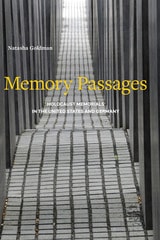
Memory Passages
Holocaust Memorials in the United States and GermanyNatasha Goldman
Temple University Press, 2020
For decades, artists and architects have struggled to relate to the Holocaust in visual form, resulting in memorials that feature a diversity of aesthetic strategies. In Memory Passages, Natasha Goldman analyzes both previously-overlooked and internationally-recognized Holocaust memorials in the United States and Germany from the postwar period to the present, drawing on many historical documents for the first time. From the perspectives of visual culture and art history, the book examines changing attitudes toward the Holocaust and the artistic choices that respond to it.
The book introduces lesser-known sculptures, such as Nathan Rapoport’s Monument to the Six Million Jewish Martyrs in Philadelphia, as well as internationally-acclaimed works, such as Peter Eisenman’s Memorial to the Murdered Jews of Europe in Berlin. Other artists examined include Will Lammert, Richard Serra, Joel Shapiro, Gerson Fehrenbach, Margit Kahl, and Andy Goldsworthy.Archival documents and interviews with commissioners, survivors, and artists reveal the conversations and decisions that have shaped Holocaust memorials.
Memory Passages suggests that memorial designers challenge visitors to navigate and activate spaces to engage with history and memory by virtue of walking or meandering. This book will be valuable for anyone teaching—or seeking to better understand—the Holocaust.
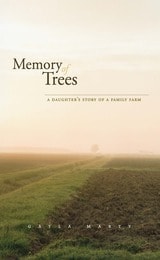
Memory of Trees
A Daughter’s Story of a Family FarmGayla Marty
University of Minnesota Press, 2013
Memory of Trees is a multigenerational story of Gayla Marty’s family farm near Rush City, Minnesota. Cleared from woodlands by her great-grandfather Jacob in the 1880s, the farm passed to her father, Gordon, and his brother, Gaylon. Hewing to a conservative Swedish Baptist faith, the two brothers worked the farm, raising their families in side-by-side houses.
As the years go by, the families grow—and slowly grow apart. Uncle Gaylon, more doctrinaire in his faith, rails against the permissiveness of Gayla’s parents. Financial tensions arise as well when the farm economy weakens and none of the children is willing or able to take over. Gayla is encouraged to leave for college, international travel, and city life, but the farm remains essential to her sense of self, even after the family decides to sell the land.
When Gaylon has an accident on a tractor, Gayla becomes driven to reconnect with him and to find out why she and her uncle—once so close but now estranged—were the only two members of the family who had resisted selling the land. Guided by vivid images of the farm’s many beautiful trees, she pores over sacred and classical works as well as layers of her own memory to understand the forces that have transformed the American landscape and culture in the last half of the twentieth century. Beneath the belief in land as a giver of life and blessing, she discovers a powerful anxiety born of human uprootedness and loss. Movingly written, Memory of Trees will resonate for many with attachments to small towns or farms, whether they continue to work the land or, like so many, have left for a different life.
Memory, Meaning, and Resistance
Reflecting on Oral History and Women at the MarginsFran Leeper Buss
University of Michigan Press, 2017

Memory
A Fourth MemoirWallace Fowlie
Duke University Press, 1990
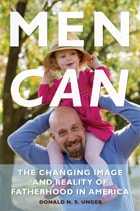
Men Can
The Changing Image and Reality of Fatherhood in AmericaDonald N.S. Unger
Temple University Press, 2010
Fatherhood is evolving in America. Stay at home dads are becoming more commonplace; men are becoming more visible in domestic, caregiving activities. In Men Can, writer, teacher, and father Donald Unger uses his personal experiences, stories of real-life families, as well as representations of fathers in film, on television, and in advertising, to illuminate the role of men in the increasingly fluid domestic sphere.
In thoughtful interviews, Don Unger tells the stories of a half dozen families—of varied ethnicities, geographical locations, and philosophical orientations—in which fathers are either primary or equally sharing parents, personalizing what is changing in how Americans care for their children. These stories are complemented by a discussion of how the language of parenting has evolved and how media representations of fathers have shifted over several decades.
Men Can shows how real change can take place when families divide up domestic labor on a gender-neutral basis. The families whose stories he tells offer insights into the struggles of—and opportunities for—men caring for children. When it comes to taking up the responsibility of parenting, his argument, ultimately, is in favor of respecting personal choices and individual differences, crediting and supporting functional families, rather than trying to force every household into a one-size-fits-all mold.
Men I Hate
A Memoir in EssaysLynette D'Amico
The Ohio State University Press, 2026
Can a lesbian who loves a trans man still call herself a lesbian? Against the backdrop of a traditional Sicilian American upbringing, Lynette D’Amico identified as a lesbian despite the expectation that her future hinged on the man she married. As a teenager, she fled her St. Louis home in the dark of night to escape her fate. No boys allowed, until one day D’Amico’s life was completely upended when her lover and spouse of twenty years—P. Carl, the acclaimed author of Becoming a Man: The Story of a Transition—told her he was a man.
Seemingly overnight, D’Amico no longer recognized her spouse in photos of past vacations or of the couple celebrating their legal gay marriage. In Men I Hate, she asks: What happens when the people we are closest to change? As D’Amico tries to engage more deeply with the man she is married to, she looks at all the men—historical figures, politicians, men in her family—in search of clear dividing lines between good men and bad, between the men she loves and the men she hates. These lines dissolve as she writes her way toward an understanding of the words marriage,husband, and home—and how we reconcile who we are with who we become.
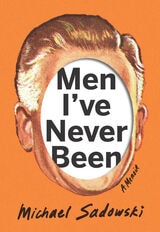
Men I've Never Been
Michael Sadowski
University of Wisconsin Press, 2021
Through wrenching tragedy and tense, life-threatening challenges, Sadowski learns to find love, purpose, and healthy self-regard. In coming to understand his identity and his place within his family, he meditates on the power of real human connection and comes to grasp the damage of his troubled upbringing and the traumas caused by toxic masculinity. By turns comic and tragic, this nuanced memoir uncovers the false selves we create to get along in the world and the price we pay to maintain them.
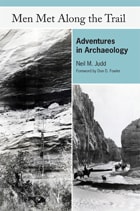
Men Met Along the Trail
Adventures in ArchaeologyNeil M Judd
University of Utah Press, 2009
Written at the request of young associates who felt Judd’s lifetime of experiences in the field could be both instructive and amusing, Men Met Along the Trail provides a glimpse of archaeology when it was an emerging field of study, evolving from simple curio collecting to technologically advanced radiocarbon dating and pollen analysis. Featuring more than thirty original photographs and a new foreword by Don D. Fowler, this book is entertaining and informative, offering readers a vibrant and colorful picture of the adventures to be found in early Southwestern archaeology.
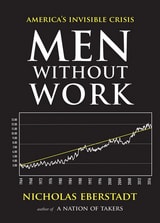
Men Without Work
America's Invisible CrisisNicholas Eberstadt
Templeton Press, 2016
By one reading, things look pretty good for Americans today: the country is richer than ever before and the unemployment rate is down by half since the Great Recession—lower today, in fact, than for most of the postwar era.
But a closer look shows that something is going seriously wrong. This is the collapse of work—most especially among America’s men. Nicholas Eberstadt, a political economist who holds the Henry Wendt Chair in Political Economy at the American Enterprise Institute, shows that while “unemployment” has gone down, America’s work rate is also lower today than a generation ago—and that the work rate for US men has been spiraling downward for half a century. Astonishingly, the work rate for American males aged twenty-five to fifty-four—or “men of prime working age”—was actually slightly lower in 2015 than it had been in 1940: before the War, and at the tail end of the Great Depression.
Today, nearly one in six prime working age men has no paid work at all—and nearly one in eight is out of the labor force entirely, neither working nor even looking for work. This new normal of “men without work,” argues Eberstadt, is “America’s invisible crisis.”
So who are these men? How did they get there? What are they doing with their time? And what are the implications of this exit from work for American society?
Nicholas Eberstadt lays out the issue and Jared Bernstein from the left and Henry Olsen from the right offer their responses to this national crisis.
For more information, please visit http://menwithoutwork.com.
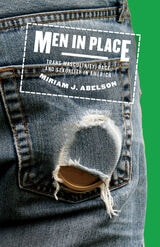
Men in Place
Trans Masculinity, Race, and Sexuality in AmericaMiriam J. Abelson
University of Minnesota Press, 2019
Daring new theories of masculinity, built from a large and geographically diverse interview study of transgender men
American masculinity is being critiqued, questioned, and reinterpreted for a new era. In Men in Place Miriam J. Abelson makes an original contribution to this conversation through in-depth interviews with trans men in the U.S. West, Southeast, and Midwest, showing how the places and spaces men inhabit are fundamental to their experiences of race, sexuality, and gender.
Men in Place explores the shifting meanings of being a man across cities and in rural areas. Here Abelson develops the insight that individual men do not have one way to be masculine—rather, their ways of being men shift between different spaces and places. She reveals a widespread version of masculinity that might be summed up as “strong when I need to be, soft when I need to be,” using the experiences of trans men to highlight the fundamental construction of manhood for all men.
With an eye to how societal institutions promote homophobia, transphobia, and racism, Men in Place argues that race and sexuality fundamentally shape safety for men, particularly in rural spaces, and helps us to better understand the ways that gender is created and enforced.
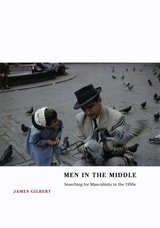
Men in the Middle
Searching for Masculinity in the 1950sJames Gilbert
University of Chicago Press, 2005
In Men in the Middle, James Gilbert uncovers a fascinating and extensive body of literature that confronts the problems and possibilities of expressing masculinity in the 1950s. Drawing on the biographies of men who explored manhood either in their writings or in their public personas, Gilbert examines the stories of several of the most important figures of the day-revivalist Billy Graham, playwright Tennessee Williams, sociologist David Riesman, sex researcher Alfred Kinsey, Playboy literary editor Auguste Comte Spectorsky, and TV-sitcom dad Ozzie Nelson-and allows us to see beyond the inherited stereotypes of the time. Each of these stories, in Gilbert's hands, adds crucial dimensions to our understanding of masculinity the 1950s. No longer will this era be seen solely in terms of the conformist man in the gray flannel suit or the Marlboro Man.
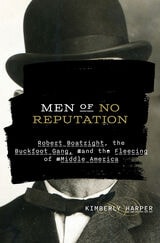
Men of No Reputation
Robert Boatright, the Buckfoot Gang, and the Fleecing of Middle AmericaKimberly Harper
University of Arkansas Press, 2024
Winner, 2025 Missouri Conference on History Book Award
Swindler. Murderer. Scoundrel.
Robert Boatright was one of Middle America’s greatest confidence men. Although little remembered today, his story provides a rare glimpse into America’s criminal past. Working in concert with a local bank and an influential Democratic boss, “this dean of modern confidence men” and his colorful confederacy of con men known as the Buckfoot Gang seemed untouchable. A series of missteps, however, led to a string of court cases across the country that brought Boatright’s own criminal enterprise to an end. And yet, the con continued: Boatright’s successor, John C. Mabray, and his cronies, many of whom had been in the Buckfoot Gang, preyed upon victims across North America in one of the largest midwestern criminal syndicates in history before they were brought to heel.
Like the works of Sinclair Lewis, Boatright’s story exposes a rift in the wholesome midwestern stereotype and furthers our understanding of nineteenth- and twentieth-century American society.
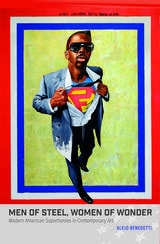
Men of Steel, Women of Wonder
Modern American Superheroes in Contemporary ArtAlejo Benedetti
University of Arkansas Press, 2019
Saturated in patriotic colors, Superman and Wonder Woman are about as American as baseball and apple pie. Superman, created in 1938, materialized as the brawny answer to the Great Depression, and when Wonder Woman arrived three years later, she supported her adopted country by fighting alongside Allied troops in World War II. As the proverbial mother and father of the superhero genre, these icons appeared to a society in crisis as unwavering beacons of national morality, a quality that lent them success on the battlefield—and on the newsstand.
As new crises arise our comic-book champions continue to be called into action. They adapt and evolve but remain the same potent, if flawed, symbols of the American way. The artists in Men of Steel, Women of Wonder, an exhibition organized by Crystal Bridges Museum of American Art, wrestle with Wonder Woman’s standing as a feminist icon, position Superman as a Soviet-era weapon, and question the immigration status of both characters. Featuring more than seventy artworks that range from loving endorsements to brutal critiques of American culture, this exhibition catalog reveals the enduring presence of these characters and the diverse ways artists employ them.
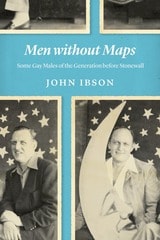
Men without Maps
Some Gay Males of the Generation before StonewallJohn Ibson
University of Chicago Press, 2019
Men's College Athletics and the Politics of Racial Equality
Five Pioneer Stories of Black Manliness, White Citizenship, and American DemocracyGregory J Kaliss
Temple University Press, 2014
College sports have provided a compelling means to discuss issues regarding racial equality and fairness in American life. As previously-white institutions of higher learning gradually (and grudgingly) opened their playing fields to African-American athletes in men's basketball and football, black and white spectators interpreted mixed-race team sports in often contradictory ways. In Men's College Athletics and the Politics of Racial Equality, Gregory Kaliss offers stunning insights into Americans' contested visions of equality, fairness, black manhood, citizenship, and an equal opportunity society.
Kaliss looks at Paul Robeson, Jackie Robinson, Wilt Chamberlain, Charlie Scott, John Mitchell, Wilbur Marshall, and Bear Bryant to show how Americans responded to racial integration over time. Men's College Athletics and the Politics of Racial Equality reveals that as fans, media members, university students, faculty, and administration—black and white—discussed the achievements and struggles of these athletes, they inevitably talked about much more than what occurred on the field.
Men, Mobs, and Law
Anti-Lynching and Labor Defense in U.S. Radical HistoryRebecca N. Hill
Duke University Press, 2008
As Hill explains, labor defense activists first drew on populist logic, opposing the masses to the state in their campaigns, while anti-lynching activists went in the opposite direction, castigating “the mob” and appealing to the law. Showing that this difference stems from the different positions of whites and Blacks in the American legal system, Hill’s comparison of anti-lynching organizing and radical labor defenses reveals the conflicts and intersections between antiracist struggle and socialism in the United States.
Menace of Our Time
The Long War Against American CommunismAaron J. Leonard
Rutgers University Press, 2025
A survey of the far-reaching measures the U.S. government brought to bear against the CPUSA, from poison-pen letters to the Red Scare and beyond.
Beginning at the turn of the twentieth century and ending only with the Soviet Union’s collapse in 1991, the U.S. government and major elements in the wider society waged an unrelenting campaign to suppress and criminalize domestic communism. This long-overdue book details the longest and most extensive repressive operation ever undertaken by U.S. authorities against a domestic political organization that, however problematic, was largely operating within the scope of constitutionally mandated freedoms. Beyond that, this is the story of how systemic measures against U.S. communists—in contrast to the vaunted claims of American political freedom—defined the political landscape of the last century.
Menace of Our Time tracks the suppression efforts aimed at the group, including the state laws of the twenties that imprisoned the fledgling communist leadership; the tactics used by police and local authorities against communists as they fought for unions, racial equality, and the unemployed; the trials and imprisonment of communist leaders mid-century; the extra-legal efforts of the Counterintelligence Program (COINTELPRO) in the sixties; and the ongoing, relentless surveillance by the FBI that followed. In examining the far-reaching measures the government brought to bear against the Communist Party USA, Aaron J. Leonard provides a clearer picture of the mechanics of social and political repression that abound in the society we still inhabit.