Results by title
193 books match the query '1945-' and 6 start with n

New Italian Migrations to the United States
Vol. 1: Politics and History since 1945Edited by Laura E. Ruberto and Joseph Sciorra: Afterword by Donna Gabaccia
University of Illinois Press, 2017
Contributors: Ottorino Cappelli, Donna Gabaccia, Stefano Luconi, Maddalena Marinari, James S. Pasto, Rodrigo Praino, Laura E. Ruberto, Joseph Sciorra, Donald Tricarico, and Elizabeth Zanoni.
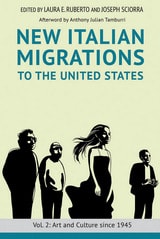
New Italian Migrations to the United States
Vol. 2: Art and Culture since 1945Laura Ruberto, Joseph Sciorra
University of Illinois Press, 2017
Contributors: John Allan Cicala, Simone Cinotto, Teresa Fiore, Incoronata (Nadia) Inserra, Laura E. Ruberto, Joseph Sciorra, and Anthony Julian Tamburri.

New Social Movements
From Ideology to Identityedited by Enrique Laraña, Hank Johnston and Joseph R. Gusfield
Temple University Press, 1994
Cultural changes over the past two decades have led to a proliferation of new social movements in Europe and the United States. New social movements such as ecology, peace, ethnicity, New Age philosophies, alternative medicine, and gender and sexual identity are among those that are emerging to challenge traditional categories in social movement theory. Synthesizing classic and modern perspectives the contributors help to redefine the field of social movements and advance an understanding of them through cross-cultural research, comparison with older movements, and an examination of the dimensions of identity—individual, collective, and melding of the two.
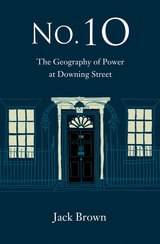
No. 10
The Geography of Power at Downing StreetJack Brown
Haus Publishing, 2019
Written by Number 10’s first ever ‘Researcher in Residence,’ with unprecedented access to people and papers, No. 10: The Geography of Power at Downing Street sheds new light on unexplored aspects of Prime Ministers’ lives. Jack Brown tells the story of the intimately entwined relationships between the house and its post-war residents, telling how each occupant’s use and modification of the building reveals their own values and approaches to the office of Prime Minister. The book reveals how and why Prime Ministers have stamped their personalities and philosophies upon Number 10 and how the building has directly affected the ability of some Prime Ministers to perform the role. Both fascinating and extremely revealing, No. 10 offers an intimate account of British political power and the building at its core. It is essential reading for anyone interested in the nature and history of British politics.
Notebooks, Volume 1, 1998-99
Anselm Kiefer
Seagull Books, 2015
The first volume of Notebooks spans the years 1998-1999 and traces the origins and creative process of Kiefer’s visual works during this period. In this volume, Kiefer returns constantly to his touchstones: sixteenth-century alchemist Robert Fludd, German romantic poet Novalis, Martin Heidegger, Ingeborg Bachmann, Robert Musil, and many other writers and thinkers. The entries reveal the process by which his artworks are informed by his reading—and vice versa—and track the development of the works he created in the late 1990s. Translated into English for the first time by Tess Lewis, the diaries reveal Kiefer’s strong affinity for language and let readers witness the process of thoughts, experiences, and adventures slowly transcending the limits of art, achieving meaning in and beyond their medium.
Praise for Kiefer
“His works recall, in this sense, the grand tradition of history painting, with its notion about the elevated role of art in society, except that they do not presume moral certainty. What makes Kiefer’s work so convincing . . . is precisely its ambiguity and self-doubt, its rejection of easy solutions, historical amnesia, and transcendence.”—New York Times
“Wordiness for Kiefer is painterliness. The library and the gallery, the book and the frame inseparable, even interchangeable, in his monumental archive of human memory. Not since Picasso’s Guernica have pictures demanded so urgently that we studiously reflect and recollect in their presence.”—Simon Schama
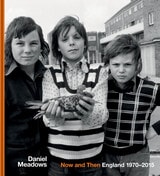
Now and Then
England 1970-2015Daniel Meadows
Bodleian Library Publishing, 2019
This book includes important work from Meadows’s groundbreaking projects, drawing on the archives now held at the Bodleian Library. It follows the maverick documentarian as he ran a free portrait studio in Manchester’s Moss Side in 1972 and then traveled 10,000 miles to make a national portrait from his converted double-decker, the Free Photographic Omnibus, a project he revisited a quarter-of-a-century later. The book goes on to show how, at the turn of the millennium, Meadows adopted new “kitchen table” technologies to make digital stories, which he dubbed “multimedia sonnets from the people.” Through the unique voices of his subjects, Meadows has made and continues to make moving and insightful commentaries on life in Britain.