Results by title
1048 books match the query 'African American & Black' and 18 start with n
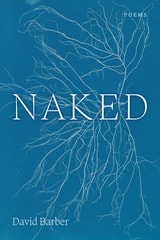
NAKED
PoemsDavid Barber
Northwestern University Press, 2027
A moving and sonically stunning exploration into the body and soul
David Barber’s masterful new book, NAKED, is powered by prolific feats of verbal prowess. With formal dexterity, nerve, and ingenious wordplay, these poems grapple with the serious business of soulmaking. In a spacious collection that enacts changes on the touch-and-go of innocence and experience, these poems are rife with inklings and reckonings in the name of muscle memory and mortal longing. Here, Hollywood meets Babylon in the Garden of Earthly Delights; Odysseus opts for a username; the naked eye goes toe-to-toe with the naked truth; American sonnets & ampersands run wild. NAKED is an all-out lovers’ quarrel over the give-and-take of the spirit and flesh—and Barber is all in.
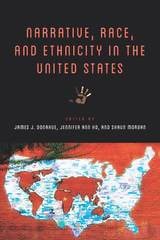
Narrative, Race, and Ethnicity in the United States
Edited by James J. Donahue, Jennifer Ann Ho, and Shaun Morgan
The Ohio State University Press, 2017
Recognizing that racial/ethnic issues and tensions are often contextualized geographically, this volume focuses on narratives associated with various racial and ethnic communities in the United States. By engaging with new developments in narrative theory and critical race studies, this volume demonstrates the vitality of using the tools of narratology and critical race theory together to understand how race influences narrative and how narratology illuminates a reading of race in ethnic American literature.
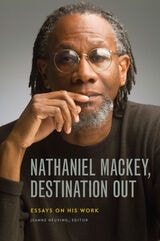
Nathaniel Mackey, Destination Out
Essays on His WorkJeanne Heuving
University of Iowa Press, 2021
This collection is organized through broad topics in order to provide entrances into his challenging work: myth, literature, and seriality; music, performance, and collaboration; syncretism, synopsis, and what-saying. It engages Mackey’s spiritual and esoteric disposition along with his attention to what Amiri Baraka called the “enraged sociologies” of Black music. In his manifesto “Destination Out,” Mackey describes his work as “wanting to bid all givens goodbye” and as “centrifugal.” It is also centripetal, manifesting a reflexive interiority that creates itself through recurring forms.
Contributors: Maria Damon, Joseph Donahue, Rachel Blau DuPlessis, Norman Finkelstein, Luke Harley, Paul Jaussen, Adalaide Morris, Fred Moten, Peter O’Leary, Anthony Reed
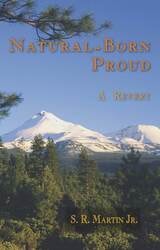
Natural-Born Proud
A ReveryS.R. Martin Jr.
Utah State University Press, 2010
A young man from Monterey and his younger brother go on their first deer hunt with their minister father and his friends. The setting is 1950s northern California, in country where, from the right height, one can see Mt. Shasta in one direction, Mt. Lassen in the other. It is a region of small, insular towns, and although it is a familiar hunting ground for the Reverend and his buddies, not everyone there welcomes black hunters. Father and son both shoulder their pride, and a racial confrontation seems inevitable.
Among the lessons young Satch learns is the sometime advantage of wit and spine. During their days in the wilderness, the brothers are initiated to the right practice of the hunt and camp and to the ribald talk, needling banter, camp tales, and occasional aggravation of sundry friends. Hunting has a primal nature, but as Satch sees, so may the variable interactions of men.

Near Black
White-to-Black Passing in American CultureBaz Dreisinger
University of Massachusetts Press, 2008
In the United States, the notion of racial “passing” is usually associated with blacks and other minorities who seek to present themselves as part of the white majority. Yet as Baz Dreisinger demonstrates in this fascinating study, another form of this phenomenon also occurs, if less frequently, in American culture: cases in which legally white individuals are imagined, by themselves or by others, as passing for black.
In Near Black, Dreisinger explores the oft-ignored history of what she calls “reverse racial passing” by looking at a broad spectrum of short stories, novels, films, autobiographies, and pop-culture discourse that depict whites passing for black. The protagonists of these narratives, she shows, span centuries and cross contexts, from slavery to civil rights, jazz to rock to hip-hop. Tracing their role from the 1830s to the present day, Dreisinger argues that central to the enterprise of reverse passing are ideas about proximity. Because “blackness,” so to speak, is imagined as transmittable, proximity to blackness is invested with the power to turn whites black: those who are literally “near black” become metaphorically “near black.”
While this concept first arose during Reconstruction in the context of white anxieties about miscegenation, it was revised by later white passers for whom proximity to blackness became an authenticating badge. As Dreisinger shows, some white-to-black passers pass via self-identification. Jazz musician Mezz Mezzrow, for example, claimed that living among blacks and playing jazz had literally darkened his skin. Others are taken for black by a given community for a period of time. This was the experience of Jewish critic Waldo Frank during his travels with Jean Toomer, as well as that of disc jockey Hoss Allen, master of R&B slang at Nashville's famed WLAC radio. For journalists John Howard Griffin and Grace Halsell, passing was a deliberate and fleeting experiment, while for Mark Twain's fictional white slave in Pudd'nhead Wilson, it is a near-permanent and accidental occurrence.
Whether understood as a function of proximity or behavior, skin color or cultural heritage, self-definition or the perception of others, what all these variants of “reverse passing” demonstrate, according to Dreisinger, is that the lines defining racial identity in American culture are not only blurred but subject to change.
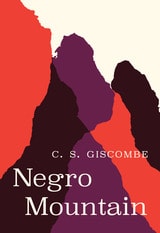
Negro Mountain
C. S. Giscombe
University of Chicago Press, 2023
In the final section of Negro Mountain, C. S. Giscombe writes, “Negro Mountain—the summit of which is the highest point in Pennsylvania—is a default, a way among others to think about the Commonwealth.” Named for an “incident” in which a Black man was killed while fighting on the side of white enslavers against Indigenous peoples in the eighteenth century, this mountain has a shadow presence throughout this collection; it appears, often indirectly, in accounts of visions, reimaginings of geography, testimonies about the “natural” world, and speculations and observations about race, sexuality, and monstrosity. These poems address location, but Giscombe—who worked for ten years in central Pennsylvania—understands location to be a practice, the continual “action of situating.”
The book weaves through the ranges of thinking that poetic voice itself might trouble. Addressing a gallery of figures, Giscombe probes their impurities and ambivalences as a way of examining what languages “count” or “don’t count” as poetry. Here, he finds that the idea of poetry is visionary, but also investigatory and exploratory.
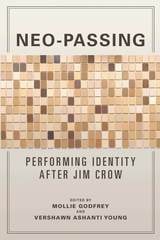
Neo-Passing
Performing Identity after Jim CrowEdited by Mollie Godfrey and Vershawn Ashanti Young: Foreword by Gayle Wald Afterword by Michele Elam
University of Illinois Press, 2018
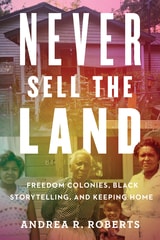
Never Sell the Land
Freedom Colonies, Black Storytelling, and Keeping HomeAndrea R. Roberts
University of Texas Press, 2027
Chronicling the stories and resilience of Texas freedom colonies facing erasure, and of the efforts of descendant community members to safeguard them.
Since Emancipation, Deep East Texas has been a place where Black Texans have experienced oppression yet also have created free Black communities. Well into the Jim Crow era, the area was home to communities where formerly enslaved people farmed their own land and ran their own affairs, now called freedom colonies. At one point, more than five hundred such communities existed in the state. Yet only a handful of these freedom colonies remain today, and they are in danger of disappearing from the record and from historical memory.
Never Sell the Land is a work about Black agency—specifically, how agency is secured through bottom-up planning and preservation in the face of unequal access. Andrea Roberts traces the efforts of descendant community members to safeguard the land and heritage of settlements in Jasper and Newton Counties, which abut the Louisiana border. She follows the descendants of these Black-built places as they deploy creative approaches to education and revitalization built on traditional community practices. Never Sell the Land tells the origin story of The Texas Freedom Colonies Atlas and Study and shows how preservation becomes self-determination—and how grassroots projects are exhuming the freedom colonies from history books, personal archives, and oral histories, and fighting to physically cement them within the landscape of Texas today.

New Black Feminist Criticism, 1985-2000
Barbara Christian. Edited by Gloria Bowles, M. Giulia Fabi, and Arlene Keizer
University of Illinois Press, 2007
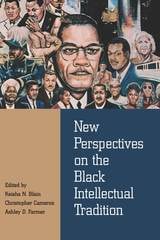
New Perspectives on the Black Intellectual Tradition
Edited by Keisha N. Blain, Christopher Cameron, and Ashley D. Farmer
Northwestern University Press, 2018
The book examines four central themes within the black intellectual tradition: black internationalism, religion and spirituality, racial politics and struggles for social justice, and black radicalism. The essays identify the emergence of black thought within multiple communities internationally, analyze how black thinkers shaped and were shaped by the historical moment in which they lived, interrogate the ways in which activists and intellectuals connected their theoretical frameworks across time and space, and assess how these strains of thought bolstered black consciousness and resistance worldwide.
Defying traditional temporal and geographical boundaries, New Perspectives on the Black Intellectual Tradition illuminates the origins of and conduits for black ideas, redefines the relationship between black thought and social action, and challenges long-held assumptions about black perspectives on religion, race, and radicalism. The intellectuals profiled in the volume reshape and redefine the contours and boundaries of black thought, further illuminating the depth and diversity of the black intellectual tradition.
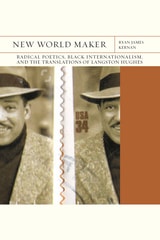
New World Maker
Radical Poetics, Black Internationalism, and the Translations of Langston HughesRyan James Kernan, foreword by Robin D. G. Kelley
Northwestern University Press, 2022
Through original research and close readings alert to the foreign prosody underlying Hughes’s work, New World Maker recuperates his political writing, which had been widely maligned by Cold War detractors and adherents of New Criticism, and affirms his place as a progenitor of African diasporic literature and within the pantheon of US modernists. Demonstrating the integral part translation played in Hughes’s creative process, this book challenges a number of common assumptions about this canonical thinker and offers important insights for scholars of African diasporic literature, comparative literature, and American, Caribbean, and translation studies.
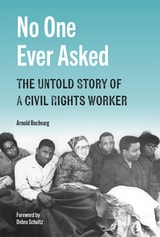
No One Ever Asked
The Untold Story of a Civil Rights WorkerArnold Rochvarg
University of Missouri Press, 2025
Rochvarg, the cousin of the woman around whom the narrative revolves, had for over fifty years been intrigued by the mystery surrounding the seven-year disappearance of his cousin Iris during the 1960s. Once he finally approached her about her rumored involvement in the civil rights movement, she generously shared her experiences with him and arranged for him to meet others with whom she had worked. His book corroborates and enhances the stories he was told through traditional research based on primary and secondary sources.
More than a review of significant events of the mid-1960s, No One Ever Asked is also the story of the challenges and sacrifices of young civil rights workers both Black and white, young persons who not only faced violence and personal harm, but in many cases became estranged from their families because of their involvement in the movement. Rochvarg approaches history from the “bottom-up,” focusing on persons whose stories have never been told but have something to add to an understanding of the history of the movement. Many of them, even sixty years later, have never shared their stories because, as in the case of the central character of this book, no one ever asked them.
None Like Us
Blackness, Belonging, Aesthetic LifeStephen Best
Duke University Press, 2018
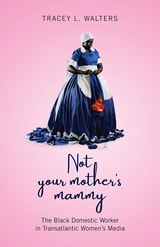
Not Your Mother's Mammy
The Black Domestic Worker in Transatlantic Women’s MediaTracey L Walters
Rutgers University Press, 2021
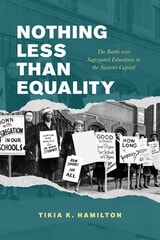
Nothing Less Than Equality
The Battle over Segregated Education in the Nation’s CapitalTikia K. Hamilton
University of Chicago Press, 2026
The landmark Brown v. Board of Education case, which barred racial segregation in American public schools, wasn’t the only path for Black parents, teachers, and activists who sought equality of educational opportunity. Some believed that the solution to inequality lay in pressing the federal government to live up to the Jim Crow doctrine of “separate but equal” by providing more resources to Black schools. And for a time, this seemed true in Washington, DC, where Black activists leveraged their status as residents of the nation’s capital to advocate on behalf of Black education. However, disappointments with the “separate but equal” strategy and a sea change in activism led to an embrace of integration.
In Nothing Less Than Equality, Tikia K. Hamilton reveals the rich and complex history of educational activism in Washington prior to Brown v. Board of Education, illuminating complex dynamics that provide a counterpoint and backdrop to the landmark Supreme Court case. Hamilton thoroughly examines the multipronged strategies employed by parents, teachers, attorneys, and activists to democratize education, demonstrating that there was no linear path to Brown.
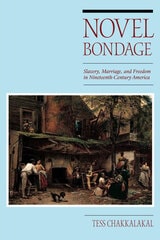
Novel Bondage
Slavery, Marriage, and Freedom in Nineteenth-Century AmericaTess Chakkalakal
University of Illinois Press, 2013
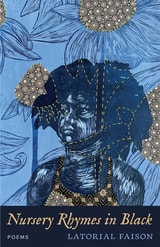
Nursery Rhymes in Black
PoemsLatorial Faison
University of Alaska Press, 2025
The collection highlights family, overcoming adversity, and endurance from the Black female perspective and celebrates the individuals and experiences that shape life and have catapulted the author into a unique existence. Narrative poems give voice to the Black Southern girlhood experience of being saved, nurtured, inspired, and even challenged by plight and circumstance. Strengthened by her experiences, Faison provides power, courage, and wisdom that resonate deeply. These poems walk in naked truth on a lyrical, musical tightrope as each brings wisdom and honesty in the intimacy of arranged words. Faison takes readers along the development of her own identity, considering stories of unsung heroes, the hands that feed us, the ancestors and traditions that form us, and the challenging ways that race, history, education, and culture intersect. With this spiritually moving collection, Faison joins all poets and writers who have come to prolifically amplify Black voices, to tell Black stories, to continue the Black literary tradition we have been gifted.
In these poems, Faison calls readers into poetic fellowship with the memories, the legacies, the truths of Black women in the South. There is reverence, history, and glory on these pages celebrating the hands, hearts, work, trouble, and ways of Black women and all the ways they teach, become, fascinate, struggle, survive, and exist in the world. Nursery Rhymes in Black lulls us—but not to sleep—rather, to wake up, to speak out, to take a stand, to advocate as we pause to remember, understand, and celebrate.
neckbone
visual versesavery r. young; foreword by Theaster Gates
Northwestern University Press, 2019