Results by title
1563 books match the query 'African American & Black Studies' and 33 start with n
Nahuat Myth and Social Structure
By James M. Taggart
University of Texas Press, 1997
First published in 1983, Nahuat Myth and Social Structure brings together an important collection of modern-day Aztec Indian folktales and vividly demonstrates how these tales have been shaped by the social structure of the communities in which they are told.
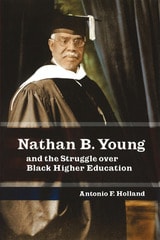
Nathan B. Young and the Struggle over Black Higher Education
Antonio F. Holland
University of Missouri Press, 2006
Born in slavery in Alabama, Young followed a love of learning to degrees from Talladega and Oberlin Colleges and a career in higher education. Employed by Booker T. Washington in 1892, he served at Tuskegee Institute until conflict with Washington’s vocational orientation led him to move on. During a brief tenure at Georgia State Industrial College under Richard R. Wright, Sr., he became disillusioned by efforts of whites to limit black education to agriculture and the trades. Hired as president of Florida A&M in 1901, he fought for twenty years to balance agricultural/vocational education with the liberal arts, only to meet with opposition from state officials that led to his ouster.
This principled educator finally found his place as president of Lincoln University in Missouri in 1923. Here Young made a determined effort to establish the school as a standard institution of higher learning. Holland describes how he campaigned successfully to raise academic standards and gain accreditation for Lincoln’s programs—successes made possible by the political and economic support of farsighted members of Missouri’s black community.
Holland shows that the great debate over black higher education was carried on not only in the rhetoric of Washington and Du Bois but also on the campuses, as Young and others sought to prepare African American students to become thinkers and creators. In tracing Young’s career, Holland presents a wealth of information on the nature of the education provided for former slaves and their descendents in four states—shedding new light on the educational environment at Oberlin and Tuskegee—and on the actions of racist white government officials to limit the curriculum of public education for blacks.
Although Young’s efforts to improve the schools he served were often thwarted, Holland shows that he kept his vision alive in the black community. Holland’s meticulous reconstruction of an eventful career provides an important look at the forces that shaped and confounded the development of black higher education during traumatic times.

Natives of My Person
George Lamming
University of Michigan Press, 1992
Navigating Interracial Borders
Black-White Couples and Their Social WorldsChilds, Erica Chito
Rutgers University Press, 2005
Is love color-blind, or at least becoming increasingly so? Today’s popular rhetoric and evidence of more interracial couples than ever might suggest that it is. But is it the idea of racially mixed relationships that we are growing to accept or is it the reality? What is the actual experience of individuals in these partnerships as they navigate their way through public spheres and intermingle in small, close-knit communities?
In Navigating Interracial Borders, Erica Chito Childs explores the social worlds of black-white interracial couples and examines the ways that collective attitudes shape private relationships. Drawing on personal accounts, in-depth interviews, focus group responses, and cultural analysis of media sources, she provides compelling evidence that sizable opposition still exists toward black-white unions. Disapproval is merely being expressed in more subtle, color-blind terms.
Childs reveals that frequently the same individuals who attest in surveys that they approve of interracial dating will also list various reasons why they and their families wouldn’t, shouldn’t, and couldn’t marry someone of another race. Even college students, who are heralded as racially tolerant and open-minded, do not view interracial couples as acceptable when those partnerships move beyond the point of casual dating. Popular films, Internet images, and pornography also continue to reinforce the idea that sexual relations between blacks and whites are deviant.
Well-researched, candidly written, and enriched with personal narratives, Navigating Interracial Borders offers important new insights into the still fraught racial hierarchies of contemporary society in the United States.

Ne me quitte pas
A Song by Jacques Brel and Interpreted by Nina Simone and OthersMaya Angela Smith
Duke University Press, 2025
Necessarily Black
Cape Verdean Youth, Hip-Hop Culture, and a Critique of IdentityP. Khalil Saucier
Michigan State University Press, 2015
Negritude Women
T. Denean Sharpley-Whiting
University of Minnesota Press, 2002
Rediscovers the crucial role that women played in the influential Negritude movement.
The Negritude movement, which signaled the awakening of a pan-African consciousness among black French intellectuals, has been understood almost exclusively in terms of the contributions of its male founders: Aimé Césaire, Léopold Sédar Senghor, and Léon G. Damas. This masculine genealogy has completely overshadowed the central role played by French-speaking black women in its creation and evolution. In Negritude Women, T. Denean Sharpley-Whiting offers a long-overdue corrective, revealing the contributions made by the women who were not merely integral to the success of the movement, but often in its vanguard.
Through such disparate tactics as Lacascade’s use of Creole expressions in her French prose writings, the literary salon and journal founded by the Martinique-born Nardal sisters, and Roussy-Césaire’s revolutionary blend of surrealism and Negritude in the pages of Tropiques, the journal she founded with her husband, these four remarkable women made vital contributions. In exploring their influence on the development of themes central to Negritude-black humanism, the affirmation of black peoples and their cultures, and the rehabilitation of Africa-Sharpley-Whiting provides the movement’s first genuinely inclusive history.
Negro Militia and Reconstruction
By Otis A. Singletary
University of Texas Press, 1957
Much of the violence that characterized Reconstruction was directly associated with the Negro militia movement organized by Radical politicians to support their precarious regimes in Southern states. This book is the story of that ill-fated movement, a story with important implication for later times.
Most Southern whites did not disguise their hostility toward the governments that were imposed on their states after Reconstruction entered its Radical phase. and Radical leaders lived in constant fear that this hostility would flare into open revolt. Organization of a loyal protective force was imperative if they were to remain in power.
Although planned originally as a defensive force, the Negro militia was quickly used by the Radicals for such purposes as controlling elections. The resentment of Southern whites resulting from this political activity was aggravated by crimes of violence, depredations, and minor social offenses committed by some of the militiamen. However, the white Southerner’s fundamental enmity toward the Negro militia stemmed from the racial implications of a policy that armed the Negroes and placed them in positions of authority over white men.
At first, opposition to the Negro militia movement took the form of legal stratagems and other measures short of force, but the final blow to the Negro militia was dealt by white volunteer rifle companies— illegal, armed counterforces that were at the very core of the White Line movement. The race riot as a political technique was born, the most notorious riot occurring at Hamburg, South Carolina, where, the author states, the policy of “disbandment through extermination” was successfully employed. Disintegration of the entire movement was inevitable.
“It is ironic,” Singletary states, “that the organization of this protective force, because of its racial implications, actually aided in the destruction of the very thing it was created to protect.”
Before its publication, Negro Militia and Reconstruction won the Moncado Prize, a cash award made biennially by the American Military Institute for “the best original book-length manuscript in any field of United States Military history.”
Negro Thought in America, 1880-1915
Racial Ideologies in the Age of Booker T. WashingtonAugust Meier
University of Michigan Press, 1963
Neither Black Nor White
Slavery and Race Relations in Brazil and the United StatesCarl Degler
University of Wisconsin Press, 1986
Carl Degler’s 1971 Pulitzer-Prize-winning study of comparative slavery in Brazil and the United States is reissued in the Wisconsin paperback edition, making it accessible for all students of American and Latin American history and sociology.
Until Degler’s groundbreaking work, scholars were puzzled by the differing courses of slavery and race relations in the two countries. Brazil never developed a system of rigid segregation, such as appeared in the United States, and blacks in Brazil were able to gain economically and retain far more of their African culture. Rejecting the theory of Giberto Freyre and Frank Tannenbaum—that Brazilian slavery was more humane—Degler instead points to a combination of demographic, economic, and cultural factors as the real reason for the differences.
“In the early 1970s when studies in social history were beginning to blossom on the North American scene, Carl Degler’s prize-winning contribution was a thoughtful provocative essay in comparative history. Its thoughtfulness has not diminished with the years. Indeed, it is as topical today as when it was first published. The Brazilian experience with rapid industrialization and its attempt to restore democratic government indicates that the issues which Degler treated in the early 1970s are more pertinent than ever today.”—Franklin W. Knight, Department of History, Johns Hopkins University.
Neo-Passing
Performing Identity after Jim CrowEdited by Mollie Godfrey and Vershawn Ashanti Young: Foreword by Gayle Wald Afterword by Michele Elam
University of Illinois Press, 2018
New Day Begun
African American Churches and Civic Culture in Post-Civil Rights AmericaR. Drew Smith, ed.
Duke University Press, 2003
This collection of essays analyzes the results of an unprecedented survey of nearly 2,000 African American churches across the country conducted by The Public Influences of African-American Churches Project, which is based at Morehouse College in Atlanta. These essays—by political scientists, theologians, ethicists, and others—draw on the survey findings to analyze the social, historical, and institutional contexts of black church activism and to consider the theological and moral imperatives that have shaped black church approaches to civic life—including black civil religion and womanist and afrocentric critiques. They also look at a host of faith-based initiatives addressing economic development and the provision of social services. New Day Begun presents necessary new interpretations of how black churches have changed—and been changed by—contemporary American political culture.
Contributors. Lewis Baldwin, Allison Calhoun-Brown, David D. Daniels III, Walter Earl Fluker, C.R.D. Halisi, David Howard-Pitney, Michael Leo Owens, Samuel Roberts, David Ryden, Corwin Smidt, R. Drew Smith
New Day in Babylon
The Black Power Movement and American Culture, 1965-1975William L. Van Deburg
University of Chicago Press, 1992
"New Day in Babylon is an extremely intelligent synthesis, a densely textured evocation of one of American history's most revolutionary transformations in ethnic group consciousness."—Bob Blauner, New York Times
Winner of the Gustavus Myers Center Outstanding Book Award, 1993
New Growth
The Art and Texture of Black HairJasmine Nichole Cobb
Duke University Press, 2022
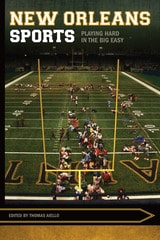
New Orleans Sports
Playing Hard in the Big EasyThomas Aiello
University of Arkansas Press, 2019
Tracing that history from the early nineteenth century to the present, while also surveying the state of the city’s sports historiography, New Orleans Sports places sport in the context of race relations, politics, and civic and business development to expand that historiography—currently dominated by a text that stops at 1900—into the twentieth century, offering a modern examination of sports in the city.
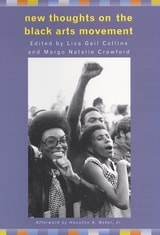
New Thoughts on the Black Arts Movement
Edited by Lisa Gail Collins and Margo Natalie Crawford
Rutgers University Press, 2006
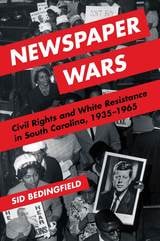
Newspaper Wars
Civil Rights and White Resistance in South Carolina, 1935-1965Sid Bedingfield
University of Illinois Press, 2017
Next to the Color Line
Gender, Sexuality, and W. E. B. Du BoisSusan Gillman
University of Minnesota Press, 2007
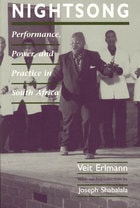
Nightsong
Performance, Power, and Practice in South AfricaVeit Erlmann
University of Chicago Press, 1996
Veit Erlmann provides the first comprehensive interpretation of isicathamiya performance practice and its relation to the culture and consciousness of the Zulu migrant laborers who largely compose its choirs. In songs and dances, the performers oppose the class and racial oppression that reduces them to "labor units." At the same time, Erlmann argues, the performers rework dominant images to symbolically reconstruct their "home," an imagined world of Zulu rural tradition and identity.
By contrasting the live performance of isicathamiya to its reproduction in mass media, recordings, and international concerts, Erlmann addresses important issues in performance studies and anthropology, and looks to the future of isicathamiya live performance in the new South Africa. Featuring an Introduction by Joseph Shabalala, the lead singer and founder of Ladysmith Black Mambazo, this book will be essential reading for anyone interested in the study of music, performance, popular culture, or South Africa.
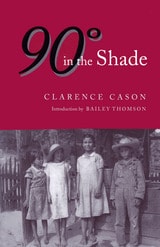
Ninety Degrees in the Shade
Clarence E. Cason
University of Alabama Press, 2001
A candid, courageous portrait of the South as told by a writer unafraid to confront its heat, its history, and its humanity.
Clarence Cason belonged to that restless generation of southern intellectuals who, between the world wars, questioned the South's stubborn traditionalism, even as they tried to explain and defend its distinctiveness. From his professorial perch at The University of Alabama, Cason wrote polished essays for leading national publications while contributing weekly editorials for newspaper readers. As a journalist in academia, he cultivated a broad audience for his eloquent though tentative observations about the "character" of a region that seemed to be a separate province of the nation.
In 1935, Cason collected his thoughts in a small book of essays titled 90° in the Shade. In it, he declared that climate and the relaxation afforded by field and stream had given southerners excellent reasons for their notoriously slow pace of life. Still, he wrote, "there is much work that ought to be done below the Potomac." Cason captured the pathos of race relations and other persistent problems and declared that the abominable practice of lynching would end when the best people of the South risked their personal and commercial standing to denounce it. Just days before the book's publication, however, Cason shot himself in his campus office. He left no explanation, but apparently he feared angry reaction from fellow citizens to his mild criticisms and gentle suggestions for change.
The University of Alabama Press brought the book back into print in 1983. This new edition of Cason's classic features an introduction by journalist and UA professor H. Bailey Thomson, allowing yet another generation the enjoyment of Cason's perceptive writing, not so much for any remedy he proposed but rather for the open-minded and loving way in which he addressed the region's tragic experience.
This second reprint edition of a classic work on southern culture will allow a new generation of readers to enjoy Cason's observant, graceful writing.
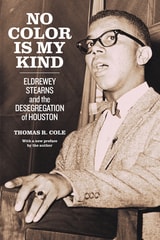
No Color Is My Kind
Eldrewey Stearns and the Desegregation of HoustonThomas R. Cole
University of Texas Press, 2021
In 1959, a Black man named Eldrewey Stearns was beaten by Houston police after being stopped for a traffic violation. He was not the first to suffer such brutality, but the incident sparked Stearns’s conscience and six months later he was leading the first sit-in west of the Mississippi River. No Color Is My Kind, first published in 1997, introduced readers to Stearns, including his work as a civil rights leader and lawyer in Houston’s desegregation movement between 1959 and 1963. This remarkable and important history, however, was nearly lost to bipolar affective disorder. Stearns was a fifty-two-year-old patient in a Galveston psychiatric hospital when Thomas Cole first met him in 1984. Over the course of a decade, Cole and Stearns slowly recovered the details of Stearns’s life before his slide into mental illness, writing a story that is more relevant today than ever.
In this new edition, Cole fills in the gaps between the late 1990s and now, providing an update on the progress of civil rights in Houston and Stearns himself. He also reflects on his tumultuous and often painful collaboration with Stearns, challenging readers to be part of his journey to understand the struggles of a Black man’s complex life. At once poignant, tragic, and emotionally charged, No Color Is My Kind is essential reading as the current movement for racial reconciliation gathers momentum.
No Color Is My Kind
The Life of Eldrewey Stearns and the Integration of HoustonBy Thomas R. Cole
University of Texas Press, 1997
No God but Man
On Race, Knowledge, and TerrorismAtiya Husain
Duke University Press, 2025
No More Invisible Man
Race and Gender in Men's WorkAdia Harvey Wingfield
Temple University Press, 2012
The “invisible men” of sociologist Adia Harvey Wingfield’s urgent and timely No More Invisible Man are African American professionals who fall between extremely high status, high-profile black men and the urban underclass. Her compelling interview study considers middle-class, professional black men and the challenges, obstacles, and opportunities they encounter in white male–dominated occupations.
No More Invisible Man chronicles these men’s experiences as a tokenized minority in the workplace to show how issues of power and inequality exist—especially as they relate to promotion, mobility, and developing occupational networks. Wingfield’s intersectional analysis deftly charts the ways that gender, race, and class collectively shape black professional men’s work experiences.
In its examination of men’s interactions with women and other men, as well as men’s performances of masculinity and their emotional demeanors in these jobs, No More Invisible Man extends our understanding of racial- and gender-based dynamics in professional work.

No One's Witness
A Monstrous PoeticsSyd Zolf
Duke University Press, 2021
No Peace Without Freedom
Race and The Women's International League For Peace and Freedom 1915-1975Joyce Blackwell
Southern Illinois University Press, 2004
Just as women changed the direction and agenda of the peace movement when they became progressively more involved in an all-male club, black women altered a cause that had previously lacked racial diversity when they were first granted admission to the Women’s International League for Peace and Freedom in 1915. As Joyce Blackwell illustrates in this first study of collective black peace activism, the increased presence of black women in the WILPF over the next sixty years brought to the movement historical experiences shaped by societal racism.
No Peace Without Freedom: Race and the Women’s International League for Peace and Freedom, 1915–1975 explores how black women, fueled by the desire to eradicate racial injustice, compelled the white leadership of the WILPF to revisit its own conceptions of peace and freedom. Blackwell offers a renewed examination of peace movements in American history, one that points out the implications of black women’s participation for the study of social activism, African American history, and women’s history. This new perspective on interracial and black female global activism helps redefine the often-covert systemic violence necessary to maintain systems of social and economic hierarchy, moving peace and war discourse away from its narrow focus on European and European-American issues.
Blackwell looks closely at the reasons why white women organized their own peace group at the start of World War I and assesses several bold steps taken by these groups in their first ten years. Addressing white peace activists’ continuous search for the “perfect” African American woman, Blackwell considers when and why black women joined the WILPF, why so few of them were interested in the organization, and what the small number who did join had in common with their white counterparts. She also shows how the WILPF, frustrated at its inability to successfully appeal to black women, established a controversial interracial committee to deal with the dilemma of recruiting black women while attempting to maintain all of its white members.
Tracing the black activists’ peace reform activities on an international level from World War I to the end of the Vietnam War, No Peace Without Freedom examines the links black activists established within the African American community as well as the connections they made with peoples of the black Diaspora and later with colonized people irrespective of race. The volume is complemented by eighteen illustrations.

No Safe Spaces
Re-casting Race, Ethnicity, and Nationality in American TheaterAngela C. Pao
University of Michigan Press, 2010
"No Safe Spaces opens up a conversation beyond narrow polemics . . . Although cross-racial casting has been the topic of heated discussion, little sustained scholarship addresses both the historical precedents and theoretical dimensions. Pao illustrates the tensions and contradictions inherent not only in stage representations, but also in the performance of race in everyday life. A wonderful book whose potential readership goes well beyond theater and performance scholars."
---Josephine Lee, University of Minnesota
"Non-traditional casting, increasingly practiced in American theater, is both deeply connected to our country's racial self-image(s) and woefully under-theorized. Pao takes on the practice in its entirety to disentangle the various strands of this vitally important issue."
---Karen Shimakawa, New York University
No Safe Spaces looks at one of the most radical and enduring changes introduced during the Civil Rights era---multiracial and cross-racial casting practices in American theater. The move to cast Latino/a, African American, and Asian American actors in classic stage works by and about white Europeans and Americans is viewed as both social and political gesture and artistic innovation. Nontraditionally cast productions are shown to have participated in the national dialogue about race relations and ethnic identity and served as a source of renewed creativity for the staging of the canonical repertory.
Multiracial casting is explored first through its history, then through its artistic, political, and pragmatic dimensions. Next, the book focuses on case studies from the dominant genres of contemporary American theater: classical tragedy and comedy, modern domestic drama, antirealist drama, and the Broadway musical, using a broad array of archival source materials to enhance and illuminate its arguments.
Angela C. Pao is Associate Professor of Comparative Literature at Indiana University.
A volume in the series Theater: Theory/Text/Performance

No Tea, No Shade
New Writings in Black Queer StudiesE. Patrick Johnson, editor
Duke University Press, 2016
No Way Out
Precarious Living in the Shadow of Poverty and Drug DealingWaverly Duck
University of Chicago Press, 2015
Duck’s short stay in Bristol Hill quickly transformed into a long-term study—one that forms the core of No Way Out. This landmark book challenges the common misconception of urban ghettoes as chaotic places where drug dealing, street crime, and random violence make daily life dangerous for their residents. Through close observations of daily life in these neighborhoods, Duck shows how the prevailing social order ensures that residents can go about their lives in relative safety, despite the risks that are embedded in living amid the drug trade. In a neighborhood plagued by failing schools, chronic unemployment, punitive law enforcement, and high rates of incarceration, residents are knit together by long-term ties of kinship and friendship, and they base their actions on a profound sense of community fairness and accountability. Duck presents powerful case studies of individuals whose difficulties flow not from their values, or a lack thereof, but rather from the multiple obstacles they encounter on a daily basis.
No Way Out explores how ordinary people make sense of their lives within severe constraints and how they choose among unrewarding prospects, rather than freely acting upon their own values. What emerges is an important and revelatory new perspective on the culture of the urban poor.
Nobody Is Supposed to Know
Black Sexuality on the Down LowC. Riley Snorton
University of Minnesota Press, 2014
Since the early 2000s, the phenomenon of the “down low”—black men who have sex with men as well as women and do not identify as gay, queer, or bisexual—has exploded in news media and popular culture, from the Oprah Winfrey Show to R & B singer R. Kelly’s hip hopera Trapped in the Closet. Most down-low stories are morality tales in which black men are either predators who risk infecting their unsuspecting female partners with HIV or victims of a pathological black culture that repudiates openly gay identities. In both cases, down-low narratives depict black men as sexually dangerous, duplicitous, promiscuous, and contaminated.
In Nobody Is Supposed to Know, C. Riley Snorton traces the emergence and circulation of the down low in contemporary media and popular culture to show how these portrayals reinforce troubling perceptions of black sexuality. Reworking Eve Sedgwick’s notion of the “glass closet,” Snorton advances a new theory of such representations in which black sexuality is marked by hypervisibility and confinement, spectacle and speculation. Through close readings of news, music, movies, television, and gossip blogs, Nobody Is Supposed to Know explores the contemporary genealogy, meaning, and functions of the down low.
Snorton examines how the down low links blackness and queerness in the popular imagination and how the down low is just one example of how media and popular culture surveil and police black sexuality. Looking at figures such as Ma Rainey, Bishop Eddie L. Long, J. L. King, and Will Smith, he ultimately contends that down-low narratives reveal the limits of current understandings of black sexuality.
None Like Us
Blackness, Belonging, Aesthetic LifeStephen Best
Duke University Press, 2018
Not in Our Lifetimes
The Future of Black PoliticsMichael C. Dawson
University of Chicago Press, 2011
For all the talk about a new postracial America, the fundamental realities of American racism—and the problems facing black political movements—have not changed. Michael C. Dawson lays out a nuanced analysis of the persistence of racial inequality and structural disadvantages, and the ways that whites and blacks continue to see the same problems—the disastrous response to Katrina being a prime example—through completely different, race-inflected lenses. In fact, argues Dawson, the new era heralded by Barack Obama’s election is more racially complicated, as the widening class gap among African Americans and the hot-button issue of immigration have the potential to create new fissures for conservative and race-based exploitation. Through a thoughtful analysis of the rise of the Tea Party and the largely successful “blackening” of President Obama, Dawson ultimately argues that black politics remains weak—and that achieving the dream of racial and economic equality will require the sort of coalition-building and reaching across racial divides that have always marked successful political movements.
Polemical but astute, passionate but pragmatic, Not in Our Lifetimes forces us to rethink easy assumptions about racial progress—and begin the hard work of creating real, lasting change.
Now Is the Time!
Detroit Black Politics and Grassroots ActivismTodd C. Shaw
Duke University Press, 2009
Shaw uses the tools of social movement analysis, including the quantitative analysis of budgets, electoral data, and housing statistics, as well as historical research and personal interviews, to better understand the dilemmas, innovations, and dynamics of grassroots activism. He begins with a history of discriminatory housing practices and racial divisions that deeply affected Detroit following the Second World War and set the stage for the election of the city’s first black mayor, Coleman Young. By emphasizing downtown redevelopment, Mayor Young’s administration often collided with low-income housing advocates. Only through grassroots activism were those advocates able to delay or derail governmental efforts to demolish low-income housing in order to make way for more upscale development. Shaw then looks at present-day public housing activism, assessing the mixed success of the nationally sponsored HOPE VI project aimed at fostering home ownership in low-income areas. Descriptive and prescriptive, Now Is the Time! traces the complicated legacy of community activism to illuminate what is required for grassroots activists to be effective in demanding public accountability to poor and marginalized citizens.