Results by title
336 books match the query 'Age' and 12 start with n

Narrative Podcasting in an Age of Obsession
Neil Verma
University of Michigan Press, 2024
Narrative Podcasting in an Age of Obsession is the first book to look back on this prodigious body of material and attempt to make sense of it from a structural, historical, and analytic point of view. Focusing on more than 350 podcasts and other audio works released between Serial and the COVID pandemic, the book explores why so many of these podcasts seem “obsessed with obsession,” why they focus not only on informing listeners but also dramatizing the labor that goes into it, and why fiction podcasts work so hard to prove they are a brand new form, even as they revive features of radio from decades gone by. This work also examines the industry's reckoning with its own implication in systemic racism, misogyny, and other forms of discrimination. Employing innovative new critical techniques for close listening—including pitch tracking software and spectrograms—Narrative Podcasting in an Age of Obsession makes a major contribution to podcast studies and media studies more broadly.

Nature's Ghosts
Confronting Extinction from the Age of Jefferson to the Age of EcologyMark V. Barrow, Jr.
University of Chicago Press, 2009
The rapid growth of the American environmental movement in recent decades obscures the fact that long before the first Earth Day and the passage of the Endangered Species Act, naturalists and concerned citizens recognized—and worried about—the problem of human-caused extinction.
As Mark V. Barrow reveals in Nature’s Ghosts, the threat of species loss has haunted Americans since the early days of the republic. From Thomas Jefferson’s day—when the fossil remains of such fantastic lost animals as the mastodon and the woolly mammoth were first reconstructed—through the pioneering conservation efforts of early naturalists like John James Audubon and John Muir, Barrow shows how Americans came to understand that it was not only possible for entire species to die out, but that humans themselves could be responsible for their extinction. With the destruction of the passenger pigeon and the precipitous decline of the bison, professional scientists and wildlife enthusiasts alike began to understand that even very common species were not safe from the juggernaut of modern, industrial society. That realization spawned public education and legislative campaigns that laid the foundation for the modern environmental movement and the preservation of such iconic creatures as the bald eagle, the California condor, and the whooping crane.
A sweeping, beautifully illustrated historical narrative that unites the fascinating stories of endangered animals and the dedicated individuals who have studied and struggled to protect them, Nature’s Ghosts offers an unprecedented view of what we’ve lost—and a stark reminder of the hard work of preservation still ahead.
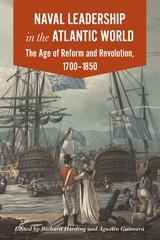
Naval Leadership in the Atlantic World
The Age of Reform and Revolution, 1700–1850Richard Harding and Agustín Guimerá
University of Westminster Press, 2017
The naval leader has taken centre stage in traditional naval histories. However, while the historical narrative has been fairly consistent the development of various navies has been accompanied by assumptions, challenges and competing visions of the social characteristics of naval leaders and of their function. Whilst leadership has been a constant theme in historical studies, it has not been scrutinised as a phenomenon in its own right. This book examines the critical period in Europe between 1700 -1850, when political, economic and cultural shifts were bringing about a new understanding of the individual and of society. Bringing together context with a focus on naval leadership as a phenomenon is at the heart of this book, a unique collaborative venture between British, French and Spanish scholars. As globalisation develops in the twenty-first century the significance of navies looks set to increase. This volume of essays aims to place naval leadership in its historical context.
An electronic version of this book is freely available, thanks to the support of libraries working with Knowledge Unlatched. KU is a collaborative initiative designed to make high quality books Open Access for the public good. The Open Access ISBN for this book is 978-1-911534-76-1. More information about the initiative and details about KU’s Open Access programme can be found at www.knowledgeunlatched.org
Negro Thought in America, 1880-1915
Racial Ideologies in the Age of Booker T. WashingtonAugust Meier
University of Michigan Press, 1963
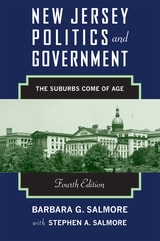
New Jersey Politics and Government, 4th edition
The Suburbs Come of AgeSalmore, Barbara G
Rutgers University Press, 2013
Offering a comprehensive overview of New Jersey politics and government, chapters cover the state’s political history; campaigns and elections; interest groups; the constitution; the development of government institutions; relationships with neighboring states, the federal government, and its own municipalities and counties; tax and spending policies; education; and quality of life issues.
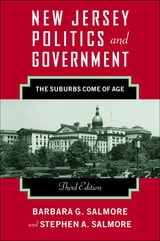
New Jersey Politics and Government
The Suburbs Come of AgeSalmore, Barbara G
Rutgers University Press, 2008

New Korean Wave
Transnational Cultural Power in the Age of Social MediaDal Yong Jin
University of Illinois Press, 2016
News at Work
Imitation in an Age of Information AbundancePablo J. Boczkowski
University of Chicago Press, 2010
Before news organizations began putting their content online, people got the news in print or on TV and almost always outside of the workplace. But nowadays, most of us keep an eye on the headlines from our desks at work, and we have become accustomed to instant access to a growing supply of constantly updated stories on the Web. This change in the amount of news available as well as how we consume it has been coupled with an unexpected development in editorial labor: rival news organizations can now keep tabs on the competition and imitate them, resulting in a decrease in the diversity of the news. Peeking inside the newsrooms where journalists create stories and the work settings where the public reads them, Pablo J. Boczkowski reveals why journalists contribute to the growing similarity of news—even though they dislike it—and why consumers acquiesce to a media system they find increasingly dissatisfying.
Comparing and contrasting two newspapers in Buenos Aires with similar developments in the United States, News at Work offers an enlightening perspective on living in a world with more information but less news.

No Limits to Their Sway
Cartagena's Privateers and the Masterless Caribbean in the Age of RevolutionsEdgardo Pérez Morales
Vanderbilt University Press, 2018
Most of Cartagena's privateers were people of color and descendants of slaves who benefited from the relative freedom and flexibility of life at sea, but also faced kidnapping, enslavement, and brutality. Many came from Haiti and Guadeloupe; some had been directly involved in the Haitian Revolution. While their manpower proved crucial in the early Anti-Spanish struggles, Afro-Caribbean privateers were also perceived as a threat, suspected of holding questionable loyalties, disorderly tendencies, and too strong a commitment to political and social privileges for people of color. Based on handwritten and printed sources in Spanish, English, and French, this book tells the story of Cartagena's multinational and multicultural seafarers, revealing the Trans-Atlantic and maritime dimensions of South American independence.

No Limits to Their Sway
Cartagena's Privateers and the Masterless Caribbean in the Age of RevolutionsEdgardo Pérez Morales
Vanderbilt University Press, 2022
Most of Cartagena's privateers were people of color and descendants of slaves who benefited from the relative freedom and flexibility of life at sea, but also faced kidnapping, enslavement, and brutality. Many came from Haiti and Guadeloupe; some had been directly involved in the Haitian Revolution. While their manpower proved crucial in the early Anti-Spanish struggles, Afro-Caribbean privateers were also perceived as a threat, suspected of holding questionable loyalties, disorderly tendencies, and too strong a commitment to political and social privileges for people of color. Based on handwritten and printed sources in Spanish, English, and French, this book tells the story of Cartagena's multinational and multicultural seafarers, revealing the Trans-Atlantic and maritime dimensions of South American independence.

Nobody Comes of Age
Essays on the Victorian NovelCatherine Gallagher
University of Chicago Press, 2027
A collection of field-defining essays on the Victorian novel, taking up a fascinating paradox in literary history: why do we care so deeply about fictional characters who don’t really exist?
n Nobody Comes of Age, Catherine Gallagher explores the Victorian novel by examining its most fundamental building block: the fictional character. Gallagher argues that “Nobodies”—nonreferential, yet realistic, invented personae, usually of middling social status—were the very engine of the genre’s development. Having arrived on the fictional scene in the eighteenth century, Nobody came of age during the Victorian era. The novel achieved cultural hegemony, and Victorian novelists explored these characters’ fictionality in tandem with the great intellectual developments of their time. Readers, knowing well that novel personae were not portraits of actual individuals, nevertheless expected them to yield important insights into the social and cultural changes of the age.
Nobody Comes of Age gathers in revised form a selection of Catherine Gallagher’s classic and still influential essays on the Victorian novel. These essays take up topics such as the relationship between fiction and the decline of religious belief in the period, and how novelists worked the tension between characters who seemed typical and plots that were unpredictable. Gallagher expertly navigates across a range of canonical texts, from the ordinary outcomes of George Eliot’s Middlemarch to the archetypal sacrifices in Thomas Hardy’s Tess of the d'Urbervilles. For scholars and students of nineteenth-century British literature, Nobody Comes of Age is an essential companion.

Not Free, Not for All
Public Libraries in the Age of Jim CrowCheryl Knott
University of Massachusetts Press, 2015
Winner of the 2016 Eliza Atkins Gleason Book Award and the 2016 Lillian Smith Book Award
Americans tend to imagine their public libraries as time-honored advocates of equitable access to information for all. Through much of the twentieth century, however, many black Americans were denied access to public libraries or allowed admittance only to separate and smaller buildings and collections. While scholars have examined and continue to uncover the history of school segregation, there has been much less research published on the segregation of public libraries in the Jim Crow South. In fact, much of the writing on public library history has failed to note these racial exclusions.
In Not Free, Not for All, Cheryl Knott traces the establishment, growth, and eventual demise of separate public libraries for African Americans in the South, disrupting the popular image of the American public library as historically welcoming readers from all walks of life. Using institutional records, contemporaneous newspaper and magazine articles, and other primary sources together with scholarly work in the fields of print culture and civil rights history, Knott reconstructs a complex story involving both animosity and cooperation among whites and blacks who valued what libraries had to offer. African American library advocates, staff, and users emerge as the creators of their own separate collections and services with both symbolic and material importance, even as they worked toward dismantling those very institutions during the era of desegregation.