Results by title
239 books match the query 'Agriculture' and 4 start with n
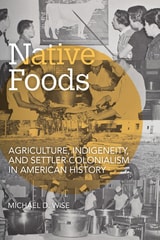
Native Foods
Agriculture, Indigeneity, and Settler Colonialism in American HistoryMichael D. Wise
University of Arkansas Press, 2023
Combining original historical research with interdisciplinary perspectives and informed by the work of Indigenous food sovereignty advocates and activists, this study sheds new light on the historical roles of Native American cuisine in American history and the significance of ongoing colonial processes in present-day discussions about the place of Native foods and Native history in our evolving worlds of taste, justice, and politics.
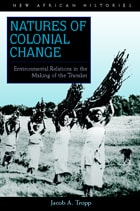
Natures of Colonial Change
Environmental Relations in the Making of the TranskeiJacob A. Tropp
Ohio University Press, 2006
In this groundbreaking study, Jacob A. Tropp explores the interconnections between negotiations over the environment and an emerging colonial relationship in a particular South African context—the Transkei—subsequently the largest of the notorious “homelands” under apartheid.
In the late nineteenth century, South Africa’s Cape Colony completed its incorporation of the area beyond the Kei River, known as the Transkei, and began transforming the region into a labor reserve. It simultaneously restructured popular access to local forests, reserving those resources for the benefit of the white settler economy. This placed new constraints on local Africans in accessing resources for agriculture, livestock management, hunting, building materials, fuel, medicine, and ritual practices.
Drawing from a diverse array of oral and written sources, Tropp reveals how bargaining over resources—between and among colonial officials, chiefs and headmen, and local African men and women—was interwoven with major changes in local political authority, gendered economic relations, and cultural practices as well as with intense struggles over the very meaning and scope of colonial rule itself.
Natures of Colonial Change sheds new light on the colonial era in the Transkei by looking at significant yet neglected dimensions of this history: how both “colonizing” and “colonized” groups negotiated environmental access and how such negotiations helped shape the broader making and meaning of life in the new colonial order.

Nematodes in Soil Ecosystems
Edited by Diana W. Freckman
University of Texas Press, 1982
Many species of the phylum Nematoda, the nonsegmented worms, play an important role as animal or plant parasites; most species are active contributors to the decomposition cycle in soil ecosystems, but the details of that contribution are just beginning to be understood.
Agricultural nematologists, vitally involved in the study of the methodology, taxonomy, and biology of the species due to the direct relationship between crop yield and the size of plant-parasitic nematode populations, have provided much information about the nematodes. More recently, ecologists have contributed additional data on the structure and function of the total soil community, including energy flow and nutrient cycling, and have examined the critical and multifaceted role of soil nematodes in such communities. Nematodes in Soil Ecosystems provides a valuable synthesis of significant research in this area and may stimulate further important communication between the agricultural and ecological branches of nematode research.
No Condition Is Permanent
The Social Dynamics of Agrarian Change in Sub-Saharan AfricaSara S. Berry
University of Wisconsin Press, 1993
“No condition is permanent,” a popular West African slogan, expresses Sara S. Berry’s theme: the obstacles to African agrarian development never stay the same. Her book explores the complex way African economy and society are tied to issues of land and labor, offering a comparative study of agrarian change in four rural economies in sub-Saharan Africa, including two that experienced long periods of expanding peasant production for export (southern Ghana and southwestern Nigeria), a settler economy (central Kenya), and a rural labor reserve (northeastern Zambia).
The resources available to African farmers have changed dramatically over the course of the twentieth century. Berry asserts that the ways resources are acquired and used are shaped not only by the incorporation of a rural area into colonial (later national) and global political economies, but also by conflicts over culture, power, and property within and beyond rural communities. By tracing the various debates over rights to resources and their effects on agricultural production and farmers’ uses of income, Berry presents agrarian change as a series of on-going processes rather than a set of discrete “successes” and “failures.”
No Condition Is Permanent enriches the discussion of agrarian development by showing how multidisciplinary studies of local agrarian history can constructively contribute to development policy. The book is a contribution both to African agrarian history and to debates over the role of agriculture in Africa’s recent economic crises.