399 books match the query 'American fiction' and 16 start with n

cover of Necessary American Fictions: Popular Literature of the 1950s

Necessary American Fictions

Popular Literature of the 1950s

William Darby

University of Wisconsin Press, 1987

William Darby gives us a comprehensive and (mostly) sympathetic reading of over fifty novels and a few movies from the 1950s. He examines titles such as Mandingo, The Invisible Man, I the Jury, Catcher in the Rye, Battle Cry, The Caine Mutiny, The Revolt of Mamie Stover, The Manchurian Candidate, Hawaii, The Bramble Bush, Peyton Place, Ten North Frederick, A Stone for Danny Fisher, The Bad Seed, Not as a Stranger, The Blackboard Jungle, From Here to Eternity, and Compulsion.
[more]
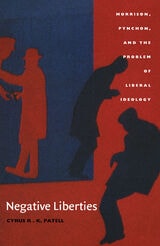
cover of Negative Liberties: Morrison, Pynchon, and the Problem of Liberal Ideology

Negative Liberties

Morrison, Pynchon, and the Problem of Liberal Ideology

Cyrus R. K. Patell

Duke University Press, 2001

Since the nineteenth century, ideas centered on the individual, on Emersonian self-reliance, and on the right of the individual to the pursuit of happiness have had a tremendous presence in the United States—and even more so after the Reagan era. But has this presence been for the good of all? In Negative Liberties Cyrus R. K. Patell revises important ideas in the debate about individualism and the political theory of liberalism. He does so by adding two new voices to the current discussion—Toni Morrison and Thomas Pynchon—to examine the different ways in which their writings embody, engage, and critique the official narrative generated by U.S. liberal ideology.
Pynchon and Morrison reveal the official narrative of individualism as encompassing a complex structure of contradiction held in abeyance. This narrative imagines that the goals of the individual are not at odds with the goals of the family or society and in fact obscures the existence of an unholy truce between individual liberty and forms of oppression. By bringing these two fiction writers into a discourse dominated by Ralph Waldo Emerson, Isaiah Berlin, John Rawls, George Kateb, Robert Bellah, and Michael Sandel, Patell unmasks the ways in which contemporary U.S. culture has not fully shed the oppressive patterns of reasoning handed down by the slaveholding culture from which American individualism emerged.
With its interdisciplinary approach, Negative Liberties will appeal to students and scholars of American literature, culture, sociology, and politics.
[more]
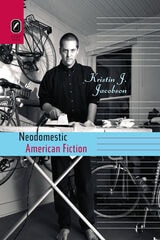
cover of Neodomestic American Fiction

Neodomestic American Fiction

Kristin J. Jacobson

The Ohio State University Press, 2010

In American literature, domestic fictions—that is, novels focused on the home and homemaking—are linked with white, middle-class women’s fiction and culture. Employing a spatial lens, Neodomestic American Fiction joins and extends other studies in redefining domestic fiction’s literary history and definition. Unlike previous redefinitions and reevaluations, Neodomestic American Fiction reads domestic novels alongside feminist geography and architectural history to map the links and disjunctions among a range of authors writing during the same period as well as across centuries and cultures. Kristin Jacobson’s attention to domestic geographies reveals a new space and subgenre emerge in the 1980s: neodomestic fiction.
 
In this innovative study, Kristin Jacobson identifies over thirty novels that renovate traditional forms, therefore challenging model domesticity’s conservative gender, racial, and sexual politics. Rather than produce stable single-family homes, neodomestic fictions advance a politics of instability characterized by mobility, renovation and redesign, and relational space. These “alternative” domesticities—when read in the context of neodomestic fiction—are not marginal but rather central to domesticity’s configurations. Such resistance, as Iris Marion Young argues, “is integral to modern political theory and is not an alternative to it.”
 
Thus, this spatial analysis of post-1980 domestic novels does not indicate a post-feminist or post-gender world. Rather, neodomestic fiction’s heterogeneous, unstable spaces offer opportunities to examine contemporary hierarchies and experiment with more egalitarian homemaking. These fictions include Toni Morrison’s Paradise, Barbara Kingsolver’s The Poisonwood Bible, Leslie Marmon Silko’s Gardens in the Dunes, and Chang-rae Lee’s A Gesture Life.
[more]
cover of New Hard-Boiled Writers: 1970s–1990s

New Hard-Boiled Writers

1970s–1990s

LeRoy Lad Panek

University of Wisconsin Press, 2000

Beginning in the 1970s, a new generation of writers took over the hard-boiled story (created by Raymond Chandler and Dashiell Hammett) and transformed it to fit the realities of their world—a universe infected by violence, greed, racism, sexism, war, and commercialism. Their protagonists, too, are far different from Sam Spade and Philip Marlowe.
    The author comments both on the way the hard-boiled story has changed over the past three decades and examines the work of ten significant contemporary hard-boiled writers. Chapters on Robert B. Parker, James Crumley, Loren Estleman, Sara Paretsky, Sue Grafton, Carl Hiaasen, Earl Emerson, Robert Crais, James Lee Burke, and Walter Mosley demonstrate how these writers have used the hard-boiled hero to make powerful statements about life in the last quarter of the twentieth century.
[more]
cover of New Latina Narrative: The Feminine Space of Postmodern Ethnicity

New Latina Narrative

The Feminine Space of Postmodern Ethnicity

Ellen McCracken

University of Arizona Press, 1999
During the last two decades of the twentieth century, U.S. Latina writers have made a profound impact on American letters with fiction in both mainstream and regional venues. Following on the heels of this vibrant and growing body of work, New Latina Narrative offers the first in-depth synthesis and literary analysis of this transethnic genre. Focusing on the dynamic writing published in the 1980s and 1990s by Mexican American, Puerto Rican, Cuban American, and Domincan American women, New Latina Narrative illustrates how these writers have redefined the concepts of multiculturalism and diversity in American society. As participants in both mainstream and grassroots forms of multiculturalism, these new Latina narrativists have created a feminine space within postmodern ethnicity, disrupting the idealistic veneer of diversity with which publishers often market this fiction. In this groundbreaking study, author Ellen McCracken opens the conventional boundaries of Latino/a literary criticism, incorporating elements of cultural studies theory and contemporary feminism. Emphasizing the diversity within new Latina narrative, McCracken discusses the works of more than two dozen writers, including Julia Alvarez, Denise Chávez, Sandra Cisneros, Cristina Garcia, Graciela Limón, Demetria Martínez, Pat Mora, Cherríe Moraga, Mary Helen Ponce, and Helena María Viramontes. She stresses such themes as the resignification of master narrative, the autobiographical self and collective identity, popular religiosity, subculture and transgression, and narrative harmony and dissonance. New Latina Narrative provides readers an enriched basis for reconceiving the overall Latino/a literary field and its relation to other contemporary literary and cultural trends. McCracken's original approach extends the Latina literary canon—both the works to be studied and the issues to be examined—resulting in a valuable work for all readers of women's studies, contemporary American literature, ethnic studies, communications, and sociology.
[more]
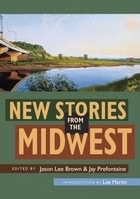
cover of New Stories from the Midwest

New Stories from the Midwest

Jason Lee Brown

Ohio University Press, 2011

New Stories from the Midwest presents a collection of stories that celebrate an American region too often ignored in discussions about distinctive regional literature. The editors solicited nominations from more than three hundred magazines, literary journals, and small presses, and narrowed the selection to nineteen authors comprising prize winners and new and established authors.

The stories, written by midwestern writers or focusing on the Midwest, demonstrate how the quality of fiction from and about the heart of the country rivals that of any other region.

The anthology includes an introduction from Lee Martin and short fiction by emerging and established writers such as Rosellen Brown, Bonnie Jo Campbell, Christie Hodgen, Gregory Blake Smith, and Benjamin Percy.
[more]
cover of New Stories from the Southwest

New Stories from the Southwest

D. Seth Horton

Ohio University Press, 2008

The beauty and barrenness of the southwestern landscape naturallylends itself to the art of storytellers. It is a land of heat and dryness, aland of spirits, a land that is misunderstood by those living along thecoasts.

New Stories from the Southwest presents nineteen short stories that appeared in North American periodicals between January and December 2006. Though many of these stories vary by aesthetics, tone, voice, and almost any other craft category one might wish to use, they are nevertheless bound together by at least one factor, which is that the landscape of the region plays a key role in their narratives. They each evoke and explore what it means to exist in thisunique corner of the country.

Selected by editor D. Seth Horton, the former fiction editor for the Sonora Review, from a wide cross-section of journals and magazines, and with a foreword by noted writer Ray Gonzalez, New Stories from the Southwest presents a generous sampling of the best of contemporary fiction situated in this often overlooked area of the country. Swallow Press is particularly pleased to publish this wide-ranging collection of stories from both new and established writers.

Contributors to New Stories from the Southwest are:
- Alan Cheuse
- Matt Clark
- Lorien Crow
- Kathleen De Azvedo
- Alan Elyshevitz
- Marcela Fuentes
- Dennis Fulgoni
- Ray Gonzalez
- Anna Green
- Donald Lucio Hurd
- Toni Jensen
- Charles Kemnitz
- Elmo Lum
- Tom McWhorter
- S. G. Miller
- Peter Rock
- Alicita Rodriguez
- John Tait
- Patrick Tobin
- Valery Varble
[more]
cover of New Visions of Community in Contemporary American Fiction: Tan, Kingsolver, Castillo, Morrison

New Visions of Community in Contemporary American Fiction

Tan, Kingsolver, Castillo, Morrison

Magali Cornier Michael

University of Iowa Press, 2006
In this engaging, optimistic close reading of five late twentieth-century novels by American women, Magali Cornier Michael illuminates the ways in which their authors engage with ideas of communal activism, common commitment, and social transformation. The fictions she examines imagine coalition building as a means of moving toward new forms of nonhierarchical justice; for ethnic cultures that, as a result of racist attitudes, have not been assimilated, power with each other rather than power over each other is a collective goal.Michael argues that much contemporary American fiction by women offers models of care and nurturing that move away from the private sphere toward the public and political. Specifically, texts by women from such racially marked ethnic groups as African American, Asian American, Native American, and Mexican American draw from the rich systems of thought, histories, and experiences of these hybrid cultures and thus offer feminist and ethical revisions of traditional concepts of community, coalition, subjectivity, and agency.Focusing on Amy Tan’s The Joy Luck Club, Barbara Kingsolver’s The Bean Trees and Pigs in Heaven, Ana Castillo’s So Far from God, and Toni Morrison’s Paradise, Michael shows that each writer emphasizes the positive, liberating effects of kinship and community. These hybrid versions of community, which draw from other-than-dominant culturally specific ideas and histories, have something to offer Americans as the United States moves into an increasingly diverse twenty-first century. Michael provides a rich lens through which to view both contemporary fiction and contemporary life.
[more]
cover of Nice and Noir: Contemporary American Crime Fiction

Nice and Noir

Contemporary American Crime Fiction

Richard B. Schwartz

University of Missouri Press, 2002

Owners of mystery bookshops will tell you that there are several sorts of buyers: those who purchase on impulse or whim; genre addicts who buy paperbacks by the week and by the armful; and those who have caught up on canonical texts and regularly buy new novels by select authors in hardcover. Richard B. Schwartz belongs in the last group, with his own list of approximately seventy favorite writers.
Nice and Noir: Contemporary American Crime Fiction explores the work of these writers, building upon a reading of almost seven hundred novels from the 1980s and 1990s. By looking at recurring themes in these mysteries, Schwartz offers readers new ways to approach the works in relation to contemporary cultural concerns.
            With sensitivity to a culture consisting of frontiers and borders, Schwartz examines the position of the vigilante in art and society, racial bridges and divides, the absence of divine presence and compensating narrative strategies, the unresolved nature of the crime plot and its roots in chivalric romance. The special importance of setting and the growing importance of grotesque humor in the fiction studied here are addressed by the author, as is the journalistic/instructional dimension of the field and the importance of crossover narratives.
            This book is not only a study and appreciation of an important subgenre and its contemporary practitioners; it also utilizes both literary history and theoretical material. Information has been drawn from fanzines, from discussions with writers, booksellers, agents, and editors, and from the author’s own extensive knowledge of literature and American culture.
            Nice and Noir is wide-ranging but neither ponderous nor lugubrious. Its language is accessible but not simplistic. The book will have a broad appeal—both to academics and to general readers with some interest in American studies and popular culture.
[more]
cover of Nineteenth-Century Women at the Movies: Adapting Classic Women's Fiction to Film

Nineteenth-Century Women at the Movies

Adapting Classic Women's Fiction to Film

Barbara Tepa Lupack

University of Wisconsin Press, 1999

Even in Hollywood’s world of blockbusters and special effects, there continues to be interest in “quieter” adaptations based on the works of writers of other eras, especially the classic novels of nineteenth-century women. Those novels emphasize strong female protagonists, fine language, and sensitivity to social nuances.
    This volume’s twelve essays offer critical insights not only into the visions of the novelist and the filmmaker but also into contemporary cultural concerns. The adaptations of novels by eight popular writers are analyzied: Mary Shelley, Jane Austen, Charlotte Brontë, Emily Brontë, Harriet Beecher Stowe, Louisa May Alcott, Ouida, and George Eliot.
[more]
cover of Notes on Nowhere: Feminism, Utopian Logic, and Social Transformation

Notes on Nowhere

Feminism, Utopian Logic, and Social Transformation

Jennifer Burwell

University of Minnesota Press, 1997

Notes on Nowhere was first published in 1997. Minnesota Archive Editions uses digital technology to make long-unavailable books once again accessible, and are published unaltered from the original University of Minnesota Press editions.

The term utopia implies both "good place" and "nowhere." Since Sir Thomas More wrote Utopia in 1516, debates about utopian models of society have sought to understand the implications of these somewhat contradictory definitions. In Notes on Nowhere, author Jennifer Burwell uses a cross section of contemporary feminist science fiction to examine the political and literary meaning of utopian writing and utopian thought.

Burwell provides close readings of the science fiction novels of five feminist writers-Marge Piercy, Sally Gearhart, Joanna Russ, Octavia Butler, and Monique Wittig-and poses questions central to utopian writing: Do these texts promote a tradition in which narratives of the ideal society have been used to hide rather than reveal violence, oppression, and social divisions? Can a feminist critical utopia offer a departure from this tradition by using utopian narratives to expose contradiction and struggle as central aspects of the utopian impulse? What implications do these questions have for those who wish to retain the utopian impulse for emancipatory political uses?

As one way of answering these questions, Burwell compares two "figures" that inform utopian writing and social theory. The first is the traditional abstract "revolutionary" subject who contradicts existing conditions and who points us to the ideal body politic. The second, "resistant," subject is partial, concrete, and produced by conditions rather than operating outside of them. In analyzing contemporary changes in the subject's relationship to social space, Burwell draws from and revises "standpoint approaches" that tie visions of social transformation to a group's position within existing conditions.

By exploring the dilemmas, antagonisms, and resolutions within the critical literary feminist utopia, Burwell creates connections to a similar set of problems and resolutions characterizing "nonliterary" discourses of social transformation such as feminism, gay and lesbian studies, and Marxism. Notes on Nowhere makes an original, significant, and persuasive contribution to our understanding of the political and literary dimensions of the utopian impulse in literature and social theory.

Jennifer Burwell teaches in the Department of English at Wesleyan University in Connecticut.
[more]
cover of Novel Competition: American Fiction and the Cultural Economy, 1965-1999

Novel Competition

American Fiction and the Cultural Economy, 1965-1999

Evan Brier

University of Iowa Press, 2024
Novel Competition describes the literary and institutional struggle to make American novels matter between 1965 and 1999. As corporations took over the book business, Hollywood movies, popular music, and other forms of mass-produced culture competed with novels as never before for a form of prestige that had mostly been attached to novels in previous decades. In the context of this competition, developments like the emergence of Rolling Stone magazine, regional publishers, Black studies programs, and “New Hollywood” became key events in the life of the American novel. Novels by Truman Capote, Ann Beattie, Toni Cade Bambara, Cynthia Ozick, and Larry McMurtry—among many others—are recast as prescient reports on, and formal responses to, a world suddenly less hospitable to old claims about the novel’s value. This book brings to light the story of the novel’s perceived decline and the surprising ways American fiction transformed in its wake.
 
[more]
cover of Novel Gazing: Queer Readings in Fiction

Novel Gazing

Queer Readings in Fiction

Eve Kosofsky Sedgwick, ed.

Duke University Press, 1997

Novel Gazing is the first collection of queer criticism on the history of the novel. The contributors to this volume navigate new territory in literary theory with essays that implicitly challenge the "hermeneutic of suspicion" widespread in current critical theory. In a stunning introductory essay, Eve Kosofsky Sedgwick delineates the possibilities for a criticism that would be "reparative" rather than cynical or paranoid. The startlingly imaginative essays in the volume explore new critical practices that can weave the pleasures and disorientations of reading into the fabric of queer analyses.

Through discussions of a diverse array of British, French, and American novels—including major canonical novels, best-sellers, children’s fiction, and science fiction—these essays explore queer worlds of taste, texture, joy, and ennui, focusing on such subjects as flogging, wizardry, exorcism, dance, Zionist desire, and Internet sexuality. Interpreting the works of authors as diverse as Benjamin Constant, Toni Morrison, T. H. White, and William Gibson, along with canonical queer modernists such as James, Proust, Woolf, and Cather, contributors reveal the wealth of ways in which selves and communities succeed in extracting sustenance from the objects of a culture whose avowed desire has often been not to sustain them. The dramatic reframing that these essays perform will make the significance of Novel Gazing extend beyond the scope of queer studies to literary criticism in general.

Contributors. Stephen Barber, Renu Bora, Anne Chandler, James Creech, Tyler Curtain, Jonathan Goldberg, Joseph Litvak, Michael Lucey, Jeff Nunokawa, Cindy Patton, Jacob Press, Robert F. Reid-Pharr, Eve Kosofsky Sedgwick, Melissa Solomon, Kathryn Bond Stockton, John Vincent, Maurice Wallace, Barry Weller
[more]
cover of Novel Houses: Twenty Famous Fictional Dwellings

Novel Houses

Twenty Famous Fictional Dwellings

Christina Hardyment

Bodleian Library Publishing, 2019
Many beloved novels have place at their heart—and often even in their title. Novel Houses visits unforgettable dwellings in twenty legendary works of English and American fiction, exploring how Uncle Tom’s Cabin came to start the American Civil War, why Bleak House is used as the name of a happy home, and what Jane Austen had in mind when she worked out the plot for Mansfield Park. Taking up the importance of 221B Baker Street to Sherlock Holmes, and of Bag-End to the hobbits who called it home, the book also sheds fresh light on Emily Brontë’s Wuthering Heights, Mervyn Peake’s Gormenghast, and the real-life settings of Daphne du Maurier’s Rebecca and E. M. Forster’s Howards End. Throughout, the book invites us to consider how houses, while so fundamental to these stories, also reveal much about their authors’ passions and preoccupations. A winning combination of literary criticism, geography, and biography, this is an entertaining and insightful celebration of beloved novels and the extraordinary role that houses play—whether grand or small, unique or ordinary, real or imagined.
 
[more]
cover of Novel Nostalgias: The Aesthetics of Antagonism in Nineteenth Century U.S. Literature

Novel Nostalgias

The Aesthetics of Antagonism in Nineteenth Century U.S. Literature

John Funchion

The Ohio State University Press, 2015

Novel Nostalgias: The Aesthetics of Antagonism in Nineteenth-Century U.S. Literature establishes how the longing to recover a lost home or past drove some of the central conflicts of the nineteenth-century United States. Providing one of the few U.S. literary histories that examines cultural material from both before and after the Civil War, John Funchion argues that a diverse array of novels, from William Wells Brown’s Clotel to L. Frank Baum’s The Wonderful Wizard of Oz, imagined new politically—and antagonistically—charged communities through forms of nostalgic longing.
 
In contrast with studies that characterized the nineteenth-century U.S. novel as a consensus-generating form complicit with disciplinary culture, Funchion shows how novels shaped a series of culture wars by advancing antagonistic nostalgias. Southern slave owners and their slaves or industrial magnates and their union opponents alike enlisted the power of nostalgia to validate their rival visions of the nation as lost moments awaiting recovery. Antagonistic nostalgias legitimated the political claims of movements as diverse as abolitionism, sectionalism, populism, socialism, anarchism, and cosmopolitanism. Novel Nostalgias provides a deep cultural historical understanding of the nineteenth-century United States, but ultimately, it also allows for a better understanding of how twenty-first-century movements function.
[more]
cover of Novel Subjects: Authorship as Radical Self-Care in Multiethnic American Narratives

Novel Subjects

Authorship as Radical Self-Care in Multiethnic American Narratives

Leah A. Milne

University of Iowa Press, 2021

How does contemporary literature contend with the power and responsibility of authorship, particularly when considering marginalized groups? How have the works of multiethnic authors challenged the notion that writing and authorship are neutral or universal?

In Novel Subjects, Leah Milne offers a new way to look at multicultural literature by focusing on scenes of writing in contemporary works by authors with marginalized identities. These scenes, she argues, establish authorship as a form of radical self-care—a term we owe to Audre Lorde, who defines self-care as self-preservation and “an act of political warfare.”

In engaging in this battle, the works discussed in this study confront limitations on ethnicity and nationality wrought by the institutionalization of multiculturalism. They also focus on identities whose mere presence on the cultural landscape is often perceived as vindictive or willful. Analyzing recent texts by Carmen Maria Machado, Louise Erdrich, Ruth Ozeki, Toni Morrison, and more, Milne connects works across cultures and nationalities in search of reasons for this recent trend of depicting writers as characters in multicultural texts. Her exploration uncovers fiction that embrace unacceptable or marginalized modes of storytelling—such as plagiarism, historical revisions, jokes, and lies—as well as inauthentic, invisible, and unexceptional subjects. These works ultimately reveal a shared goal of expanding the borders of belonging in ethnic and cultural groups, and thus add to the ever-evolving conversations surrounding both multicultural literature and self-care.
[more]