Results by title
1038 books match the query 'Antiquities' and 19 start with n
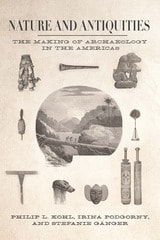
Nature and Antiquities
The Making of Archaeology in the AmericasEdited by Philip L. Kohl, Irina Podgorny, and Stefanie Gänger
University of Arizona Press, 2014
The volume breaks new ground by entreating archaeologists to acknowledge the importance of ways of knowing that resulted from the study of nature in the history of archaeology. Some of the contributions to this volume trace the part conventions, practices, and concepts from natural history and the natural sciences played in the history and making of the discipline. Others set out to uncover, reassemble, or adjust our vision of collections that research historians of archaeology have disregarded or misrepresented—because their nineteenth-century makers would refuse to comply with today’s disciplinary borders and study natural specimens and antiquities in conjunction, under the rubric of the territorial, the curious or the universal. Other contributions trace the sociopolitical implications of studying nature in conjunction with “indigenous peoples” in the Americas—inquiring into what it meant and entailed to comprehend the inhabitants of the American continent in and through a state of nature.
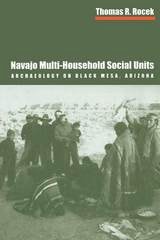
Navajo Multi-Household Social Units
Archaeology on Black Mesa, ArizonaThomas R. Rocek
University of Arizona Press, 1995
Rocek explores a neglected but major source of social flexibility in these societies. While many studies have focused on household and community-level organization, few have examined the flexible, intermediate-sized, "middle-level" cooperative units that bind small groups of households together. Middle-level units, says the author, must be recognized as important sources of social flexibility in many such cultural contexts. Futhermore, attention to middle-level units is critical for understanding household or community-level organization, because the flexibility they offer can fundamentally alter the behavior of social units of a larger or smaller scale.
In examining the archaeological record of Navajo settlement, Rocek develops archaeological methods for examing multiple-household social units (variously called "outfits or "cooperating groups") through spatial analysis, investigates evidence of change in middle-level units over time, relates these changes to economic and demographic flux, and compares the Navajo case study to the broader ethnographic literature of middle-level units. Rocek finds similarities with social organization in non-unilineally organized societies, in groups that have been traditionally described as characterized by network organization, and particularly in pastoral societies. The results of Rocek's study offer a new perspective on variability in Navajo social organization while suggesting general patterns of the response of social groups to change.
Rocek's work will be of significant interest not only to those with a professional interest in Navajo history and culture, but also, for its methodological insights, to a far broader range of archaeologists, social anthropologists, ethnohistorians, ethnoarchaeologists, historians, cultural geographers, and political scientists.
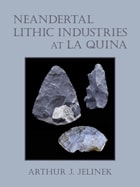
Neandertal Lithic Industries at La Quina
Arthur J. Jelinek
University of Arizona Press, 2013
This study of the significance of changes through time revealed by an analysis of the chipped stone at La Quina reports on the excavations of the Cooperative American–French Excavation Project from 1985 to 1994. It moves beyond the largely descriptive and subjective approaches that have traditionally been applied to this kind of evidence and applies several important quantitative analytical techniques. These new approaches incorporate the history of previous excavations at the site, the results of the work of the Cooperative Project, and the most recent scientific understanding of relevant climatic changes.
This is a major contribution to our understanding of Neandertal behavior and industry. It adds new dimensions and perspectives based on innovative techniques of analysis. The analytic methods applied to lithic artifacts that form the heart of the book are the product of considerations about how to best interpret a sequence of multiple contextual samples. The author concludes the book with an extraordinarily useful chapter that places his findings into the larger context of our contemporary knowledge of Neandertal life in the region.
The book comes with a compact disc, which includes coded observations used in the analysis in as many as 47 data fields for the more than 11,500 artifacts that will allow professionals and students to further explore the collection of lithic artifacts.
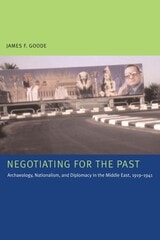
Negotiating for the Past
Archaeology, Nationalism, and Diplomacy in the Middle East, 1919-1941By James F. Goode
University of Texas Press, 2007
The discovery of the tomb of Tutankhamun in 1922 was a landmark event in Egyptology that was celebrated around the world. Had Howard Carter found his prize a few years earlier, however, the treasures of Tut might now be in the British Museum in London rather than the Egyptian Museum in Cairo. That's because the years between World War I and World War II were a transitional period in Middle Eastern archaeology, as nationalists in Egypt and elsewhere asserted their claims to antiquities discovered within their borders. These claims were motivated by politics as much as by scholarship, with nationalists seeking to unite citizens through pride in their ancient past as they challenged Western powers that still exercised considerable influence over local governments and economies. James Goode's analysis of archaeological affairs in Turkey, Egypt, Iran, and Iraq during this period offers fascinating new insight into the rise of nationalism in the Middle East, as well as archaeological and diplomatic history.
The first such work to compare archaeological-nationalistic developments in more than one country, Negotiating for the Past draws on published and archival sources in Arabic, English, French, German, Persian, and Turkish. Those sources reveal how nationalists in Iraq and Iran observed the success of their counterparts in Egypt and Turkey, and were able to hold onto discoveries at legendary sites such as Khorsabad and Persepolis. Retaining artifacts allowed nationalists to build museums and control cultural heritage. As Goode writes, "Going to the national museum became a ritual of citizenship." Western archaeologists became identified (in the eyes of many) as agents of imperialism, thus making their work more difficult, and often necessitating diplomatic intervention. The resulting "negotiations for the past" pulled patrons (such as John D. Rockefeller, Jr., and Lord Carnarvon), archaeologists (James Breasted and Howard Carter), nationalist leaders (Ataturk and Sa'd Zaghlul), and Western officials (Charles Evan Hughes and Lord Curzon) into intractable historical debates with international implications that still resonate today.
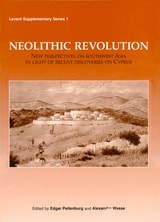
Neolithic Revolution
New Perspectives on Southwest Asia in Light of Recent Discoveries on Cyprus (Levant Supplementary): No. 1E. Peltenburg
Council for British Research in the Levant, 2004
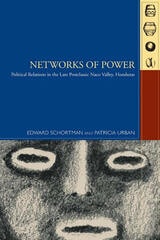
Networks of Power
Political Relations in the Late Postclassic Naco ValleyEdward Schortman
University Press of Colorado, 2011
Describing the material and behavioral patterns pertaining to the Late Postclassic period using components of three settlements in the Naco Valley of northwestern Honduras, the book focuses on how contests for power shaped political structures. Power-seeking individuals, including but not restricted to ruling elites, depended on networks of allies to support their political objectives. Ongoing and partially successful competitions waged within networks led to the incorporation of exotic ideas and imported items into the daily practices of all Naco Valley occupants. The result was a fragile hierarchical structure forever vulnerable to the initiatives of agents operating on local and distant stages.
Networks of Power describes who was involved in these competitions and in which networks they participated; what resources were mustered within these webs; which projects were fueled by these assets; and how, and to what extent, they contributed to the achievement of political aims.
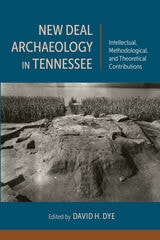
New Deal Archaeology in Tennessee
Intellectual, Methodological, and Theoretical ContributionsEdited by David H. Dye
University of Alabama Press, 2016
Exploring how New Deal innovation transformed archaeology in the American South.
New Deal Archaeology in Tennessee tells the engrossing story of Southeastern archaeology in the 1930s. The Tennessee Valley Authority Act of May 1933 initiated an ambitious program of flood control and power generation by way of a chain of hydroelectric dams on the Tennessee River. The construction of these dams flooded hundreds of thousands of square miles of river bottoms, campsites, villages, and towns that had been homes to Native Americans for centuries. This triggered an urgent need to undertake extensive archaeological fieldwork throughout the region. Those studies continue to influence contemporary archaeology.
The state of Tennessee and the Tennessee Valley were especially well suited research targets thanks to their mild climate and long field seasons. A third benefit in the 1930s was the abundance of labor supplied by Tennesseans unemployed during the Great Depression. Within months of the passage of the Tennessee Valley Authority Act, teams of archaeologists fanned out across the state and region under the farsighted direction of Smithsonian Institution curators Neil M. Judd, Frank H. H. Roberts, and Frank M. Setzler. The early months of 1934 would become the busiest period of archaeological fieldwork in US history.
The twelve insightful essays in New Deal Archaeology in Tennessee document and explore this unique peak in archaeological study. Chapters highlight then-new techniques such as mound “peeling” and stratigraphic excavation adapted from the University of Chicago; the four specific New Deal sites of Watts Bar Reservoir, Mound Bottom, Pack, and Chickamauga Basin; bioarchaeology in the New Deal; and the enduring impact of the New Deal on contemporary fieldwork.
The challenges of the 1930s in recruiting skilled labor, training unskilled ancillary labor, developing and improvising new field methods, and many aspects of archaeological policies, procedures, and best-practices laid much of the foundation of contemporary archaeological practice. New Deal Archaeology in Tennessee offers an invaluable record of that pivotal time for professional, student, and amateur archaeologists.
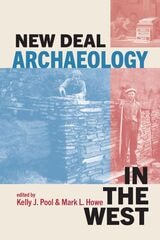
New Deal Archaeology in the West
Edited by Kelly J. Pool and Mark L. Howe
University of Utah Press, 2023
Descriptions of New Deal projects and their contributions to our understanding of the past, as well as the stories of those involved—archaeologists, avocationalists, and others—are woven together across the chapters. Also documented are lost or scattered artifacts, records, and ancestors’ remains; incomplete analyses; unpublished reports; inconsistent application of scientific methodology; and the loss of Native sacred sites and traditional lands and lifeways. Authors highlight characteristics that distinguished the American West from the East during the Depression and affected the nature of New Deal projects, including the extent of federal land available in the West, the reliance of sparsely populated areas upon tourism, the presence of large resident Native populations with deep histories, and the wide-ranging degree of existing archaeology infrastructure in each state. This volume demonstrates that despite regional differences, New Deal-funded archaeological and cultural heritage projects created a legacy of knowledge and practice across the nation.
New Inscriptions and Seals Relating to the Biblical World
Meir Lubetski
SBL Press, 2012
New Perspectives on Etruria and Early Rome
Sinclair Bell
University of Wisconsin Press, 2009
Paying tribute to Richard Daniel De Puma, a scholar who has made significant and influential contributions to Etruscan and Roman studies, the contributors to this collection echo the ambition and creativity of his work while offering an up-to-date survey of contemporary Etruscan scholarship. In surveying new developments in both fields, the work collected here represent the diverse, interdisciplinary interests of De Puma as well as areas of recent groundbreaking research.
New Perspectives on Mimbres Archaeology
Three Millennia of Human Occupation in the North American SouthwestEdited by Barbara J. Roth, Patricia A. Gilman, and Roger Anyon
University of Arizona Press, 2018
New Perspectives on Mimbres Archaeology brings together these experts in a single volume for the first time. The contributors discuss current knowledge of the people who lived in the Mimbres region of the southwestern United States and how our knowledge has changed since the Mimbres Foundation, directed by Steven A. LeBlanc, began the first modern archaeological investigations in the region. Many of these authors have spent decades conducting the fieldwork that has allowed for a broader understanding of Mimbres society.
Focusing on a variety of important research topics of interest to archaeologists—including the social contexts of people and communities, the role of ritual and ideology in Mimbres society, evidence of continuities and cultural change through time, and the varying impacts of external influences throughout the region—New Perspectives on Mimbres Archaeology presents recent data on and interpretations of the entire pre-Hispanic sequence of occupation. Additional contributions include a history of nonprofit archaeology by William H. Doelle and a concluding chapter by Steven A. LeBlanc reflecting on his decades-long work in Mimbres archaeology and outlining important areas for the next wave of research.
New Perspectives on the Origins of Americanist Archaeology
Edited by David L. Browman and Stephen Williams
University of Alabama Press, 2002
In this landmark book, experienced scholars take a retrospective look at the developing routes that have brought American archaeologists into the 21st century.
In 1996, the Society for American Archaeology's Committee on the History of Archaeology established a biennial symposium
named after Gordon R. Willey, one of the fathers of American archaeology, to focus on the history of the discipline. This volume grew out of the
second symposium, presented at the 1998 meeting of the Society for American Archaeology.
Interest in the intellectual history of the field is certainly nothing new—the first such volume appeared in 1856—but previously, focus has been on individuals and their theories and methods, or on various government agencies that supported, developed, or mandated
excavations in North America. This volume, however, focuses on the roots of Americanist archaeology, including its pre-1915 European connections, and on some of the earliest work by women archaeologists, which has been largely overlooked.
Full of valuable insights for archaeologists and anthropologists—both professional and amateur—into the history and
development of Americanist archaeology, New Perspectives will also inspire and serve as a model for future research.
David Browman is Professor of Anthropology and Chair of the Interdisciplinary Program in Archaeology at Washington University. Stephen Williams is Professor Emeritus of Anthropology at Harvard University.
Newberry Crater
Anthropological Papers Number 121Thomas Connolly
University of Utah Press, 1999
The research in this volume derives from investigations conducted in connection with proposed widening and realignment of the Paulina-East Lake Highway, located within the caldera of Newberry Volcano. Formal evaluation of 13 localities and data recovers at four sites produced a wealth of information regarding human uses of the caldera and vicinity throughout the Holocene.
Night and Darkness in Ancient Mesoamerica
Nancy Gonlin
University Press of Colorado, 2021
The anthropological study of night and darkness enriches and strengthens the understanding of human behavior, power, economy, and the supernatural. In eleven case studies featuring the residents of Teotihuacan, the Classic period Maya, inhabitants of Rio Ulúa, and the Aztecs, the authors challenge archaeologists to consider the influence of the ignored dimension of the night and the role and expression of darkness on ancient behavior. Chapters examine the significance of eclipses, burials, tombs, and natural phenomena considered to be portals to the underworld; animals hunted at twilight; the use and ritual meaning of blindfolds; night-blooming plants; nocturnal foodways; fuel sources and lighting technology; and other connected practices.
Night and Darkness in Ancient Mesoamerica expands the scope of published research and media on the archaeology of the night. The book will be of interest to those who study the humanistic, anthropological, and archaeological aspects of the Aztec, Maya, Teotihuacanos, and southeastern Mesoamericans, as well as sensory archaeology, art history, material culture studies, anthropological archaeology, paleonutrition, socioeconomics, sociopolitics, epigraphy, mortuary studies, volcanology, and paleoethnobotany.
Contributors: Jeremy Coltman, Christine Dixon, Rachel Egan, Kirby Farah, Carolyn Freiwald, Nancy Gonlin, Julia Hendon, Cecelia Klein, Jeanne Lopiparo, Brian McKee, Jan Marie Olson, David M. Reed, Payson Sheets, Venicia Slotten, Michael Thomason, Randolph Widmer, W. Scott Zeleznik
Nine Mile Canyon
The Archaeological History of an American TreasureJerry D. Spangler
University of Utah Press, 2013
The early visitors in the 1890s were determined to recover collections for museums but never much cared to understand the people who left the artifacts. Then came a cadre of young scientists—the first to be trained specifically in archaeology—who found Nine Mile Canyon to be an intriguing laboratory that yielded more questions than answers. Scholars such as Noel Morss, Donald Scott, Julian Steward, John Gillin, and John Otis Brew all left their boot prints there.
Today, archaeological research is experiencing another renaissance—a new generation of university-trained archaeologists is determined to unravel the mystery of Nine Mile Canyon using scientific tools and techniques that were unavailable to past generations. Through the words and thoughts of the archaeologists, as well as the more than 150 photos, readers will come to see Nine Mile Canyon as an American treasure unlike any other. As the first book that is devoted exclusively to the archaeology of this unique place, Nine Mile Canyon will evoke fascination among scholars and the general public alike.
Winner of a Choice Outstanding Academic Title award.
North America's Galapagos
The Historic Channel Islands Biological SurveyCorinne Heyning Laverty
University of Utah Press, 2019
This untold saga of adventure, discovery, and goals abandoned is juxtaposed against the fresh successes of a new generation of Channel Island scholars. Engagingly written, North America’s Galapagos illuminates the scientific process and reveals remarkable modern discoveries that are rewriting archaeological textbooks and unraveling the answer to the age-old question: how and when were the Americas populated?
Anyone interested in the work conducted behind closed museum doors will want to read this book—so will history buffs, environmentalists, scientists, and general readers curious about our world.
Visit the author's website: https://www.channelislandscalifornia.com/
North American Indigenous Warfare and Ritual Violence
Edited by Richard J. Chacon and Rubén G. Mendoza
University of Arizona Press, 2007
The editors argue that a failure to acknowledge the roles of warfare and violence in the lives of indigenous North Americans is itself a vestige of colonial repression—depriving native warriors of their history of armed resistance. These essays document specific acts of Native American violence across the North American continent. Including contributions from anthropologists, archaeologists, historians, and ethnographers, they argue not only that violence existed but also that it was an important and frequently celebrated component of Amerindian life.
CONTENTS
Acknowledgments
Introduction
Richard J. Chacon and Rubén G. Mendoza
1. Traditional Native Warfare in Western Alaska
Ernest S. Burch Jr.
2. Barbarism and Ardour of War from the Tenderest Years”: Cree-Inuit Warfare in the Hudson Bay Region
Charles A. Bishop and Victor P. Lytwyn
3. Aboriginal Warfare on the Northwest Coast: Did the Potlatch Replace Warfare?
Joan A. Lovisek
4. Ethnohistoric Descriptions of Chumash Warfare
John R. Johnson
5. Documenting Conflict in the Prehistoric Pueblo Southwest
Polly Schaafsma
6. Cahokia and the Evidence for Late Pre-Columbian War in the North American Midcontinent
Thomas E. Emerson
7. Iroquois-Huron Warfare
Dean R. Snow
8. Desecrating the Sacred Ancestor Temples: Chiefly Conflict and Violence in the American Southeast
David H. Dye and Adam King
9. Warfare, Population, and Food Production in Prehistoric Eastern North America
George R. Milner
10. The Osteological Evidence for Indigenous Warfare in North America
Patricia M. Lambert
11. Ethical Considerations and Conclusions Regarding Indigenous Warfare and Violence in North America
Richard J. Chacon and Rubén G. Mendoza
References
About the Contributors
Index
Northwest Coast
Archaeology as Deep HistoryMadonna L. Moss
University Press of Colorado, 2011
Not so Far from Paquimé
Essays on the Archaeology of Chihuahua, MexicoEdited by Jane Holden Kelley and David A. Phillips Jr.
University of Utah Press, 2017