Results by title
87 books match the query 'Applications' and 5 start with n
Negative Group Delay Devices
From concepts to applicationsBlaise Ravelo
The Institution of Engineering and Technology, 2019
Negative Group Delay Devices: From concepts to applications introduces the theoretical concept, analysis, design methodology and implementation of negative group delay (NGD). The NGD concept is a recent topic in electrical and electronic engineering research based on an unconventional function; the generation of an output signal seemingly in time-advance of the input signal. The NGD function has been exploited to develop experimental high-performance electronic devices, and novel design features of radio frequency (RF) and microwave electronic devices, such as filters, power dividers and amplifiers. Examples include the realization of non-Foster reactive elements, shortening or reducing delay lines, enhancing the efficiency of feedforward linear amplifiers, improvement of phase shifters accuracy and bandwidth, equalization of electrical interconnect effects for the microwave, digital and mixed signal integrity improvement, and minimizing beam-squint in series-fed antenna arrays.
[more]
Neurotechnology
Methods, advances and applicationsVictor Hugo C. de Albuquerque
The Institution of Engineering and Technology, 2020
This book focuses on recent advances and future trends in the methods and applications of technologies that are used in neuroscience for the evaluation, diagnosis and treatment of neurological diseases and conditions or for the improvement of quality of life. The editors have assembled contributions from a range of international experts, to bring together key topics in neurotechnology, neuroengineering, and neurorehabilitation. The book explores biomedical signal processing, neuroimaging acquisition and analysis, computational intelligence, virtual and augmented reality, biometrics, machine learning and neurorobotics, human machine interaction, mobile apps and discusses ways in which these neural technologies can be used as diagnostic tools, research methods, treatment modalities, as well as in devices and apps in everyday life.
[more]
Novel Radar Techniques and Applications
Real aperture array radar, Imaging radar, and Passive and multistatic radar, Volume 1Richard Klemm
The Institution of Engineering and Technology, 2018
Novel Radar Techniques and Applications presents the state-of-the-art in advanced radar, with emphasis on ongoing novel research and development and contributions from an international team of leading radar experts.
[more]
Novel Radar Techniques and Applications
Waveform diversity and cognitive radar and Target tracking and data fusion, Volume 2Richard Klemm
The Institution of Engineering and Technology, 2018
Novel Radar Techniques and Applications presents the state-of-the-art in advanced radar, with emphasis on ongoing novel research and development and contributions from an international team of leading radar experts. Each section gives an overview of the latest research and perspectives of the future, and includes a number of chapters dedicated to specific techniques in conjunction with existing operational, experimental or conceptual applications.
[more]
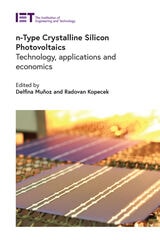
n-Type Crystalline Silicon Photovoltaics
Technology, applications and economicsDelfina Muñoz
The Institution of Engineering and Technology, 2022
Most solar cells currently in commercial use are p-type solar cells, due to their historically lower cost and ease of manufacture compared to n-type solar cells. However, due to improved manufacturing technology and falling cost in general, the cost difference between the two types has shrunk, making n-type solar cells an attractive option for future commercial high-efficiency solar cells.
[more]