Results by title
138 books match the query 'Art and society' and 6 start with n
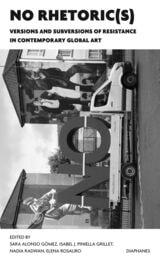
NO Rhetoric(s)
Versions and Subversions of Resistance in Contemporary Global ArtEdited by Sara Alonso Gómez, Isabel J. Piniella Grillet, Nadia Radwan, and Elena Rosauro
Diaphanes, 2021
NO Rhetoric(s) examines a subject intensely debated during the last three decades but rarely a topic of its own: art as an agent of resistance, whether as a rhetorical stance or critical strategy. In the face of today’s discourse on revolt and insurrection, it is necessary to ask whether the gesture of “negation” still has an emancipatory potential. NO Rhetoric(s) contributes a deeper understanding of the different logics of resistance at play between art and politics. Showcasing a diverse array of voices, this volume presents contributions on topics as varied as sexual dissidence, ecology, and geopolitics in the digital age. Through this interdisciplinary show of force, the collected authors, artists, and scholars shed light on how art approaches the most urgent issues facing today’s society.
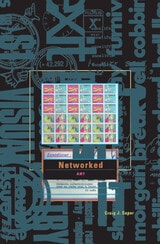
Networked Art
Craig J. Saper
University of Minnesota Press, 2001
Outlines an exciting new approach to this confluence of art, media, and poetry.
The experimental art and poetry of the last half of the twentieth century offers a glimpse of the emerging networked culture that electronic devices will make omnipresent. Craig J. Saper demarcates this new genre of networked art, which uses the trappings of bureaucratic systems—money, logos, corporate names, stamps—to create intimate situations among the participants.
In Saper’s analysis, the pleasures that these aesthetic situations afford include shared special knowledge or new language among small groups of participants. Functioning as artworks in themselves, these temporary institutional structures—networks, publications, and collective works—give rise to a gift-exchange community as an alternative economy and social system. Saper explains how this genre developed from post-World War II conceptual art, including periodicals as artworks in themselves; lettrist, concrete, and process poetry; Bauhaus versus COBRA; Fluxus publications, kits, and machines; mail art and on-sendings. The encyclopedic scope of the book includes discussions of artists from J. Beuys to J. S. G. Boggs, and Bauhaus’s Max Bill to Anna Freud Banana. Networked Art is an essential guide to the digital artists and networks of the emerging future.
Never Alone, Except for Now
Art, Networks, PopulationsKris Cohen
Duke University Press, 2017
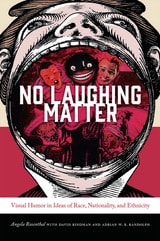
No Laughing Matter
Visual Humor in Ideas of Race, Nationality, and EthnicityEdited by Angela Rosenthal, David Bindman, and Adrian W. B. Randolph
Dartmouth College Press, 2015
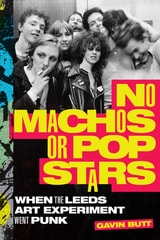
No Machos or Pop Stars
When the Leeds Art Experiment Went PunkGavin Butt
Duke University Press, 2022
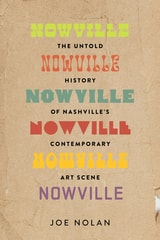
Nowville
The Untold History of Nashville's Contemporary Art SceneJoe Nolan
Vanderbilt University Press, 2024
This is the origin story of Nashville’s surging contemporary art scene told by the ones who were there before anyone else. Not a story about commercial spaces or official institutions—this is the story of moldy warehouse studios and improvised galleries, happy-kegger after-parties and front lawn art sales, exhibitions in apartment living rooms and secret art displays hidden in plain sight.
Nowville is an oral history of the Nashville art scene beginning in the 1990s. Author Joe Nolan tracks down the city’s art punks, art monks, radical art students, and visionary pioneers to share what made their moments in Nashville so special. He also offers insights into how this homespun movement powered by DIY innovating came to be a thriving creative community and a cornerstone of the city’s contemporary allure.
This book is the recipient of the 2025 Norman L. and Roselea J. Goldberg Prize from Vanderbilt University Press for the best book in the area of art or medicine.