Results by title
235 books match the query 'Books and reading' and 5 start with n
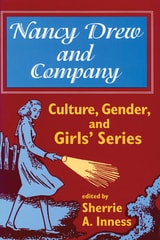
Nancy Drew and Company
Culture, Gender, and Girls’ SeriesEdited by Sherrie A. Inness
University of Wisconsin Press, 1997
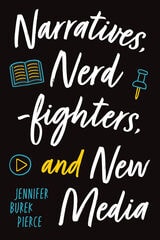
Narratives, Nerdfighters, and New Media
Jennifer Burek Pierce
University of Iowa Press, 2020
For decades, we’ve been warned that video killed the radio star, and, more recently, that social media has replaced reading. Nerdfighteria, a first-of-its-kind online literary community with nearly three million members, challenges these assumptions. It is the brainchild of brothers Hank and John Green, who provide literary themed programming on their website and YouTube channel, including video clips from John, a best-selling author most famous for his young adult book, The Fault in Our Stars. These clips not only give fans personal insights into his works and the writing process writ large, they also provide unique access to the author, inspiring fans to create their own fan art and make connections with one another.
In the twenty-first century, reading and watching videos are related activities that allow people to engage with authors and other readers. Whether they turn to The Fault in Our Stars or titles by lesser-known authors, Nerdfighters are readers. Incorporating thousands of testimonials about what they read and why, Jennifer Burek Pierce not only sheds light on this particular online community, she also reveals what it tells us about the changing nature of reading in the digital age. In Nerdfighteria, we find a community who shows us that being online doesn’t mean disinterest in books.

Newbery & Caldecott Medal Books, 1986-2000
A Comprehensive Guide to the WinnersAmerican Library Association, 2001
Nonfiction in Motion
Connecting Preschoolers with Nonfiction Books through MovementJulie Dietzel-Glair
American Library Association, 2016
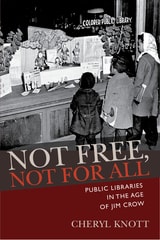
Not Free, Not for All
Public Libraries in the Age of Jim CrowCheryl Knott
University of Massachusetts Press, 2015
Winner of the 2016 Eliza Atkins Gleason Book Award and the 2016 Lillian Smith Book Award
Americans tend to imagine their public libraries as time-honored advocates of equitable access to information for all. Through much of the twentieth century, however, many black Americans were denied access to public libraries or allowed admittance only to separate and smaller buildings and collections. While scholars have examined and continue to uncover the history of school segregation, there has been much less research published on the segregation of public libraries in the Jim Crow South. In fact, much of the writing on public library history has failed to note these racial exclusions.
In Not Free, Not for All, Cheryl Knott traces the establishment, growth, and eventual demise of separate public libraries for African Americans in the South, disrupting the popular image of the American public library as historically welcoming readers from all walks of life. Using institutional records, contemporaneous newspaper and magazine articles, and other primary sources together with scholarly work in the fields of print culture and civil rights history, Knott reconstructs a complex story involving both animosity and cooperation among whites and blacks who valued what libraries had to offer. African American library advocates, staff, and users emerge as the creators of their own separate collections and services with both symbolic and material importance, even as they worked toward dismantling those very institutions during the era of desegregation.