501 books match the query 'Catholic Church' and 7 start with n
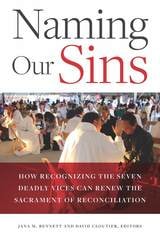
cover of Naming Our Sins: How Recognizing the Seven Deadly Vices can Renew the Sacrament of Reconciliation

Naming Our Sins

How Recognizing the Seven Deadly Vices can Renew the Sacrament of Reconciliation

Jana Bennett

Catholic University of America Press, 2019
What would it take to renew our ability to name our sins in a meaningful and pertinent way? Naming sins is a particularly important task for Catholic moral theology, but it is one that often falls back into a paradigm of simple violations of rules. While laws and commandments are essential, Vatican II’s universal call to holiness and the revival of virtue ethics require moving further. Yet in part because moral theologians today tend to be lay people, not priests, there has been a de-emphasis on the confession of sins. Contemporary questions like poverty, racism, and abortion are usually connected to questions about sin in some way, but they are disconnected from the idea of naming specific sins in the sacrament of penance. Lay moral theologians raise these issues in a way that makes clear their implications for a parish social justice committee (or the voting booth), but not their implications for the naming of sins in the sacrament of reconciliation. Naming Our Sins proposes to re-make that connection: the moral theologian’s task of helping people name individual sins needs to be restored, though in ways distinctive from dominant pre-Vatican II notions. In this volume, editors Jana Bennett and David Cloutier gather some of the best of the current generation of moral theologians in order to reflect on the classic tradition of the vices. It is crucial to the Christian understanding of sin that we recognize (a) we bear at least some responsibilities for injuries, and (b) God wants us to participate in the process of healing and conversion. Neither the sin itself nor the healing simply come from somewhere else; the task of naming sins enlists us as mature, growing disciples. Each chapter takes on a different classical vice, describing the vice, exploring its dimensions in contemporary experience, and moving the reader toward naming specific sins that arise from the vice. The concluding chapters from Catholic priests explore two basic dimensions of the sacrament of penance: liturgical and communal.
[more]
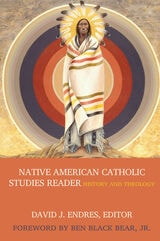
cover of Native American Catholic Studies Reader: History and Theology

Native American Catholic Studies Reader

History and Theology

David J. Endres

Catholic University of America Press, 2022
Before there was an immigrant American Church, there was a Native American Church. The Native American Catholic Studies Reader offers an introduction to the story of how Native American Catholicism has developed over the centuries, beginning with the age of the missions and leading to inculturated, indigenous forms of religious expression. Though the Native-Christian relationship could be marked by tension, coercion, and even violence, the Christian faith took root among Native Americans and for those who accepted it and bequeathed it to future generations it became not an imposition, but a way of expressing Native identity. From the perspective of historians and theologians, the Native American Catholic Studies Reader offers a curated collection of essays divided into three sections: education and evangelization; tradition and transition; and Native American lives. Contributors include scholars currently working in the field: Mark Clatterbuck, Damian Costello, Conor J. Donnan, Ross Enochs, Allan Greer, Mark G. Thiel, and Christopher Vecsey, as well as selections from a past generation: Gerald McKevitt, SJ, and Carl F. Starkloff, SJ. These contributions explore the interaction of missionaries and tribal leaders, the relationship of traditional Native cosmology and religiosity to Christianity, and the role of geography and tribal consciousness in accepting and maintaining indigenous and religious identities. These readings highlight the state of the emergent field of Native-Catholic studies and suggest further avenues for research and publication. For scholars, teachers, and students, the Native American Catholic Studies Reader explores how the faith of the American Church’s eldest members became a means of expressing and celebrating language, family, and tribe.
[more]
cover of Natural Moral Law in Contemporary Society

Natural Moral Law in Contemporary Society

Holger Zaborowski

Catholic University of America Press, 2010
The essays of this volume examine natural moral law, different natural law theories, and the role that natural law can and should play in our contemporary society
[more]
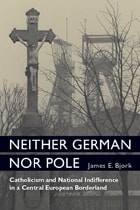
cover of Neither German nor Pole: Catholicism and National Indifference in a Central European Borderland

Neither German nor Pole

Catholicism and National Indifference in a Central European Borderland

James E. Bjork

University of Michigan Press, 2009

"This is a fascinating local story with major implications for studies of nationalism and regional identities throughout Europe more generally."
---Dennis Sweeney, University of Alberta

"James Bjork has produced a finely crafted, insightful, indeed, pathbreaking study of the interplay between religious and national identity in late nineteenth-century Central Europe."
---Anthony Steinhoff, University of Tennessee at Chattanooga

Neither German nor Pole examines how the inhabitants of one of Europe's most densely populated industrial districts managed to defy clear-cut national categorization, even in the heyday of nationalizing pressures at the turn of the twentieth century. As James E. Bjork argues, the "civic national" project of turning inhabitants of Upper Silesia into Germans and the "ethnic national" project of awakening them as Poles both enjoyed successes, but these often canceled one another out, exacerbating rather than eliminating doubts about people's national allegiances. In this deadlock, it was a different kind of identification---religion---that provided both the ideological framework and the social space for Upper Silesia to navigate between German and Polish orientations. A fine-grained, microhistorical study of how confessional politics and the daily rhythms of bilingual Roman Catholic religious practice subverted national identification, Neither German nor Pole moves beyond local history to address broad questions about the relationship between nationalism, religion, and modernity.
[more]
cover of Newman, Canon Law and Development: Quarrying Granite Rocks with Razors

Newman, Canon Law and Development

Quarrying Granite Rocks with Razors

David P. Long

Catholic University of America Press, 2024
John Henry Newman is well-known as a theologian, philosopher, historian, writer, University rector, and poet, but can he also be associated with the field of canon law? When Newman first proposed the possibility of doctrinal development as proof that the Catholic faith was free from corruption and error, he claimed “the Church is declared to be the great and special support of the Truth, her various functionaries are said to be means towards the settlement of diversities and of uncertainty of doctrine, and securing unity of faith.” For Newman, these various functionaries included not only apostles, prophets, evangelists, and pastors, but also theologians and, as is argued in this work, canon lawyers. While Newman and doctrinal development have become well-explored topics in the field of theology, there has been little scholarship on how Newman’s thoughts on doctrinal development can influence current canon law and Church governance. David Long addresses that lacuna by offering a systematic analysis of Newman’s concept of development within current canonical practice. It starts by tracing Newman’s notions of personal judgment, public discussion, and episcopal moderation, followed by a presentation of the current canonical understanding of the theologian, and finally an application of the connection between Newman’s theory on development and present canonical legislation as it involves the role of the theologian. By undertaking such an application, and by creating a model for discussion that preserves both development and Tradition, this work humbly proposes a valuable model for understanding the theologian’s contribution within the life of the contemporary Church in ways not previously explored.
[more]
cover of Next-Generation Leadership: A Toolkit for Those in Their Teens, Twenties, & Thirties, Who Want to be Successful Leaders

Next-Generation Leadership

A Toolkit for Those in Their Teens, Twenties, & Thirties, Who Want to be Successful Leaders

William J. Byron

University of Scranton Press, 2010

Drawing on his five decades of leadership experience, William Byron outlines in this volume the theory, practice, and purpose of leadership. Intuition, humility, empathy, simplicity of lifestyle, and sound speaking and writing skills are all essential for effective leadership, and Byron devotes separate, in-depth chapters to each. Aimed at an audience now largely overlooked by leadership literature, Next Generation Leadership will appeal to the business, government, religion, and nonprofit leaders of tomorrow.
[more]
cover of Nostra Aetate

Nostra Aetate

Pim Valkenberg

Catholic University of America Press, 2016

The contents of this book originated in a conference at the Catholic University of America in May 2015. The essays and lectures contained within focus on the relationships of the Catholic Church with the other "Abrahamic" faiths, primarily Islam and Judaism. There is some discussion of the Asian religions as well. This volume, in structure, loosely follows the document Nostra Aetate itself. The first part of the book gives a broad view of the document and its importance. The following parts concentrates on the relationships between the Catholic Church and the Asian, Muslim and Jewish religions. The concluding section of the book surveys the reception Nostra Aetate received in various ecclesial and academic contexts.
[more]