Results by title
267 books match the query 'Children' and 4 start with n
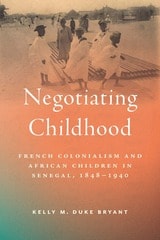
Negotiating Childhood
French Colonialism and African Children in Senegal, 1848–1940Kelly M. Duke Bryant
University of Massachusetts Press, 2026
A groundbreaking study of the meaning of childhood in French colonial Senegal
Negotiating Childhood explores how colonial child protection policies and African children’s responses to them produced new ways of defining, measuring, documenting, and experiencing childhood in the French colony of Senegal from 1848 to 1940. In this groundbreaking book, Kelly M. Duke Bryant takes the scholarship in new directions, offering to a literature dominated by studies of British colonies in the twentieth century a study of childhood in a French colony from the immediate post-emancipation period through the 1930s. This focus allows her to complicate the generally accepted timeline of child protection in colonial Africa and question other assumptions about children’s history on the continent.
This deeply researched work uses a wide range of sources to examine children’s experiences in spaces where they encountered French discipline and surveillance, such as wardship courts, public streets, schools, juvenile reformatories, and vaccine clinics. The book shows not only how these spaces re-ordered African childhood, but also how children themselves shaped and limited French efforts to impose order, especially when the state depended on African children’s cooperation to make good on rhetoric about child “protection.” It also charts the rise of documentation in children’s lives, as colonial representatives recorded names, ages, and other details about the African children with whom they interacted. Tracing the “documented” child back to the early colonial period, Negotiating Childhood historicizes the emergence of identity documentation—so crucial to our contemporary world—and questions the naturalness of the very idea of the “child.”
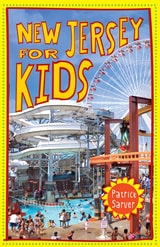
New Jersey for Kids
Sarver, Patrick
Rutgers University Press, 2012
Many parents in the Garden State are familiar with Great Adventure in Jackson, the boardwalk at Point Pleasant, and the Adventure Aquarium in Camden, but do they know about Kindermusik in Teaneck, the Young Chef’s Academy in Hillsborough, or the Buehler Challenger and Science Center in Paramus?
In New Jersey for Kids, Patrick Sarver provides parents with a handy reference guide offering hundreds of educational and entertaining ideas for children and their parents to explore and enjoy. Activities are designed specifically for kids ages 12 and under and cover a wide array of fun ways to enrich their intellectual lives, build their athletic skills, express themselves creatively, or just have room to play. The activities covered include:
- Robotics workshops
- Themed tea parties
- Plays and performances for children
- Museum tours, special exhibits, and programs for kids
- Pony rides and horseback riding lessons
- Specialized summer camps
- Arts and crafts classes
- Gymnastics classes
- Zoos and nature activities
- Hockey, soccer, and baseball clinics
- Acting and dancing lessons
- Play centers with slides, ball pits, and bounce castles
Busy parents no longer need to spend hours surfing the Web and scouting out resources to find nearby activities their kids might enjoy. New Jersey for Kids puts this information right in the palms of their hands. Chapters are organized by category so it is easy to locate just the right activities to suit an individual child’s interests, whether it’s a fun way to spend an afternoon or a class that might inspire a lifelong passion. Along with descriptions and commentary, listings include recommended age ranges, handicap accessibility, and estimated durations of activities as well as practical information on hours, price ranges, Web sites, and phone numbers.

Newbery & Caldecott Medal Books, 1986-2000
A Comprehensive Guide to the WinnersAmerican Library Association, 2001

Not in Front of the Children
'Indecency,' Censorship, and the Innocence of YouthHeins, Marjorie
Rutgers University Press, 2007
From Huckleberry Finn to Harry Potter, from Internet filters to the v-chip, censorship exercised on behalf of children and adolescents is often based on the assumption that they must be protected from “indecent” information that might harm their development—whether in art, in literature, or on a Web site. But where does this assumption come from, and is it true?
In Not in Front of the Children, Marjorie Heins explores the fascinating history of “indecency” laws and other restrictions aimed at protecting youth. From Plato’s argument for rigid censorship, through Victorian laws aimed at repressing libidinous thoughts, to contemporary battles over sex education in public schools and violence in the media, Heins guides us through what became, and remains, an ideological minefield. With fascinating examples drawn from around the globe, she suggests that the “harm to minors” argument rests on shaky foundations.