662 books match the query 'China' and 17 start with n
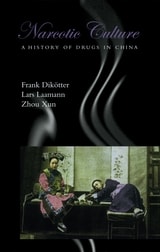
cover of Narcotic Culture: A History of Drugs in China

Narcotic Culture

A History of Drugs in China

Frank Dikötter, Lars Laamann, and Zhou Xun

University of Chicago Press, 2004

To this day, the perception persists that China was a civilization defeated by imperialist Britain's most desirable trade commodity, opium—a drug that turned the Chinese into cadaverous addicts in the iron grip of dependence. Britain, in an effort to reverse the damage caused by opium addiction, launched its own version of the "war on drugs," which lasted roughly sixty years, from 1880 to World War II and the beginning of Chinese communism. But, as Narcotic Culture brilliantly shows, the real scandal in Chinese history was not the expansion of the drug trade by Britain in the early nineteenth century, but rather the failure of the British to grasp the consequences of prohibition.

In a stunning historical reversal, Frank Dikötter, Lars Laamann, and Zhou Xun tell this different story of the relationship between opium and the Chinese. They reveal that opium actually had few harmful effects on either health or longevity; in fact, it was prepared and appreciated in highly complex rituals with inbuilt constraints preventing excessive use. Opium was even used as a medicinal panacea in China before the availability of aspirin and penicillin. But as a result of the British effort to eradicate opium, the Chinese turned from the relatively benign use of that drug to heroin, morphine, cocaine, and countless other psychoactive substances. Narcotic Culture provides abundant evidence that the transition from a tolerated opium culture to a system of prohibition produced a "cure" that was far worse than the disease.

Delving into a history of drugs and their abuses, Narcotic Culture is part revisionist history of imperial and twentieth-century Britain and part sobering portrait of the dangers of prohibition.
[more]
cover of National Past-Times: Narrative, Representation, and Power in Modern China

National Past-Times

Narrative, Representation, and Power in Modern China

Ann Anagnost

Duke University Press, 1997

In National Past-Times, Ann Anagnost explores the fashioning and refashioning of modern Chinese subjectivity as it relates to the literal and figurative body of the nation. In essays revealing the particular temporality of the modern Chinese nation-state, Anagnost examines the disparate eras of its recent past and its propensity for continually looking backward in order to face the future.
Using interviews and participant observation as well as close readings of official documents, propaganda materials, and popular media, Anagnost notes the discontinuities in the nation’s narrative—moments where this narrative has been radically reorganized at critical junctures in China’s modern history. Covering a broad range of issues relating to representation and power—issues that have presented themselves with particular clarity in the years since the violent crackdown on the student movement of 1989—National Past-Times critiques the ambiguous possibilities produced by the market, as well as new opportunities for "unfreedom" in the discipline of labor and the commodification of women. Anagnost begins with a retrospective reflection on the practice of "speaking bitterness" in socialist revolutionary practice. Subsequent essays discuss the culture debates of the 1980s, the discourse of social disorder, the issue of population control, the film The Story of Qiu Ju, and anomalies at the theme park "Splendid China."
[more]
cover of Natural Resources and the New Frontier: Constructing Modern China's Borderlands

Natural Resources and the New Frontier

Constructing Modern China's Borderlands

Judd C. Kinzley

University of Chicago Press, 2018

China’s westernmost province of Xinjiang has experienced escalating cycles of violence, interethnic strife, and state repression since the 1990s. In their search for the roots of these growing tensions, scholars have tended to focus on ethnic clashes and political disputes. In Natural Resources and the New Frontier, historian Judd C. Kinzley takes a different approach—one that works from the ground up to explore the infrastructural and material foundation of state power in the region.
 
As Kinzley argues, Xinjiang’s role in producing various natural resources for regional powers has been an important but largely overlooked factor in fueling unrest. He carefully traces the buildup to this unstable situation over the course of the twentieth century by focusing on the shifting priorities of Chinese, Soviet, and provincial officials regarding the production of various resources, including gold, furs, and oil among others. Through his archival work, Kinzley offers a new way of viewing Xinjiang that will shape the conversation about this important region and offer a model for understanding the development of other frontier zones in China as well as across the global south.
[more]
cover of Necklace and Calabash: A Chinese Detective Story

Necklace and Calabash

A Chinese Detective Story

Robert van Gulik

University of Chicago Press, 1967

A fiendishly clever puzzle mystery starring the beloved detective Judge Dee, whom the Los Angeles Times ranked with Sherlock Holmes

Necklace and Calabash finds Judge Dee returning to his district of Poo-yang, where the peaceful town of Riverton promises a few days' fishing and relaxation. Yet a chance meeting with a Taoist recluse, a gruesome body fished out of the river, strange guests at the Kingfisher Inn, and a princess in distress thrust the judge into one of the most intricate and baffling mysteries of his career.

 
[more]
cover of Negative Exposures: Knowing What Not to Know in Contemporary China

Negative Exposures

Knowing What Not to Know in Contemporary China

Margaret Hillenbrand

Duke University Press, 2020
When nations decide to disown their troubled pasts, how does this strategic disavowal harden into social fact? In Negative Exposures, Margaret Hillenbrand investigates the erasure of key aspects of such momentous events as the Nanjing Massacre, the Cultural Revolution, and the Tiananmen Square protests from the Chinese historical consciousness, not due to amnesia or censorship but through the operations of public secrecy. Knowing what not to know, she argues, has many stakeholders, willing and otherwise, who keep quiet to protect themselves or their families out of shame, pragmatism, or the palliative effects of silence. Hillenbrand shows how secrecy works as a powerful structuring force in Chinese society, one hiding in plain sight, and identifies aesthetic artifacts that serve as modes of reckoning against this phenomenon. She analyses the proliferation of photo-forms—remediations of well-known photographs of troubling historical events rendered in such media as paint, celluloid, fabric, digital imagery, and tattoos—as imaginative spaces in which the shadows of secrecy are provocatively outlined.
[more]
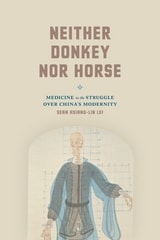
cover of Neither Donkey nor Horse: Medicine in the Struggle over China's Modernity

Neither Donkey nor Horse

Medicine in the Struggle over China's Modernity

Sean Hsiang-lin Lei

University of Chicago Press, 2014

Neither Donkey nor Horse tells the story of how Chinese medicine was transformed from the antithesis of modernity in the early twentieth century into a potent symbol of and vehicle for China’s exploration of its own modernity half a century later. Instead of viewing this transition as derivative of the political history of modern China, Sean Hsiang-lin Lei argues that China’s medical history had a life of its own, one that at times directly influenced the ideological struggle over the meaning of China’s modernity and the Chinese state.
           
Far from being a remnant of China’s premodern past, Chinese medicine in the twentieth century coevolved with Western medicine and the Nationalist state, undergoing a profound transformation—institutionally, epistemologically, and materially—that resulted in the creation of a modern Chinese medicine. This new medicine was derided as “neither donkey nor horse” because it necessarily betrayed both of the parental traditions and therefore was doomed to fail. Yet this hybrid medicine survived, through self-innovation and negotiation, thus challenging the conception of modernity that rejected the possibility of productive crossbreeding between the modern and the traditional.
           
By exploring the production of modern Chinese medicine and China’s modernity in tandem, Lei offers both a political history of medicine and a medical history of the Chinese state.
[more]
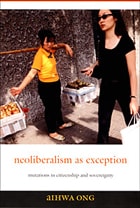
cover of Neoliberalism as Exception: Mutations in Citizenship and Sovereignty

Neoliberalism as Exception

Mutations in Citizenship and Sovereignty

Aihwa Ong

Duke University Press, 2006

Neoliberalism is commonly viewed as an economic doctrine that seeks to limit the scope of government. Some consider it a form of predatory capitalism with adverse effects on the Global South. In this groundbreaking work, Aihwa Ong offers an alternative view of neoliberalism as an extraordinarily malleable technology of governing that is taken up in different ways by different regimes, be they authoritarian, democratic, or communist. Ong shows how East and Southeast Asian states are making exceptions to their usual practices of governing in order to position themselves to compete in the global economy. As she demonstrates, a variety of neoliberal strategies of governing are re-engineering political spaces and populations. Ong’s ethnographic case studies illuminate experiments and developments such as China’s creation of special market zones within its socialist economy; pro-capitalist Islam and women’s rights in Malaysia; Singapore’s repositioning as a hub of scientific expertise; and flexible labor and knowledge regimes that span the Pacific.

Ong traces how these and other neoliberal exceptions to business as usual are reconfiguring relationships between governing and the governed, power and knowledge, and sovereignty and territoriality. She argues that an interactive mode of citizenship is emerging, one that organizes people—and distributes rights and benefits to them—according to their marketable skills rather than according to their membership within nation-states. Those whose knowledge and skills are not assigned significant market value—such as migrant women working as domestic maids in many Asian cities—are denied citizenship. Nevertheless, Ong suggests that as the seam between sovereignty and citizenship is pried apart, a new space is emerging for NGOs to advocate for the human rights of those excluded by neoliberal measures of human worthiness.
[more]
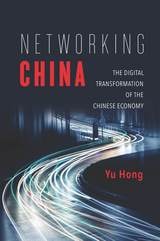
cover of Networking China: The Digital Transformation of the Chinese Economy

Networking China

The Digital Transformation of the Chinese Economy

Yu Hong

University of Illinois Press, 2017
In recent years, China 's leaders have taken decisive action to transform information, communications, and technology (ICT) into the nation's next pillar industry. In Networking China , Yu Hong offers an overdue examination of that burgeoning sector's political economy. Hong focuses on how the state, in conjunction with market forces and class interests, is constructing and realigning its digitalized sector. State planners intend to build a more competitive ICT sector by modernizing the network infrastructure, corporatizing media-and-entertainment institutions, and by using ICT as a crosscutting catalyst for innovation, industrial modernization, and export upgrades. The goal: to end China's industrial and technological dependence upon foreign corporations while transforming itself into a global ICT leader. The project, though bright with possibilities, unleashes implications rife with contradiction and surprise. Hong analyzes the central role of information, communications, and culture in Chinese-style capitalism. She also argues that the state and elites have failed to challenge entrenched interests or redistribute power and resources, as promised. Instead, they prioritize information, communications, and culture as technological fixes to make pragmatic tradeoffs between economic growth and social justice.
[more]
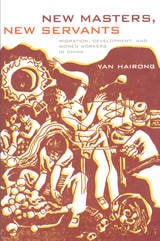
cover of New Masters, New Servants: Migration, Development, and Women Workers in China

New Masters, New Servants

Migration, Development, and Women Workers in China

Yan Hairong

Duke University Press, 2008

On March 9, 1996, tens of thousands of readers of a daily newspaper in China’s Anhui province saw a photograph of two young women at a local long-distance bus station. Dressed in fashionable new winter coats and carrying luggage printed with Latin letters, the women were returning home from their jobs in one of China’s large cities. As the photo caption indicated, the image represented the “transformation of migrant women”; the women’s “transformation” was signaled by their status as consumers. New Masters, New Servants is an ethnography of class dynamics and the subject formation of migrant domestic workers. Based on her interviews with young women who migrated from China’s Anhui province to the city of Beijing to engage in domestic service for middle-class families, as well as interviews with employers, job placement agencies, and government officials, Yan Hairong explores what these migrant workers mean to the families that hire them, to urban economies, to rural provinces such as Anhui, and to the Chinese state. Above all, Yan focuses on the domestic workers’ self-conceptions, desires, and struggles.

Yan analyzes how the migrant women workers are subjected to, make sense of, and reflect on a range of state and neoliberal discourses about development, modernity, consumption, self-worth, quality, and individual and collective longing and struggle. She offers keen insight into the workers’ desire and efforts to achieve suzhi (quality) through self-improvement, the way workers are treated by their employers, and representations of migrant domestic workers on television and the Internet and in newspapers and magazines. In so doing, Yan demonstrates that contestations over the meanings of migrant workers raise broad questions about the nature of wage labor, market economy, sociality, and postsocialism in contemporary China.
[more]
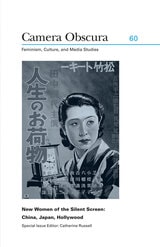
cover of New Women of the Silent Screen: China, Japan, Hollywood, Volume 20

New Women of the Silent Screen

China, Japan, Hollywood, Volume 20

Catherine Russell , ed.

Duke University Press, 0

Examining constructions of gender, nationalism, and modernity in films produced in China and Japan in the 1920s and early 1930s, this special issue of Camera Obscura is the first collection of feminist research on Asian cinema of the silent period. Actresses emerged for the first time in the Asian public sphere in the late 1910s, making the convention of the female impersonator obsolete and giving human faces to the many social transformations of urban modernity. During this period, filmmaking started to establish itself as a product of mass culture that circulated globally, creating conduits of cultural exchange in which the modern New Woman became a principal figure of currency. In the silent cinemas of China, Japan, and Hollywood, where Asian women appeared as key representations of nativist and orientalist ideology, early women stars became the focus for competing discourses of gender and modernity and played a key role in the construction of modern Asian identity.

The collection includes an essay on the actress Pearl White and how the emergence of the New Woman on Asian screens provoked extensive discussions in the media about the norms of gender and femininity. Hollywood orientalism and Asian nationalism converged in the images of Asian American stars Anna May Wong and Tsuru Aoki, who were criticized by both American and Asian constituencies for transgressing cultural norms. Other essays offer a feminist critique of films by the Japanese directors Yasujiro Ozu, Heinosuke Gosho, Kenji Mizoguchi, and Mikio Naruse, whose work often captured the position of women in a patriarchal system. Trapped between the progressive paradigms of the New Woman and traditional expectations of appropriate gender roles, and between competing notions of Asian modernity, Asian women stars of the silent cinema constitute a dynamic site for feminist film research.

Contributors. Weihong Bao, Chika Kinoshita, Sara Ross, Catherine Russell, Mitsuyo Wada-Marciano, Yiman Wang
[more]
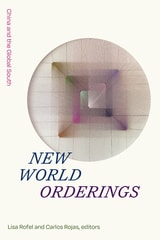
cover of New World Orderings: China and the Global South

New World Orderings

China and the Global South

Lisa Rofel and Carlos Rojas, editors

Duke University Press, 2022

The contributors to New World Orderings demonstrate that China’s twenty-first-century rise occurs not only through economics and state politics but equally through the mutual entanglements of overlapping social, economic, and cultural worlds in Southeast Asia, Africa, and Latin America. They show how the Chinese state has sought to reconfigure the nation’s position in the world and the centrality of trade, labor, religion, migration, gender, race, and literature to this reconfiguration. Among other topics, the contributors examine China’s post-Bandung cultural diplomacy with African nations, how West African “pastor-entrepreneurs” in China interpreted and preached the prosperity doctrine, the diversity of Chinese-Argentine social relations in the soy supply chain, and the ties between China and India within the complex history of inter-Asian exchange and Chinese migration to Southeast Asia. By examining China’s long historical relationship with the Global South, this volume presents a non-state-centric history of China that foregrounds the importance of transnational communicative and imaginative worldmaking processes and interactions.

Contributors. Andrea Bachner, Luciano Damián Bolinaga, Nellie Chu, Rachel Cypher, Mingwei Huang, T. Tu Huynh, Yu-lin Lee, Ng Kim Chew, Lisa Rofel, Carlos Rojas, Shuang Shen, Derek Sheridan, Nicolai Volland
[more]
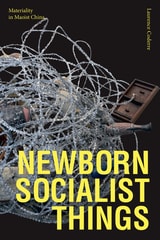
cover of Newborn Socialist Things: Materiality in Maoist China

Newborn Socialist Things

Materiality in Maoist China

Laurence Coderre

Duke University Press, 2021
Contemporary China is seen as a place of widespread commodification and consumerism, while the preceeding Maoist Cultural Revolution is typically understood as a time when goods were scarce and the state criticized what little consumption was possible. Indeed, with the exception of the likeness and words of Mao Zedong, both the media and material culture of the Cultural Revolution are often characterized as a void out of which the postsocialist world of commodity consumption miraculously sprang fully formed. In Newborn Socialist Things, Laurence Coderre explores the material culture of the Cultural Revolution to show how it paved the way for commodification in contemporary China. Examining objects ranging from retail counters and porcelain statuettes to textbooks and vanity mirrors, she shows how the project of building socialism in China has always been intimately bound up with consumption. By focusing on these objects—or “newborn socialist things”—along with the Cultural Revolution’s media environment, discourses of materiality, and political economy, Coderre reconfigures understandings of the origins of present-day China.
[more]
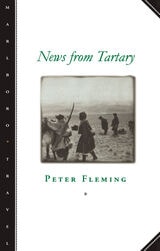
cover of News from Tartary: A Journey from Peking to Kashmir

News from Tartary

A Journey from Peking to Kashmir

Peter Fleming

Northwestern University Press, 1999
Originally published in 1936, News from Tartary is the story of a journey from Peking through the mysterious province of Sinkiang, to India. Fleming tells the story in his inimitable manner, dismissing the difficulties with irony and describing events and developments with humor and brilliant color, and his account is a classic of travel writing as well as a brilliant description of a vanished time and way of life.
[more]
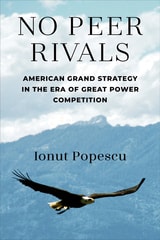
cover of No Peer Rivals: American Grand Strategy in the Era of Great Power Competition

No Peer Rivals

American Grand Strategy in the Era of Great Power Competition

Ionut Popescu

University of Michigan Press, 2025

With military maneuvers in Taiwan and the South China Sea and the eruption of war in Ukraine, the past few years have brought deteriorating diplomatic relations and increasing military and economic tensions between the United States, China, and Russia. After benefiting from the geopolitical and financial advantages conferred by a privileged status as a global superpower for three decades, the United States needs to adapt to a geopolitical shift toward competition and confrontation in order to contain China’s quest for global superpower status.
 
No Peer Rivals takes a major staple of International Relations scholarship—the offensive realist paradigm—and develops a comprehensive and practical grand strategy for the United States in this new era of Great Power Competition. The No Peer Rival framework is grounded in a realistic assessment of the most likely courses of action adopted by China, Russia, and other important regional powers. It prioritizes great power rivalry over other strategic goals, and identifies China as the biggest threat to America’s unique position in the international system. This grand strategic approach carefully aligns the domestic sources of national power (economic strength, energy security, and technological prowess) to America’s foreign policy and national security objectives. In addition to recommending necessary changes to America’s military and diplomatic strategies, No Peer Rivals also demonstrates that a realistic approach to industrial policy, international trade, energy production, and technological superiority offers the best chance for developing the sinews of power needed to outcompete Beijing in the long run.
[more]
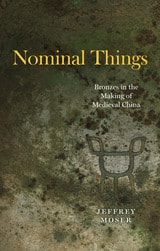
cover of Nominal Things: Bronzes in the Making of Medieval China

Nominal Things

Bronzes in the Making of Medieval China

Jeffrey Moser

University of Chicago Press, 2023

How the medieval study of ancient bronzes influenced the production of knowledge and the making of things in East Asia.
 
This book opens in eleventh-century China, where scholars were the first in world history to systematically illustrate and document ancient artifacts. As Jeffrey Moser argues, the visual, technical, and conceptual mechanisms they developed to record these objects laid the foundations for methods of visualizing knowledge that scholars throughout early modern East Asia would use to make sense of the world around them.
 
Of the artifacts these scholars studied, the most celebrated were bronze ritual vessels that had been cast nearly two thousand years earlier. While working to make sense of the relationship between the bronzes’ complex shapes and their inscribed glyphs, they came to realize that the objects were “nominal things”—objects inscribed with names that identified their own categories and uses. Eleventh-century scholars knew the meaning of these glyphs from hallowed Confucian writings that had been passed down through centuries, but they found shocking disconnects between the names and the bronzes on which they were inscribed. Nominal Things traces the process by which a distinctive system of empiricism was nurtured by discrepancies between the complex materiality of the bronzes and their inscriptions. By revealing the connections between the new empiricism and older ways of knowing, the book explains how scholars refashioned the words of the Confucian classics into material reality.

 
[more]
cover of Northern Frontiers of Qing China and Tokugawa Japan: A Comparative Study of Frontier Policy

Northern Frontiers of Qing China and Tokugawa Japan

A Comparative Study of Frontier Policy

Richard Louis Edmonds

University of Chicago Press, 1985
[more]
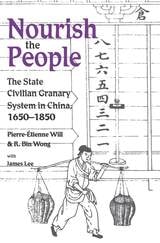
cover of Nourish the People: The State Civilian Granary System in China, 1650–1850

Nourish the People

The State Civilian Granary System in China, 1650–1850

Pierre-Etienne Will and R. Bin Wong; With James Lee; Contributions by Jean Oi and Peter Perdue

University of Michigan Press, 1991

The Qing state, driven by Confucian precepts of good government and urgent practical needs, committed vast resources to its granaries. Nourish the People traces the basic practices of this system, analyzes the organizational bases of its successes and failures, and examines variant practices in different regions. The volume concludes with an assessment of the granary system’s social and economic impact and historical comparison with the food supply policies of other states.
[more]