Results by title
138 books match the query 'Civil War' and 2 start with n
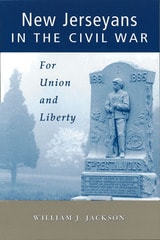
New Jerseyans in the Civil War
For Union and LibertyJackson, William J
Rutgers University Press, 2006
The Civil War divided New Jersey just as it did the nation. As a small state sandwiched between two large and powerful neighbors, New Jersey had always enthusiastically supported the creation of a strong central government. On the other hand, many New Jersey citizens did not share the anti-slavery sentiments of the North; they supported property rights of slave owners and believed in the natural inferiority of blacks. Subsequently, when southern states began to secede from the Union to form the Confederacy, New Jerseyans were left divided and confused.
William J. Jackson examines the ironies, paradoxes, and contradictions that characterized New Jersey's unique historical role in the war. This is the only book to incorporate social and political history with that of military history and strategy. Civil War aficionados and historians will also welcome Jackson's analysis of the participation of New Jersey African Americans on the home front and in the military.

Not Slave, Not Free
The African American Economic Experience Since the Civil WarJay R. Mandle
Duke University Press, 1992
Not Slave, Not Free focuses first on rural southern society before World War II and the role played by African Americans in that setting. The South was the least developed part of the United States, a fact that Mandle considers fundamental in accounting for the poverty of African Americans in the years before the War. At the same time, however, the concentration of the black labor force in plantation work significantly retarded the South’s economic growth. Tracing the postwar migration of blacks from the South, Mandle shifts attention to the problems and opportunities that confronted African Americans in cities. He shows how occupational segregation and income growth accelerated this migration.
Instrumental to an understanding of the history of the political economy of the United States, this book also directs readers and policymakers to the central issues confronting African Americans today.