Results by title
718 books match the query 'Civil rights' and 22 start with n
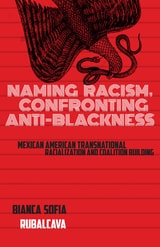
Naming Racism, Confronting Anti-Blackness
Mexican American Transnational Racialization and Coalition BuildingBianca Sofia Rubalcava
Rutgers University Press, 2026
What happens when we move beyond a Black-and-white understanding of racism? This provocative book challenges conventional narratives by exploring how Mexican Americans navigate the US racial hierarchy—not simply as victims of white supremacy but as complex participants in systems of racial oppression. Tracing the construction of race from colonial regimes to the present, author Bianca Sofia Rubalcava argues that non-Black people of color, particularly Mexican Americans, often negotiate their racial position by distancing themselves from Blackness. Through legal history, social movement archives, and survey data, this work reveals how anti-Blackness has persisted across borders and generations, from the pursuit of legal whiteness to enduring family biases around interracial relationships. Ultimately, the book offers a powerful critique of how anti-Black ideologies hinder cross-racial solidarity and perpetuate marginalization. A bold and necessary intervention, this study pushes the Latinx community—and all readers—to confront complicity and reimagine racial justice in more inclusive and transformative ways.
Native Land Talk
Indigenous and Arrivant Rights TheoriesYael Ben-zvi
Dartmouth College Press, 2018
Natural Right and History
Leo Strauss
University of Chicago Press, 1965
"Strauss . . . makes a significant contribution towards an understanding of the intellectual crisis in which we find ourselves . . . [and] brings to his task an admirable scholarship and a brilliant, incisive mind."—John H. Hallowell, American Political Science Review
Leo Strauss (1899-1973) was the Robert Maynard Hutchins Distinguished Service Professor Emeritus in Political Science at the University of Chicago.
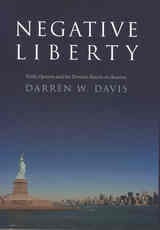
Negative Liberty
Public Opinion and the Terrorist Attacks on AmericaDarren W. Davis
Russell Sage Foundation, 2007
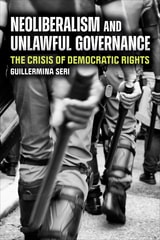
Neoliberalism and Unlawful Governance
The Crisis of Democratic RightsGuillermina Seri
University of Michigan Press, 2026
In looking at the ways in which people resist, the book honors the perspective of the excluded and the voices of those most immediately affected by neoliberal austerity—from activists defending land and rights to communities subjected to various forms of exploitation, extractivism, and displacement. Bringing in these voices and theoretical perspectives, including from beyond the English-speaking world, this book highlights alternative ways of thinking about democracy and rights, drawing from the tradition of the commons. Through its deep analysis of history, theory, and world events, Neoliberalism and Unlawful Governance offers fresh insights into how various forms of emergency measures, policing, and security are used to privilege markets over people and the planet, while also emphasizing the crucial role of popular movements in defending and expanding democratic rights and to rebuilding commons.
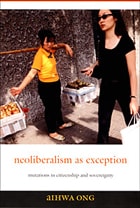
Neoliberalism as Exception
Mutations in Citizenship and SovereigntyAihwa Ong
Duke University Press, 2006
Ong traces how these and other neoliberal exceptions to business as usual are reconfiguring relationships between governing and the governed, power and knowledge, and sovereignty and territoriality. She argues that an interactive mode of citizenship is emerging, one that organizes people—and distributes rights and benefits to them—according to their marketable skills rather than according to their membership within nation-states. Those whose knowledge and skills are not assigned significant market value—such as migrant women working as domestic maids in many Asian cities—are denied citizenship. Nevertheless, Ong suggests that as the seam between sovereignty and citizenship is pried apart, a new space is emerging for NGOs to advocate for the human rights of those excluded by neoliberal measures of human worthiness.
New Deal / New South
An Anthony J. Badger ReaderAnthony J. Badger
University of Arkansas Press, 2007
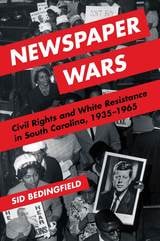
Newspaper Wars
Civil Rights and White Resistance in South Carolina, 1935-1965Sid Bedingfield
University of Illinois Press, 2017
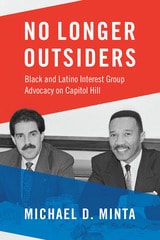
No Longer Outsiders
Black and Latino Interest Group Advocacy on Capitol HillMichael D. Minta
University of Chicago Press, 2021
In No Longer Outsiders, Minta provides a comprehensive account of the effectiveness of minority civil rights organizations and their legislative allies. He finds that the organizations’ legislative priorities are consistent with black and Latino preferences for stronger enforcement of civil rights policy and immigration reform. Although these groups focus mainly on civil rights for blacks and immigration issues for Latinos, their policy agendas extend into other significant areas. Minta concludes with an examination of how diversity in Congress helps groups gain greater influence and policy success despite many limits placed upon them.
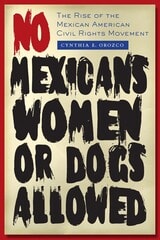
No Mexicans, Women, or Dogs Allowed
The Rise of the Mexican American Civil Rights MovementBy Cynthia E. Orozco
University of Texas Press, 2009
Founded by Mexican American men in 1929, the League of United Latin-American Citizens (LULAC) has usually been judged according to Chicano nationalist standards of the late 1960s and 1970s. Drawing on extensive archival research, including the personal papers of Alonso S. Perales and Adela Sloss-Vento, No Mexicans, Women, or Dogs Allowed presents the history of LULAC in a new light, restoring its early twentieth-century context.
Cynthia Orozco also provides evidence that perceptions of LULAC as a petite bourgeoisie, assimilationist, conservative, anti-Mexican, anti-working class organization belie the realities of the group's early activism. Supplemented by oral history, this sweeping study probes LULAC's predecessors, such as the Order Sons of America, blending historiography and cultural studies. Against a backdrop of the Mexican Revolution, World War I, gender discrimination, and racial segregation, No Mexicans, Women, or Dogs Allowed recasts LULAC at the forefront of civil rights movements in America.
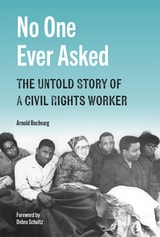
No One Ever Asked
The Untold Story of a Civil Rights WorkerArnold Rochvarg
University of Missouri Press, 2025
Rochvarg, the cousin of the woman around whom the narrative revolves, had for over fifty years been intrigued by the mystery surrounding the seven-year disappearance of his cousin Iris during the 1960s. Once he finally approached her about her rumored involvement in the civil rights movement, she generously shared her experiences with him and arranged for him to meet others with whom she had worked. His book corroborates and enhances the stories he was told through traditional research based on primary and secondary sources.
More than a review of significant events of the mid-1960s, No One Ever Asked is also the story of the challenges and sacrifices of young civil rights workers both Black and white, young persons who not only faced violence and personal harm, but in many cases became estranged from their families because of their involvement in the movement. Rochvarg approaches history from the “bottom-up,” focusing on persons whose stories have never been told but have something to add to an understanding of the history of the movement. Many of them, even sixty years later, have never shared their stories because, as in the case of the central character of this book, no one ever asked them.
No State Shall Abridge
The Fourteenth Amendment and the Bill of RightsMichael Kent Curtis
Duke University Press, 1990
“Curtis effectively settles a serious legal debate: whether the framers of the 14th Amendment intended to incorporate the Bill of Rights guarantees and thereby inhibit state action. Taking on a formidable array of constitutional scholars, . . . he rebuts their argument with vigor and effectiveness, conclusively demonstrating the legitimacy of the incorporation thesis. . . . A bold, forcefully argued, important study.”—Library Journal
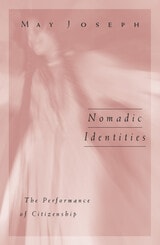
Nomadic Identities
The Performance Of CitizenshipMay Joseph
University of Minnesota Press, 1999
A look at citizenship through the lens of performance.
In a modern world of vast migrations and relocations, the rights—and rites—of citizenship are increasingly perplexing, and ever more important. This book asks how citizenship is enacted when all the world’s the stage.
Kung Fu cinema, soul music, plays, and speeches are some of the media May Joseph considers as expressive negotiations for legal and cultural citizenship. Nomadic Identities combines material culture and historical approaches to forge connections between East Africa, India, Britain, the Caribbean, and the United States in the struggles for democratic citizenship. Exploring the notion of nomadic citizenship as a modern construct, Joseph emphasizes culture as the volatile mise-en-scène through which popular conceptions of local and national citizenship emerge. Joseph, an Asian African from Tanzania, brings a personal insight to the question of how citizenship is expressed—particularly the nomadic, conditional citizenship related to histories of migrancy and the tenuous status of immigrants. Nomadic Identities investigates the metaphoric, literal, and performed possibilities available in different arenas of the everyday through which individuals and communities experience citizenship, successfully or not. A unique inquiry into contemporary experiences of migrancy linking Tanzania, Britain, and the United States, this book blends political theory, performance studies, cultural studies, and historical writing. It offers vignettes that describe the official and informal cultural transactions that designate citizenship under the globalizing forces of decolonization, the cold war, and transnational networks.Crossing the globe, Nomadic Identities provides fresh insights into the contemporary phenomena of territorial displacement and the resulting local and transnational movements of people.
Nonviolence
An Idea Whose Time Has ComeRamin Jahanbegloo
Haus Publishing, 2023
In this compact book, Ramin Jahanbegloo argues that the time has come for humanity to renew its political, economic, and cultural commitment to the idea of nonviolence. At the core of the work of such towering fighters against oppression as Mahatma Gandhi, Martin Luther King Jr., Nelson Mandela, the Dalai Lama, and Václav Havel, the idea of nonviolence still has much to teach us and much work to do in the ongoing fight for justice worldwide.
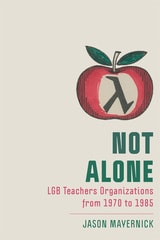
Not Alone
LGB Teachers Organizations from 1970 to 1985Jason Mayernick
Rutgers University Press, 2024
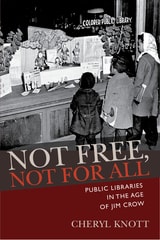
Not Free, Not for All
Public Libraries in the Age of Jim CrowCheryl Knott
University of Massachusetts Press, 2015
Winner of the 2016 Eliza Atkins Gleason Book Award and the 2016 Lillian Smith Book Award
Americans tend to imagine their public libraries as time-honored advocates of equitable access to information for all. Through much of the twentieth century, however, many black Americans were denied access to public libraries or allowed admittance only to separate and smaller buildings and collections. While scholars have examined and continue to uncover the history of school segregation, there has been much less research published on the segregation of public libraries in the Jim Crow South. In fact, much of the writing on public library history has failed to note these racial exclusions.
In Not Free, Not for All, Cheryl Knott traces the establishment, growth, and eventual demise of separate public libraries for African Americans in the South, disrupting the popular image of the American public library as historically welcoming readers from all walks of life. Using institutional records, contemporaneous newspaper and magazine articles, and other primary sources together with scholarly work in the fields of print culture and civil rights history, Knott reconstructs a complex story involving both animosity and cooperation among whites and blacks who valued what libraries had to offer. African American library advocates, staff, and users emerge as the creators of their own separate collections and services with both symbolic and material importance, even as they worked toward dismantling those very institutions during the era of desegregation.
Not in Our Lifetimes
The Future of Black PoliticsMichael C. Dawson
University of Chicago Press, 2011
For all the talk about a new postracial America, the fundamental realities of American racism—and the problems facing black political movements—have not changed. Michael C. Dawson lays out a nuanced analysis of the persistence of racial inequality and structural disadvantages, and the ways that whites and blacks continue to see the same problems—the disastrous response to Katrina being a prime example—through completely different, race-inflected lenses. In fact, argues Dawson, the new era heralded by Barack Obama’s election is more racially complicated, as the widening class gap among African Americans and the hot-button issue of immigration have the potential to create new fissures for conservative and race-based exploitation. Through a thoughtful analysis of the rise of the Tea Party and the largely successful “blackening” of President Obama, Dawson ultimately argues that black politics remains weak—and that achieving the dream of racial and economic equality will require the sort of coalition-building and reaching across racial divides that have always marked successful political movements.
Polemical but astute, passionate but pragmatic, Not in Our Lifetimes forces us to rethink easy assumptions about racial progress—and begin the hard work of creating real, lasting change.
Nothing Has to Make Sense
Upholding White Supremacy through Anti-Muslim RacismSherene H. Razack
University of Minnesota Press, 2022
How Western nations have consolidated their whiteness through the figure of the Muslim in the post-9/11 world
While much has been written about post-9/11 anti-Muslim racism (often termed Islamophobia), insufficient attention has been given to how anti-Muslim racism operates through law and is a vital part of law’s protection of whiteness. This book fills this gap while also providing a unique new global perspective on white supremacy. Sherene H. Razack, a leading critical race and feminist scholar, takes an innovative approach by situating law within media discourses and historical and contemporary realities. We may think of law as logical, but, argues Razack, its logic breaks down when the subject is Muslim.
Tracing how white subjects and majority-white nations in the post-9/11 era have consolidated their whiteness through the figure of the Muslim, Razack examines four sites of anti-Muslim racism: efforts by American evangelical Christians to ban Islam in the school curriculum; Canadian and European bans on Muslim women’s clothing; racial science and the sentencing of Muslims as terrorists; and American national memory of the torture of Muslims during wars and occupations. Arguing that nothing has to make sense when the subject is Muslim, she maintains that these legal and cultural sites reveal the dread, phobia, hysteria, and desire that mark the encounter between Muslims and the West.
Through the prism of racism, Nothing Has to Make Sense argues that the figure of the Muslim reveals a world divided between the deserving and the disposable, where people of European origin are the former and all others are confined in various ways to regimes of disposability. Emerging from critical race theory, and bridging with Islamophobia/critical religious studies, it demonstrates that anti-Muslim racism is a revelatory window into the operation of white supremacy as a global force.
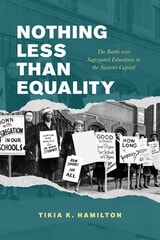
Nothing Less Than Equality
The Battle over Segregated Education in the Nation’s CapitalTikia K. Hamilton
University of Chicago Press, 2026
The landmark Brown v. Board of Education case, which barred racial segregation in American public schools, wasn’t the only path for Black parents, teachers, and activists who sought equality of educational opportunity. Some believed that the solution to inequality lay in pressing the federal government to live up to the Jim Crow doctrine of “separate but equal” by providing more resources to Black schools. And for a time, this seemed true in Washington, DC, where Black activists leveraged their status as residents of the nation’s capital to advocate on behalf of Black education. However, disappointments with the “separate but equal” strategy and a sea change in activism led to an embrace of integration.
In Nothing Less Than Equality, Tikia K. Hamilton reveals the rich and complex history of educational activism in Washington prior to Brown v. Board of Education, illuminating complex dynamics that provide a counterpoint and backdrop to the landmark Supreme Court case. Hamilton thoroughly examines the multipronged strategies employed by parents, teachers, attorneys, and activists to democratize education, demonstrating that there was no linear path to Brown.
Nothing Like Sunshine
A Story in the Aftermath of the MLK AssassinationBen Kamin
Michigan State University Press, 2010
Rabbi Ben Kamin has written a definitive personal expression about race, coming of age in the 1960s, a forbidden friendship, and his personal love for Dr. Martin Luther King Jr. This is a story that spans a four-decade search for a lost high school chum, a deep misunderstanding, and a coming to terms with an America painfully evolving from the blood of MLK to the promise of Barack Obama.
The book is a remembrance of Kamin's life at Cincinnati's notorious Woodward High School, a microcosm of the 1960s and of America itself, as well as detailing Kamin's search-for Clifton, for America, for the key to understanding what race relations really are in the United States. Simultaneously, it is the story of the emerging rabbi's search for the legacy of his spiritual mentor, Dr. Martin Luther King Jr., taking Kamin from Cincinnati to Cleveland to Memphis to New Orleans and other points, and constantly bringing him home to his friend Clifton and "the heaving hallways" of that high school.
Now Is the Time!
Detroit Black Politics and Grassroots ActivismTodd C. Shaw
Duke University Press, 2009
Shaw uses the tools of social movement analysis, including the quantitative analysis of budgets, electoral data, and housing statistics, as well as historical research and personal interviews, to better understand the dilemmas, innovations, and dynamics of grassroots activism. He begins with a history of discriminatory housing practices and racial divisions that deeply affected Detroit following the Second World War and set the stage for the election of the city’s first black mayor, Coleman Young. By emphasizing downtown redevelopment, Mayor Young’s administration often collided with low-income housing advocates. Only through grassroots activism were those advocates able to delay or derail governmental efforts to demolish low-income housing in order to make way for more upscale development. Shaw then looks at present-day public housing activism, assessing the mixed success of the nationally sponsored HOPE VI project aimed at fostering home ownership in low-income areas. Descriptive and prescriptive, Now Is the Time! traces the complicated legacy of community activism to illuminate what is required for grassroots activists to be effective in demanding public accountability to poor and marginalized citizens.
Nursing Civil Rights
Gender and Race in the Army Nurse CorpsCharissa J. Threat
University of Illinois Press, 2015
As Threat reveals, both groups viewed their circumstances with the Army Nurse Corps as a civil rights matter. Each conducted separate integration campaigns to end the discrimination they suffered. Yet their stories defy the narrative that civil rights struggles inevitably arced toward social justice. Threat tells how progressive elements in the campaigns did indeed break down barriers in both military and civilian nursing. At the same time, she follows conservative threads to portray how some of the women who succeeded as agents of change became defenders of exclusionary practices when men sought military nursing careers. The ironic result was a struggle that simultaneously confronted and reaffirmed the social hierarchies that nurtured discrimination.