Results by title
143 books match the query 'Class' and 3 start with n
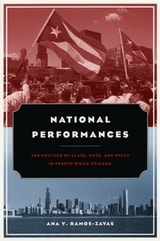
National Performances
The Politics of Class, Race, and Space in Puerto Rican ChicagoAna Y. Ramos-Zayas
University of Chicago Press, 2003
Drawing on extensive ethnographic research, Ramos-Zayas shows how the performance of Puerto Rican nationalism in Chicago serves as a critique of social inequality, colonialism, and imperialism, allowing barrio residents and others to challenge the notion that upward social mobility is equally available to all Americans—or all Puerto Ricans. Paradoxically, however, these activists' efforts also promote upward social mobility, overturning previous notions that resentment and marginalization are the main results of nationalist strategies.
Ramos-Zayas's groundbreaking work allows her here to offer one of the most original and complex analyses of contemporary nationalism and Latino identity in the United States.

New Jersey Dreaming
Capital, Culture, and the Class of '58Sherry B. Ortner
Duke University Press, 2005
Ortner tracked down nearly all 304 of her classmates. She interviewedabout 100 in person and spoke with most of the rest by phone, recording her classmates’ vivid memories of time, place, and identity. Ortner shows how social class affected people’s livesin many hidden and unexamined ways. She also demonstrates that the Class of ‘58’s extreme upward mobility must be understood in relation to the major identity movements of the twentieth century—the campaign against anti-Semitism, the Civil Rights movement, and feminism.
A multisited study combining field research with an interdisciplinary analytical framework, New Jersey Dreaming is a masterly integration of developments at the vanguard of contemporary anthropology. Engaging excerpts from Ortner's field notes are interspersed throughout the book. Whether recording the difficulties and pleasures of studying one's own peer group, the cultures of driving in different parts of the country, or the contrasting experiences of appointment-making in Los Angeles and New York, they provide a rare glimpse into the actual doing of ethnographic research.
Not-So-Nuclear Families
Class, Gender, and Networks of CareHansen, Karen V
Rutgers University Press, 2004
In recent years U.S. public policy has focused on strengthening the nuclear family as a primary strategy for improving the lives of America's youth. It is often assumed that this normative type of family is an independent, self-sufficient unit adequate for raising children. But half of all households in the United States with young children have two employed parents. How do working parents provide care and mobilize the help that they need?
In Not-So-Nuclear Families: Class, Gender, and Networks of Care, Karen V. Hansen investigates the lives of working parents and the informal networks they construct to help care for their children. She chronicles the conflicts, hardships, and triumphs of four families of various social classes. Each must navigate the ideology that mandates that parents, mothers in particular, rear their own children, in the face of an economic reality that requires that parents rely on the help of others. In vivid family stories, parents detail how they and their networks of friends, paid caregivers, and extended kin collectively close the "care gap" for their school-aged children.
Hansen not only debunks the myth that families in the United States are independent, isolated, and self-reliant units, she breaks new theoretical ground by asserting that informal networks of care can potentially provide unique and valuable bonds that nuclear families cannot.