Results by title
233 books match the query 'Cold War' and 6 start with n
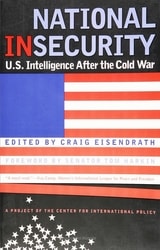
National Insecurity
U.S. Intelligence After the Cold Waredited by Craig Eisendrath, foreword by Tom Harkin
Temple University Press, 2000
In National Insecurity ten prominent experts describe, from an insider perspective, what went wrong with U.S. intelligence and what will be necessary to fix it. Drawing on their experience in government administration, research, and the foreign service, they propose a radical rethinking of the United States' intelligence needs in the post-Cold War world. In addition, they offer a coherent and unified plan for reform that can simultaneously protect U. S. security and uphold the values of our democratic system.
As we now know, even during the Cold War, when intelligence was seen as a matter of life and death, our system served us badly. It provided unreliable information, which led to a grossly inflated military budget, as it wreaked havoc around the world, supporting corrupt regimes, promoting the drug trade, and repeatedly violating foreign and domestic laws. Protected by a shroud of secrecy, it paid no price for its mistakes. Instead it grew larger and more insulated every year.
Taking into consideration our strategic interests abroad as well as the price of covert operations in dollars, in reliability, and in good will, every American taxpayer can be informed by and will want to read this book. National Insecurity is essential for readers interested in contemporary political issues, international relations, U.S. history, public policy issues, foreign policy, intelligence reform, and political science.
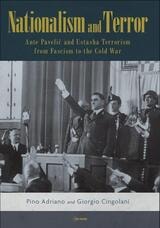
Nationalism and Terror
Ante Pavelic and Ustasha Terrorism from Fascism to the Cold WarGiorgio Cingolani
Central European University Press, 2018
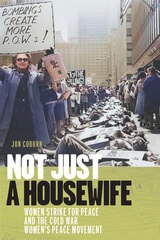
Not Just a Housewife
Women Strike for Peace and the Cold War Women's Peace MovementJon Coburn
University of Massachusetts Press, 2025
On November 1, 1961, thousands of middle-class white women took to the streets throughout the United States to demonstrate against atomic weapons. They were brought together by the group Women Strike for Peace (WSP), which grew from modest beginnings at a Georgetown cocktail party to become one of the most effective peace organizations in American history. Under the stewardship of children’s book illustrator Dagmar Wilson, and with indispensable support from figures such as Bella Abzug, a lawyer who would later help found the National Women’s Political Caucus and serve as US Representative for New York, WSP branches spread to cities and towns across the country, and the group influenced major arms-control treaties and successful antiwar efforts of the Cold War period. Single-handedly, WSP dismantled the McCarthyite House Un-American Activities Committee (HUAC), catalysed public support for the 1963 Nuclear Weapons Test Ban Treaty, and brokered unprecedented exchanges between American and Vietnamese women during the American War in Vietnam. WSP accomplished their political wins , in part, through a public image that stressed the inherent moral authority and sanctity of motherhood.
In Not Just a Housewife, Jon Coburn explores the fascinating story of WSP to argue that the group’s historic significance was much more complex than the maternal activism for which it is often remembered. He traces activists’ evolution through the Cold War’s cultural upheavals, uncovering the significance of forgotten episodes, such as the extraordinary self-immolation of 82-year-old Detroit activist Alice Herz and WSP’s unheralded contributions to the 1977 National Women’s Conference. In so doing, Coburn recovers WSP’s revolutionary politics and militant protests and contends that the organization fused this radical activism with the seeming respectability of motherhood. Through unprecedented access to organizational archives and oral histories, Not Just a Housewife details how WSP’s unique fusion of radicalism and respectability significantly shaped Cold War-era women’s peace movement history, as well as the broader American culture.
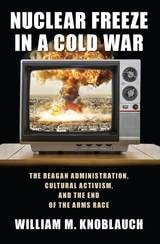
Nuclear Freeze in a Cold War
The Reagan Administration, Cultural Activism, and the End of the Arms RaceWilliam M. Knoblauch
University of Massachusetts Press, 2017
Alarmed, the Reagan administration worked to co-opt the rhetoric of the nuclear freeze and contain antinuclear activism. Recently declassified White House memoranda reveal a concerted campaign to defeat activists' efforts. In this book, William M. Knoblauch examines these new sources, as well as the influence of notable personalities like Carl Sagan and popular culture such as the film The Day After, to demonstrate how cultural activism ultimately influenced the administration's shift in rhetoric and, in time, its stance on the arms race.
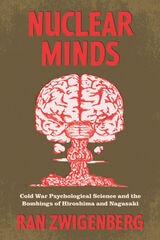
Nuclear Minds
Cold War Psychological Science and the Bombings of Hiroshima and NagasakiRan Zwigenberg
University of Chicago Press, 2023
In 1945, researchers on a mission to Hiroshima with the United States Strategic Bombing Survey canvassed survivors of the nuclear attack. This marked the beginning of global efforts—by psychiatrists, psychologists, and other social scientists—to tackle the complex ways in which human minds were affected by the advent of the nuclear age. A trans-Pacific research network emerged that produced massive amounts of data about the dropping of the bomb and subsequent nuclear tests in and around the Pacific rim.
Ran Zwigenberg traces these efforts and the ways they were interpreted differently across communities of researchers and victims. He explores how the bomb’s psychological impact on survivors was understood before we had the concept of post-traumatic stress disorder. In fact, psychological and psychiatric research on Hiroshima and Nagasaki rarely referred to trauma or similar categories. Instead, institutional and political constraints—most notably the psychological sciences’ entanglement with Cold War science—led researchers to concentrate on short-term damage and somatic reactions or even, in some cases, on denial of victims’ suffering. As a result, very few doctors tried to ameliorate suffering.
But, Zwigenberg argues, it was not only that doctors “failed” to issue the right diagnosis; the victims’ experiences also did not necessarily conform to our contemporary expectations. As he shows, the category of trauma should not be used uncritically in a non-Western context. Consequently, this book sets out, first, to understand the historical, cultural, and scientific constraints in which researchers and victims were acting and, second, to explore how suffering was understood in different cultural contexts before PTSD was a category of analysis.
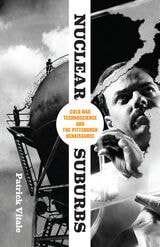
Nuclear Suburbs
Cold War Technoscience and the Pittsburgh RenaissancePatrick Vitale
University of Minnesota Press, 2021
From submarines to the suburbs—the remaking of Pittsburgh during the Cold War
During the early Cold War, research facilities became ubiquitous features of suburbs across the United States. Pittsburgh’s eastern and southern suburbs hosted a constellation of such facilities that became the world’s leading center for the development of nuclear reactors for naval vessels and power plants. The segregated communities that surrounded these laboratories housed one of the largest concentrations of nuclear engineers and scientists on earth. In Nuclear Suburbs, Patrick Vitale uncovers how the suburbs shaped the everyday lives of these technology workers.
Using oral histories, Vitale follows nuclear engineers and scientists throughout and beyond the Pittsburgh region to understand how the politics of technoscience and the Cold War were embedded in daily life. At the same time that research facilities moved to Pittsburgh’s suburbs, a coalition of business and political elites began an aggressive effort, called the Pittsburgh Renaissance, to renew the region. For Pittsburgh’s elite, laboratories and researchers became important symbols of the new Pittsburgh and its postindustrial economy. Nuclear Suburbs exposes how this coalition enrolled technology workers as allies in their remaking of the city.
Offering lessons for the present day, Nuclear Suburbs shows how race, class, gender, and the production of urban and suburban space are fundamental to technoscientific networks, and explains how the “renewal” of industrial regions into centers of the tech economy is rooted in violence and injustice.