Results by title
198 books match the query 'Community' and 6 start with n
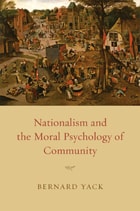
Nationalism and the Moral Psychology of Community
Bernard Yack
University of Chicago Press, 2012
Nationalism is one of modern history’s great surprises. How is it that the nation, a relatively old form of community, has risen to such prominence in an era so strongly identified with the individual? Bernard Yack argues that it is the inadequacy of our understanding of community—and especially the moral psychology that animates it—that has made this question so difficult to answer.
Yack develops a broader and more flexible theory of community and shows how to use it in the study of nations and nationalism. What makes nationalism such a powerful and morally problematic force in our lives is the interplay of old feelings of communal loyalty and relatively new beliefs about popular sovereignty. By uncovering this fraught relationship, Yack moves our understanding of nationalism beyond the oft-rehearsed debate between primordialists and modernists, those who exaggerate our loss of individuality and those who underestimate the depth of communal attachments.
A brilliant and compelling book, Nationalism and the Moral Psychology of Community sets out a revisionist conception of nationalism that cannot be ignored.

Native Hubs
Culture, Community, and Belonging in Silicon Valley and BeyondRenya K. Ramirez
Duke University Press, 2007
Ramirez’s ethnography revolves around the Paiute American activist Laverne Roberts’s notion of the “hub,” a space that allows for the creation of a sense of belonging away from a geographic center. Ramirez describes “hub-making” activities in Silicon Valley, including sweat lodge ceremonies, powwows, and American Indian Alliance meetings, gatherings at which urban Indians reinforce bonds of social belonging and forge intertribal alliances. She examines the struggle of the Muwekma Ohlone, a tribe aboriginal to the San Francisco Bay area, to maintain a sense of community without a land base and to be recognized as a tribe by the federal government. She considers the crucial role of Native women within urban indigenous communities; a 2004 meeting in which Native Americans from Mexico and the United States discussed cross-border indigenous rights activism; and the ways that young Native Americans in Silicon Valley experience race and ethnicity, especially in relation to the area’s large Chicano community. A unique and important exploration of diaspora, transnationalism, identity, belonging, and community, Native Hubs is intended for scholars and activists alike.
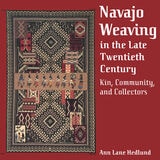
Navajo Weaving in the Late Twentieth Century
Kin, Community, and CollectorsAnn Lane Hedlund
University of Arizona Press, 2004
In testimony to this living art form, this book presents 74 dazzling color plates of Navajo rugs and wall hangings woven between 1971 and 1996. Drawn from a private southwestern collection, they represent the work of sixty of the finest native weavers in the American Southwest. The creations depicted here reflect a number of styles—revival, sandpainting, pictorial, miniature, sampler—and a number of major regional variations, from Ganado to Teec Nos Pos.
Textile authority Ann Hedlund provides an introductory narrative about the development of Navajo textile collecting—including the shift of attention from artifacts to art—and a brief review of the history of Navajo weaving. She then comments on the shaping of the particular collection represented in the book, offering a rich source of knowledge and insight for other collectors.
Explaining themes in Navajo weaving over the quarter-century represented by the Santa Fe Collection, Hedlund focuses on the development of modern rug designs and the influence on weavers of family, community, artistic identity, and the marketplace. She also introduces each section of plates with a description of the representative style, its significance, and the weavers who perpetuate and deviate from it. In addition to the textile plates, Hedlund’s color photographs show the families, landscapes, livestock, hogans, and looms that surround today’s Navajo weavers.
Navajo Weaving in the Late Twentieth Century explores many of the important connections that exist today among weavers through their families and neighbors, and the significant role that collectors play in perpetuating this dynamic art form. For all who appreciate American Indian art and culture, this book provides invaluable guidance to the fine points of collecting and a rich visual feast.
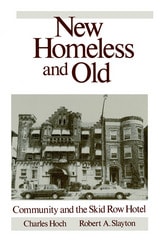
New Homeless And Old
Community and the Skid Row HotelCharles Hoch
Temple University Press, 1990
New Visions of Community in Contemporary American Fiction
Tan, Kingsolver, Castillo, MorrisonMagali Cornier Michael
University of Iowa Press, 2006
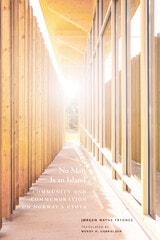
No Man Is An Island
Community and Commemoration on Norway's UtøyaJørgen Watne Frydnes, translated by Wendy H. Gabrielsen
University of Massachusetts Press, 2025
On July 22, 2011, a white supremacist killed eight people at Oslo’s Government Center in Norway and then terrorized the idyllic island of Utøya, where he executed sixty-nine more people, mostly teenagers. The country had never suffered such a massacre, and in the aftermath, the entire population was reeling.
Utøya, the Norwegian Labor Party’s summer camp for youth, a beloved place where many Norwegians learned about democratic values and processes, made lifelong friendships, and developed a vision for a just society, became mired in grief and discord. When Jørgen Watne Frydnes took on the daunting task of rebuilding the island and charting its future, he had to figure out a compassionate and just way forward. He made a radical decision: he set out to talk with each family of a murdered person, seeking to understand their needs and their hopes so that the future of the island could include their wishes and concerns. This emotionally grueling work, which was never considered in the scholarly literature on commemoration, led to a true renewal of Utøya, resulting in a meaningful memorial to those who were lost as well as beautiful surroundings for campers who come there to study democracy and peace.
Frydnes’s narrative, originally published in Norwegian, is structured around the seasons of the year and the landscape of the island, and tracks one person’s account of learning how to remember, commemorate, and honor the dead, and acknowledge a mass tragedy, and yet also create a nurturing, aspirational space for hope.