Results by title
851 books match the query 'Congresses' and 18 start with n
Nabokov Upside Down
Edited by Brian Boyd and Marijeta Bozovic
Northwestern University Press, 2017
Nabokov Upside Down brings together essays that explicitly diverge from conventional topics and points of reference when interpreting a writer whose influence on contemporary literature is unrivaled. Scholars from around the world here read Nabokov in terms of bodies rather than minds, belly-laughs rather than erudite wit, servants rather than master-artists, or Asian rather than Western perspectives. The first part of the volume is dedicated to surveys of Nabokov’s oeuvre that transform some long-held assumptions concerning the nature of and significance of his work.
Often thought of as among the most cerebral of artists, Nabokov comes across in these essays as profoundly aware of the physical world, as evidenced by his masterly representation of physical movement, his bawdy humor, and his attention to gustatory pleasure, among other aspects of his writing. The volume’s second half focuses on individual works or phases in Nabokov’s career, noting connections among them as well as to other fields of inquiry beyond literature. Engaged in conversation with each other and, in his editorial comments, with Brian Boyd, the essays in this volume show Nabokov scholarship continuing to renew itself.

Namibia Under South African Rule
Mobility and Containment, 1915–46Patricia Hayes
Ohio University Press, 1998
The peoples of Namibia have been on the move throughout history. The South Africans in 1915 took over from the Germans in trying to fit Namibia into a colonial landscape. This book is about the clashes and stresses which resulted from the first three decades of South African colonial rule.
Namibia under South African Rule is a major contribution to Namibian historiography, exploring, in particular, many new themes in twentieth-century Namibian history. Here is exciting new work from a host of scholars and writers on a heretofore under-researched subject.

Naming Evil, Judging Evil
Edited by Ruth W. Grant
University of Chicago Press, 2006
Is it more dangerous to call something evil or not to? This fundamental question deeply divides those who fear that the term oversimplifies grave problems and those who worry that, to effectively address such issues as terrorism and genocide, we must first acknowledge them as evil. Recognizing that the way we approach this dilemma can significantly affect both the harm we suffer and the suffering we inflict, a distinguished group of contributors engages in the debate with this series of timely and original essays.
Drawing on Western conceptions of evil from the Middle Ages to the present, these pieces demonstrate that, while it may not be possible to definitively settle moral questions, we are still able—and in fact are obligated—to make moral arguments and judgments. Using a wide variety of approaches, the authors raise tough questions: Why is so much evil perpetrated in the name of good? Could evil ever be eradicated? How can liberal democratic politics help us strike a balance between the need to pass judgment and the need to remain tolerant? Their insightful answers exemplify how the sometimes rarefied worlds of political theory, philosophy, theology, and history can illuminate pressing contemporary concerns.
National Saving and Economic Performance
Edited by B. Douglas Bernheim and John B. Shoven
University of Chicago Press, 1991
In National Saving and Economic Performance, edited by B. Douglas Bernheim and John B. Shoven, that task is addressed by offering the results of new research, with recommendations for policies aimed to improve saving. Leading experts in diverse fields of economics debate the need for more accurate measurement of official saving data; examine how corporate decisions to retain or distribute earnings affect household-level consumption and saving; and investigate the effects of taxation on saving behavior, correlations between national saving and international investment over time, and the influence of economic growth on saving.
Presenting the most comprehensive and up-to-date research on saving, this volume will benefit both academic and government economists.
Nationally Competitive Scholarships
Serving Students and the Public GoodSuzanne McCray
University of Arkansas Press, 2007
Nations, Identities, Cultures
V. Y. Mudimbe, ed.
Duke University Press, 1997
Examining the degree to which twentieth-century representations of colonization, revolution, and modernity are nineteenth-century constructs, Nations, Identities, Cultures locates contemporary political thought in an ethos of exile, nostalgic for bygone places and cultures of the nineteenth century. The contributors interrogate the significance of changes in the way the political is conceptualized and the impact of shifting representations of political society on our understanding of nation, identity, and culture. Approaches to these issues range from broad perspectives on global culture, civil society, liberalism, and dialectical identity to specific case studies on the politics of Quebec, the Russian muzhik, Israel’s borders, the ancient Greek origins of European culture, Kongo nationalism, the women of Lebanon, and the Danish/Swedish border.
Contributors. Martin Bernal, Dominique Colas, Miriam Cooke, Daphna Golan, Thomas Lahusen, Jocelyn Létourneau, Anders Linde-Laursen, Wyatt MacGaffey, John McCumber, V. Y. Mudimbe, Kenneth Surin, Immanuel Wallerstein

Natural Resource Development and Human Rights in Latin America
State and non-state actors in the promotion of and opposition to extractivismEdited by Malayna Raftopoulos and Radoslaw Poweska
University of London Press, 2017
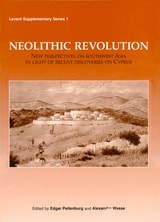
Neolithic Revolution
New Perspectives on Southwest Asia in Light of Recent Discoveries on Cyprus (Levant Supplementary): No. 1E. Peltenburg
Council for British Research in the Levant, 2004
New Developments in Productivity Analysis
Edited by Charles R. Hulten, Edwin R. Dean, and Michael J. Harper
University of Chicago Press, 2001
Charles R. Hulten is professor of economics at the University of Maryland. He has been a senior research associate at the Urban Institute and is chair of the Conference on Research in Income and Wealth of the National Bureau of Economic Research. Michael Harper is chief of the Division of Productivity Research at the Bureau of Labor Statistics. Edwin R. Dean, formerly associate commissioner for Productivity and Technology at the Bureau of Labor Statistics, is adjunct professor of economics at The George Washington University.
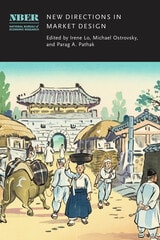
New Directions in Market Design
Edited by Irene Lo, Michael Ostrovsky, Parag A. Pathak
University of Chicago Press, 2026
A comprehensive survey of the evolution of market design over the past three decades.
In the mid-1990s, the first Federal Communications Commission spectrum auction and the redesign of the National Residency Matching Program collectively helped to jumpstart the field of market design. Since then, extensive research has improved auction design and broken new conceptual ground in addressing multi-agent matching problems. This volume summarizes key discoveries and advances in market design over the past three decades and explores contemporary challenges—from climate policy and electricity markets to AI-mediated exchanges and hospital resource allocation.
Contributors examine how to design efficient, incentive-compatible mechanisms that are robust to shifting conditions and increasing complexity. They consider a wide variety of applications that could benefit from the market design viewpoint, such as environmental markets, school choice, and organ exchange. Together, the chapters illustrate the important interactions between economic theory, computational tools, and institutional insight.

New Issues in Librarianship
Presented Papers at the ALA 2009 Annual ConferenceAmerican Library Association, 2009
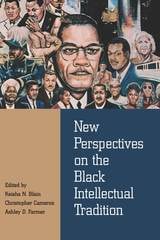
New Perspectives on the Black Intellectual Tradition
Edited by Keisha N. Blain, Christopher Cameron, and Ashley D. Farmer
Northwestern University Press, 2018
The book examines four central themes within the black intellectual tradition: black internationalism, religion and spirituality, racial politics and struggles for social justice, and black radicalism. The essays identify the emergence of black thought within multiple communities internationally, analyze how black thinkers shaped and were shaped by the historical moment in which they lived, interrogate the ways in which activists and intellectuals connected their theoretical frameworks across time and space, and assess how these strains of thought bolstered black consciousness and resistance worldwide.
Defying traditional temporal and geographical boundaries, New Perspectives on the Black Intellectual Tradition illuminates the origins of and conduits for black ideas, redefines the relationship between black thought and social action, and challenges long-held assumptions about black perspectives on religion, race, and radicalism. The intellectuals profiled in the volume reshape and redefine the contours and boundaries of black thought, further illuminating the depth and diversity of the black intellectual tradition.
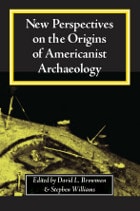
New Perspectives on the Origins of Americanist Archaeology
Edited by David L. Browman and Stephen Williams
University of Alabama Press, 2002
In this landmark book, experienced scholars take a retrospective look at the developing routes that have brought American archaeologists into the 21st century.
In 1996, the Society for American Archaeology's Committee on the History of Archaeology established a biennial symposium
named after Gordon R. Willey, one of the fathers of American archaeology, to focus on the history of the discipline. This volume grew out of the
second symposium, presented at the 1998 meeting of the Society for American Archaeology.
Interest in the intellectual history of the field is certainly nothing new—the first such volume appeared in 1856—but previously, focus has been on individuals and their theories and methods, or on various government agencies that supported, developed, or mandated
excavations in North America. This volume, however, focuses on the roots of Americanist archaeology, including its pre-1915 European connections, and on some of the earliest work by women archaeologists, which has been largely overlooked.
Full of valuable insights for archaeologists and anthropologists—both professional and amateur—into the history and
development of Americanist archaeology, New Perspectives will also inspire and serve as a model for future research.
David Browman is Professor of Anthropology and Chair of the Interdisciplinary Program in Archaeology at Washington University. Stephen Williams is Professor Emeritus of Anthropology at Harvard University.
New Technologies and Renaissance Studies
Edited by William R. Bowen and Raymond G. Siemens
Iter Press, 2008
The first volume of the series, New Technologies and Renaissance Studies, presents a collection of contributions to one ongoing forum for the dialogue which lies at the heart of the book series, the annual "conference within a conference" of the same name which takes place during the Renaissance Society of America gathering, dedicated specifically to the intersection of computational methods and Renaissance studies. Papers in this volume exemplify those fruitful and productive exchanges, from their inception at the 2001 meeting in Chicago to the 2005 meeting in Cambridge.
New Technologies and Renaissance Studies II
Edited by Tassie Gniady, Kris McAbee, Jessica Murphy
Iter Press, 2014
In the fourth volume of the New Technologies in Medieval and Renaissance Studies series, volume editors Tassie Gniady, Kris McAbee, and Jessica Murphy bring together some of the best work from the New Technologies in Medieval and Renaissance Studies panels at the Renaissance Society of America (RSA) annual meetings for the years 2004–2010. These essays demonstrate a dedication to grounding the use of “newest” practices in the theories of the early modern period. At the same time, the essays are interested in the moment—the needs of scholars then, the theories of media that informed current understanding, and the tools used to conduct studies.
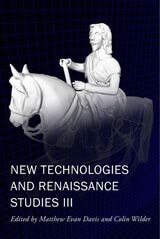
New Technologies and Renaissance Studies III
Edited by Matthew Evan Davis and Colin Wilder
Iter Press, 2022

New Technologies and Renaissance Studies IV
The Changing Shape of Digital Early Modern StudiesEdited by Randa El Khatib and Caroline Winter
Iter Press, 2025
A collection of essays engaging with digital scholarship and new technologies.
Contributors to this volume engage with digital scholarship in several ways: by creating digital projects, often in multidisciplinary, collaborative environments; by applying digital methodologies and tools to explore research questions; and by speculating about the potential directions that digital scholarship can take to tackle existing research areas that could benefit from new perspectives. Together, the chapters demonstrate how various digital approaches—from network analysis to web mapping, VR and AR technologies, digital editions, databases, and archives—are all contributing in creative and effective ways to expand our knowledge of the past, to help ask and answer questions at a scale that was unimaginable before the digital turn, and to reshape early modern studies in the twenty-first century.
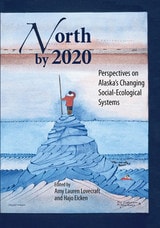
North by 2020
Perspectives on Alaska’s Changing Social-Ecological SystemsEdited by Amy Lauren Lovecraft and Hajo Eicken
University of Alaska Press, 2011
Originating from a series of workshops held at the Alaska Forum of the Fourth International Polar Year, this interdisciplinary volume addresses a host of current concerns regarding the ecology and rapid transformation of the arctic. Concentrating on the most important linked social-ecological systems, including fresh water, marine resources, and oil and gas development, this volume explores opportunities for sustainable development from a variety of perspectives, among them social sciences, natural and applied sciences, and the arts. Individual chapters highlight expressions of climate change in dance, music, and film, as well as from an indigenous knowledge–based perspective.