Results by title
81 books match the query 'Creation' and 3 start with n

Nancy Hanks, An Intimate Portrait
The Creation of a National Commitment to the ArtsMichael Straight
Duke University Press, 1988
This biography captures the spirit and the flavor of Ms. Hanks's remarkable life, above all during the eight years in which she led the Endowment. Tracing her childhood in Florida and North Carolina through her achievements as a student leader at Duke University, Straight makes clear her conscious effort to find a path with more scope than the usual marriage-and-a-family when expected of Southern women. Nancy Hanks went to Washington and found a job with the Office of War Mobilization. She later worked with Nelson Rockefeller, who became governor of New York, a Republican party luminary, and vice president under Gerald Ford, in addition to being an heir to one of America's greatest fortunes. Her relationship with Rockefeller was crucial to her personal life, and his conception of government and its role and a lasting influence on her career.
Straight examines Nancy Hanks's leadership of the NEA and takes particular note of the intense debate over the role of government in fostering American artistic expression, an issue with roots running back through the New Deal to the early history of the United States. Nancy Hanks took a strong and activist role in the formulation and administration of a national arts policy, and her accomplishments have left an indelible mark on public support for arts in the United States. Straight, who worked closely with Ms. Hanks and admired her despite frequent policy disagreements, deals honestly with both the successes and failures of her efforts. His biography imparts a sense of the reasons why her many friends felt such loyalty to this complex and gifted woman.
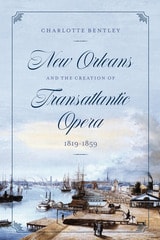
New Orleans and the Creation of Transatlantic Opera, 1819–1859
Charlotte Bentley
University of Chicago Press, 2022
New Orleans and the Creation of Transatlantic Opera, 1819–1859 explores the thriving operatic life of New Orleans in the first half of the nineteenth century, drawing out the transatlantic connections that animated it. By focusing on a variety of individuals, their extended webs of human contacts, and the materials that they moved along with them, this book pieces together what it took to bring opera to New Orleans and the ways in which the city’s operatic life shaped contemporary perceptions of global interconnection. The early chapters explore the process of bringing opera to the stage, taking a detailed look at the management of New Orleans’s Francophone theater, the Théâtre d’Orléans, as well as the performers who came to the city and the reception they received. But opera’s significance was not confined to the theater, and later chapters of the book examine how opera permeated everyday life in New Orleans, through popular sheet music, novels, magazines and visual culture, and dancing in its many ballrooms. Just as New Orleans helped to create transatlantic opera, opera in turn helped to create the city of New Orleans.
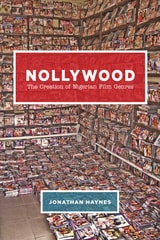
Nollywood
The Creation of Nigerian Film GenresJonathan Haynes
University of Chicago Press, 2016
Haynes describes the major Nigerian film genres and how they relate to Nigerian society—its values, desires, anxieties, and social tensions—as the country and its movies have developed together over the turbulent past two decades. As he shows, Nollywood is a form of popular culture; it produces a flood of stories, repeating the ones that mean the most to its broad audience. He interprets these generic stories and the cast of mythic figures within them: the long-suffering wives, the business tricksters, the Bible-wielding pastors, the kings in their traditional regalia, the glamorous young professionals, the emigrants stranded in New York or London, and all the rest. Based on more than twenty years of research, Haynes’s survey of Nollywood’s history and genres is unprecedented in scope, while his book also vividly describes landmark films, leading directors, and the complex character of this major branch of world cinema.