Results by title
476 books match the query 'Criticism' and 14 start with n

NOVEL PROFESSIONS
INTERESTED DISINTEREST AND THE MAKING OF THE VICTORIAN NOVELJennifer Ruth
The Ohio State University Press, 2006
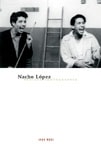
Nacho Lopez, Mexican Photographer
John Mraz
University of Minnesota Press, 2003
Reveals the career of an influential but under-appreciated photojournalist
Photographer Nacho López was Mexico’s Eugene Smith, fusing social commitment with searing imagery to dramatize the plight of the helpless, the poor, and the marginalized in the pages of glossy illustrated magazines. Even today, López’s photographs forcefully belie the picturesque exoticism that is invariably presented as the essence of Mexico.
In Nacho López, Mexican Photographer, John Mraz offers the first full-length study in English of this influential photojournalist and provides a close visual analysis of more than fifty of López’s most important photographs. Mraz first sets López’s work in the historical and cultural context of the authoritarian presidentialism that characterized Mexican politics in the 1950s, the cult of wealth and celebrity promoted by Mexico’s professional photographers, and the government’s attempts to modernize and industrialize Mexico at almost any cost. Mraz skillfully explores the implications of López's imagery in this setting: the extent to which his photographs might constitute further victimization of his downtrodden subjects, the relationship between them and the middle-class readers of the magazines for which López worked, and the success with which his photographs challenged Mexico's economic and political structures. Mraz contrasts the photos López took with those that were selected by his editors for publication. He also compares López’s images with his theories about documentary photography, and considers López’s photographs alongside the work of Robert Capa, Dorothea Lange, Henri Cartier-Bresson, and Sebastião Salgado. López’s imagery is further analyzed in relation to the Mexican Golden Age cinema inspired by Sergei Eisenstein, the pioneering digital imagery of Pedro Meyer, and the work of Manuel Álvarez Bravo, who Mraz provocatively argues was the first Mexican photographer to take an anti-picturesque stance. The definitive English-language assessment of Nacho López’s career, this volume also explores such broader topics as the nature of the photographic essay and the role of the media in effecting social change.
National Camera
Photography and Mexico’s Image EnvironmentRoberto Tejada
University of Minnesota Press, 2009
The “problem” of photography in Mexico, Tejada shows, reveals cross-cultural episodes that are rife with contradictions, especially in the complex terms of cultural and sexual difference. Analyzing such topics as territory, sexuality, and social and ethnic relations in image making, Tejada delves into the work of key figures including Manuel Alvarez Bravo, Edward Weston, Tina Modotti, Marius de Zayas, and Julien Levy, as well as the Agustín Víctor Casasola Archive, the Boystown photographs, and contemporary Mexican and Latina photo-based artists.
From the Mexican Revolution of 1910–1920 to the U.S.–Mexico borderlands of today, Tejada traces the connective thread that photography has provided between Mexican and U.S. American intellectual and cultural production and, in doing so, defines both nations.

Negative Poetics
Edward Jayne
University of Iowa Press, 1992
Negotiating Difference
Race, Gender, and the Politics of PositionalityMichael Awkward
University of Chicago Press, 1995
From Spike Lee's She's Gotta Have It to Michael Jackson's physical transmutations, from Toni Morrison's Song of Solomon to August Wilson's Fences, from male scholars' investments in feminism to white scholars' in black texts—Awkward explores cultural moments that challenge the exclusive critical authority of race and gender. In each instance he confronts the question: What do artists, scholars, and others concerned with representations of Afro-American life make of the view that gender, race, and sexuality circumscribe their own and others' lives and narratives? Throughout he demonstrates the perils and merits of the sort of "boundary crossing" this book ultimately makes: a black male feminism.
In pursuing a black male feminist criticism, Awkward's study acknowledges the complexities of interpretation in an age when a variety of powerful discourses have proliferated on the subject of racial, gendered, and sexual difference; at the same time, it identifies this proliferation as an opportunity to negotiate seemingly fixed cultural and critical positions.
New Building in Old Cities
Writings by Gustavo Giovannoni on Architectural and Urban ConservationGustavo Giovannoni
J. Paul Getty Trust, The, 2024
The Italian architect, historian, and restorer Gustavo Giovannoni (1873–1947) was a key figure in the fields of architecture, urbanism, and conservation during the first half of the twentieth century. A traditionalist largely neglected by the proponents of modernist architecture following World War II, he remains little known internationally. His writings, however, until now unavailable in English, represent a significant step toward the full appreciation of the historic city and are directly relevant today to the protection of urban historic resources worldwide.
This abundantly illustrated critical anthology is a representative sample of Giovannoni’s seminal texts related to the appreciation, understanding, and planning of historic cities. The thirty readings, which appear with their original illustrations, are grouped into six parts organized around key concepts in Giovannoni’s conservation theory—urban building, respect for the setting or context, a thinning out of the urban fabric, conservation and restoration treatments, the grafting of the new upon the old, and reconstruction. Each part is preceded by an introduction, and each reading is prefaced by succinct remarks explaining the rationale for its selection and the principal matters covered. Six plate sections further illustrate the readings’ main concepts and themes.
Nietzsche and Dostoevsky
Philosophy, Morality, TragedyEdited by Jeff Love and Jeffrey Metzger
Northwestern University Press, 2016
Nietzsche on Language, Consciousness, and the Body
Christian J. Emden
University of Illinois Press, 2005
Emden situates Nietzsche’s writings on language and rhetoric within their wider historical context. He demonstrates that Nietzsche is not as radical in his thinking as has been often supposed, and that a number of problems with Nietzsche disappear when Nietzsche’s works are compared to works on the same subjects by writers of the 18th and 19th centuries. Further, the relevance of rhetoric and the history of rhetoric to philosophy and the history of philosophy is reasserted, in consonance with Nietzsche’s own statements and practices. Important in this regard are the role of fictions, descriptions, and metaphor.

Nietzsche's Philosophical Context
An Intellectual BiographyThomas Brobjer
University of Illinois Press, 2007
Nietzsche
Attempt at a MythologyErnst Bertram. Translated and with an Introduction by Robert E. Norton
University of Illinois Press, 2008
The only English translation of a crucial interpretation of Nietzsche
First published in 1918, Ernst Bertram's Nietzsche: Attempt at a Mythology substantially shaped the image of Nietzsche for the generation between the wars. It won the Nietzsche Society's first prize and was admired by luminous contemporaries including André Gide, Hermann Hesse, Gottfried Benn, and Thomas Mann. Although translated into French in 1932, the book was never translated into English following the decline of Nietzsche's and Bertram's reputations after 1945. Now, with Nietzsche's importance for twentieth-century thought undisputed, the work by one of his most influential interpreters can at last be read in English.Employing a perspectival technique inspired by Nietzsche himself, Bertram constructs a densely layered portrait of the thinker that shows him riven by deep and ultimately irresolvable cultural, historical, and psychological conflicts. At once lyrical and intensely probing, richly complex yet thematically coherent, Bertram's book is a masterpiece in a forgotten tradition of intellectual biography.

Nineteenth-Century Scottish Rhetoric
The American ConnectionWinifred Bryan Horner
Southern Illinois University Press, 1992
Winifred Bryan Horner argues that an understanding of the changes that occurred in the content of nineteenth-century courses in logic, rhetoric, and belles lettres taught in Scottish universities provides important critical insight into the development of the twentieth-century American composition course, as well as courses in English literature and critical theory.
Because of the inaccessibility of primary materials documenting the changes in courses taught at Scottish universities, the impression remains that the nineteenth century represents a break with the traditional school curriculum rather than a logical transition to a new focus of study. Horner has discovered that the notes of students who attended these classes—meticulously transcribed records of the lectures that professors dictated in lieu of printed texts—provide reliable documentation of the content of courses taught during the period. Using these records, Horner traces the evolution of current traditional composition, developed in the United States in the first part of the twentieth century, from courses taught in nineteenth-century, northern Scottish universities. She locates the beginning of courses in English literature and belletristic composition in the southern schools, particularly Edinburgh.
Horner’s study opens new vistas for the study of the evolution of university curricula, especially the never before acknowledged influence of belletristric rhetoric on the development of the North American composition course.
No Speed Limit
Three Essays on AccelerationismSteven Shaviro
University of Minnesota Press, 2015
Accelerationism is the bastard offspring of a furtive liaison between Marxism and science fiction. Its basic premise is that the only way out is the way through: to get beyond capitalism, we need to push its technologies to the point where they explode. This may be dubious as a political strategy, but it works as a powerful artistic program.
Other authors have debated the pros and cons of accelerationist politics; No Speed Limit makes the case for an accelerationist aesthetics. Our present moment is illuminated, both for good and for ill, in the cracked mirror of science-fictional futurity.
Forerunners: Ideas First is a thought-in-process series of breakthrough digital publications. Written between fresh ideas and finished books, Forerunners draws on scholarly work initiated in notable blogs, social media, conference plenaries, journal articles, and the synergy of academic exchange. This is gray literature publishing: where intense thinking, change, and speculation take place in scholarship.
Non-Design
Architecture, Liberalism, and the MarketAnthony Fontenot
University of Chicago Press, 2021

Novels and Arguments
Inventing Rhetorical CriticismZahava K. McKeon
University of Chicago Press, 1982