76 books match the query 'Cultural History' and 4 start with n
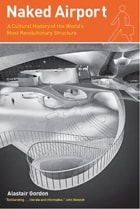
cover of Naked Airport: A Cultural History of the World's Most Revolutionary Structure

Naked Airport

A Cultural History of the World's Most Revolutionary Structure

Alastair Gordon

University of Chicago Press, 2008

 
Although airports are now best known for interminable waits at check-in counters, liquid restrictions for carry-on luggage, and humiliating shoe-removal rituals at security, they were once the backdrops for jet-setters who strutted, martinis in hand, through curvilinear terminals designed by Eero Saarinen. In the critically acclaimed Naked Airport, Alastair Gordon traces the cultural history of this defining institution from its origins in the muddy fields of flying machines to its frontline position in the struggle against international terrorism.
            From global politics to action movies to the daily commute, Gordon shows how the airport has changed our sense of time, distance, and style, and ultimately the way cities are built and business is done. He introduces the people who shaped and were shaped by this place of sudden transition: pilots like Charles Lindbergh, architects like Le Corbusier, and political figures like Fiorello LaGuardia and Adolf Hitler. Naked Airport is a profoundly original history of a long-neglected yet central component of modern life.
 
“This charming history documents why airports have always been such intriguing places. Gordon wittily deconstructs air terminal architecture. . . . Here is a book with more than enough quirky details to last a long layover.”—People
 
“[A] splendid cultural history.”—Atlantic Monthly
 
“Gordon, an architecture and design critic, tells his story well, bringing to life some of the main characters and highlighting some of the important issues concerning urbanism and airports.”—Michael Roth, San Francisco Chronicle
 
“Gordon provides a truly compelling account of how airports had over the course of three-quarters of a century become the locus of not only modern dreams but postmodern nightmares as well. Don’t leave home without it.”—Terence Riley, director of the Miami Art Museum


[more]
cover of Night Mother: A Personal and Cultural History of The Exorcist

Night Mother

A Personal and Cultural History of The Exorcist

Marlena Williams

The Ohio State University Press, 2023
Never watch The Exorcist, Marlena Williams’s mother told her, just as she’d been told by her own mother as a Catholic teen in rural Oregon when the horror classic premiered. And like her mother, Mary, Williams watched it anyway. An inheritance passed from mother to daughter, The Exorcist looms large—in popular culture and in Williams’s own life, years after Mary’s illness and death. In Night Mother, Williams investigates the film not only as a projection of Americans’ worst fears in the tumultuous 1970s and a source of enduring tropes around girlhood, faith, and transgression but also as a key to understanding her mother and the world she came from. The essays in Night Mother delve beneath the surface of The Exorcist to reveal the deeper stories the film tells about faith, family, illness, anger, guilt, desire, and death. Whether tracing the career of its young star, Linda Blair, unpacking its most infamous scenes, exploring its problematic depictions of gender and race, or reflecting on the horror of growing up female in America, Williams deftly blends bold personal narrative with shrewd cultural criticism. Night Mother offers fresh insights for both fans of the film and newcomers alike.
[more]
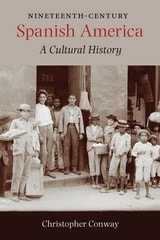
cover of Nineteenth-Century Spanish America: A Cultural History

Nineteenth-Century Spanish America

A Cultural History

Christopher Conway

Vanderbilt University Press, 2015

Nineteenth-Century Spanish America: A Cultural History provides a panoramic and accessible introduction to the era in which Latin America took its first steps into the Modern Age. Including colorful characters like circus clowns, prostitutes, bullfighters, street puppeteers, and bestselling authors, this book maps vivid and often surprising combinations of the new and the old, the high and the low, and the political and the cultural. Christopher Conway shows that beneath the diversity of the New World there was a deeper structure of shared patterns of cultural creation and meaning. Whether it be the ways that people of refinement from different countries used the same rules of etiquette, or how commoners shared their stories through the same types of songs, Conway creates a multidisciplinary framework for understanding the culture of an entire hemisphere.


The book opens with key themes that will help students and scholars understand the century, such as the civilization and barbarism binary, urbanism, the divide between conservatives and liberals, and transculturation. In the chapters that follow, Conway weaves transnational trends together with brief case studies and compelling snapshots that help us understand the period. How much did books and photographs cost in the nineteenth century? What was the dominant style in painting? What kinds of ballroom dancing were popular? Richly illustrated with striking photographs and lithographs, this is a book that invites the reader to rediscover a past age that is not quite past, still resonating into the present.

[more]
cover of Nineteenth-Century Spanish America: A Cultural History

Nineteenth-Century Spanish America

A Cultural History

Christopher Conway

Vanderbilt University Press, 2015

Nineteenth-Century Spanish America: A Cultural History provides a panoramic and accessible introduction to the era in which Latin America took its first steps into the Modern Age. Including colorful characters like circus clowns, prostitutes, bullfighters, street puppeteers, and bestselling authors, this book maps vivid and often surprising combinations of the new and the old, the high and the low, and the political and the cultural. Christopher Conway shows that beneath the diversity of the New World there was a deeper structure of shared patterns of cultural creation and meaning. Whether it be the ways that people of refinement from different countries used the same rules of etiquette, or how commoners shared their stories through the same types of songs, Conway creates a multidisciplinary framework for understanding the culture of an entire hemisphere.

The book opens with key themes that will help students and scholars understand the century, such as the civilization and barbarism binary, urbanism, the divide between conservatives and liberals, and transculturation. In the chapters that follow, Conway weaves transnational trends together with brief case studies and compelling snapshots that help us understand the period. How much did books and photographs cost in the nineteenth century? What was the dominant style in painting? What kinds of ballroom dancing were popular? Richly illustrated with striking photographs and lithographs, this is a book that invites the reader to rediscover a past age that is not quite past, still resonating into the present.
[more]