Results by title
117 books match the query 'Digital media' and 4 start with n
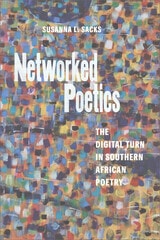
Networked Poetics
The Digital Turn in Southern African PoetrySusanna L. Sacks
University of Massachusetts Press, 2024
Winner of the 2025 MLA Scaglione Prize for African Studies
Simultaneously transnational and local, poetry in the twenty-first century is produced across digital networks, shaped through local communities, and evaluated on a global scale. It might start on social media, where a video of a poet circulates and goes viral, gaining international attention without ever going through traditional modes of publication. In Networked Poetics, Susanna L. Sacks introduces readers to the southern African poetry scene in Malawi, Zimbabwe, and South Africa, illustrating how contemporary poetry is shaped, from inception to canonization, by the influence of digital media publication.
Interweaving ethnographic observation and extensive literary analysis, Sacks demonstrates that, as more artists in Africa reach wider audiences through online publication, poetic form has shifted to reflect social media’s aesthetic norms of urgency, immediacy, and populism. These changes have, in turn, challenged elite processes of valuation, forcing literary institutions like prizes, festivals, and curricula to accommodate the digital turn.

New Directions in Israeli Media
Film, Television, and Digital ContentEdited by Yaron Peleg, Eran Kaplan, and Ido Rosen
University of Texas Press, 2025
A comprehensive analysis of the major trends and developments in contemporary Israeli media.
In the twenty-first century, Israeli filmmaking has transformed from a localized industry into a globally recognized and diverse national cinema, its filmmakers gaining prominence internationally and introducing new themes, aesthetics, and voices to the scene. At the same time, Israeli television shows have emerged as a dominant force, propelled by the spread of streaming. Through the rise of online content creation and consumption, especially in the 2010s, new voices have revolutionized the creative landscape.
With Israel’s position at the cutting edge of technology and virtual platforms, Israeli media has seen a boom, winning prizes at international film festivals and adapting shows like Euphoria, Homeland, and Fauda for wider audiences. In New Directions in Israeli Media, thirteen contributors detail the shifting dynamics of Israeli cinema, television, and online content in the digital age, exploring how globalization, technological advances, and changing audience preferences are reshaping creative industries. Editors Yaron Peleg, Eran Kaplan, and Ido Rosen have assembled a volume that prompts critical reflection on the intersection of art, technology, and culture in a rapidly changing media landscape.

News
The Politics of Illusion, Tenth EditionW. Lance Bennett
University of Chicago Press, 2016
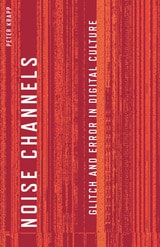
Noise Channels
Glitch and Error in Digital CulturePeter Krapp
University of Minnesota Press, 2011
To err is human; to err in digital culture is design. In the glitches, inefficiencies, and errors that ergonomics and usability engineering strive to surmount, Peter Krapp identifies creative reservoirs of computer-mediated interaction. Throughout new media cultures, he traces a resistance to the heritage of motion studies, ergonomics, and efficiency; in doing so, he shows how creativity is stirred within the networks of digital culture.
Noise Channels offers a fresh look at hypertext and tactical media, tunes into laptop music, and situates the emergent forms of computer gaming and machinima in media history. Krapp analyzes text, image, sound, virtual spaces, and gestures in noisy channels of computer-mediated communication that seek to embrace—rather than overcome—the limitations and misfires of computing. Equally at home with online literature, the visual tactics of hacktivism, the recuperation of glitches in sound art, electronica, and videogames, or machinima as an emerging media practice, he explores distinctions between noise and information, and how games pivot on errors at the human–computer interface.
Grounding the digital humanities in the conditions of possibility of computing culture, Krapp puts forth his insight on the critical role of information in the creative process.