Results by title
295 books match the query 'Ecosystems & Habitats' and 5 start with n
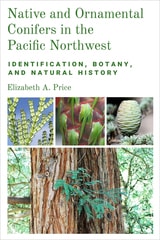
Native and Ornamental Conifers in the Pacific Northwest
Identification, Botany and Natural HistoryElizabeth A. Price
Oregon State University Press, 2022
Based on her experiences teaching workshops on conifer identification and cultivation, Elizabeth Price has developed Jargon-free photographic charts, which allow for side-by-side comparison of conifer features and guide the reader to species identification. The charts are detailed enough for specialists yet accessible to amateurs.
The book includes extensive material on the characteristics, botany, and natural history of conifer plant families, genera, and species, all illustrated with original photographs. Research across many disciplines is blended with direct observation and personal experience, creating a book that goes beyond identification and is both rigorous and engaging.
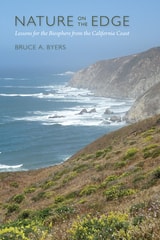
Nature on the Edge
Lessons for the Biosphere from the California CoastBruce A. Byers
Oregon State University Press, 2024
In compelling dispatches from the edge of the continent, Byers explores topics ranging from butterflies to scrub jays, from salmon to whales. He describes the natural history, ecology, and evolution of key species and ecosystems in scientifically sound but accessible language, and notes that despite all we know, fascinating ecological mysteries still abound. Byers also surveys ecocentric philosophies and worldviews rooted in these places and argues for their importance in developing a more harmonious and sustainable relationship between humans and our home planet.
UNESCO biosphere reserves are laboratories for understanding how humans affect ecosystems and models for how we can heal the human-nature relationship. While the biosphere concept and network has existed for fifty years now, it is still not well-known by the general public. Today, the US has twenty-eight biosphere reserves. By focusing on two beloved sites in California, Byers draws attention to the important work being done in these reserves around the world, with the goal of inspiring readers to reflection, action, and hope in the face of climate change, biodiversity loss, and other environmental challenges.
Net Values
Environmental, Economic, and Social Entanglements in the Gulf of CaliforniaNicole D. Peterson
University of Arizona Press, 2025
In Loreto, Baja California Sur, Mexico, artisanal fishing families and staff of Loreto Bay National Park face an array of choices as tourism, environmental concerns, and economic precarity challenge livelihoods and natural resource availability. In Net Values, Nicole D. Peterson offers a critical examination of how the idea of “choice” is understood, and what it means for policies, planning, and programs to ignore the social, political, economic, and cultural contexts surrounding these choices.
Anchored by more than twenty years of research, Peterson provides insight into the fishing community of Loreto and reveals an important role in decision-making that diverges from previous studies. She argues that decisions about fishing, natural resource management, and other aspects of life are influenced by context, values, and expectations in ways that go beyond the typical psychological or cognitive theories of choice. Instead, Net Values highlights the ways that choices are constrained and enabled by values and expectations of cultures, histories, relationships, and experiences, both personal and shared. Peterson answers questions such as “why do the fishermen fish?” or “what is the marine park staff doing?” These decisions and choices are related to the larger implication addressed by this book: that in order to make effective policies around natural resource management and other issues, we must understand how those potential policies interact with the decision processes already underway.
Divided into five chapters, Net Values is rich in ethnographic detail, drawing from real people to inform the narratives, chapters, and theoretical elaboration. Peterson’s interactions with fishers such as Don Javier and his family and friends support the ideas offered around choice, values, and strategies, connecting ideas to real experiences.
No Species Is an Island
Bats, Cacti, and Secrets of the Sonoran DesertTheodore H. Fleming; Illustrations by Kim Kanoa Duffek
University of Arizona Press, 2017
The Sonoran Desert is the most biologically diverse desert in the world. Four species of columnar cacti, including the iconic saguaro and organ pipe, are among its most conspicuous plants. No Species Is an Island describes Theodore H. Fleming’s eleven-year study of the pollination biology of these species at a site he named Tortilla Flats in Sonora, Mexico, near Kino Bay.
Now Fleming shares the surprising results of his intriguing work. Among the novel findings are one of the world’s rarest plant-breeding systems in a giant cactus; the ability of the organ pipe cactus to produce fruit with another species’ pollen; the highly specialized moth-cactus pollination system of the senita cactus; and the amazing lifestyle of the lesser long-nosed bat, the major nocturnal pollinator of three of these species.
These discoveries serve as a primer on how to conduct ecological research, and they offer important conservation lessons for us all. Fleming highlights the preciousness of the ecological web of our planet—Tortilla Flats is a place where cacti and migratory bats and birds connect such far-flung habitats as Mexico’s tropical dry forest, the Sonoran Desert, and the temperate rain forests of southeastern Alaska. Fleming offers an insightful look at how field ecologists work and at the often big surprises that come from looking carefully at a natural world where no species stands alone.
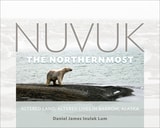
Nuvuk, the Northernmost
Altered Land, Altered Lives in Barrow, AlaskaDaniel James Inulak Lum
University of Alaska Press, 2013
As arguments over climate change rage in more temperate locales, Nuvuk, the Northernmost is a poignant snapshot of life in a town where these changes are impossible to overlook. Lum’s vivid photographs of wildlife, such as whales, polar bears, and birds, offer rare close-ups of animals few ever see. In addition, Lum provides vivid descriptions and pictures of daily life in and around Barrow, offering a compelling insider’s introduction to living on the tip of the world. With Lum as a capable guide, Nuvuk, the Northernmost is a chance to see a rare world before it changes forever.