Results by title
108 books match the query 'Effect of human beings on' and 5 start with n
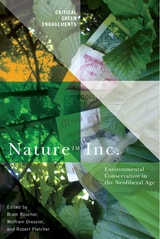
Nature Inc.
Environmental Conservation in the Neoliberal AgeEdited by Bram Büscher, Wolfram Dressler, and Robert Fletcher
University of Arizona Press, 2014
As public funding for conservation efforts grows ever scarcer and the private sector is brimming with ideas about how its role—along with its profits— can grow, market forces have found their way into environmental management to a degree unimaginable only a few years ago. Ecotourism, payment for environmental services (PES), and new conservation finance instruments such as species banking, carbon trading, and biodiversity derivatives are only some of the market mechanisms that have sprung into being. This is “Nature™ Inc.”: a fast-growing frontier of networks, activities, knowledge, and regulations that are rapidly changing the relations between people and nature on both global and local scales.
Nature™ Inc. brings together cutting-edge research by respected scholars from around the world to analyze how “neoliberal conservation” is reshaping human–nature relations that have been fashioned over two centuries of capitalist development. Contributors synthesize and add to a growing body of academic literature that cuts across the disciplinary boundaries of geography, sociology, anthropology, political science, and development studies to critically interrogate the increasing emphasis on neoliberal market-based mechanisms in environmental conservation. They all grapple with one overriding question: can capitalist market mechanisms resolve the environmental problems they have helped create?
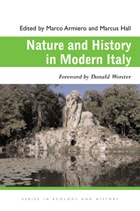
Nature and History in Modern Italy
Marco Armiero
Ohio University Press, 2010
Is Italy il bel paese—the beautiful country—where tourists spend their vacations looking for art, history, and scenery? Or is it a land whose beauty has been cursed by humanity’s greed and nature’s cruelty? The answer is largely a matter of narrative and the narrator’s vision of Italy. The fifteen essays in Nature and History in Modern Italy investigate that nation’s long experience in managing domesxadtixadcated rather than wild natures and offer insight into these conflicting visions. Italians shaped their land in the most literal sense, producing the landscape, sculpting its heritage, embedding memory in nature, and rendering the two different visions inseparxadable. The interplay of Italy’s rich human history and its dramatic natural diversity is a subject with broad appeal to a wide range of readers.
Nature/Southwestern Colorado C*Op*
D Paulson
University Press of Colorado, 2006
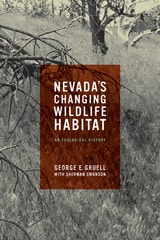
Nevada's Changing Wildlife Habitat
An Ecological HistoryGeorge E. Gruell
University of Nevada Press, 2013
For millennia the ecology of the Great Basin has evolved because of climate change and the impacts of human presence. Nevada’s Changing Wildlife Habitat is the first book to explain the transformations in the plants and animals of this region over time and how they came about. Using data gleaned from archaeological and anthropological studies, numerous historical documents, repeat photography, and several natural sciences, the authors examine changes in vegetation and their impact on wildlife species and the general health of the environment. They also outline the choices that current users and managers of rangelands face in being good stewards of this harsh but fragile environment and its wildlife.
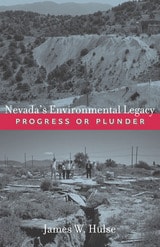
Nevada's Environmental Legacy
Progress or PlunderJames W. Hulse
University of Nevada Press, 2009
Nevada's relatively brief history (it became a state in 1864) has been largely a story of the exploitation of its natural resources. Mining has torn down mountains and poisoned streams and groundwater. Uncontrolled grazing by vast herds of sheep and cattle has denuded grasslands and left them prey to the invasion of noxious plant species and vulnerable to wildfire. Clear-cut logging practices have changed the composition of forests and induced serious soil erosion. More recently, military testing, including hundreds of atomic blasts to determine the efficacy of nuclear weapons, has irreversibly polluted expanses of fragile desert landscape. And rampant development throughout the state over the past four decades, along with the public's growing demand for recreational facilities, has placed intolerable demands on the arid state's limited water resources and threatened the survival of numerous rare plant and animal species. Veteran historian and Nevada native James W. Hulse considers the state's complex environmental history as a series of Faustian bargains between the state's need for economic development and the industries, government agencies, and individuals that have exploited Nevada's natural resources with little concern for the long-term consequences of their activities. His survey covers all these issues, and examines public attitudes about the environment and the role of federal and state agencies in creating, interpreting, and enforcing environmental policies.