201 books match the query 'English fiction' and 12 start with n
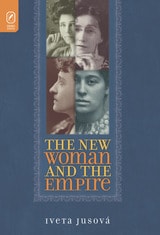
cover of NEW WOMAN AND THE EMPIRE

NEW WOMAN AND THE EMPIRE

Iveta Jusová

The Ohio State University Press, 2005

[more]
cover of NOVEL PROFESSIONS: INTERESTED DISINTEREST AND THE MAKING OF THE VICTORIAN NOVEL

NOVEL PROFESSIONS

INTERESTED DISINTEREST AND THE MAKING OF THE VICTORIAN NOVEL

Jennifer Ruth

The Ohio State University Press, 2006
[more]
cover of Narrating Trauma: Victorian Novels and Modern Stress Disorders

Narrating Trauma

Victorian Novels and Modern Stress Disorders

Gretchen Braun

The Ohio State University Press, 2022
Neurasthenia, rail shock, hysteria. In Narrating Trauma, Gretchen Braun traces the nineteenth-century prehistory of those mental and physical responses that we now classify as post-traumatic stress and explores their influence on the Victorian novel. Engaging dialogues between both present-day and nineteenth-century mental science and literature, Braun examines novels that show the development of the mental dysfunction known as nervous disorder, positing that it was understood not as a failure of reason but instead as an organically based, crippling disjunction between the individual mind and its social context—with sufferers inhabiting spaces between sanity and madness. Spanning from the early Victorian period to the fin de siècle and encompassing realist, Gothic, sentimental, and sensation fiction, Narrating Trauma studies trauma across works of fiction by Charlotte Brontë, Emily Jolly, Wilkie Collins, George Eliot, Charles Dickens, and Thomas Hardy. In doing so, Braun brings both nineteenth-century science and current theories of trauma to bear on the narrative patterns that develop around mentally disordered women and men feminized by nervous disorder, creating a framework for novelistic critique of modern lifestyles, stressors, and institutions.
[more]
cover of Narrative Bonds: Multiple Narrators in the Victorian Novel

Narrative Bonds

Multiple Narrators in the Victorian Novel

Alexandra Valint

The Ohio State University Press, 2021
While narrative fracturing, multiplicity, and experimentalism are commonly associated with modernist and postmodern texts, they have largely been understudied in Victorian literature. Narrative Bonds: Multiple Narrators in the Victorian Novel focuses on the centrality of these elements and address the proliferation of multiple narrators in Victorian novels. In Narrative Bonds, Alexandra Valint explores the ways in which the Victorian multi-narrator form moves toward the unity of vision across characters and provides inclusivity in an era of expanding democratic rights and a growing middle class. Integrating narrative theory, gothic theory, and disability studies with analyses of works by Charles Dickens, Robert Louis Stevenson, Wilkie Collins, Emily Brontë, and Bram Stoker, this comprehensive and illuminating study illustrates the significance and impact of the multi-narrator structure in Victorian novels.
[more]
cover of Narrative Innovation and Incoherence: Ideology in Defoe, Goldsmith, Austen, Eliot, and Hemingway

Narrative Innovation and Incoherence

Ideology in Defoe, Goldsmith, Austen, Eliot, and Hemingway

Michael M. Boardman

Duke University Press, 1992

When the impulse toward innovation arises late in a writer's career, it is often accompanied by a sense of urgency, and the result, as Narrative Innovation and Incoherence demonstrates, raises important questions for literary theory. Michael M. Boardman considers this pressing struggle to find a new form as it appears in the later works of Defoe, Goldsmith, Austen, Eliot, and Hemingway. He analyzes how these authors react to new and compelling beliefs for which a previous way of writing is no longer adequate.
Urgent innovations, in this account, can only be understood as unique, individual responses to crises in belief. Taking as a point of departure French theorist Althusser's conviction that ideology is intelligible only through structure, Boardman searches for an explanation of both form and ideology not in Marxist concepts of base and superstructure but in the particular structure of an individual artist's writing career. Narrative ideology here becomes more complex than is generally assumed.
Theoretically informed yet avoiding essentializing explanations of narrative invention, Narrative Innovation and Incoherence offers unexpected insights into the multifaceted relations between form and belief. It will encourage serious students of the novel to reexamine the importance of poetics as a mediating factor in the means of production.
[more]
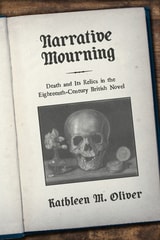
cover of Narrative Mourning: Death and Its Relics in the Eighteenth-Century British Novel

Narrative Mourning

Death and Its Relics in the Eighteenth-Century British Novel

Kathleen M. Oliver

Bucknell University Press, 2020

Narrative Mourning explores death and its relics as they appear within the confines of the eighteenth-century British novel. It argues that the cultural disappearance of the dead/dying body and the introduction of consciousness as humanity’s newfound soul found expression in fictional representations of the relic (object) or relict (person). In the six novels examined in this monograph—Samuel Richardson's Clarissa and Sir Charles Grandison; Sarah Fielding's David Simple and Volume the Last; Henry Mackenzie's The Man of Feeling; and Ann Radcliffe's The Mysteries of Udolpho—the appearance of the relic/relict signals narrative mourning and expresses (often obliquely) changing cultural attitudes toward the dead.

Published by Bucknell University Press. Distributed worldwide by Rutgers University Press. 

[more]
cover of New Women, New Novels

New Women, New Novels

Ardis, Ann

Rutgers University Press, 1990

.
[more]
cover of Nineteenth-Century Women at the Movies: Adapting Classic Women's Fiction to Film

Nineteenth-Century Women at the Movies

Adapting Classic Women's Fiction to Film

Barbara Tepa Lupack

University of Wisconsin Press, 1999

Even in Hollywood’s world of blockbusters and special effects, there continues to be interest in “quieter” adaptations based on the works of writers of other eras, especially the classic novels of nineteenth-century women. Those novels emphasize strong female protagonists, fine language, and sensitivity to social nuances.
    This volume’s twelve essays offer critical insights not only into the visions of the novelist and the filmmaker but also into contemporary cultural concerns. The adaptations of novels by eight popular writers are analyzied: Mary Shelley, Jane Austen, Charlotte Brontë, Emily Brontë, Harriet Beecher Stowe, Louisa May Alcott, Ouida, and George Eliot.
[more]
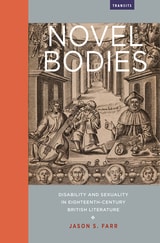
cover of Novel Bodies: Disability and Sexuality in Eighteenth-Century British Literature

Novel Bodies

Disability and Sexuality in Eighteenth-Century British Literature

Jason S. Farr

Bucknell University Press, 2019

Novel Bodies examines how disability shapes the British literary history of sexuality. Jason Farr shows that various eighteenth-century novelists represent disability and sexuality in flexible ways to reconfigure the political and social landscapes of eighteenth-century Britain. In imagining the lived experience of disability as analogous to—and as informed by—queer genders and sexualities, the authors featured in Novel Bodies expose emerging ideas of able-bodiedness and heterosexuality as interconnected systems that sustain dominant models of courtship, reproduction, and degeneracy. Further, Farr argues that they use intersections of disability and queerness to stage an array of contemporaneous debates covering topics as wide-ranging as education, feminism, domesticity, medicine, and plantation life. In his close attention to the fiction of Eliza Haywood, Samuel Richardson, Sarah Scott, Maria Edgeworth, and Frances Burney, Farr demonstrates that disabled and queer characters inhabit strict social orders in unconventional ways, and thus opened up new avenues of expression for readers from the eighteenth century forward.


Published by Bucknell University Press. Distributed worldwide by Rutgers University Press.
[more]
cover of Novel Gazing: Queer Readings in Fiction

Novel Gazing

Queer Readings in Fiction

Eve Kosofsky Sedgwick, ed.

Duke University Press, 1997

Novel Gazing is the first collection of queer criticism on the history of the novel. The contributors to this volume navigate new territory in literary theory with essays that implicitly challenge the "hermeneutic of suspicion" widespread in current critical theory. In a stunning introductory essay, Eve Kosofsky Sedgwick delineates the possibilities for a criticism that would be "reparative" rather than cynical or paranoid. The startlingly imaginative essays in the volume explore new critical practices that can weave the pleasures and disorientations of reading into the fabric of queer analyses.

Through discussions of a diverse array of British, French, and American novels—including major canonical novels, best-sellers, children’s fiction, and science fiction—these essays explore queer worlds of taste, texture, joy, and ennui, focusing on such subjects as flogging, wizardry, exorcism, dance, Zionist desire, and Internet sexuality. Interpreting the works of authors as diverse as Benjamin Constant, Toni Morrison, T. H. White, and William Gibson, along with canonical queer modernists such as James, Proust, Woolf, and Cather, contributors reveal the wealth of ways in which selves and communities succeed in extracting sustenance from the objects of a culture whose avowed desire has often been not to sustain them. The dramatic reframing that these essays perform will make the significance of Novel Gazing extend beyond the scope of queer studies to literary criticism in general.

Contributors. Stephen Barber, Renu Bora, Anne Chandler, James Creech, Tyler Curtain, Jonathan Goldberg, Joseph Litvak, Michael Lucey, Jeff Nunokawa, Cindy Patton, Jacob Press, Robert F. Reid-Pharr, Eve Kosofsky Sedgwick, Melissa Solomon, Kathryn Bond Stockton, John Vincent, Maurice Wallace, Barry Weller
[more]
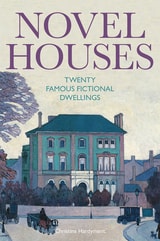
cover of Novel Houses: Twenty Famous Fictional Dwellings

Novel Houses

Twenty Famous Fictional Dwellings

Christina Hardyment

Bodleian Library Publishing, 2019
Many beloved novels have place at their heart—and often even in their title. Novel Houses visits unforgettable dwellings in twenty legendary works of English and American fiction, exploring how Uncle Tom’s Cabin came to start the American Civil War, why Bleak House is used as the name of a happy home, and what Jane Austen had in mind when she worked out the plot for Mansfield Park. Taking up the importance of 221B Baker Street to Sherlock Holmes, and of Bag-End to the hobbits who called it home, the book also sheds fresh light on Emily Brontë’s Wuthering Heights, Mervyn Peake’s Gormenghast, and the real-life settings of Daphne du Maurier’s Rebecca and E. M. Forster’s Howards End. Throughout, the book invites us to consider how houses, while so fundamental to these stories, also reveal much about their authors’ passions and preoccupations. A winning combination of literary criticism, geography, and biography, this is an entertaining and insightful celebration of beloved novels and the extraordinary role that houses play—whether grand or small, unique or ordinary, real or imagined.
 
[more]
cover of Novel Violence: A Narratography of Victorian Fiction

Novel Violence

A Narratography of Victorian Fiction

Garrett Stewart

University of Chicago Press, 2009

Victorian novels, Garrett Stewart argues, hurtle forward in prose as violent as the brutal human existence they chronicle. In Novel Violence, he explains how such language assaults the norms of written expression and how, in doing so, it counteracts the narratives it simultaneously propels.

            Immersing himself in the troubling plots of Charles Dickens, Anne Brontë, George Eliot, and Thomas Hardy, Stewart uses his brilliant new method of narratography to trace the microplots of language as they unfold syllable by syllable. By pinpointing where these linguistic narratives collide with the stories that give them context, he makes a powerful case for the centrality of verbal conflict to the experience of reading Victorian novels. He also maps his finely wrought argument on the spectrum of influential theories of the novel—including those of Georg Lukács and Ian Watt—and tests it against Edgar Allan Poe’s antinovelistic techniques. In the process, Stewart shifts critical focus toward the grain of narrative and away from more abstract analyses of structure or cultural context, revealing how novels achieve their semantic and psychic effects and unearthing, in prose, something akin to poetry.

[more]