Results by title
99 books match the query 'Environment' and 6 start with n
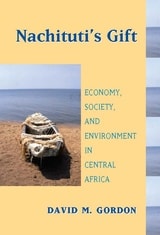
Nachituti's Gift
Economy, Society, and Environment in Central AfricaDavid M. Gordon
University of Wisconsin Press, 2006
Nachituti’s Gift challenges conventional theories of economic development with a compelling comparative case study of inland fisheries in Zambia and Congo from pre- to postcolonial times. Neoclassical development models conjure a simple, abstract progression from wealth held in people to money or commodities; instead, Gordon argues, primary social networks and oral charters like “Nachituti’s Gift” remained decisive long after the rise of intensive trade and market activities. Interweaving oral traditions, songs, and interviews as well as extensive archival research, Gordon’s lively tale is at once a subtle analysis of economic and social transformations, an insightful exercise in environmental history, and a revealing study of comparative politics.
“A powerful portrayal of the complexity, fluidity, and subtlety of Lake Mweru fishers’ production strategies . . . . Natchituti’s Gift adds nuance and evidence to some of the most important and sophisticated conversations going on in African studies today.”—Kirk Arden Hoppe, International Journal of African Historical Studies
“A lively and intelligent book, which offers a solid contribution to ongoing debates about the interplay of the politics of environment, history and economy.”—Joost Fontein, Africa
“Well researched and referenced . . . . [Natchituti’s Gift] will be of interest to those in a wide variety of disciplines including anthropology, African Studies, history, geography, and environmental studies.”—Heidi G. Frontani, H-SAfrica
Natural Resource Policymaking in Developing Countries
Environment, Economic Growth, and Income DistributionWilliam L. Ascher and Robert Healy
Duke University Press, 1990
This book is about the links that tie resource use, environmental quality, and economic development, and the way in which those links are affected by the distribution of income and resource ownership. The links may be relatively simple, as in the case of peasant farmers too poor to conserve resources for the future and with nothing to gain from sound environmental practices. Or they may be very complex—as the authors find when they demonstrate how achievement of higher incomes by the rich can increase environmentally destructive behavior by the poor. Many of the links in some way involve rural land use, whether for agriculture or forestry. Natural Resource Policymaking in Developing Countries argues that the policies that matter are not merely those dealing with resources and the environment, but a much broader set that includes income distribution and asset ownership.
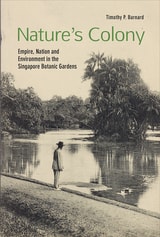
Nature's Colony
Empire, Nation and Environment in the Singapore Botanic GardensTimothy P. Barnard
National University of Singapore Press, 2017
Initially conceived to exploit nature for the benefit of empire, the Gardens were part of a symbolic struggle by administrators, scientists, and gardeners to assert dominance within Southeast Asia’s tropical landscape, reflecting shifting understandings of power, science, and nature among local administrators and distant mentors in Britain. Consequently, as an outpost of imperial science, the Gardens were instrumental in the development of plantation crops, such as rubber and oil palm, which went on to shape landscapes across the globe. Since the independence of Singapore, the Gardens have played a role in the “greening” of the country and have been named as Singapore’s first World Heritage Site. Setting the Gardens alongside the Royal Botanic Gardens, Kew, and botanic gardens in India, Ceylon, Mauritius, and the West Indies, Nature’s Colony provide the first in-depth look at the history of this influential institution.
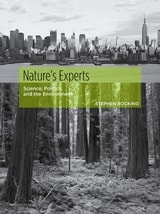
Nature's Experts
Science, Politics, and the EnvironmentBocking, Stephen
Rutgers University Press, 2004
"This book by Stephen Bocking is as much about deliberative democracy as it is about science and the environment. Stephen Bocking’s treatment is deep, perceptive, and profoundly wise. He has caught the heart of present and future environmental science, politics, and democratic governance."—C. S. Holling, The Resilience Alliance and emeritus professor, Arthur R. Marshall Jr. Chair in Ecological Sciences at the University of Florida
"If knowledge is power, how should expert advice be deployed by a would-be democratic society? This perennial question is newly illuminated by this timely and wide-ranging review of the role played by science in the making of environmental policy."—William C. Clark, Harvey Brooks Professor of International Science, Public Policy, and Human Development, Harvard University, John F. Kennedy School of Government
It seems self-evident that science plays a central role in environmental affairs. Regulatory agencies, businesses, and public interest groups all draw on scientific research to support their claims. Some critics, however, describe science not as the solution to environmental problems, but as their source. Moreover, the science itself is often controversial, as debates over global warming and environmental health risks have shown.
Nature’s Experts explores the contributions and challenges presented when scientific authority enters the realm of environmental affairs. Stephen Bocking focuses on four major areas of environmental politics: the formation of environmental values and attitudes, management of natural resources such as forests and fish, efforts to address international environmental issues such as climate change, and decisions relating to environmental and health risks. In each area, practical examples and case studies illustrate that science must fulfill two functions if it is to contribute to resolving environmental controversies. First, science must be relevant and credible, and second, it must be democratic, where everyone has access to the information they need to present and defend their views.
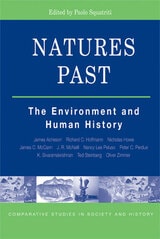
Natures Past
The Environment and Human HistoryEdited by Paolo Squatriti
University of Michigan Press, 2007
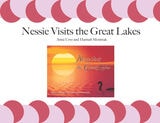
Nessie Visits the Great Lakes
Anna Urso
Michigan Publishing Services, 2022