Results by title
421 books match the query 'Evolution' and 7 start with n
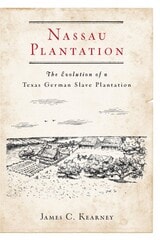
Nassau Plantation
The Evolution of a Texas-German Slave PlantationJames C. Kearney
University of North Texas Press, 2010
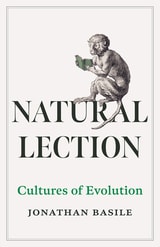
Natural Lection
Cultures of EvolutionJonathan Basile
University of Minnesota Press, 2026
A radical deconstructive approach to evolutionary theory
For as long as there has been evolutionary science, thinkers in the natural sciences, social sciences, and humanities have battled over whether evolutionary theory can or should provide insights into human nature and culture. Yet even the dissenters tend to agree that there is, somewhere, a natural foundation of instinctual or genetic inheritance; the debate is only whether and how human culture is an exception from it. Natural Lection complicates this fundamental boundary as it exposes how our scientific knowledge of nature rests on a faulty foundation that must be supplemented by humanist thought.
Jonathan Basile, as part of the emerging movement of biodeconstruction, extends the work of Jacques Derrida into the life sciences as he parses writing on cultural evolution to reveal the contradictions within our opposing notions of genealogically governed nature and networked or viral human culture. Holding this opposition in suspense, Basile proposes a new framework: natural lection, the view of nature not as original material but as the result of a shifting, always provisional act of reading. By paying careful attention to what biologists describe as a superficial layer of metaphor and rhetoric in their writing—but which he sees as an ineluctable textuality shaping the core of their work—Basile traces the political implications of scientific thought to its theoretical fragility, which calls for philosophical and literary modes of reading.
Showing how contemporary approaches to cultural evolution continue to repeat incoherent patterns of thought at least as old as Darwin—if not Aristotle—Natural Lection dismantles assumptions shared by evolutionary biology, cultural studies, and new materialism. By critically analyzing these foundations, Basile pushes back against the neoliberal and far-right weaponization of evolutionary theory, opening a novel terrain of scientific and political possibility.
Retail e-book files for this title are screen-reader friendly.
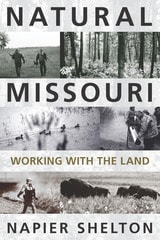
Natural Missouri
Working with the LandNapier Shelton
University of Missouri Press, 2005
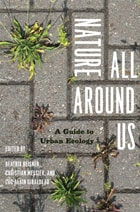
Nature All Around Us
A Guide to Urban EcologyEdited by Beatrix Beisner, Christian Messier, and Luc-Alain Giraldeau
University of Chicago Press, 2012
Nature All Around Us uses the familiar—such as summer Sundays humming with lawn mowers, gray squirrels foraging in planters, and flocks of pigeons—in order to introduce basic ecological concepts. In twenty-five short chapters organized by scale, from the home to the neighborhood to the city at large, it offers a subtle and entertaining education in ecology sure to inspire appreciation and ultimately stewardship of the environment. Various ecological concepts that any urban dweller might encounter are approachably examined, from understanding why a squirrel might act aggressively towards its neighbor to how nutrients and energy contained within a discarded apple core are recycled back into the food chain. Streaming through the work is an introduction to basic ecology, including the dangers of invasive species and the crucial role played by plants and trees in maintaining air quality.
Taken as a whole, Nature All Around Us is an unprecedented field guide to the ecology of the urban environment that invites us to look at our towns, cities, and even our backyards through the eyes of an ecologist. It is an entertaining, educational, and inspiring glimpse into nature in seemingly unnatural settings, a reminder that we don’t have to trek into the wild to see nature—we just have to open our eyes.
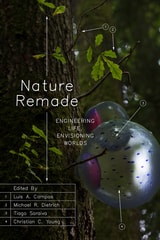
Nature Remade
Engineering Life, Envisioning WorldsEdited by Luis A. Campos, Michael R. Dietrich, Tiago Saraiva, and Christian C. Young
University of Chicago Press, 2021
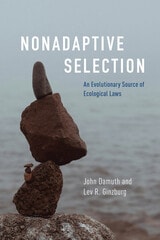
Nonadaptive Selection
An Evolutionary Source of Ecological LawsJohn Damuth and Lev R. Ginzburg
University of Chicago Press, 2025
In this important treatise, ecologists and evolutionary biologists John Damuth and Lev R. Ginzburg identify a specific evolutionary process in biology, which they call nonadaptive selection. The idea is simple, but the implications are profound. Nonadaptive selection, as they use the term, is selection among biological entities (as is natural selection) but is based on the fitness effects of structural properties intrinsic to the entities under selection rather than on interactions between traits and a local shared environment. In other words, features of systems that evolve by nonadaptive selection do not adapt to local environmental conditions; rather, this selective process increases the long-term stability of the focal systems independent of local conditions.
Nonadaptive selection may be of particular value in explaining broad, persistent patterns in multispecies biological units where adaptive evolution may be weak or poorly defined. Examples include Damuth’s Law, the equivalence of energy use among animal species across a wide range of body sizes; the ratio-dependent, or Arditi-Ginzburg, predation conjecture; the consistency of allometric scaling powers; the shortness of trophic chains; and the prevalence of certain types of three-species trophic structures across ecosystems. Damuth and Ginzburg see nonadaptive selection underlying patterns of ecological allometries, community structure, and species interactions, with some implications for macroevolution. Moreover, they find a surprising relationship between these nonadaptive processes and biological laws. They do not advocate the reorientation of any existing research programs but present nonadaptive selection as an additional conceptual framework that may be useful to add to ecology and evolution.
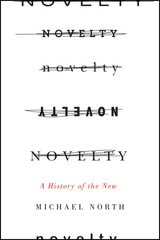
Novelty
A History of the NewMichael North
University of Chicago Press, 2013
In Novelty, Michael North takes us on a dazzling tour of more than two millennia of thinking about the problem of the new, from the puzzles of the pre-Socratics all the way up to the art world of the 1960s and ’70s. The terms of the debate, North shows, were established before Plato, and have changed very little since: novelty, philosophers argued, could only arise from either recurrence or recombination. The former, found in nature’s cycles of renewal, and the latter, seen most clearly in the workings of language, between them have accounted for nearly all the ways in which novelty has been conceived in Western history, taking in reformation, renaissance, invention, revolution, and even evolution. As he pursues this idea through centuries and across disciplines, North exhibits astonishing range, drawing on figures as diverse as Charles Darwin and Robert Smithson, Thomas Kuhn and Ezra Pound, Norbert Wiener and Andy Warhol, all of whom offer different ways of grappling with the idea of originality.
Novelty, North demonstrates, remains a central problem of contemporary science and literature—an ever-receding target that, in its complexity and evasiveness, continues to inspire and propel the modern. A heady, ambitious intellectual feast, Novelty is rich with insight, a masterpiece of perceptive synthesis.