Results by title
520 books match the query 'Family' and 12 start with n
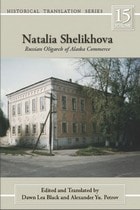
Natalia Shelikhova
Russian Oligarch of Alaska CommerceEdited by Dawn Lea Black and Alexander Petrov
University of Alaska Press, 2010
This volume makes available for the first time in English a variety of primary source materials relating to the life and work of Natalia Shelikov, a pioneering nineteenth-century Russian-American businesswoman. As a principal of the Russian-American Company, Shelikov worked in Alaska, and her business acumen and wide-ranging connections—including the empress of Russia and a swathe of northern leaders—were crucial to the growth of Alaska’s economy, as well as to the welfare of the Native people, in whose life and culture she took a strong interest. The letters, petitions, and personal documents presented here will be indispensable for students of Alaska and nineteenth-century women’s history.
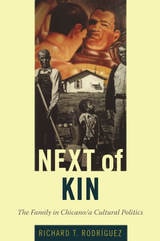
Next of Kin
The Family in Chicano/a Cultural PoliticsRichard T. Rodríguez
Duke University Press, 2009
Describing how la familia came to be adopted as an organizing strategy for communitarian politics, Rodríguez looks at foundational texts including Rodolfo Gonzales’s well-known poem “I Am Joaquín,” the Chicano Liberation Youth Conference’s manifesto El Plan Espiritual de Aztlán, and José Armas’s La Familia de La Raza. Rodríguez analyzes representations of the family in the films I Am Joaquín, Yo Soy Chicano, and Chicana; the Los Angeles public affairs television series ¡Ahora!; the experimental videos of the artist-activist Harry Gamboa Jr.; and the work of hip-hop artists such as Kid Frost and Chicano Brotherhood. He reflects on homophobia in Chicano nationalist thought, and examines how Chicano gay men have responded to it in works including Al Lujan’s video S&M in the Hood, the paintings of Eugene Rodríguez, and a poem by the late activist Rodrigo Reyes. Next of Kin is both a wide-ranging assessment of la familia’s symbolic power and a hopeful call for a more inclusive cultural politics.
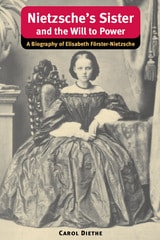
Nietzsche's Sister and the Will to Power
A Biography of Elisabeth Förster-NietzscheCarol Diethe
University of Illinois Press, 2002
In 1901, a year after her brother Friedrich's death, Elisabeth Förster-Nietzsche published The Will to Power, a hasty compilation of writings he had never intended for print. In Nietzsche's Sister and the Will to Power, Carol Diethe contends that Förster-Nietzsche's own will to power and her desire to place herself--not her brother--at the center of cultural life in Germany are centrally responsible for Nietzsche's reputation as a belligerent and proto-Fascist thinker.
Offering a new look at Nietzsche's sister from a feminist perspective, this spirited and erudite biography examines why Elisabeth Förster-Nietzsche recklessly consorted with anti-Semites, from her own husband to Hitler himself, out of convenience and a desire for revenge against a brother whose love for her waned after she caused the collapse of his friendship with Lou Salomé. The book also examines their family dynamics, Nietzsche's dismissal of his sister's early writing career, and the effects of limited education on intelligent women. Diethe concludes by detailing Förster-Nietzsche's brief marriage and her subsequent colonial venture in Paraguay, maintaining that her sporadic anti-Semitism was, like most things in her life, an expedient tool for cultivating personal success and status.
A volume in the series International Nietzsche Studies, edited by Richard Schacht
Night Mother
A Personal and Cultural History of The ExorcistMarlena Williams
The Ohio State University Press, 2023
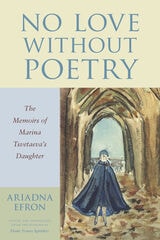
No Love Without Poetry
The Memoirs of Marina Tsvetaeva's DaughterAriadna Efron
Northwestern University Press, 2009
The memoirs of Ariadna Efron provide an intimate and indispensable perspective on the poet Marina Tsvetaeva’s life and work, told from the point of view of her daughter. This wrenching story about the difficulty of living with genius charts Efron’s relationship with her parents as they navigate art and exile.
Efron’s rapport with her mother, already intense, became strained under the hardships imposed by early twentieth century Russian political upheaval. Efron recounts the family’s travels from Moscow to Germany, to Czechoslovakia, and finally to France, where, against her mother’s advice, Efron decided to return to Russia. Diane Nemec Ignashev draws on Efron’s short stories and her mother’s notebooks to supplement the original memoirs. Haunting and poignant, No Love without Poetry completes extant historical records on Tsvetaeva—and showcases Efron as a literary force in her own right.
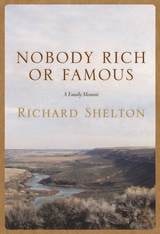
Nobody Rich or Famous
A Family MemoirRichard Shelton
University of Arizona Press, 2016
Known for his storytelling, Shelton crafts a tale of poverty and its attendant sorrows: alcoholism, neglect, and abuse. But the tenacity of the human spirit shines through. This is an epic tale of Steinbeckian proportions, but it is not fiction. This is memoir in its finest tradition, illuminating today’s cultural chasm between the haves and have-nots. In the author’s words, Nobody Rich or Famous is “the story of a family and how it got that way.”
Nonprofit
Matt Burriesci
New Issues Poetry and Prose, 2015
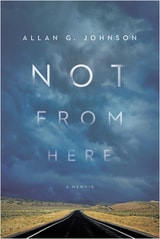
Not from Here
A MemoirAllan Johnson
Temple University Press, 2015
As a white man with Norwegian and English lineage, Johnson explores both America and the question of belonging to a place whose history holds the continuing legacy of the displacement, dispossession, and genocide of Native peoples.
More than a personal narrative, Not from Here illuminates the national silence around unresolved questions of accountability, race, and identity politics, and the dilemma of how to take responsibility for “a past we did not create.” Johnson’s story—about the past living in the present; of redemption, fate, family, tribe, and nation; of love and grief—raises profound questions about belonging, identity, and place.
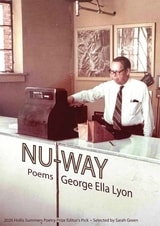
Nu-Way
PoemsGeorge Ella Lyon
Ohio University Press, 2027
Nu-Way traces the evolution of a writer from a three-year-old sitting on the counter of her daddy’s dry cleaner's to a fully developed poet. George Ella Lyon journeys from her role as the keeper of family stories to the teller of her own. This is a book of becoming, of claiming a self.
Growing up in the mountains of eastern Kentucky, near all four of her grandparents, Lyon was schooled in secrets and learned, of necessity, to keep her own. In Nu-Way, her sixth collection, she takes up both sides of the family tapestry: the scenes intentionally stitched and the tangle on the other side. This is not a process of power, but of inner transformation, of coming to terms with herself as well as the people who made her. It holds the tension of opposites—the individual and the collective—without sacrificing either. Highly sharable, Nu-Way will appeal to readers who often feel shut out of poetry.
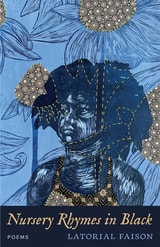
Nursery Rhymes in Black
PoemsLatorial Faison
University of Alaska Press, 2025
The collection highlights family, overcoming adversity, and endurance from the Black female perspective and celebrates the individuals and experiences that shape life and have catapulted the author into a unique existence. Narrative poems give voice to the Black Southern girlhood experience of being saved, nurtured, inspired, and even challenged by plight and circumstance. Strengthened by her experiences, Faison provides power, courage, and wisdom that resonate deeply. These poems walk in naked truth on a lyrical, musical tightrope as each brings wisdom and honesty in the intimacy of arranged words. Faison takes readers along the development of her own identity, considering stories of unsung heroes, the hands that feed us, the ancestors and traditions that form us, and the challenging ways that race, history, education, and culture intersect. With this spiritually moving collection, Faison joins all poets and writers who have come to prolifically amplify Black voices, to tell Black stories, to continue the Black literary tradition we have been gifted.
In these poems, Faison calls readers into poetic fellowship with the memories, the legacies, the truths of Black women in the South. There is reverence, history, and glory on these pages celebrating the hands, hearts, work, trouble, and ways of Black women and all the ways they teach, become, fascinate, struggle, survive, and exist in the world. Nursery Rhymes in Black lulls us—but not to sleep—rather, to wake up, to speak out, to take a stand, to advocate as we pause to remember, understand, and celebrate.
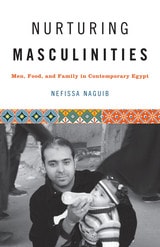
Nurturing Masculinities
Men, Food, and Family in Contemporary EgyptBy Nefissa Naguib
University of Texas Press, 2015
Two structuring concepts have predominated in discussions concerning how Middle Eastern men enact their identity culturally: domination and patriarchy. Nurturing Masculinities dispels the illusion that Arab men can be adequately represented when we speak of them only in these terms. By bringing male perspectives into food studies, which typically focus on the roles of women in the production and distribution of food, Nefissa Naguib demonstrates how men interact with food, in both political and domestic spheres, and how these interactions reflect important notions of masculinity in modern Egypt.
In this classic ethnography, narratives about men from a broad range of educational backgrounds, age groups, and social classes capture a holistic representation of masculine identity and food in modern Egypt on familial, local, and national levels. These narratives encompass a broad range of issues and experiences, including explorations of traditions surrounding food culture; displays of caregiving and love when men recollect the taste, feel, and fragrance of food as they discuss their desires to feed their families well and often; and the role that men, working to ensure the equitable distribution of food, played during the Islamist movement of the Muslim Brotherhood in 2011. At the core of Nurturing Masculinities is the idea that food is a powerful marker of manhood, fatherhood, and family structure in contemporary Egypt, and by better understanding these foodways, we can better understand contemporary Egyptian society as a whole.
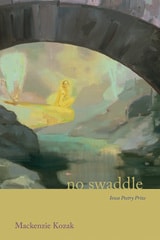
no swaddle
Mackenzie Kozak
University of Iowa Press, 2025
Brockman-Campbell Book Award for Poetry, Honorable Mention
Mackenzie Kozak examines the complex question of whether or not to bear children. Through a series of untitled American sonnets, the poems speak to themes of origin and desire, noting the shame that can accompany such a decision. Many poetry collections speak to the varied griefs of becoming a mother, losing a child, or being unable to have a child, but this collection gives specific voice to another grief that feels unspeakable: the possible conclusion of not wanting to be a mother.
no swaddle reads as a sort of meditation on theme, its repeated form mirroring the spiraling nature of indecision and reconsideration of the same major question alongside its continuous struggle to name. In the end, this grappling with elements of grief and shame becomes a way of moving toward greater agency and fulfillment.