Results by title
511 books match the query 'Government policy' and 17 start with n
Nashville in the New Millennium
Immigrant Settlement, Urban Transformation, and Social BelongingJamie Winders
Russell Sage Foundation, 2013

National Parks Forever
Fifty Years of Fighting and a Case for IndependenceJonathan B. Jarvis and T. Destry Jarvis
University of Chicago Press, 2022
The US National Parks, what environmentalist and historian Wallace Stegner called America’s “best idea,” are under siege. Since 1972, partisan political appointees in the Department of the Interior have offered two conflicting views of the National Park Service (NPS): one vision emphasizes preservation and science-based decision-making, and another prioritizes economic benefits and privatization. These politically driven shifts represent a pernicious, existential threat to the very future of our parks.
For the past fifty years, brothers Jonathan B. and T. Destry Jarvis have worked both within and outside NPS as leaders and advocates. National Parks Forever interweaves their two voices to show how our parks must be protected from those who would open them to economic exploitation, while still allowing generations to explore and learn in them. Their history also details how Congress and administration appointees have used budget and staffing cuts to sabotage NPS’s ability to manage the parks and even threatened their existence. Drawing on their experience, Jarvis and Jarvis make a bold and compelling proposal: that it is time for NPS to be removed from the Department of the Interior and made an independent agency, similar to the Smithsonian Institution, giving NPS leaders the ability to manage park resources and plan our parks’ protection, priorities, and future.
Natural Resource Policymaking in Developing Countries
Environment, Economic Growth, and Income DistributionWilliam L. Ascher and Robert Healy
Duke University Press, 1990
This book is about the links that tie resource use, environmental quality, and economic development, and the way in which those links are affected by the distribution of income and resource ownership. The links may be relatively simple, as in the case of peasant farmers too poor to conserve resources for the future and with nothing to gain from sound environmental practices. Or they may be very complex—as the authors find when they demonstrate how achievement of higher incomes by the rich can increase environmentally destructive behavior by the poor. Many of the links in some way involve rural land use, whether for agriculture or forestry. Natural Resource Policymaking in Developing Countries argues that the policies that matter are not merely those dealing with resources and the environment, but a much broader set that includes income distribution and asset ownership.

Naturalizing Mexican Immigrants
A Texas HistoryBy Martha Menchaca
University of Texas Press, 2011
2013 — NACCS Book Award – National Association for Chicana and Chicano Studies
During the nineteenth and early twentieth centuries, a majority of the Mexican immigrant population in the United States resided in Texas, making the state a flashpoint in debates over whether to deny naturalization rights. As Texas federal courts grappled with the issue, policies pertaining to Mexican immigrants came to reflect evolving political ideologies on both sides of the border.
Drawing on unprecedented historical analysis of state archives, U.S. Congressional records, and other sources of overlooked data, Naturalizing Mexican Immigrants provides a rich understanding of the realities and rhetoric that have led to present-day immigration controversies. Martha Menchaca's groundbreaking research examines such facets as U.S.-Mexico relations following the U.S. Civil War and the schisms created by Mexican abolitionists; the anti-immigration stance that marked many suffragist appeals; the effects of the Spanish American War; distinctions made for mestizo, Afromexicano, and Native American populations; the erosion of means for U.S. citizens to legalize their relatives; and the ways in which U.S. corporations have caused the political conditions that stimulated emigration from Mexico.
The first historical study of its kind, Naturalizing Mexican Immigrants delivers a clear-eyed view of provocative issues.
Nature's Burdens
Conservation and American Politics, The Reagan Era to the PresentDaniel Nelson
Utah State University Press, 2017
Nature’s Burdens is a political and intellectual history of American natural resource conservation from the 1980s into the twenty-first century—a period of intense political turmoil, shifting priorities among federal policymakers, and changing ideas about the goals of conservation. Telling a story of persistent activism, conflict, and frustration but also of striking achievement, it is an account of how new ideas and policies regarding human relationships to plants, animals, and their surroundings have become vital features of modern environmentalism.
In the 1960s and 1970s, Congress embraced the largely dormant movement to preserve distinctive landscapes and the growing demand for outdoor recreation, establishing an unprecedented number of parks, monuments, and recreation areas. The election of Ronald Reagan and a shift to a Republican-controlled Senate brought this activity to an abrupt halt and introduced a period of intense partisanship and legislative gridlock that extends to the present. In this political climate, three developments largely defined the role of conservation in contemporary society: environmental organizations have struggled to defend the legal status quo, private land conservation has become increasingly important, and the emergence of potent scientific voices has promoted the protection of animals and plants and injected a new sense of urgency into the larger cause.
These developments mark this period as a distinctive and important chapter in the history of American conservation. Scrupulously researched, scientifically and politically well informed, concise, and accessibly written, Nature’s Burdens is the most comprehensive examination of recent efforts to protect and enhance the natural world. It will be of interest to environmental historians, environmental activists, and any general reader interested in conservation.
Navigating Climate Change Policy
The Opportunities of FederalismEdella C. Schlager
University of Arizona Press, 2011
Federalism—the system of government in which power is divided among a national government and state and regional governments—is well-suited to address the challenges of climate change because it permits distinctive policy responses at a variety of scales. The chapters in this book explore questions such as what are appropriate relationships between states, tribes, and the federal government as each actively pursues climate-change policies? How much leeway should states have in designing and implementing climate-change policies, and how extensively should the federal government exercise its preemption powers to constrain state activity? What climate-change strategies are states best suited to pursue, and what role, if any, will regional state-based collaborations and associations play? This book examines these questions from a variety of perspectives, blending legal and policy analyses to provide thought-provoking coverage of how governments in a federal system cooperate, coordinate, and accommodate one another to address this global problem.
Navigating Climate Change Policy is an essential resource for policymakers and judges at all levels of government who deal with questions of climate governance. It will also serve as an important addition to the curriculum on climate change and environmental policy in graduate and undergraduate courses and will be of interest to anyone concerned with how the government addresses environmental issues.
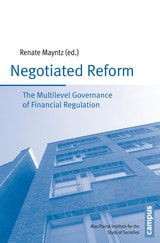
Negotiated Reform
The Multilevel Governance of Financial RegulationEdited by Renate Mayntz
Campus Verlag, 2016
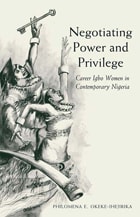
Negotiating Power and Privilege
Career Igbo Women in Contemporary NigeriaPhilomina E. Okeke-Ihejirika
Ohio University Press, 2004
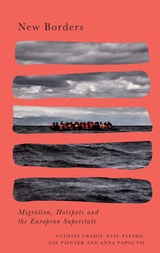
New Borders
Migration, Hotspots and the European SuperstateAntonis Vradis, Evie Papada, Joe Painter, and Anna Papoutsi
Pluto Press, 2018
As borders across Europe have come to symbolize the European Union, this book provides answers to questions of European policy, the securitization of national boundaries, and how legislation determines who is free to belong to a place.
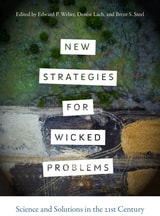
New Strategies for Wicked Problems
Science and Solutions in the 21st CenturyEdward P. Weber
Oregon State University Press, 2017
We now live in a world full of wicked problems, most of them urgent challenges calling out for creative, democratic, and effective solutions. Ed Weber, Denise Lach, and Brent Steele, of the Oregon State University School of Public Policy, solicited papers from a wide variety of accomplished scholars in the fields of science, politics, and policy with significant research experience to address this challenge. The resultant collection focuses on major contemporary environmental and natural resource policy issues, and proposes an assortment of alternative problem-solving methodologies to tackle such problems.
New Strategies for Wicked Problems will appeal to scholars, students, and decision-makers wrestling with wicked problems and “post-normal” science settings beyond simply environmental and natural resource-based issues. It will provide much needed guidance to policymakers, citizens, public managers, and various stakeholders who are struggling with wicked problems in their professional lives.
Other Contributors:
Tanya Heikkila
Helen Ingram
Ann C. Keller
Bob Lackey
Anna Pakenham Stevenson
Christopher M. Weible
Daniel R. Williams

No God but Man
On Race, Knowledge, and TerrorismAtiya Husain
Duke University Press, 2025
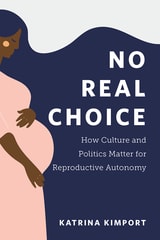
No Real Choice
How Culture and Politics Matter for Reproductive AutonomyKatrina Kimport
Rutgers University Press, 2022
Based on candid, in-depth interviews with women who considered but did not obtain an abortion, No Real Choice punctures the myth that American women have full autonomy over their reproductive choices. Focusing on the experiences of a predominantly Black and low-income group of women, sociologist Katrina Kimport finds that structural, cultural, and experiential factors can make choosing abortion impossible–especially for those who experience racism and class discrimination. From these conversations, we see the obstacles to “choice” these women face, such as bans on public insurance coverage of abortion and rampant antiabortion claims that abortion is harmful. Kimport's interviews reveal that even as activists fight to preserve Roe v. Wade, class and racial disparities have already curtailed many women’s freedom of choice.
No Real Choice analyzes both the structural obstacles to abortion and the cultural ideologies that try to persuade women not to choose abortion. Told with care and sensitivity, No Real Choice gives voice to women whose experiences are often overlooked in debates on abortion, illustrating how real reproductive choice is denied, for whom, and at what cost.

No Smoking
The Ethical IssuesRobert E. Goodin
University of Chicago Press, 1990

No Way to Run an Economy
Why the System Failed and How to Put It RightGraham Turner
Pluto Press, 2009
In The Credit Crunch, Graham Turner predicted that banks would be nationalised and interest rates would be reduced too slowly to halt the crisis. His predictions were correct. His new book, No Way to Run an Economy, is the essential guide to the turbulent times ahead.
Turner recommended radical measures, such as quantitative easing, in early 2008 but argues that action has been taken too late and been too timid to make a real difference. He dissects the policy mistakes of the last 12 months including Obama's doomed market-led response to the crisis and the obsession of central banks with the red herring of inflation.
There is no doubt the economy is still in serious trouble, but Turner shows that learning from the mistakes made so far can prevent a situation worse than that of the 1930s crisis.
Nonprofits and Their Networks
Cleaning the Waters along Mexico’s Northern BorderDaniel M. Sabet
University of Arizona Press, 2008
Finding that these organizations do have a positive impact, Daniel Sabet seeks to understand how autonomous nonprofit organizations have emerged and developed along the border. He employs data from more than 250 interviews with members of civil society organizations and public officials, surveys of neighborhood association leaders, observations at public meetings, and many secondary sources. His research compares the experiences of third-sector organizations in four prominent Mexican border cities: Tijuana, Nogales, Ciudad Juárez, and Nuevo Laredo.
Sabet finds that political change is a necessary precondition for the establishment of an independent third sector. The demise of one-party rule in Mexico has given nonprofit organizations greater opportunities to flourish, he finds, but persistent informal rules still obstruct their emergence and development. Sabet concludes that the success of the third sector will depend on the organizations’ networks. He examines organizational ties to three key groups—U.S. nonprofits, the business community, and government-created methods for public participation—and evaluates the importance of these connections for the future.

Northern Frontiers of Qing China and Tokugawa Japan
A Comparative Study of Frontier PolicyRichard Louis Edmonds
University of Chicago Press, 1985

Nourish the People
The State Civilian Granary System in China, 1650–1850Pierre-Etienne Will and R. Bin Wong; With James Lee; Contributions by Jean Oi and Peter Perdue
University of Michigan Press, 1991