1441 books match the query 'Great Britain' and 24 start with n
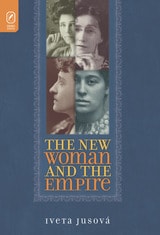
cover of NEW WOMAN AND THE EMPIRE

NEW WOMAN AND THE EMPIRE

Iveta Jusová

The Ohio State University Press, 2005

[more]
cover of NEWSPEAK in the 21st Century

NEWSPEAK in the 21st Century

David Cromwell and David Edwards

Pluto Press, 2009

Since 2001, Media Lens has encouraged thousands of readers to challenge the filtered and distorted version of the world provided by major newspapers and broadcasters. The media responses, collected in Newspeak, are an exposé of the arrogance and servility to power of our leading journalists and editors, starring Andrew Marr, Alan Rusbridger, Roger Alton, Jon Snow, Jeremy Bowen and even George Monbiot.

Picking up where the highly acclaimed and successful Guardians of Power (2006) left off, Newspeak is packed with forensic media analysis, revealing the lethal bias in "balanced" reporting. Even the "best" UK media -- the Guardian, the Independent, Channel 4 News and the BBC -- turn out to be cheerleaders for government, business and war.

Alongside an A-Z of BBC propaganda and chapters on Iraq and climate change, Newspeak focuses on the demonisation of Iran and Venezuela, the Israel-Palestine conflict, the myth of impartial reporting and the dark art of smearing dissidents.
[more]
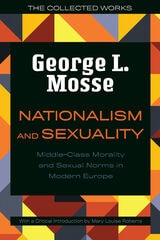
cover of Nationalism and Sexuality: Middle-Class Morality and Sexual Norms in Modern Europe

Nationalism and Sexuality

Middle-Class Morality and Sexual Norms in Modern Europe

George L. Mosse, With a critical introduction by Mary Louise Roberts

University of Wisconsin Press, 2020

This landmark work by George L. Mosse, first published in 1985, examines the history of sexuality through the lens of bourgeois respectability and nationalism. Using a daring breadth of German and English sources, Nationalism and Sexuality pioneered the use of gender stereotypes as a methodology for studying the history of sexuality in mainstream European history. Mosse’s innovative inquiries on gender remain central to discussions about modern constructions of national belonging and the workings of the state. This edition of Mosse’s classic volume includes a new critical introduction by Mary Louise Roberts, whose books include What Soldiers Do: Sex and the American GI in World War II France.
[more]
cover of Nationalism, Devolution and the Challenge to the United Kingdom State

Nationalism, Devolution and the Challenge to the United Kingdom State

Arthur Aughey

Pluto Press, 2001
[more]
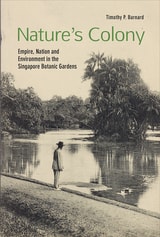
cover of Nature's Colony: Empire, Nation and Environment in the Singapore Botanic Gardens

Nature's Colony

Empire, Nation and Environment in the Singapore Botanic Gardens

Timothy P. Barnard

National University of Singapore Press, 2017

Established in 1859, the Singapore Botanic Gardens are arguably the most important colonial botanic gardens in the world. Not only have the Gardens been important as a park for Singaporeans and visitors, they have had a significant role as a scientific institution and as a testing ground for tropical plantation agriculture implemented around the world. As Timothy P. Barnard shows in Nature’s Colony, underlying each of these uses is a broader story of the Botanic Gardens as an arena where power and the natural world meet and interact.
 
Initially conceived to exploit nature for the benefit of empire, the Gardens were part of a symbolic struggle by administrators, scientists, and gardeners to assert dominance within Southeast Asia’s tropical landscape, reflecting shifting understandings of power, science, and nature among local administrators and distant mentors in Britain. Consequently, as an outpost of imperial science, the Gardens were instrumental in the development of plantation crops, such as rubber and oil palm, which went on to shape landscapes across the globe. Since the independence of Singapore, the Gardens have played a role in the “greening” of the country and have been named as Singapore’s first World Heritage Site. Setting the Gardens alongside the Royal Botanic Gardens, Kew, and botanic gardens in India, Ceylon, Mauritius, and the West Indies, Nature’s Colony provide the first in-depth look at the history of this influential institution.

 
[more]
cover of Negotiated Reform: The Multilevel Governance of Financial Regulation

Negotiated Reform

The Multilevel Governance of Financial Regulation

Edited by Renate Mayntz

Campus Verlag, 2016
Multilevel structures are becoming increasingly characteristic of the world in which we live. This book is a unique study of policy making in a multilevel political system extending from the national to the international level. Taking as its subject the process of financial market reforms that took place following the recent financial crisis, it brings together an international group of renowned social scientists to explore the interplay between international organizations, European authorities, and regulators in the United States, the United Kingdom, and Germany in global financial decision making. Contributors thoroughly explore a small set of reform issues—including bank structure, bank capital, resolution, and over-the-counter trading of derivatives—to provide a detailed view of the vertical and horizontal interactions between these actors as related to a set of key questions: Are those states affected by the crisis adopting internationally negotiated regulations? Or are they instead determining the European and international reform agenda? Are the agreed upon policies contributing to greater harmonization of financial regulation in a multilevel political system? Or is the process being dominated by differing national interests?
[more]
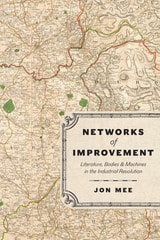
cover of Networks of Improvement: Literature, Bodies, and Machines in the Industrial Revolution

Networks of Improvement

Literature, Bodies, and Machines in the Industrial Revolution

Jon Mee

University of Chicago Press, 2023

A new literary-cultural history of the Industrial Revolution in Britain from the late eighteenth to the mid-nineteenth centuries.

Working against the stubbornly persistent image of “dark satanic mills,” in many ways so characteristic of literary Romanticism, Jon Mee provides a fresh, revisionary account of the Industrial Revolution as a story of unintended consequences. In Networks of Improvement, Mee reads a wide range of texts—economic, medical, and more conventionally “literary”—with a focus on their circulation through networks and institutions. Mee shows how a project of enlightened liberal reform articulated in Britain’s emerging manufacturing towns led to unexpectedly coercive forms of machine productivity, a pattern that might be seen repeating in the digital technologies of our own time. Instead of treating the Industrial Revolution as Romanticism’s “other,” Mee shows how writing, practices, and institutions emanating from these industrial towns developed a new kind of knowledge economy, one where local literary and philosophical societies served as important transmission hubs for the circulation of knowledge.
[more]
cover of New Science, New World

New Science, New World

Denise Albanese

Duke University Press, 1996

In New Science, New World Denise Albanese examines the discursive interconnections between two practices that emerged in the seventeenth century—modern science and colonialism. Drawing on the discourse analysis of Foucault, the ideology-critique of Marxist cultural studies, and de Certeau’s assertion that the modern world produces itself through alterity, she argues that the beginnings of colonialism are intertwined in complex fashion with the ways in which the literary became the exotic “other” and undervalued opposite of the scientific.
Albanese reads the inaugurators of the scientific revolution against the canonical authors of early modern literature, discussing Galileo’s Dialogue on the Two Chief World Systems and Bacon’s New Atlantis as well as Milton’s Paradise Lost and Shakespeare’s The Tempest. She examines how the newness or “novelty” of investigating nature is expressed through representations of the New World, including the native, the feminine, the body, and the heavens. “New” is therefore shown to be a double sign, referring both to the excitement associated with a knowledge oriented away from past practices, and to the oppression and domination typical of the colonialist enterprise. Exploring the connections between the New World and the New Science, and the simultaneously emerging patterns of thought and forms of writing characteristic of modernity, Albanese insists that science is at its inception a form of power-knowledge, and that the modern and postmodern division of “Two Cultures,” the literary and the scientific, has its antecedents in the early modern world.
New Science, New World makes an important contribution to feminist, new historicist, and cultural materialist debates about the extent to which the culture of seventeenth-century England is proto-modern. It will offer scholars and students from a wide range of fields a new critical model for historical practice.

[more]
cover of New Women, New Novels

New Women, New Novels

Ardis, Ann

Rutgers University Press, 1990
.
[more]
cover of New World, Known World: Shaping Knowledge in Early Anglo-American Writing

New World, Known World

Shaping Knowledge in Early Anglo-American Writing

David Read

University of Missouri Press, 2005
New World, Known World examines the works of four writers closely associated with the early period of English colonization, from 1624 to 1649: John Smith’s Generall Historie of Virginia, William Bradford’s Of Plymouth Plantation, Thomas Morton’s New English Canaan, and Roger Williams’s A Key into the Language of America (in conjunction with another of Williams’s major works, The Bloudy Tenent of Persecution). David Read addresses these texts as examples of what he refers to as “individual knowledge projects”— the writers’ attempts to shape raw information and experience into patterns and narratives that can be compared with and assessed against others from a given society’s fund of accepted knowledge.
            Read argues that the body of Western knowledge in the period immediately before the development of well-defined scientific disciplines is primarily the work of individuals functioning in relative isolation, rather than institutions working in concert. The European colonization of other regions in the same period exposes in a way few historical situations do both the complexity and the uncertainty involved in the task of producing knowledge.   
            Read treats each work as the project of a specific mind, reflecting a high degree of intentionality and design, and not simply as a collection of documentary evidence to be culled in the service of a large-scale argument. He shows that each author adds a distinct voice to the experience of North American colonization and that each articulates it in ways that are open to analysis in terms of form, style, convention, rhetorical strategies, and applications of metaphor and allegory.
            By applying the tools of literary interpretation to colonial texts, Read reaches a fuller understanding of the immediate consequences of English colonization in North America on the culture’s base of knowledge. Students and scholars of early modern colonialism and transatlantic studies, as well as those with interests in seventeenth-century American and English literature, should find this book of particular value.  
[more]
cover of Nineteenth-Century English

Nineteenth-Century English

Richard W. Bailey

University of Michigan Press, 1998

Jane Austen's English is far different from Virginia Woolf's, but historians of the English language have given scant attention to the ways in which English changed over the course of the nineteenth century. In Nineteenth-Century English, Richard W. Bailey treads new ground by showing the extent to which the language changed as cultural and economic transformations brought us into the modern world.
Six aspects of nineteenth-century English are treated in separate chapters: writing, sounds, words, slang, grammar, and "voices." In each domain, innovation and obsolescence are discussed as they were observed by contemporary writers. Thus Bailey shows how linguistic details gained powerful social meaning in the emergent stratification by class, region, race, and gender of the anglophone community.
At the beginning of the century, the "Italian" sound of a in dance was thought to be an intolerable vulgarity; by the end, it was a sign of the highest refinement. At the beginning, OK had yet to be invented; by the end, it was being used in nearly all varieties of English and had appeared as a loanword in many languages touched by English. At the beginning, mixed forms of English--pidgins and creoles--were little known and thoroughly despised; by the end some of them had become vehicles for Bible translation. As English became a global language, it took on the local color of its surroundings, and proper usage became ever more important as an index of social worth, as a measure of intelligence, and as a gauge to a person's suitability for employment, often resulting in painful consequences. What the language was like changed dramatically. What people thought about the language changed even more.
"The tale that Bailey has to tell . . . is little short of enthralling. Drawing on previously neglected material--novels, magazines, letters and diaries--he shows how the language came into the century a Georgian popinjay and left it a sober-suited man of business, purged of quirks and flashy curiosities. Along the way, Bailey uncovers a language which, while it seems familiar enough on the printed page of a Jane Austen novel, was actually quite different from the English we use today. . . ." --Robert McCrum, Observer (London)
Language changes as time goes by. Modern listeners can barely comprehend Old and Middle English. Although we are able to understand nineteenth-century English, the language changed with the effects of industrialization, urbanization, bilingualism, and growing literacy. In this book, Richard Bailey uses numerous examples and illustrations to demonstrate the changes in English. Furthermore, he identifies the connections between social events and linguistic transformation.
". . . a highly engaging study of a broad and difficult subject. Bailey is an excellent writer--the chapters are well-organized and written in a vigorous style that is buoyed by a wry sense of humor. . . ." --Lexicographia
". . . entertaining, lucid, packed with detail, and refreshingly alert to the arresting quotation. If it is unusual to associate pleasurable reading with the scholarly analysis of language, Bailey also makes clear the serious philological and political implications of his study." -- Times Literary Supplement
Richard Bailey is Professor of English, University of Michigan, and is known internationally as an expert on social and regional varieties of English.
[more]
cover of No. 10: The Geography of Power at Downing Street

No. 10

The Geography of Power at Downing Street

Jack Brown

Haus Publishing, 2019

Fronted by one of the world’s most iconic doors, 10 Downing Street is the home and office of the British Prime Minister and the heart of British politics. Steeped in both political and architectural history, this famed address was originally designed in the late seventeenth century as little more than a place of residence, with no foresight of the political significance the location would come to hold. As its role evolved, 10 Downing Street, now known simply as ‘Number 10,’ has required constant adaptation in order to accommodate the changing requirements of the premiership. 
Written by Number 10’s first ever ‘Researcher in Residence,’ with unprecedented access to people and papers, No. 10: The Geography of Power at Downing Street sheds new light on unexplored aspects of Prime Ministers’ lives. Jack Brown tells the story of the intimately entwined relationships between the house and its post-war residents, telling how each occupant’s use and modification of the building reveals their own values and approaches to the office of Prime Minister. The book reveals how and why Prime Ministers have stamped their personalities and philosophies upon Number 10 and how the building has directly affected the ability of some Prime Ministers to perform the role. Both fascinating and extremely revealing, No. 10 offers an intimate account of British political power and the building at its core. It is essential reading for anyone interested in the nature and history of British politics.  

[more]
cover of Noble Volunteers: The British Soldiers Who Fought the American Revolution

Noble Volunteers

The British Soldiers Who Fought the American Revolution

Don N. Hagist

Westholme Publishing, 2025

Advisor for Ken Burns The American Revolution on PBS®
Winner of the 2020 American Revolution Roundtable of Philadelphia Book of the Year
Redcoats. For Americans, the word brings to mind the occupying army that attempted to crush the Revolutionary War. There was more to these soldiers than their red uniforms, but the individuals who formed the ranks are seldom described in any detail in historical literature, leaving unanswered questions. Who were these men? Why did they join the army? Where did they go when the war was over?
    In Noble Volunteers: The British Soldiers Who Fought the American Revolution, Don N. Hagist brings life to these soldiers, describing the training, experiences, and outcomes of British soldiers who fought during the Revolution. Drawing on thousands of military records and other primary sources in British, American, and Canadian archives, and the writings of dozens of officers and soldiers, Noble Volunteers shows how a peacetime army responded to the onset of war, how professional soldiers adapted quickly and effectively to become tactically dominant, and what became of the thousands of career soldiers once the war was over. 
    In this historical tour de force, introduced by Pulitzer Prize winner Rick Atkinson, Hagist dispels long-held myths, revealing how remarkably diverse British soldiers were. They represented a variety of ages, nationalities, and socioeconomic backgrounds, and many had joined the army as a peacetime career, only to find themselves fighting a war on another continent in often brutal conditions. Against the sweeping backdrop of the war, Hagist directs his focus on the small picture, illuminating the moments in an individual soldier’s life—those hours spent nursing a fever while standing sentry in the bitter cold, or writing a letter to a wife back home. What emerges from these vignettes is the understanding that while these were “common” soldiers, each soldier was completely unique, for, as Hagist writes, “There was no ‘typical’ British soldier.” 

[more]
cover of Noel Coward: A Biography

Noel Coward

A Biography

Philip Hoare

University of Chicago Press, 1998

To several generations, actor, playwright, songwriter, and filmmaker, Noël Coward (1899-1973) was the very personification of wit, glamour, and elegance. His biographer, Philip Hoare, given unprecedented access to the private papers and correspondence of Coward family members, compatriots, and numerous lovers, has produced the definitive biography of one of the twentieth century's most celebrated and controversial figures.

"Philip Hoare's careful research and lucid presentation in his Noël Coward: A Biography adds depth to the picture."-New York Times Book Review

"A fascinating, in-depth biography."—Library Journal

"Hoare has profiled vividly and in-depth a complex legend who had a talent for creating and recreating both himself and his works."—Publishers Weekly

"In the thicket of books about the life and work of Coward, Philip Hoare's stands out as the most well-documented and objective."—Los Angeles Times

"[Hoare's] book, like its subject, strives for effortless sophistication, and succeeds."—Newsday

"Hoare's retelling of Coward's story [is] the most vivid, insightful, and fascinating so far."—John Lahr, The New Yorker
[more]
cover of None a Stranger There: England and/in Europe on the Early Modern Stage

None a Stranger There

England and/in Europe on the Early Modern Stage

Edited by Scott Oldenburg and Matteo Pangallo

University of Alabama Press, 2025

A wide-ranging group of scholarly essays that probe the historical nature of English identity, both through self-definition and in relationship to the rest of Europe
[more]
cover of Normal Aging I: Reports from the Duke Longitudinal Studies, 1955–1969

Normal Aging I

Reports from the Duke Longitudinal Studies, 1955–1969

Erdman Palmore

Duke University Press, 1970
[more]
cover of North Sea Crossings: The Literary Heritage of Anglo-Dutch Relations 1066–1688

North Sea Crossings

The Literary Heritage of Anglo-Dutch Relations 1066–1688

Sjoerd Levelt and Ad Putter

Bodleian Library Publishing, 2022

North Sea Crossings sheds new light on the literature and art of a pivotal period in European history by exploring the cultural relationship between speakers of Dutch and speakers of English in England and the Dutch Low Countries.

This richly illustrated book tells the story of cultural exchange between the people of the Low Countries and England in the Middle Ages and the Early Modern period, revealing how Anglo-Dutch connections changed the literary landscape on both sides of the North Sea.

Ranging from the Norman Conquest of 1066 to the “Glorious Revolution” of 1688, North Sea Crossings uncovers the lasting impact of contacts and collaborations between Dutch and English speakers on historical writing, map-making, manuscript production, and early printing. The literary heritage of Anglo-Dutch relations is explored and lavishly illustrated through a unique collection of manuscripts, early prints, maps, and other treasures from the Bodleian Library.
[more]
cover of Northern Ireland After the Good Friday Agreement: Victims, Grievance and Blame

Northern Ireland After the Good Friday Agreement

Victims, Grievance and Blame

Marie Smyth and Mike Morrissey

Pluto Press, 2002

The difficulties that have dogged the Northern Ireland peace process and the implementation of the Good Friday Agreement are rarely out of the headlines. This book gives an insight into one of the issues at stake for the people of Northern Ireland – the long-term impact of political violence on the civil population.

The result of extensive research among local communities, and drawing on survey and interview evidence, Northern Ireland After the Good Friday Agreement sets this issue within the context of past conflict and the continuing sectarian violence of the present. In particular it presents the views of ordinary people about their personal experiences of political violence and the impact it has had upon their lives.

Moreover, it shows how the Troubles have affected the young people of the region, and looks at the problems facing a society coming out of a protracted period of low-intensity conflict.

[more]
cover of Not for Patching: A Strategic Welfare Review

Not for Patching

A Strategic Welfare Review

Frank Field and Andrew Forsey

Haus Publishing, 2017
In his famous report of 1942, the economist and social reformer William Beveridge wrote that World War II was a “revolutionary moment in the world’s history” and so a time “for revolutions, not for patching.” The Beveridge Report outlined the welfare state that Atlee’s government would go on to implement after 1946, instituting, for the first time, a national system of benefits to protect all from “the cradle to the grave.” Its crowning glory was the National Health Service, established in 1948, which provided free medical care for all at the point of delivery. Since then, the welfare system has been patched, beset by muddled thinking and short-termism. The British government spends more than £171 billion every year on welfare—and yet, since the Beveridge Report, there has been no strategic review of the system, compared to other areas of government and public policy, which have been subject to frequent strategic reviews. Reform of the welfare system need not mean dismantlement, Frank Field and Andrew Forsey argue here, but serious questions nonetheless must be asked about how the welfare state as we understand it can remain sustainable as the twenty-first century progresses.
 
[more]
cover of Notebooks, English Virtuosi, and Early Modern Science

Notebooks, English Virtuosi, and Early Modern Science

Richard Yeo

University of Chicago Press, 2014
In Notebooks, English Virtuosi, and Early Modern Science, Richard Yeo interprets a relatively unexplored set of primary archival sources: the notes and notebooks of some of the leading figures of the Scientific Revolution. Notebooks were important to several key members of the Royal Society of London, including Robert Boyle, John Evelyn, Robert Hooke, John Locke, and others, who drew on Renaissance humanist techniques of excerpting from texts to build storehouses of proverbs, maxims, quotations, and other material in personal notebooks, or commonplace books. Yeo shows that these men appreciated the value of their own notes both as powerful tools for personal recollection, and, following Francis Bacon, as a system of precise record keeping from which they could retrieve large quantities of detailed information for collaboration.
           
The virtuosi of the seventeenth century were also able to reach beyond Bacon and the humanists, drawing inspiration from the ancient Hippocratic medical tradition and its emphasis on the gradual accumulation of information over time. By reflecting on the interaction of memory, notebooks, and other records, Yeo argues, the English virtuosi shaped an ethos of long-term empirical scientific inquiry.
[more]
cover of Notorious Facts: Publicity in Romantic England, 1780–1830

Notorious Facts

Publicity in Romantic England, 1780–1830

James Mulvihill

University of Delaware Press, 2012

Notorious Facts examines the sensationalistic confounding of persons and principles in the public life of Romantic England (1780–1830). Its purview is limited to five decades straddling the late eighteenth and early nineteenth centuries, but its trajectory, moving from a politics rendered in personal terms to a politics of personality, describes a shift still in process today. The study’s chapters draw on a motley body of literature (pamphlets, secret histories, and the like) that at first glance seems uncharacteristic of what literary historians call the English Romantic period. Viewed in the context of something called late Georgian England, these texts seem more indigenous, but if the canonical revisionism of the last few decades should teach us anything, it is that a Romanticism encompassing all romanticisms ideally excludes nothing.

In its heroic Enlightenment sense, publicity is concerned with exposing the workings of power for all to see. A good deal may be inferred about publicity in Romantic England from primary texts in which this salutary function is at once espoused and subverted. These texts—the mostly nameless or pseudonymous authors of the age’s pamphlet literature are the heroes and villains of the piece—almost invariably claim to speak from a disinterested conception of publicity while putting its methods of critical exposure to wholly self-interested purposes. This study examines well-known authors of the period like Jeremy Bentham, Samuel Taylor Coleridge, and William Hazlitt, as well as pamphleteers like John Horne Tooke, Philip Withers, and Nathaniel Jefferys. Other figures include authors of secret history like Thomas Ashe, Mary Anne Clarke, Lewis Goldsmith, and Joseph Haslewood in addition to notorious figures in their own right such as the Prince and Princess of Wales, Mrs. Fitzherbert, and the Reverend Edward Irving. Among the topics treated are treasonous libel, royal scandal, secret history, and celebrity.

Published by University of Delaware Press. Distributed worldwide by Rutgers University Press.
 

[more]
cover of Novel Science: Fiction and the Invention of Nineteenth-Century Geology

Novel Science

Fiction and the Invention of Nineteenth-Century Geology

Adelene Buckland

University of Chicago Press, 2013

Novel Science is the first in-depth study of the shocking, groundbreaking, and sometimes beautiful writings of the gentlemen of the “heroic age” of geology and of the contribution these men made to the literary culture of their day. For these men, literature was an essential part of the practice of science itself, as important to their efforts as mapmaking, fieldwork, and observation. The reading and writing of imaginative literatures helped them to discover, imagine, debate, and give shape and meaning to millions of years of previously undiscovered earth history.
           
Borrowing from the historical fictions of Walter Scott and the poetry of Lord Byron, they invented geology as a science, discovered many of the creatures we now call the dinosaurs, and were the first to unravel and map the sequence and structure of stratified rock. As Adelene Buckland shows, they did this by rejecting the grand narratives of older theories of the earth or of biblical cosmogony: theirs would be a humble science, faithfully recording minute details and leaving the big picture for future generations to paint. Buckland also reveals how these scientists—just as they had drawn inspiration from their literary predecessors—gave Victorian realist novelists such as George Eliot, Charles Kingsley, and Charles Dickens a powerful language with which to create dark and disturbing ruptures in the too-seductive sweep of story.
[more]
cover of Now More Than Ever

Now More Than Ever

By Aldous Huxley

University of Texas Press, 2000

Over the course of his career, British writer Aldous Huxley (1894-1963) shifted away from elitist social satires and an atheistic outlook toward greater concern for the masses and the use of religious terms and imagery. This change in Huxley's thinking underlies the previously unpublished play Now More Than Ever.

Written in 1932-1933 just after Brave New World, Now More Than Ever is a response to the social, economic, and political upheavals of its time. Huxley's protagonist is an idealistic financier whose grandiose schemes for controlling the means of production drive him to swindling and finally to suicide. His fate allows Huxley to expose the evils he perceives in free-market capitalism while pleading the case for national economic planning and the rationalization of Britain's industrial base.

This volume contains the full text of Now More Than Ever, which was believed to be lost until 1976, when a copy was found at the Harry Ransom Humanities Research Center of the University of Texas at Austin. A "thinker's play" that has never been produced on stage, it is the last previously unpublished piece of Huxley's major writings and immensely important to understanding his development as a writer. The editors of this volume have annotated the play for contemporary readers. Their introduction sets the play in the context of Huxley's intellectual life.

[more]
cover of Nuclear Power

Nuclear Power

Janet Wood

The Institution of Engineering and Technology, 2007

This title is the first of four 'new-look' books in the Power and Energy series that are aimed at industry professionals rather than academics. Nuclear Power explains in detail how nuclear power works, its costs, its benefits as part of the electricity supply system, and also examines its record.
[more]