Results by title
90 books match the query 'Growth' and 4 start with n
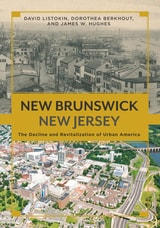
New Brunswick, New Jersey
The Decline and Revitalization of Urban AmericaListokin, David
Rutgers University Press, 2016
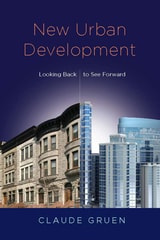
New Urban Development
Looking Back to See ForwardGruen, Claude
Rutgers University Press, 2010
New Urban Development traces how locally induced housing cost increases led federal policy-makers to toss out the safeguards against lending excesses that had been put in place during the 1930s. But the story begins much earlier, during the colonial era, continuing up through the mortgage collapse that ushered in the recession of 2008. In his sweeping history of these issues, Gruen considers gentrification, environmentalism, sprawl, anti-sprawl movements, and more. His clarification of how urban development change occurs backs up his recommendations for increasing the production of housing and replacing obsolete commercial and industrial spaces with development that serves the twenty-first-century economy. New Urban Development specifies thirteen changes to policies at the federal, state, and local levels to provide better and less expensive urban housing, desirable neighborhoods, and thriving workplaces across the country.
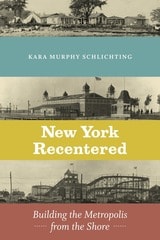
New York Recentered
Building the Metropolis from the ShoreKara Murphy Schlichting
University of Chicago Press, 2019
The history of New York City’s urban development often centers on titanic municipal figures like Robert Moses and on prominent inner Manhattan sites like Central Park. New York Recentered boldly shifts the focus to the city’s geographic edges—the coastlines and waterways—and to the small-time unelected locals who quietly shaped the modern city. Kara Murphy Schlichting details how the vernacular planning done by small businessmen and real estate operators, performed independently of large scale governmental efforts, refigured marginal locales like Flushing Meadows and the shores of Long Island Sound and the East River in the late nineteenth and early twentieth centuries. The result is a synthesis of planning history, environmental history, and urban history that recasts the story of New York as we know it.
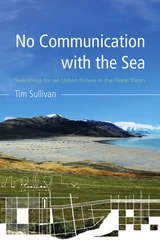
No Communication with the Sea
Searching for an Urban Future in the Great BasinTim Sullivan
University of Arizona Press, 2010
No Communication with the Sea is a journey through this urbanizing Great Basin landscape. Here, the land fosters illusions of limitless space and resources, but its space and resources are severely limited; its people live clustered in cities but are often reluctant to embrace urbanity. These tensions led journalist and urban planner Tim Sullivan to explore the developing centers and edges of the Great Basin cities and the ways some are trying to build livable and sustainable urban environments.
In this highly readable book of creative nonfiction, Sullivan employs a variety of methods—including interviews, research, travelogues, and narrative—to survey the harsh landscape for clues to the ways cities can adapt to their geography, topography, ecology, hydrography, history, and culture. No Communication with the Sea embarks on a quest for a livable future for the heart of the interior West. In the process, it both unearths the past and ponders the present and future Great Basin cities.