Results by title
332 books match the query 'Health & Fitness' and 7 start with n
Needless Suffering
How Society Fails Those with Chronic PainDavid Nagel
University Press of New England, 2016
Negotiating Disability
Disclosure and Higher EducationStephanie L. Kerschbaum, Laura T. Eisenman, and James M. Jones, Editors
University of Michigan Press, 2017
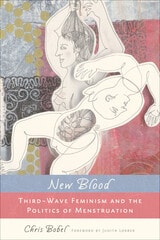
New Blood
Third-Wave Feminism and the Politics of MenstruationChris Bobel
Rutgers University Press, 2010
Through her critical ethnographic lens, Bobel focuses on debates central to feminist thought (including the utility of the category "gender") and challenges to building an inclusive feminist movement. Filled with personal narratives, playful visuals, and original humor, New Blood reveals middle-aged progressives communing in Red Tents, urban punks and artists "culture jamming" commercial menstrual products in their zines and sketch comedy, queer anarchists practicing DIY health care, African American health educators espousing "holistic womb health," and hopeful mothers refusing to pass on the shame to their pubescent daughters. With verve and conviction, Bobel illuminates today's feminism-on-the-ground--indisputably vibrant, contentious, and ever-dynamic.
No Germs Allowed!
How to Avoid Infectious Diseases At Home and on the RoadWeinberg, Winkler G
Rutgers University Press, 1996
AIDS, tuberculosis, hepatitis, chickenpox, malaria, Lyme disease, salmonella, strep throat-no matter where you go or where you live, you are at risk from infectious disease. But there are ways you can protect yourself and your family!
The revised and expanded edition of this classic guide explains what you need to know to keep the germs away. From the infections of daily life, like the common cold and traveler's diarrhea, to dangerous, rare diseases such as plague, hantavirus, and invasive strep bacteria, to recent threats of mad cow disease, West Nile virus, SARS, and bioterrorism, this unique guide tells you:
- your chances of getting sick
- simple precautions you can take
- which vaccinations and shots are worthwhile
- how to avoid catching infections in the hospital
- special precautions to take if you are pregnant
- how to ward off infections even if you have chronic health problems or are HIV positive
- how to keep well while traveling
- what to eat-and not eat-on the road
- symptoms that signal trouble
- what illnesses you can get from bug bites and animals
- how to prevent sexually transmitted diseases
- who should get flu shots and why
- why you should see your doctor before you get sick
Dr. Winkler G. Weinberg lets you know what you need to worry about and what you don't.
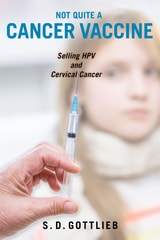
Not Quite a Cancer Vaccine
Selling HPV and Cervical CancerS.D. Gottlieb
Rutgers University Press, 2018
Prior to its market debut, Gardasil seemed to offer female empowerment, touting protection against HPV and its potential for cervical cancer. Gottlieb questions the marketing pitch’s vaunted promise and asks why vaccine marketing unnecessarily gendered the vaccine’s utility, undermining Gardasil’s benefit for men and women alike. This book demonstrates why in the ten years since Gardasil’s U.S. launch its low rates of public acceptance have their origins in the early days of the vaccine dissemination. Not Quite a Cancer Vaccine addresses the on-going expansion in U.S. healthcare of patients-as-consumers and the ubiquitous, and sometimes insidious, health marketing of large pharma.
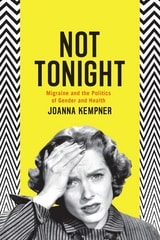
Not Tonight
Migraine and the Politics of Gender and HealthJoanna Kempner
University of Chicago Press, 2014
In Not Tonight, Joanna Kempner argues that this general dismissal of migraine can be traced back to the gendered social values embedded in the way we talk about, understand, and make policies for people in pain. Because the symptoms that accompany headache disorders—like head pain, visual auras, and sensitivity to sound—lack an objective marker of distress that can confirm their existence, doctors rely on the perceived moral character of their patients to gauge how serious their complaints are. Kempner shows how this problem plays out in the history of migraine, from nineteenth-century formulations of migraine as a disorder of upper-class intellectual men and hysterical women to the influential concept of “migraine personality” in the 1940s, in which women with migraine were described as uptight neurotics who withheld sex, to contemporary depictions of people with highly sensitive “migraine brains.” Not Tonight casts new light on how cultural beliefs about gender, pain, and the distinction between mind and body influence not only whose suffering we legitimate, but which remedies are marketed, how medicine is practiced, and how knowledge about disease is produced.
Not Trying
Infertility, Childlessness, and AmbivalenceKristin J. Wilson
Vanderbilt University Press, 2014
But the majority of women who struggle with fertility avoid treatment. The women whose interviews appear in Not Trying belong to this majority. Their attitudes vary and may change as their life circumstances evolve. Some support the prevailing cultural narrative that women are meant to be mothers and refuse to see themselves as childfree by choice. Most of these women, who come from a wider range of social backgrounds than most researchers have studied, experience deep ambivalence about motherhood and non-motherhood, never actually choosing either path. They prefer to let life unfold, an attitude that seems to reduce anxiety about not conforming to social expectations.