Results by title
124 books match the query 'Health and hygiene' and 3 start with n

Neurasthenic Nation
America's Search for Health, Happiness, and Comfort, 1869-1920Schuster, David G
Rutgers University Press, 2011
As the United States rushed toward industrial and technological modernization in the late nineteenth century, people worried that the workplace had become too competitive, the economy too turbulent, domestic chores too taxing, while new machines had created a fast-paced environment that sickened the nation. Physicians testified that, without a doubt, modern civilization was causing a host of ills—everything from irritability to insomnia, lethargy to weight loss, anxiety to lack of ambition, and indigestion to impotence. They called this condition neurasthenia.
Neurasthenic Nation investigates how the concept of neurasthenia helped doctors and patients, men and women, and advertisers and consumers negotiate changes commonly associated with “modernity.” Combining a survey of medical and popular literature on neurasthenia with original research into rare archives of personal letters, patient records, and corporate files, David Schuster charts the emergence of a “neurasthenic nation”—a place where people saw their personal health as inextricably tied to the pitfalls and possibilities of a changing world.

No Longer Patient
Feminist Ethics and Health CareSusan Sherwin
Temple University Press, 1992
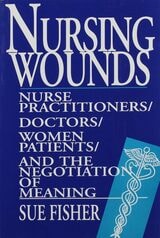
Nursing Wounds
Nurse Practitioners, Doctors, Women Patients, and the Negotiation of MeaningFisher, Sue
Rutgers University Press, 1995
The rise of the nurse practitioner as a new kind of health care professional has blurred the traditional distinction between physicians and nurses. Nurse practitioners argue that they combine both the traditionally male health care delivery of the M.D. and the traditionally female caring attention of the R.N. In her previous work Sue Fisher has analyzed the difficulties that women patients have in getting doctors to listen to their medical concerns. Now she asks whether women fare any better with nurse practitioners.
Nursing Wounds takes us into the examining rooms of nurse practitioners and doctors to listen to how health care professionals and women patients communicate. The nurse practitioners, unlike the doctors, go beyond the medical problem to ask about the social context of the patients' lives. In these exchanges the doctors insist on reinforcing both their professional status and dominant cultural assumptions about women. While the nurse practitioners sometimes do this, they also distance themselves from their professional identities, respond to their patients woman to woman, and undermine traditional understandings about gender arrangements.These differences have important consequences for the delivery of health care.
This compelling and complex analysis employs a range of theoretical perspectives–-from sociolinguistic to postmodern and materialist. Fisher concludes by urging a health care policy that capitalizes on the special strengths of nurse practitioners as providers of primary care who pay real attention to what their patients are saying and who support an alternative, even oppositional, understanding of women's lives.