Results by title
2646 books match the query 'History & Criticism' and 47 start with n
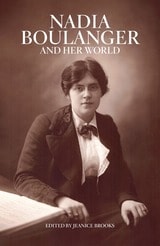
Nadia Boulanger and Her World
Edited by Jeanice Brooks
University of Chicago Press, 2020
Composer, performer, conductor, impresario, and charismatic and inspirational teacher, Boulanger engaged in a vast array of activities in a variety of media, from private composition lessons and lecture-recitals to radio broadcasts, recordings, and public performances. But how to define and account for Boulanger’s impact on the music world is still unclear. Nadia Boulanger and Her World takes us from a time in the late nineteenth century, when many careers in music were almost entirely closed to women, to the moment in the late twentieth century when those careers were becoming a reality. Contributors consider Boulanger’s work in the worlds of composition, musical analysis, and pedagogy and explore the geographies of transatlantic and international exchange and disruption within which her career unfolded. Ultimately, this volume takes its title as a topic for exploration—asking what worlds Boulanger belonged to, and in what sense we can consider any of them to be “hers.”
Narration in the Fiction Film
David Bordwell
University of Wisconsin Press, 1985
Most films tell tales, but what does that involve? How do motion pictures tease us into building what we all agree to call stories? In this study, David Bordwell offers the first comprehensive account of how movies use fundamental principles of narrative representation, unique features of the film medium, and diverse story-telling patterns to construct their fictional narratives. The result is a pioneering, far-reaching work which will change the way we perceive narrative film—and which every serious film scholar, student or fan will welcome.
“This book is of crucial importance to film specialists. I cannot think that any film teacher/scholar would miss reading this work.”—Don Fredricksen, Cornell University
“David Bordwell’s Narration in the Fiction Film is a major contribution to film studies and to narrative theory. The work, I predict, will be widely read, praised, debated, and damned. Brodwell’s originality lies not so much in demonstrating the deficiencies of other theories, which he does very convincingly, but in the scope and design of his project, against which there is no competition of comparable intellectual weight.”—Jerry Carlson, DePaul University
Narrative Podcasting in an Age of Obsession
Neil Verma
University of Michigan Press, 2024
Narrative Podcasting in an Age of Obsession is the first book to look back on this prodigious body of material and attempt to make sense of it from a structural, historical, and analytic point of view. Focusing on more than 350 podcasts and other audio works released between Serial and the COVID pandemic, the book explores why so many of these podcasts seem “obsessed with obsession,” why they focus not only on informing listeners but also dramatizing the labor that goes into it, and why fiction podcasts work so hard to prove they are a brand new form, even as they revive features of radio from decades gone by. This work also examines the industry's reckoning with its own implication in systemic racism, misogyny, and other forms of discrimination. Employing innovative new critical techniques for close listening—including pitch tracking software and spectrograms—Narrative Podcasting in an Age of Obsession makes a major contribution to podcast studies and media studies more broadly.
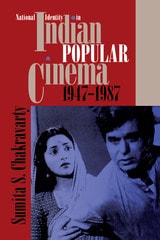
National Identity in Indian Popular Cinema, 1947-1987
By Sumita S. Chakravarty
University of Texas Press, 1993
Although Indian popular cinema has a long history and is familiar to audiences around the world, it has rarely been systematically studied. This book offers the first detailed account of the popular film as it has grown and changed during the tumultuous decades of Indian nationhood. The study focuses on the cinema’s characteristic forms, its range of meanings and pleasures, and, above all, its ideological construction of Indian national identity.
Informed by theoretical developments in film theory, cultural studies, postcolonial discourse, and “Third World” cinema, the book identifies the major genres and movements within Bombay cinema since Independence and uses them to enter larger cultural debates about questions of identity, authenticity, citizenship, and collectivity. Chakravarty examines numerous films of the period, including Guide (Vijay Anand, 1965), Shri 420 [The gentleman cheat] (Raj Kapoor, 1955), and Bhumika [The role] (Shyam Benegal, 1977). She shows how “imperso-nation,” played out in masquerade and disguise, has characterized the representation of national identity in popular films, so that concerns and conflicts over class, communal, and regional differences are obsessively evoked, explored, and neutralized.
These findings will be of interest to film and area specialists, as well as general readers in film studies.
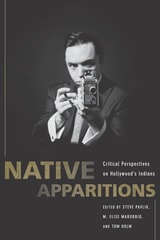
Native Apparitions
Critical Perspectives on Hollywood’s IndiansEdited by Steve Pavlik, M. Elise Marubbio, and Tom Holm
University of Arizona Press, 2017
Native Apparitions offers a critical intervention and response to Hollywood’s representations of Native peoples in film, from historical works by director John Ford to more contemporary works, such as Apocalypto and Avatar. But more than a critique of stereotypes, this book is a timely call for scholarly activism engaged in Indigenous media sovereignty. The collection clusters around three approaches: retrospective analysis, individual film analysis, and Native- and industry-centered testimonials and interviews, which highlight indigenous knowledge and cultural context, thus offering a complex and multilayered dialogic and polyphonic response to Hollywood’s representations.
Using an American Indian studies framework, Native Apparitions deftly illustrates the connection between Hollywood’s representations of Native peoples and broader sociopolitical and historical contexts connected to colonialism, racism, and the Western worldview. Most importantly, it shows the impact of racializing stereotypes on Native peoples, and the resilience of Native peoples in resisting, transcending, and reframing Hollywood’s Indian tropes.
CONTRIBUTORS
Chadwick Allen
Richard Allen
Joanna Hearne
Tom Holm
Jan-Christopher Horak
Jacqueline Land
Andrew Okpeaha MacLean
M. Elise Marubbio
Steve Pavlik
Rose Roberts
Myrton Running Wolf
Richard M. Wheelock
Nazi Film Melodrama
Laura Heins
University of Illinois Press, 2013
Ne me quitte pas
A Song by Jacques Brel and Interpreted by Nina Simone and OthersMaya Angela Smith
Duke University Press, 2025
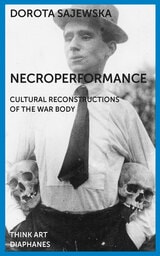
Necroperformance
Cultural Reconstructions of the War BodyDorota Sajewska
Diaphanes, 2019
Searching for traces of memory in precarious bodies inflicted with the violence of war, Necroperformance implores us to acknowledge the fragility of life as it actively reinforces an attitude of respect for the right to live. Sajewska constructs here an alternative culture archive, conjuring it from compoundly-mediatized historical remnants—bodies, documents, artworks, and cultural writings—that demand to be recognized in non-canonical reflection on our past. Her chief objective is to understand the social impact of remains and their place in culture, and by examining the body and corporality in artistic practices, social and cultural performances, she strives to identify both the fragmentariness of memory and the discontinuity of history, and finally, to reinstate the body’s (or its documental remains’) historical and political dimension.
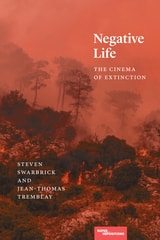
Negative Life
The Cinema of ExtinctionSteven Swarbrick and Jean-Thomas Tremblay
Northwestern University Press, 2024
How films help us understand the inevitable death of Earth and humanity
Negative Life: The Cinema of Extinction brings cinema studies, queer theory, and psychoanalysis into novel configuration around the concept of negative life, a sundering of human and nonhuman relations. Engaging a philosophical and cinematic corpus that rejects the pastoralism of “entanglement” or “enmeshment,” Steven Swarbrick and Jean-Thomas Tremblay counter ecocritical pieties and cut a new path for theory. They examine films by Julian Pölsler, Kelly Reichardt, Lee Isaac Chung, Mahesh Mathai, Paul Schrader, and others that exemplify the existential contradictions currently intensifying amid the sixth mass extinction. Each case study testifies formally and thematically to negative life as a structural condition of thought and film. Together, the cases reveal the unlivable dimension of life and art, where form, desire, and nonbelonging tarry with the future-oriented promise of ecostudies—where all that lives connects. Negative Life militates against this promise, showing that faith in connection is a dead end.
Negotiated Moments
Improvisation, Sound, and SubjectivityGillian Siddall and Ellen Waterman, editors
Duke University Press, 2016
Contributors. George Blake, David Borgo, Judith Butler, Rebecca Caines, Louise Campbell, Illa Carrillo Rodríguez, Berenice Corti, Andrew Raffo Dewar, Nina Eidsheim, Tomie Hahn, Jaclyn Heyen, Christine Sun Kim, Catherine Lee, Andra McCartney, Tracy McMullen, Kevin McNeilly, Leaf Miller, Jovana Milovic, François Mouillot, Pauline Oliveros, Jason Robinson, Neil Rolnick, Simon Rose, Gillian Siddall, Julie Dawn Smith, Jesse Stewart, Clara Tomaz, Sherrie Tucker, Lindsay Vogt, Zachary Wallmark, Ellen Waterman, David Whalen, Pete Williams, Deborah Wong, Mandy-Suzanne Wong
Negotiating Performance
Gender, Sexuality, and Theatricality in Latin/o AmericaDiana Taylor and Juan Villegas, ed.
Duke University Press, 1994
The Latin/o America examined here stretches from Patagonia to New York City, bridging the political and geographical divides between U.S. Latinos and Latin Americans. Moving from Nuyorican casitas in the South Bronx, to subversive street performances in Buenos Aires, to border art from San Diego/Tijuana, this volume negotiates the borders that bring Americans together and keep them apart, while at the same time debating the use of the contested term "Latino/a." In the emerging dialogue, contributors reenvision an inclusive "América," a Latin/o America that does not pit nationality against ethnicity—in other words, a shared space, and a home to all Latin/o Americans.
Negotiating Performance opens up the field of Latin/o American theater and performance criticism by looking at performance work by Mayans, women, gays, lesbians, and other marginalized groups. In so doing, this volume will interest a wide audience of students and scholars in feminist and gender studies, theater and performance studies, and Latin American and Latino cultural studies.
Contributors. Judith Bettelheim, Sue-Ellen Case, Juan Flores, Jean Franco, Donald H. Frischmann, Guillermo Gómez-Peña, Jorge Huerta, Tiffany Ana López, Jacqueline Lazú, María Teresa Marrero, Cherríe Moraga, Kirsten F. Nigro, Patrick O’Connor, Jorge Salessi, Alberto Sandoval, Cynthia Steele, Diana Taylor, Juan Villegas, Marguerite Waller
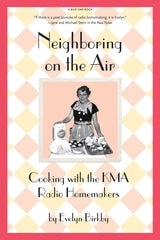
Neighboring on the Air
Cooking KMA Radio HomemakersEvelyn Birkby
University of Iowa Press, 1991
In 1925 Earl May began broadcasting KMA Radio-960 from Shenandoah, Iowa, to boost his fledgling seed business. The station aired practical information designed to help with the day-to-day activity in midwestern farmhouse kitchens. Before long KMA was a trusted friend throughout the wide listening area, offering inspiration, companionship, and all manners of domestic counsel. Hosting the daily radio programs—Home Hour, the Stitch and Chat Club, and the KMA Party Line—and the live cooking demonstrations that drew thousands to the KMA auditorium was a changing roster of personable, lively women who quickly became known as the KMA Radio Homemakers.
Now, in Neighboring on the Air, we can hear the voices of the KMA homemakers and sample their philosophy and—best of all—cooking. Through recipes, biographies, and household advice we get to know such enduring women as "The Little Minister," the Reverend Edythe Stirlen, and Leanna Driftmier and the whole Kitchen-Klatter family, part of the longest-running homemaker program in the history of radio. Learn how to make Sour Cream Apple Pie from "The Farmer's Wife," Florence Falk; Varnished Chicken from the first long-term KMA Radio Homemaker, Jessie Young; and E.E.E. Missouri Dessert (nobody can remember what the "E.E.E." stands for) from the indomitable host of the Edith Hansen Kitchen Club. This endearing scrapbook of people, places, and foods charts the continuing adventure of the KMA homemakers as they broadcast into the 1990s. Neighboring on the Air is an enchanting piece of Americana. Anyone interested in cooking, cultural history, or the Midwest will want to own and use this book.
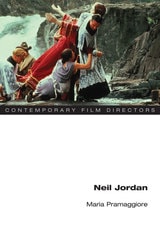
Neil Jordan
Maria T. Pramaggiore
University of Illinois Press, 2007
Despite the striking diversity of Jordan's films, the director consistently returns to gothic themes of loss, violence, and madness. In her sophisticated examination of Mona Lisa,Michael Collins, and The Good Thief, Pramaggiore shows how Jordan presents these dark narratives with a uniquely Irish and postmodern sense of irony. This illuminating analysis of one of the cinema's most important artists will be of keen interest to movie enthusiasts as well as students and scholars of contemporary film.
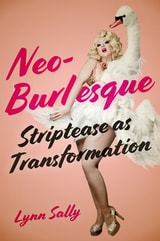
Neo-Burlesque
Striptease as TransformationLynn Sally
Rutgers University Press, 2022
Performance studies scholar and acclaimed burlesque artist Lynn Sally offers an inside look at the history, culture, and philosophy of New York’s neo-burlesque scene. Revealing how twenty-first century neo-burlesque is in constant dialogue with the classic burlesque of the nineteenth and twentieth centuries, she considers how today’s performers use camp to comment on preconceived notions of femininity. She also explores how the striptease performer directs the audience’s gaze, putting on layers of meaning while taking off layers of clothing.
Through detailed profiles of iconic neo-burlesque performers such as Dita Von Teese, Dirty Martini, Julie Atlas Muz, and World Famous *BOB*, this book makes the case for understanding neo-burlesque as a new sexual revolution. Yet it also examines the broader community of “Pro-Am” performers who use neo-burlesque as a liberating vehicle for self-expression. Raising important questions about what feminism looks like, Neo-Burlesque celebrates a revolutionary performing art and participatory culture whose acts have political reverberations, both onstage and off.
Networked Reenactments
Stories Transdisciplinary Knowledges TellKatie King with a foreword by Donna Haraway
Duke University Press, 2012
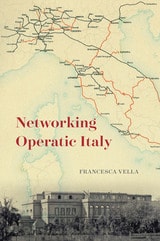
Networking Operatic Italy
Francesca Vella
University of Chicago Press, 2022
Opera’s role in shaping Italian identity has long fascinated both critics and scholars. Whereas the romance of the Risorgimento once spurred analyses of how individual works and styles grew out of and fostered specifically “Italian” sensibilities and modes of address, more recently scholars have discovered the ways in which opera has animated Italians’ social and cultural life in myriad different local contexts.
In Networking Operatic Italy, Francesca Vella reexamines this much-debated topic by exploring how, where, and why opera traveled on the mid-nineteenth-century peninsula, and what this mobility meant for opera, Italian cities, and Italy alike. Focusing on the 1850s to the 1870s, Vella attends to opera’s encounters with new technologies of transportation and communication, as well as its continued dissemination through newspapers, wind bands, and singing human bodies. Ultimately, this book sheds light on the vibrancy and complexity of nineteenth-century Italian operatic cultures, challenging many of our assumptions about an often exoticized country.
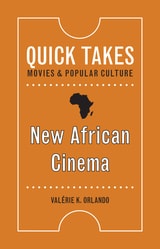
New African Cinema
Orlando, Valérie K
Rutgers University Press, 2017
Orlando illuminates the diverse themes evident in the works of filmmakers such as Ousmane Sembène’s Ceddo (Senegal, 1977), Sarah Maldoror’s Sambizanga (Angola, 1972), Assia Djebar’s La Nouba des femmes de Mont Chenoua (The Circle of women of Mount Chenoua, Algeria, 1978), Zézé Gamboa’s The Hero (Angola, 2004) and Abderrahmane Sissako’s Timbuktu (Mauritania, 2014), among others. Orlando also considers the influence of major African film schools and their traditions, as well as European and American influences on the marketing and distribution of African film. For those familiar with the polemics of African film, or new to them, Orlando offers a cogent analytical approach that is engaging.

New Directions in Israeli Media
Film, Television, and Digital ContentEdited by Yaron Peleg, Eran Kaplan, and Ido Rosen
University of Texas Press, 2025
A comprehensive analysis of the major trends and developments in contemporary Israeli media.
In the twenty-first century, Israeli filmmaking has transformed from a localized industry into a globally recognized and diverse national cinema, its filmmakers gaining prominence internationally and introducing new themes, aesthetics, and voices to the scene. At the same time, Israeli television shows have emerged as a dominant force, propelled by the spread of streaming. Through the rise of online content creation and consumption, especially in the 2010s, new voices have revolutionized the creative landscape.
With Israel’s position at the cutting edge of technology and virtual platforms, Israeli media has seen a boom, winning prizes at international film festivals and adapting shows like Euphoria, Homeland, and Fauda for wider audiences. In New Directions in Israeli Media, thirteen contributors detail the shifting dynamics of Israeli cinema, television, and online content in the digital age, exploring how globalization, technological advances, and changing audience preferences are reshaping creative industries. Editors Yaron Peleg, Eran Kaplan, and Ido Rosen have assembled a volume that prompts critical reflection on the intersection of art, technology, and culture in a rapidly changing media landscape.
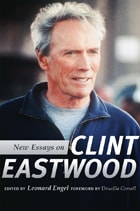
New Essays on Clint Eastwood
Leonard Engel
University of Utah Press, 2012
A common thread throughout the volume is the respect for Eastwood’s commitment to cinematic storytelling. Indi-vidually and collectively, the essays highlight the variety and complexity of Eastwood’s themes and his accomplish-ments throughout a lifetime of endeavors. Examining his Westerns and detective films illustrates how Eastwood left his iconic stamp on those genres, while discussion of his more recent films expounds on his use of family, history, and myth to transcend generic conventions and to project a hard-won vision of a united humanity beyond the separation of ethnic, racial, and national conflicts. Cumulatively, the essays remind us of his lifelong devotion to perfecting his artistry and his powers as a storyteller.
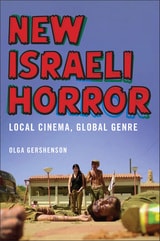
New Israeli Horror
Local Cinema, Global GenreOlga Gershenson
Rutgers University Press, 2024
Before 2010, there were no Israeli horror films. Then distinctly Israeli serial killers, zombies, vampires, and ghosts invaded local screens. The next decade saw a blossoming of the genre by young Israeli filmmakers. New Israeli Horror is the first book to tell their story. Through in-depth analysis, engaging storytelling, and interviews with the filmmakers, Olga Gershenson explores their films from inception to reception. She shows how these films challenge traditional representations of Israel and its people, while also appealing to audiences around the world.
Gershenson introduces an innovative conceptual framework of adaptation, which explains how filmmakers adapt global genre tropes to local reality. It illuminates the ways in which Israeli horror borrows and diverges from its international models. New Israeli Horror offers an exciting and original contribution to our understanding of both Israeli cinema and the horror genre.
A companion website to this book is available at https://websites.umass.edu/newisraelihorror/
Book trailer: https://youtu.be/oVJsD0QCORw (https://youtu.be/oVJsD0QCORw)
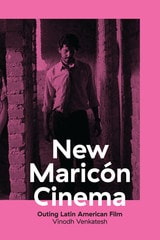
New Maricón Cinema
Outing Latin American FilmBy Vinodh Venkatesh
University of Texas Press, 2016
Recent critically and commercially acclaimed Latin American films such as XXY, Contracorriente, and Plan B create an affective and bodily connection with viewers that elicits in them an emotive and empathic relationship with queer identities. Referring to these films as New Maricón Cinema, Vinodh Venkatesh argues that they represent a distinct break from what he terms Maricón Cinema, or a cinema that deals with sex and gender difference through an ethically and visually disaffected position, exemplified in films such as Fresa y chocolate, No se lo digas a nadie, and El lugar sin límites.
Covering feature films from Argentina, Chile, Cuba, Ecuador, Mexico, Peru, the United States, and Venezuela, New Maricón Cinema is the first study to contextualize and analyze recent homo-/trans-/intersexed-themed cinema in Latin America within a broader historical and aesthetic genealogy. Working with theories of affect, circulation, and orientations, Venkatesh examines key scenes in the work of auteurs such as Marco Berger, Javier Fuentes-León, and Julia Solomonoff and in films including Antes que anochezca and Y tu mamá también to show how their use of an affective poetics situates and regenerates viewers in an ethically productive cinematic space. He further demonstrates that New Maricón Cinema has encouraged the production of “gay friendly” commercial films for popular audiences, which reflects wider sociocultural changes regarding gender difference and civil rights that are occurring in Latin America.
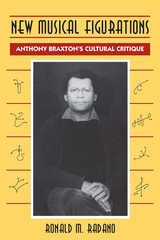
New Musical Figurations
Anthony Braxton's Cultural CritiqueRonald M. Radano
University of Chicago Press, 1993
Born in 1945, Braxton is not only a virtuoso jazz saxophonist but an innovative theoretician and composer of experimental art music. His refusal to conform to the conventions of official musical culture has helped unhinge the very ideologies on which definitions of "jazz," "black music," "popular music," and "art music" are founded.
New Musical Figurations gives the richest view available of this many-sided artist. Radano examines Braxton's early years on the South Side of Chicago, whose vibrant black musical legacy inspired him to explore new avenues of expression. Here is the first detailed history of Braxton's central role in the Association for the Advancement of Creative Musicians, the principal musician-run institution of free jazz in the United States. After leaving Chicago, Braxton was active in Paris and New York, collaborating with Philip Glass, Steve Reich, Frederic Rzewski, and other composers affiliated with the experimental-music movement. From 1974 to 1981, he gained renown as a popular jazz performer and recording artist. Since then he has taught at Mills College and Wesleyan University, given lectures on his theoretical musical system, and written works for chamber groups as well as large, opera-scale pieces.
The neglect of radical, challenging figures like Braxton in standard histories of jazz, Radano argues, mutes the innovative voice of the African-American musical tradition. Refreshingly free of technical jargon, New Musical Figurations is more than just another variation on the same jazz theme. Rather, it is an exploratory work as rich in theoretical vision as it is in historical detail.
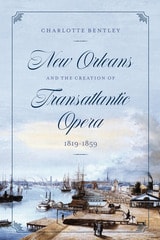
New Orleans and the Creation of Transatlantic Opera, 1819–1859
Charlotte Bentley
University of Chicago Press, 2022
New Orleans and the Creation of Transatlantic Opera, 1819–1859 explores the thriving operatic life of New Orleans in the first half of the nineteenth century, drawing out the transatlantic connections that animated it. By focusing on a variety of individuals, their extended webs of human contacts, and the materials that they moved along with them, this book pieces together what it took to bring opera to New Orleans and the ways in which the city’s operatic life shaped contemporary perceptions of global interconnection. The early chapters explore the process of bringing opera to the stage, taking a detailed look at the management of New Orleans’s Francophone theater, the Théâtre d’Orléans, as well as the performers who came to the city and the reception they received. But opera’s significance was not confined to the theater, and later chapters of the book examine how opera permeated everyday life in New Orleans, through popular sheet music, novels, magazines and visual culture, and dancing in its many ballrooms. Just as New Orleans helped to create transatlantic opera, opera in turn helped to create the city of New Orleans.
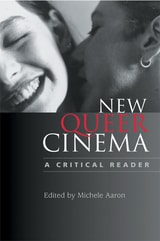
New Queer Cinema
A Critical ReaderAaron, Michele
Rutgers University Press, 2004
Coined in the early 1990s to describe a burgeoning film movement, “New Queer Cinema” has turned the attention of film theorists, students, and audiences to the proliferation of intelligent, stylish, and daring work by lesbian and gay filmmakers within independent cinema and to the infiltration of “queer” images and themes into the mainstream. Why did this shift take place? Was it political gains, cultural momentum, or market forces that energized the evolution and transformation of this cinematic genre?
New Queer Cinema: A Critical Reader provides a definitive and highly readable guide to the development of this important and controversial film movement. The volume is divided into four sections: defining “new queer cinema,” assessing its filmmakers, examining geographic and national differences, and theorizing spectatorship. Chapters address the work of pivotal directors (such as Todd Haynes and Gregg Araki) and salient films (including Paris is Burning and Boys Don’t Cry), as well as unconventional and non-Anglo-American work (experimental filmmaking and third world cinema).
With a critical eye to its uneasy relationship to the mainstream, New Queer Cinema explores the aesthetic, sociocultural, political, and, necessarily, commercial investments of the movement. It is the first full-length study of recent developments in queer cinema that combines indispensable discussions of central issues with exciting new work by key writers.
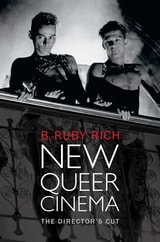
New Queer Cinema
The Director's CutB. Ruby Rich
Duke University Press, 2013
As a critic, curator, journalist, and scholar, Rich has been inextricably linked to the New Queer Cinema from its inception. This volume presents her new thoughts on the topic, as well as bringing together the best of her writing on the NQC. She follows this cinematic movement from its origins in the mid-1980s all the way to the present in essays and articles directed at a range of audiences, from readers of academic journals to popular glossies and weekly newspapers. She presents her insights into such NQC pioneers as Derek Jarman and Isaac Julien and investigates such celebrated films as Go Fish, Brokeback Mountain, Itty Bitty Titty Committee, and Milk. In addition to exploring less-known films and international cinemas (including Latin American and French films and videos), she documents the more recent incarnations of the NQC on screen, on the web, and in art galleries.
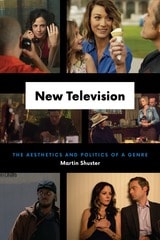
New Television
The Aesthetics and Politics of a GenreMartin Shuster
University of Chicago Press, 2017
Philosopher Martin Shuster argues that television is the modern art form, full of promise and urgency, and in New Television, he offers a strong philosophical justification for its importance. Through careful analysis of shows including The Wire, Justified, and Weeds, among others; and European and Anglophone philosophers, such as Stanley Cavell, Hannah Arendt, Martin Heidegger, and John Rawls; Shuster reveals how various contemporary television series engage deeply with aesthetic and philosophical issues in modernism and modernity. What unifies the aesthetic and philosophical ambitions of new television is a commitment to portraying and exploring the family as the last site of political possibility in a world otherwise bereft of any other sources of traditional authority; consequently, at the heart of new television are profound political stakes.
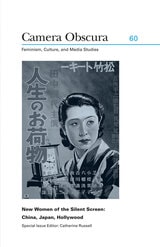
New Women of the Silent Screen
China, Japan, Hollywood, Volume 20Catherine Russell , ed.
Duke University Press, 0
The collection includes an essay on the actress Pearl White and how the emergence of the New Woman on Asian screens provoked extensive discussions in the media about the norms of gender and femininity. Hollywood orientalism and Asian nationalism converged in the images of Asian American stars Anna May Wong and Tsuru Aoki, who were criticized by both American and Asian constituencies for transgressing cultural norms. Other essays offer a feminist critique of films by the Japanese directors Yasujiro Ozu, Heinosuke Gosho, Kenji Mizoguchi, and Mikio Naruse, whose work often captured the position of women in a patriarchal system. Trapped between the progressive paradigms of the New Woman and traditional expectations of appropriate gender roles, and between competing notions of Asian modernity, Asian women stars of the silent cinema constitute a dynamic site for feminist film research.
Contributors. Weihong Bao, Chika Kinoshita, Sara Ross, Catherine Russell, Mitsuyo Wada-Marciano, Yiman Wang
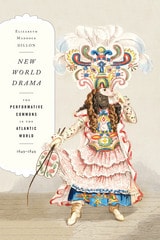
New World Drama
The Performative Commons in the Atlantic World, 1649-1849Elizabeth Maddock Dillon
Duke University Press, 2014
Audiences in London eagerly watched the royal slave, Oroonoko, tortured on stage, while audiences in Charleston and Kingston were forbidden from watching the same scene. Audiences in Kingston and New York City exuberantly participated in the slaying of Richard III on stage, enacting the rise of the "people," and Native American leaders were enjoined to watch actors in blackface "jump Jim Crow." Dillon argues that the theater served as a "performative commons," staging debates over representation in a political world based on popular sovereignty. Her book is a capacious account of performance, aesthetics, and modernity in the eighteenth-century Atlantic world.
News Parade
The American Newsreel and the World as SpectacleJoseph Clark
University of Minnesota Press, 2020
A fascinating look at the United States’ conflicted relationship with news and the media, through the lens of the newsreel
When weekly newsreels launched in the early twentieth century, they offered the U.S. public the first weekly record of events that symbolized “indisputable evidence” of the news. In News Parade, Joseph Clark examines the history of the newsreel and how it changed the way Americans saw the world. He combines an examination of the newsreel’s methods of production, distribution, and reception with an analysis of its representational strategies to understand the newsreel’s place in the history of twentieth-century American culture and film history.
Clark focuses on the sound newsreel of the 1930s and 1940s, arguing that it represents a crucial moment in the development of a spectacular society where media representations of reality became more fully integrated into commodity culture. Using several case studies, including the newsreel’s coverage of Charles Lindbergh’s transatlantic flight and the Sino–Japanese War, News Parade shows how news film transformed the relationship between its audience and current events, as well as the social and political consequences of these changes. It pays particular attention to how discourses of race and gender worked together with the rhetoric of speed, mobility, and authority to establish the power and privilege of newsreel spectatorship.
In the age of fake news and the profound changes to journalism brought on by the internet, News Parade demonstrates how new technologies and media reshaped the American public’s relationship with the news in the 1930s—a history that can help us to better understand the transformations happening today.
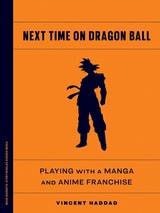
Next Time on Dragon Ball
Playing with a Manga and Anime FranchiseVincent Haddad
University of Minnesota Press, 2026
How media production and fan play interact to shape the aesthetics of a global anime franchise
Since its debut in 1984, Dragon Ball has become one of the most popular, influential, and lucrative media franchises in the world. In Next Time on Dragon Ball, Vincent Haddad investigates how the franchise has maintained huge global demand despite its formulaic plotlines. Examining its exhaustive repetition of storytelling forms across comics, TV series, games, and merchandise, Haddad argues that the convergence of play, fandom, and narrative made Dragon Ball an unlikely success—and a harbinger of broader shifts in the media landscape of franchises from the 1980s to the present.
Haddad conceives of Dragon Ball as a “franchise toy,” a corporate media property that is constantly remixed by its fans in ways that its owners resist but also ultimately embrace: appropriation is essential to the franchise’s popularity. Over the past forty years, Haddad argues, Dragon Ball’s deployment of familiar tropes, cultural references, and narrative forms—from classical Chinese stories and the films of Bruce Lee and Jackie Chan to American franchises like Superman and Star Wars—has invited unique transcultural play. Through diverse examples of how fans use its characters as “playthings,” Haddad shows how Dragon Ball travels across international networked fandoms, highlighting the queer, gendered, and racialized dimensions of this play.
Parsing the dynamics of “sites of conflict” between authorized media and fan content, Next Time on Dragon Ball illuminates how fan engagement across the Americas changes the parameters of what a manga and anime franchise is and can be.
Retail e-book files for this title are screen-reader friendly with images accompanied by short alt text and/or extended descriptions.
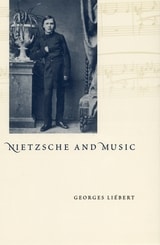
Nietzsche and Music
Georges Liébert
University of Chicago Press, 2003
In his youth, Friedrich Nietzsche yearned to become a great composer and wrote many pieces of music. He later claimed to be "the most musical of all philosophers." Yet most books on Nietzsche fail to explore the importance of music for his thought.
Nietzsche and Music provides the first in-depth examination of the fundamental significance of music for Nietzsche's life and work. Nietzsche's views on music are essential for understanding his philosophy as a whole. Part biography and part critical examination, Georges Liébert brilliantly demonstrates that despite failed attempts at a professional career as composer, Nietzsche never fully removed himself from the world of music, but instead, became a composer of philosophy, utilizing the musical form as a template for his own writings and creative thought. Liébert's study surveys Nietzsche's opinions about particular composers and compositions, as well as his more theoretical writings on music and its relation to the other arts. He also explores Nietzsche's listening habits, his playing and style of composition, and his many contacts in the musical world, including his controversial and contentious relationship with Richard Wagner. For Nietzsche, music gave access to a realm of wisdom that transcended thought. Music was Nietzsche's great solace; in his last years, it was his refuge from madness.
A virtuoso exploration of this little-known but crucial aspect of Nietzsche's life and work, this volume will be of enormous value to scholars of philosophy, music, aesthetics, and literature.

Nigerian Video Films
Revised and Expanded EditionJonathan Haynes
Ohio University Press, 2000
Night Mother
A Personal and Cultural History of The ExorcistMarlena Williams
The Ohio State University Press, 2023

Nine Choices
Johnny Cash and American CultureJonathan Silverman
University of Massachusetts Press, 2010
For much of his career, Johnny Cash opened his shows with the tagline, “Hello, I'm Johnny Cash.” This introduction seemed unnecessary, since everyone in the audience knew who he was—the famous musical artist whose career spanned almost five decades, whose troubled life on and off the stage received wide publicity, and whose cragged face seemed to express a depth and intensity not found in any other artist, living or dead.
For Cash, as for many celebrities, renown was the product of both hard work and luck. Often a visionary and always a tireless performer, he was subject to a whirlwind of social, economic, and cultural countercurrents. Nine Choices explores the tension between Cash's desire for mainstream success, his personal struggles with alcohol and drugs, and an ever-changing cultural landscape that often circumscribed his options.
Drawing on interviews, archival research, and textual analysis, Jonathan Silverman focuses on Cash's personal and artistic choices as a way of understanding his life, his impact on American culture, and the ways in which that culture in turn shaped him. Cash made decisions about where he would live, what he would play, who would produce his albums, whether he would support the Vietnam War, and even if he would flip his famous “bird”—the iconic image of Cash giving the finger which is now plastered on posters and T-shirts everywhere—in the context of cultural forces both visible and opaque. He made other decisions in consultation with a variety of people, many of whom were chiefly concerned with the reaction of his audiences.
Less a conventional biography than a study of the making of an identity, Nine Choices explores how Johnny Cash sought to define who he was, how he was perceived, and what he signified through a series of self-conscious actions. The result, Silverman shows, was a life that was often tumultuous but never uninteresting.
Nixon and the Silver Screen
Mark Feeney
University of Chicago Press, 2004
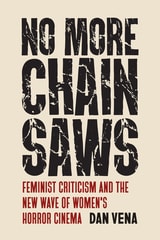
No More Chainsaws
Feminist Criticism and the New Wave of Women's Horror CinemaDan Vena
Rutgers University Press, 2026
“Welcome to the Golden Age of Women-Directed Horror.” Over the last fifteen years, there has been a sustained global influx of women artists working in mainstream and independent horror cinemas earning notable public and industry acclaim. As a result, now, for the first time in horror history, there is also a concentrated corpus of films that explicitly address topics of identity, sexuality, trauma, and monstrosity from women’s perspectives. No More Chainsaws offers an in-depth analysis of some of the earliest and underrated releases within this New Wave of women’s horror cinema: Catherine Hardwicke’s Twilight (2008), Karyn Kusama’s Jennifer’s Body (2009), Jennifer and Sylvia Soska’s American Mary (2012), and Kimberly Peirce’s Carrie (2013). No More Chainsaws articulates the ways in which these contemporary films attempt to liberate horror from an overdetermining gendered lexicon of violence and terror.
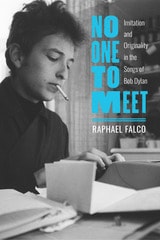
No One to Meet
Imitation and Originality in the Songs of Bob DylanRaphael Falco
University of Alabama Press, 2022
WINNER OF THE ELIZABETH AGEE PRIZE IN AMERICAN LITERATURE
A groundbreaking appreciation of Dylan as a literary practitioner.
The literary establishment tends to regard Bob Dylan as an intriguing, if baffling, outsider. That changed overnight when Dylan was awarded the 2016 Nobel Prize in Literature, challenging us to think of him as an integral part of our national and international literary heritage. No One to Meet: Imitation and Originality in the Songs of Bob Dylan places Dylan the artist within a long tradition of literary production and offers an innovative way to understand his unique and often controversial methods of composition.
Dylan expert Raphael Falco traces the similarities between the way Dylan borrows, digests, and transforms traditional songs and what Renaissance writers called imitatio. Although Dylan’s lyrical postures may suggest an avant-garde consciousness, No One to Meet shows that Dylan’s creative process creatively expands methods used by classical and Renaissance authors.
Drawing on numerous examples, including Dylan’s previously unseen manuscript excerpts and archival materials, Raphael Falco illuminates how the ancient process of poetic imitation, handed down from Greco-Roman antiquity, allows us to make sense of Dylan’s musical and lyrical technique. By placing Dylan firmly in the context of an age-old poetic practice, No One to Meet deepens our appreciation of Dylan’s songs and allows us to celebrate him as what he truly is: a great writer.
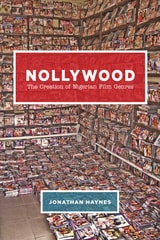
Nollywood
The Creation of Nigerian Film GenresJonathan Haynes
University of Chicago Press, 2016
Haynes describes the major Nigerian film genres and how they relate to Nigerian society—its values, desires, anxieties, and social tensions—as the country and its movies have developed together over the turbulent past two decades. As he shows, Nollywood is a form of popular culture; it produces a flood of stories, repeating the ones that mean the most to its broad audience. He interprets these generic stories and the cast of mythic figures within them: the long-suffering wives, the business tricksters, the Bible-wielding pastors, the kings in their traditional regalia, the glamorous young professionals, the emigrants stranded in New York or London, and all the rest. Based on more than twenty years of research, Haynes’s survey of Nollywood’s history and genres is unprecedented in scope, while his book also vividly describes landmark films, leading directors, and the complex character of this major branch of world cinema.
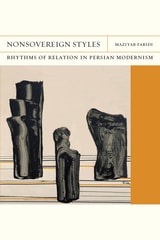
Nonsovereign Styles
Rhythms of Relation in Persian ModernismMaziyar Faridi
Northwestern University Press, 2027
Exploring motifs in modern Persian literature and Iranian film that demand new forms of relationality from politics
Assembling an understudied corpus of literary and filmic texts at the intersection of Persian and global modernism, Maziyar Faridi traces a constellation of aesthetic motifs that resist colonially imported constructs of political relationality in order to argue for an intermedial poetics of nonsovereignty. Moving from the poetry of Nima Yushij and Ahmad Shamlou to the ciné-poems of Férydoun Rahnéma and Forugh Farrokhzad, Nonsovereign Styles charts the transformation of poetic language through its exposure to minor ethnic languages and the rhetorics of English, French, and Spanish modernist poetry and alternative film. Faridi centers two key motifs: ezterāb, a trembling rhythm in which the self encounters itself as difference, and mehr, an aporetic mode of relation beyond identity, community, and sovereignty. Against the state’s project of ethnonationalism, these motifs form a poetics that is both transhistorical and transnational, producing a translational link between Iranian and internationalist poets, such as Langston Hughes and Paul Éluard. By situating Persian modernism within the broader map of global modernism, this book invites us to consider what reading these texts can teach us today about styles of relating to the world and the very sense of the political.

Norwegian Emigrant Songs and Ballads
Theodore Blegen
University of Minnesota Press, 1936
Not Hollywood
Independent Film at the Twilight of the American DreamSherry B. Ortner
Duke University Press, 2013
Not the Other Avant-Garde
The Transnational Foundations of Avant-Garde PerformanceEdited by James M. Harding and John Rouse
University of Michigan Press, 2010
Not the Other Avant-Garde is groundbreaking in both avant-garde studies and performance studies and will be a valuable contribution to the fields of theater studies, modernist studies, art history, literature, and music history.
"Joins the growing field of critical and transnational theories on the arts. . . its grounding in live performance and its foregrounding of the performative human body presents a new theoretical paradigm that is pathbreaking."
--Haiping Yan, University of California, Los Angeles
James M. Harding is Associate Professor of English at Mary Washington University. He is author of Adorno and "A Writing of the Ruins": Essays on Modern Aesthetics and Anglo-American Literature and Culture and editor of Contours of the Theatrical Avant-Garde: Performance and Textuality.
John Rouse is Associate Professor of Theater at the University of California, San Diego. He is author of Brecht and the West German Theatre.
Not without Madness
Perspectives on OperaFabrizio Della Seta
University of Chicago Press, 2012
Notions of Genre
Writings on Popular Film Before Genre TheoryEdited by Barry Keith Grant and Malisa Kurtz
University of Texas Press, 2016
Much of the writing in film studies published today can be understood as genre criticism, broadly speaking. And even before film studies emerged as an academic discipline in the 1970s, cultural observers within and beyond the academy were writing about genre films and making fascinating attempts to understand their conventions and how they speak to, for, and about the culture that produces them. While this early writing on genre film was often unsystematic, impressionistic, journalistic, and judgmental, it nonetheless produced insights that remain relevant and valuable today.
Notions of Genre gathers the most important early writing on film genre and genre films published between 1945 and 1969. It includes articles by such notable critics as Susan Sontag, Dwight Macdonald, Siegfried Kracauer, James Agee, André Bazin, Robert Warshow, and Claude Chabrol, as well as essays by scholars in academic disciplines such as history, sociology, and theater. Their writings address major issues in genre studies, including definition, representation, ideology, audiences, and industry practices, across genres ranging from comedy and westerns to horror, science fiction, fantasy, gangster films, and thrillers. The only single-volume source for this early writing on genre films, Notions of Genre will be an invaluable resource for scholars and students of film genre, film history, film theory, cultural studies, and popular culture.
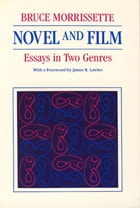
Novel and Film
Essays in Two GenresBruce Morrissette
University of Chicago Press, 1985
The influential essays collected in Novel and Film display a wide range of critical and analytic approaches to the narrative aspects of the two genres. For all the variety of their subjects, from constructional forms such as interior duplication and game play to intertextual parallels with mathematics and topology, these essays together define a unified critical perspective, one that has brought fresh precision to the analysis of narrative techniques and that continues to raise questions of prime importance to contemporary fiction. Included is a complete bibliography of Morrissette's scholarly works.
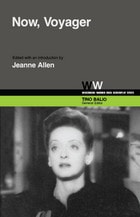
Now, Voyager
Edited by Jeanne Thomas Allen; Tino T. Balio, Series Editor
University of Wisconsin Press, 1984
Now Voyager (1942) is appreciated today for a skillfully modulated performance by Bette Davis and a rare theme in American mass culture—the study of a woman's struggle for independence. This book includes the complete screenplay.
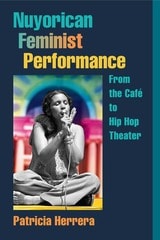
Nuyorican Feminist Performance
From the Café to Hip Hop TheaterPatricia Herrera
University of Michigan Press, 2020
The Nuyorican Poets Café has for the past forty years provided a space for multicultural artistic expression and a platform for the articulation of Puerto Rican and black cultural politics. The Café’s performances—poetry, music, hip hop, comedy, and drama—have been studied in detail, but until now, little attention has been paid to the voices of its women artists. Through archival research and interview, Nuyorican Feminist Performance examines the contributions of 1970s and ’80s performeras and how they challenged the Café’s gender politics. It also looks at recent artists who have built on that foundation with hip hop performances that speak to contemporary audiences. The book spotlights the work of foundational artists such as Sandra María Esteves, Martita Morales, Luz Rodríguez, and Amina Muñoz, before turning to contemporary artists La Bruja, Mariposa, Aya de León, and Nilaja Sun, who infuse their poetry and solo pieces with both Nuyorican and hip hop aesthetics.