Results by title
71 books match the query 'Human beings' and 3 start with n
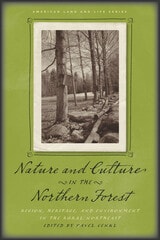
Nature and Culture in the Northern Forest
Region, Heritage, and Environment in the Rural NortheastPavel Cenkl
University of Iowa Press, 2010
Nearly 30 million acres of the Northern Forest stretch across New York, Vermont, New Hampshire, and Maine. Within this broad area live roughly a million residents whose lives are intimately associated with the forest ecosystem and whose individual stories are closely linked to the region’s cultural and environmental history. The fourteen engaging essays in Nature and Culture in the Northern Forest effectively explore the relationships among place, work, and community in this complex landscape. Together they serve as a stimulating introduction to the interdisciplinary study of this unique region.
Each of the four sections views through a different lens the interconnections between place and people. The essayists in “Encounters” have their hiking boots on as they focus on personal encounters with flora and fauna of the region. The energizing accounts in “Teaching and Learning” question our assumptions about education and scholarship by proposing invigorating collaborations between teachers and students in ways determined by the land itself, not by the abstractions of pedagogy. With the freshness of Thoreau’s irreverence, the authors in “Rethinking Place” look at key figures in the forest’s literary and cultural development to help us think about the affiliations between place and citizenship. In “Nature as Commodity,” three essayists consider the ways that writers from the nineteenth and early twentieth centuries thought about nature as a product and, thus, how their conclusions bear on the contemporary retailing of place.
The writers in Nature and Culture in the Northern Forest reveal the rich affinities between a specific place and the literature, thought, and other cultural expressions it has nurtured. Their insightful and stimulating connections exemplify adventurous bioregional thinking that encompasses both natural and cultural realities while staying rooted in the particular landscape of some of the Northeast’s wildest forests and oldest settlements.
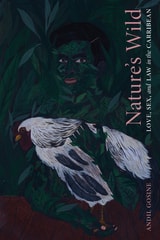
Nature's Wild
Love, Sex, and Law in the CaribbeanAndil Gosine
Duke University Press, 2021
Duke University Press Scholars of Color First Book Award recipient
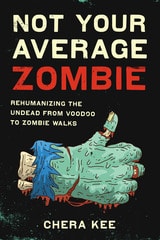
Not Your Average Zombie
Rehumanizing the Undead from Voodoo to Zombie WalksBy Chera Kee
University of Texas Press, 2017
The zombie apocalypse hasn’t happened—yet—but zombies are all over popular culture. From movies and TV shows to video games and zombie walks, the undead stalk through our collective fantasies. What is it about zombies that exerts such a powerful fascination? In Not Your Average Zombie, Chera Kee offers an innovative answer by looking at zombies that don’t conform to the stereotypes of mindless slaves or flesh-eating cannibals. Zombies who think, who speak, and who feel love can be sympathetic and even politically powerful, she asserts.
Kee analyzes zombies in popular culture from 1930s depictions of zombies in voodoo rituals to contemporary film and television, comic books, video games, and fan practices such as zombie walks. She discusses how the zombie has embodied our fears of losing the self through slavery and cannibalism and shows how “extra-ordinary” zombies defy that loss of free will by refusing to be dehumanized. By challenging their masters, falling in love, and leading rebellions, “extra-ordinary” zombies become figures of liberation and resistance. Kee also thoroughly investigates how representations of racial and gendered identities in zombie texts offer opportunities for living people to gain agency over their lives. Not Your Average Zombie thus deepens and broadens our understanding of how media producers and consumers take up and use these undead figures to make political interventions in the world of the living.