Results by title
178 books match the query 'Identification' and 5 start with n
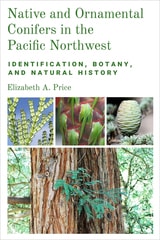
Native and Ornamental Conifers in the Pacific Northwest
Identification, Botany and Natural HistoryElizabeth A. Price
Oregon State University Press, 2022
Based on her experiences teaching workshops on conifer identification and cultivation, Elizabeth Price has developed Jargon-free photographic charts, which allow for side-by-side comparison of conifer features and guide the reader to species identification. The charts are detailed enough for specialists yet accessible to amateurs.
The book includes extensive material on the characteristics, botany, and natural history of conifer plant families, genera, and species, all illustrated with original photographs. Research across many disciplines is blended with direct observation and personal experience, creating a book that goes beyond identification and is both rigorous and engaging.
Nelumbonaceae to Vitaceae
Water Lotuses to GrapesRobert H. Mohlenbrock
Southern Illinois University Press, 2010
In this fourth and final installment in the Aquatic and Standing Water Plants of the Central Midwest series, veteran botanist Robert H. Mohlenbrock identifies aquatic and wetland plants in eight central Midwestern states, which include Iowa, Illinois, Indiana, Ohio, Kansas, Kentucky (excluding the Cumberland Mountain region), Missouri, and Nebraska.
Nelumbonaceae to Vitaceae: Water Lotuses to Grapes contains 346 highly informative and technically accurate illustrations as well as ecological information, nomenclature, and keys for plants in the aforementioned families, including white water lily, fireweed, smartweed, mild water pepper, hawthorn, and wild strawberry. Mohlenbrock identifies and describes each plant in concise and readable prose and indicates its usual habitats and the states in which it occurs.
As with previous volumes, Mohlenbrock organizes each species into three groups: truly aquatic plants, which spend their entire life with their vegetative parts either completely submerged or floating on the water’s surface; emergents, which are usually rooted under water with their vegetative parts standing above the water’s surface; and wetland plants, which live most or all of their lives out of water.
With Nelumbonaceae to Vitaceae, Mohlenbrock completes the four-volume series organizing and identifying wetland plants in the central Midwest. The botanical series will aid many, from teachers and students to state and federal employees, focused on conservation efforts and mitigation issues.
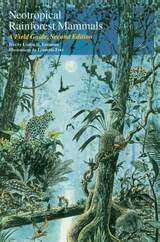
Neotropical Rainforest Mammals
A Field GuideLouise H. Emmons and François Feer
University of Chicago Press, 1997
In this completely revised and updated second edition:
A total of 226 species are treated in full (206 were included in the first edition).
All species accounts retained from the first edition have been updated to include the most recent research.
All 195 maps showing the distribution and geographic range of each species have been revised to reflect the most current information.
Twenty-nine beautiful color plates illustrate more than 220 species (including significant color variants between males and females or adults and young). Seven black-and-white plates contain more than 60 images of individual species, mainly bats.
A compact disc of mammal vocalizations—crucial to identifying nocturnal and otherwise cryptic animals that sometimes may be heard rather than seen—will be available for purchase separately.
Praise for the first edition:
"If you can't go to the Central and South American rain forests to see firsthand their threatened ecosystems, here is the next best thing."—Washington Post Book World
"A large amount of information is presented concisely and in a way that is easy to use."—Choice
"The presentation and wealth of information contained in this field guide is outstanding and will satisfy the needs of both the 'tourist' and 'researcher' traveling to the Neotropics."—Canadian Field-Naturalist

New Jersey Ferns and Fern Allies
Montgomery, James D.
Rutgers University Press, 1993
New Jersey is exceptionally rich in ferns, as three centuries of naturalists have recognized. Both amateur and professional botanists will welcome this new, complete, fully illustrated guide to the state's ferns and fern allies (the lycopods and horsetails). After an introduction to fern classification and nomenclature, the history of fern collecting, and the ecology and distribution of ferns within New Jersey, the authors describe eighty-three species, in thirty genera, and thiry-two hybrid forms (more than any other state). They include a fascinating account of the rare curly-grass fern, Schizaea pusilla, "New Jersy's most famous plant."
For each species, the authors provide a detailed drawing and comments on taxonomy, habitat, chromosome counts, habits of growth, and status as endangered species. Distribution maps show not only where plants have been collected, but also the time period for the most recent date of collectionÐÐa convenient way of showing the plant's spread or depletion. Throughout, the book reflects the latest research by fern experts.
An essential field guide and reference for naturalists, botanists, hikers, gardeners, and conservationists in New Jersey and the mid-Atlantic states.
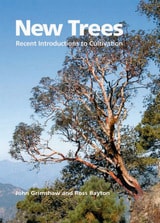
New Trees
Recent Introductions to CultivationJohn Grimshaw and Ross Bayton
Royal Botanic Gardens, Kew, 2009
This comprehensive volume, commissioned by the International Dendrology Society, covers more than eight hundred tree species that have been introduced to cultivation in the United Kingdom, Europe, and North America in recent decades. Up until now there has been no comparable source of information. Featuring horticultural notes from a network of growers and enthusiasts, backed up by data from recent scientific studies, the book presents a remarkable amount of information in a fashion accessible to amateurs as well as specialists. More than one hundred line drawings and nearly six hundred photographs—many portraying rarely seen trees—offer aids to identification. Introductory chapters covering conservation and modern techniques of tree-growing, and a comprehensive glossary and bibliography, round out the volume and make New Trees incomparable—and indispensable.