Results by title
200 books match the query 'Indians of Mexico' and 6 start with n
Nahuat Myth and Social Structure
By James M. Taggart
University of Texas Press, 1997
First published in 1983, Nahuat Myth and Social Structure brings together an important collection of modern-day Aztec Indian folktales and vividly demonstrates how these tales have been shaped by the social structure of the communities in which they are told.
Native Peoples of the Gulf Coast of Mexico
Edited by Alan R. Sandstrom and E. Hugo García Valencia
University of Arizona Press, 2005
Native Peoples of the Gulf Coast of Mexico is the first book to argue that the people of this region constitute a culture area distinct from other parts of Mexico. A pioneering effort by a team of international scholars who summarize hundreds of years of history, this encyclopedic work chronicles the prehistory, ethnohistory, and contemporary issues surrounding the many and varied peoples of the Gulf Coast, bringing together research on cultural groups about which little or only scattered information has been published.
The volume includes discussions of the prehispanic period of the Gulf Coast, the ethnohistory of many of the neglected indigenous groups of Veracruz and the Huasteca, the settlement of the American Mediterranean, and the unique geographical and ecological context of the Chontal Maya of Tabasco. It provides descriptions of the Popoluca, Gulf Coast Nahua, Totonac, Tepehua, Sierra Ñähñu (Otomí), and Huastec Maya. Each chapter contains a discussion of each group’s language, subsistence and settlement patterns, social organization, belief systems, and history of acculturation, and also examines contemporary challenges to the future of each native people.
As these contributions reveal, Gulf Coast peoples share not only major cultural features but also historical experiences, such as domination by Hispanic elites beginning in the sixteenth century and subjection to forces of change in Mexico. Yet as contemporary people have been affected by factors such as economic development, increased emigration, and the spread of Protestantism, traditional cultures have become rallying points for ethnic identity.
Native Peoples of the Gulf Coast of Mexico highlights the significance of the Gulf Coast for anyone interested in the great encuentro between the Old and New Worlds and general processes of culture change. By revealing the degree to which these cultures have converged, it represents a major step toward achieving a broader understanding of the peoples of this region and will be an important reference work on these indigenous populations for years to come.
Native Wills from the Colonial Americas
Dead Giveaways in a New WorldMark Z. Christensen and Jonathan Truitt
University of Utah Press, 2015
Native Wills from the Colonial Americas showcases new testamentary sources from the sixteenth to the eighteenth centuries. It provides readers with translations and analyses of wills written in Spanish, Nahuatl, Yucatec Maya, K’iche’ Maya, Mixtec, and Wampanoag.
Divided into three thematic sections, the book provides insights and details that further our understanding of indigenous life in the Americas under colonial rule. Part One employs testaments to highlight the women of Native America and the ways their lives frequently challenged prescribed gender roles and statuses. Part Two uses testaments to illustrate the strategies of the elite in both negotiating and maintaining their power in a colonial, Spanish world. Part Three contributes to our understanding of the individual and collective nature of death by extracting from wills the importance of conversion, kinship, and societal ties in the colonial Americas. Capturing individual voices during dramatic periods of change, the documents presented here help us understand how cultures both adapt and persist.
Natural and Moral History of the Indies
José de Acosta
Duke University Press, 2002
A significant contribution to Renaissance Europe's thinking about the New World, Acosta's Natural and Moral History of the Indies reveals an effort to incorporate new information into a Christian, Renaissance worldview. He attempted to confirm for his European readers that a "new" continent did indeed exist and that human beings could and did live in equatorial climates. A keen observer and prescient thinker, Acosta hypothesized that Latin America's indigenous peoples migrated to the region from Asia, an idea put forth more than a century before Europeans learned of the Bering Strait. Acosta's work established a hierarchical classification of Amerindian peoples and thus contributed to what today is understood as the colonial difference in Renaissance European thinking.
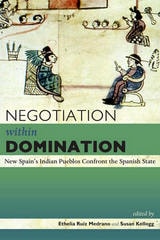
Negotiation within Domination
New Spain's Indian Pueblos Confront the Spanish StateEthelia Ruiz Medrano
University Press of Colorado, 2016
Bringing together work by Mexican and North American historians, this collection is a crucially important and rare contribution to the field. Negotiation within Domination is a valuable resource for native peoples as they seek to redefine and revitalize their identities and assert their rights relating to language and religion, ownership of lands and natural resources, rights of self-determination and self-government, and protection of cultural and intellectual property. It will be of interest primarily to specialists in the field of colonial studies and historians and ethnohistorians of New Spain.
Contributors: R. Jovita Baber, José Manuel A. Chávez-Gómez, Susan Kellogg, Edward W. Osowski, María de los Ángeles Romero Frizzi, Ethelia Ruiz Medrano, Cuauhtémoc Velasco Ávila, Yanna P. Yannakakis
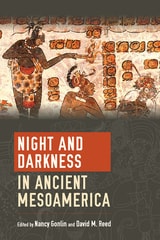
Night and Darkness in Ancient Mesoamerica
Nancy Gonlin
University Press of Colorado, 2021
The anthropological study of night and darkness enriches and strengthens the understanding of human behavior, power, economy, and the supernatural. In eleven case studies featuring the residents of Teotihuacan, the Classic period Maya, inhabitants of Rio Ulúa, and the Aztecs, the authors challenge archaeologists to consider the influence of the ignored dimension of the night and the role and expression of darkness on ancient behavior. Chapters examine the significance of eclipses, burials, tombs, and natural phenomena considered to be portals to the underworld; animals hunted at twilight; the use and ritual meaning of blindfolds; night-blooming plants; nocturnal foodways; fuel sources and lighting technology; and other connected practices.
Night and Darkness in Ancient Mesoamerica expands the scope of published research and media on the archaeology of the night. The book will be of interest to those who study the humanistic, anthropological, and archaeological aspects of the Aztec, Maya, Teotihuacanos, and southeastern Mesoamericans, as well as sensory archaeology, art history, material culture studies, anthropological archaeology, paleonutrition, socioeconomics, sociopolitics, epigraphy, mortuary studies, volcanology, and paleoethnobotany.
Contributors: Jeremy Coltman, Christine Dixon, Rachel Egan, Kirby Farah, Carolyn Freiwald, Nancy Gonlin, Julia Hendon, Cecelia Klein, Jeanne Lopiparo, Brian McKee, Jan Marie Olson, David M. Reed, Payson Sheets, Venicia Slotten, Michael Thomason, Randolph Widmer, W. Scott Zeleznik